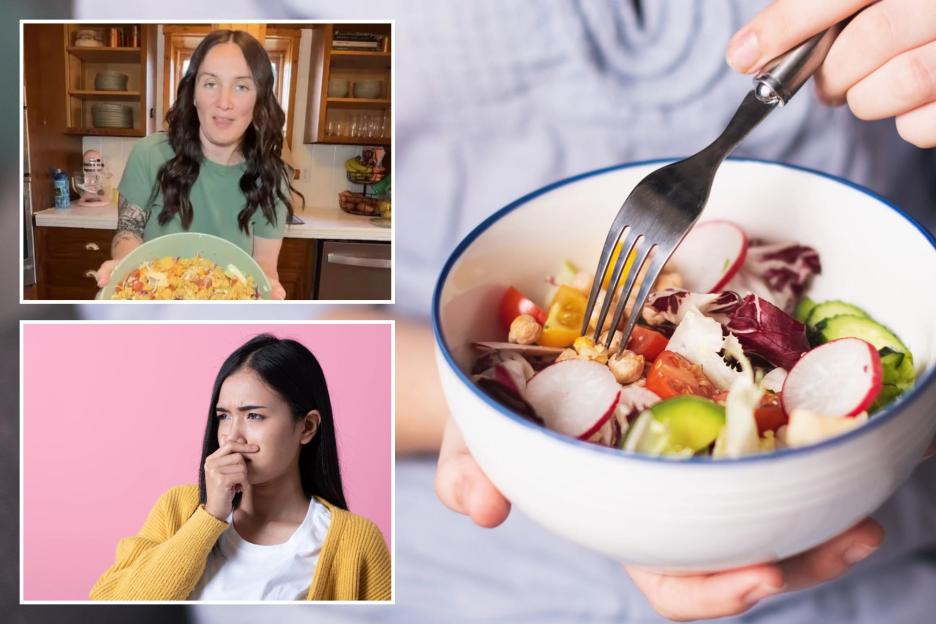
IT’S common practice to swerve foods that make you fart, but a new food trend has tooting at the centre of it – and it’s called the ‘fart salad’.
The fact of the matter is, we all pass gas – as many as , according to research.
 ‘Fart salads’ are an offshoot of the fibremaxxing trend Credit: Getty
 Megan Coulter popularised the ‘fart salad’ trend Credit: TikTok/@thecoultercoop
Some foods will make our guts more active than others, especially those packed with fibre – think beans, lentils, broccoli and potatoes with their skins on.
Most of us don’t reach the recommended 30g a day, but playing catch-up by having lots of fibre-forward foods all at once can make you fairly farty.
And this is where fart salads come in.
The craze is an offshoot of the viral , which prompts people to pack as much fibre into meals as possible, with the aim of improving digestion, boosting mood and even triggering weight loss.
It was popularised by social media influencer Megan Coulter, who shared her recipe for the gut-punching salad on .
She says in the clip : “You need fibre. Fibre helps you poop and fibre helps you fart.
“So, we’re going to be pooping. We’re going to be farting. We’re making fart salad.”
She proceeds to toss “healthier” protein pasta, cheese cubes, peperoni, red onion, garlic parmesan seasoning, packaged coleslaw mix and bottled salad dressing into a bowl.
Megan says the coleslaw mix – chopped up green and red cabbage, carrots – was her “secret ingredient” and the biggest source of fibre in her salad.
She admits calling dish a salad may be a bit of a stretch, saying: “I didn’t say this is good for you. I said it’s high in fibre.”
Speaking to The Sun, nutritionists share their thoughts on the trend and Megan’s salad – cautioning that it may end up end up “packing in more fat and calories than a takeaway meal”.
“Fart salad sounds so unappealing!” says Rob Hobson , registered nutritionist and author of The Low Appetite Cookbook.
“This is a slightly tongue-in-cheek trend, but it does actually highlight a real issue most people aren’t getting enough fibre.
“The figures in the UK are that 96 per cent of the population are not getting 30g a day and the average intake is around 16g daily.
 Most people in the UK aren’t getting enough fibre Credit: Getty
“Also only 2 per cemt women and 5 per cent men get the 30g.
“That said, focusing on one nutrient in isolation can be misleading because it’s the overall quality of the meal that really matters.”
He concedes: “If it is done well, this type of salad can be a great way to support gut .”
But he and nutritionist Katie Murray, from AltruVita , point out the potential health dangers of this supposedly healthy salad trend.
Fat traps
First off, adding hearty amounts of cheese and processed meat to a meal won’t do wonders to your health -and it’ll likely undo any benefits you get from the healthier parts of the salad.
Rob says: “When you add processed meats like pepperoni, lots of cheese and heavy dressings, you can quickly end up with a meal that’s high in saturated fat and salt.
“So while it may be high in fibre, that doesn’t automatically make it a healthy choice and in some cases could contract the gut health benefits.”
Katie adds: “Whilst this salad packs in lots of fibre and will diversify the microbiome, it contains high salt content, is high in calories and saturated fat due to the cheese, pepperoni and salad dressing.
When your wind reveals a hidden health condition
Everyone farts - it's normal! But there are times when fluffing goes beyond the expected amount and could be a sign of something serious.
IBS
IBS can be agonising, causing frequent tummy discomfort, bloating, constipation as well as bouts of diarrhoea.
Another symptom of IBS is frequent gas.
IBS can also lead to other complications such as a lack of energy, feeling sick or nauseous, pain during sex and social anxiety and depression.
So if you think you might have the condition speak to a GP.
Coeliac disease
Coeliac disease is an autoimmune digestive condition where the intestines react to gluten and become inflamed.
The adverse reaction can come from the dietary protein which is often found in three cereals: wheat, barley and rye.
The gluten damages the lining of the intestines making the body unable to absorb important nutrients.
Coeliac disease is a life-long condition that can lead to bloating, nausea, excess gas and tiredness, and is only treated by a change in diet.
Bowel cancer
It’s unlikely your wind is bowel cancer, also known as colon cancer or colorectal cancer, which is the fourth most common form of the disease in the UK.
But the key red flag signs for the disease include blood in your poo, tummy pain, bloating and a change in bowel movements.
A side effect your bowel movements changing can be gas, so if you are farting a lot and notice other symptoms speak to a GP.
“Eating high levels of these processed foods regularly can actually increase LDL levels (the bad cholesterol), blood pressure and cause the body to hold onto more fluid.”
Over time, your arteries can get clogged up from eating lots of high in unhealthy fats, and this can increase the risk of health issues like and .
Salt in cheese and meats can also drive up blood pressure over time, another risk factor for heart disease.
“Whilst this is considered a salad, due to the high levels of calories and saturated fat, it could actually end up packing in more fat and calories than a takeaway meal,” Katie goes on.
“So if one is trying to manage their cardiovascular health and weight, this may not be the right option to consume regularly.”
Gut punch
Though the point of fart salads is to get your gut going, this might not be a pleasant experience for some.
Katie says: “This salad is likely to cause gut discomfort in some individuals who are sensitive to FODMAP foods (highly fermentable fibres).
“In particular, raw cabbage from the coleslaw and raw onions can lead to symptoms like bloating, cramping, diarrhoea, constipation, and wind.
“These symptoms are particularly common culprits for those suffering with (IBS), small intestinal bacterial overgrowth (SIBO) and other gastrointestinal disorders.”
Rob adds that people using weight loss medications may not fare well with fart salads, as their “appetite is reduced and digestion can slow down”.
But uncomfortable gut symptoms can hit anyone if they overdo it with the fibre.
Katy says: “Consuming additional quantities of fibre without building up slowly can also cause these symptoms, so it is recommended to increase your levels slowly over time to allow your digestive system to adjust adequately.”
Not all gas is good
Farting is a normal part of the digestive process and we shouldn’t be ashamed of it.
But Rob points out that the term ‘fart salad’ “leans into the idea that more gas equals better gut health, which isn’t really the case”.
“Increased gas is a normal response when you suddenly increase fibre, but it’s usually a sign your gut hasn’t had time to adapt,” he explains.
“The goal isn’t to ‘max out’ fibre in one meal, but to build it up gradually and spread it across the day.
“In fact, the excess farting and bloating from adding too much fibre at once could turn people off eating these foods which is not what you want.
Katie echoes this, saying: “Occasional flatulence caused by food can be a normal and even a positive sign that fibre is being fermented by healthy gut bacteria.”
But if your farts are “excessive, persistent, socially disruptive and painful”, this may mean you need to slow it with the fibre or consider other sources your gut can better tolerate.
‘Fart salad’ done better
This doesn’t mean you shouldn’t give the trend a go at all.
Both nutritionists suggest some workarounds to make the dish better for your health and kinder to your gut.
“The key is to build it around whole, fibre-rich foods liket like cabbage, leafy greens, beans, lentils and wholegrains such as quinoa or barley,” Rob says.
“Adding healthy fats like olive oil, nuts or seeds helps make it more balanced and satisfying.”
And Katie says: “To put a healthier spin on this salad, I would start by significantly reducing the processed elements of the salad.
“I would remove pepperoni, and swap for home-cooked chicken breast or salmon, swap out processed cheese for a sprinkle of feta, add in a few tablespoons of chickpeas or beans of choice to further increase fibre and diversify the microbiome with vegan sources of fibre and protein.
“I would swap the protein pasta out for quinoa, which packs in protein and fibre in equal measure and is gluten-free, and use a homemade quick and easy salad dressing to replace a processed one using dry or fresh herbs, a big squeeze of lemon, good quality olive oil, some Dijon mustard and a drizzle of honey to taste.
“These swaps would overall reduce calories, sodium and significantly lower saturated fat and processed foods.”