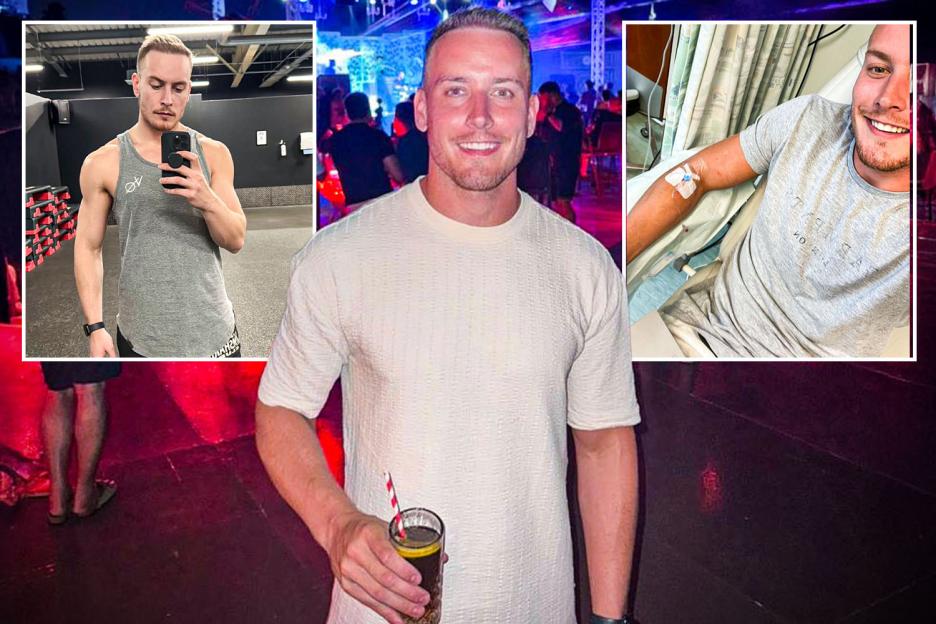
WHEN George Mckinty lost his balance and tumbled to the floor on a street in Ibiza, he could feel disapproving stares from strangers looking on.
To the 26-year-old business development manager’s horror, as he got back on his feet he heard people suggesting he was drunk or on drugs. But as he tells The Sun, the truth was much more sinister.
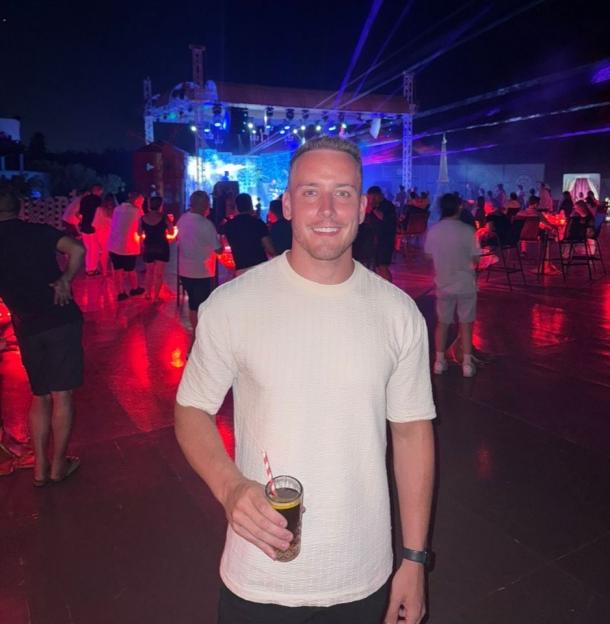 George Mckinty had decided to plough ahead with his holiday to Ibiza in August 2021 despite suffering terrifying symptoms in the run up Credit: Supplied
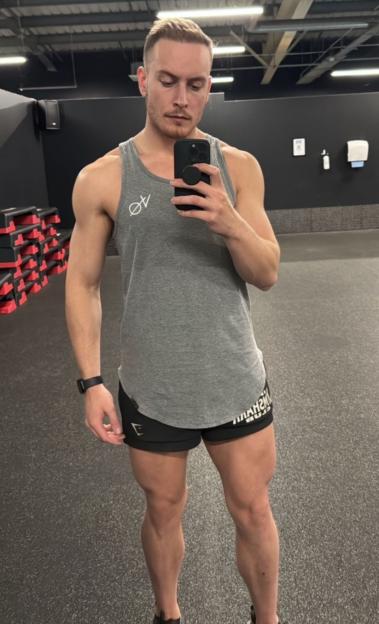 George, who was fit and active, flew home from Ibiza he went on to pay privately for an MRI scan, and his neurologist told ling him he could see lesions that were consistent with MS Credit: Supplied
Previously fit and active, George had decided to plough ahead with his holiday in August 2021 despite suffering terrifying symptoms in the run up.
His bladder had gone into overdrive, meaning he needed to go to the toilet multiple times in the night and his left leg was becoming hard to lift.
Worst of all, three weeks before his trip to the Spanish holiday isle, George, from Barry, South , went blind in his right eye, losing 80 per cent of his vision.
He went to Specsavers where an optician found a problem with his optic nerve and referred him to a neurologist, who in turn put him on the waiting list for an
“It was a terrifying time, my world was about to be flipped upside down,” recalls George.
“But I told my friends what was going on and decided to still go on holiday, we had planned a lads trip.
“Then when I was in Ibiza I fell over quite a number of times, a lot of people thought I was drunk or on drugs from the way I was walking, I was so embarrassed.
“I would often ask ‘Dr Google‘ about my symptoms in my hotel room, I had Googled them before I even went on holiday so I had an idea of what was to come.”
Incurable condition
George had done what medics always advise patients not to do: ask Google for a diagnosis and when he put his symptoms into the popular search engine, or MS was the result that frequently came back.
An incurable condition affecting the brain and spinal cord, affects more than 150,000 people in the UK and is commonly diagnosed when sufferers are in their 20s and 30s.
At the time of his diagnosis, George’s knowledge of the condition was limited but he had had an uncle with MS, who grew up in the 1970s and became a wheelchair user, with the condition affecting him greatly.
He feels this wasn’t the most helpful knowledge to have, with treatments and life expectancies having vastly improved since then.
When George flew home from Ibiza he went on to pay privately for an MRI scan in October 2021, with his neurologist telling him he could see lesions in his brain and spine that were consistent with .
When I was in Ibiza I fell over quite a number of times, a lot of people thought I was drunk or on drugs from the way I was walking, I was so embarrassed.
A lumbar puncture followed in March 2022, which saw a needle inserted in the lower back to collect cerebrospinal fluid, which is when George’s fears were confirmed by an official diagnosis.
“You have no choice but to accept it and adapt to it quickly, really,” he says, citing his mum’s handling of her own journey as inspiration.
“My mum passed away from cancer when I was 22 – she wrote on her iPad: ‘Why me?’ and then she answered her own question: ‘Why not?’,” he says.
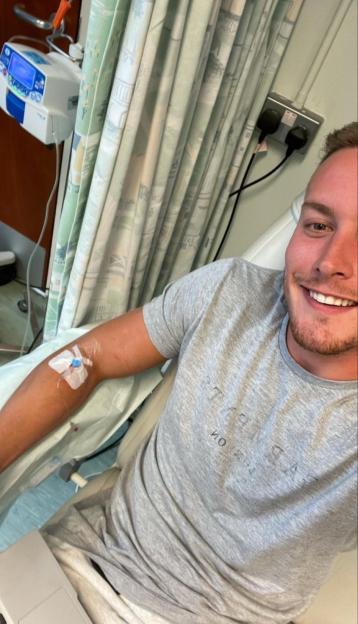 George qualified for the highest efficacy treatments, including an intravenous drip of ocrelizumab, a disease modifying drug, every six months Credit: Supplied
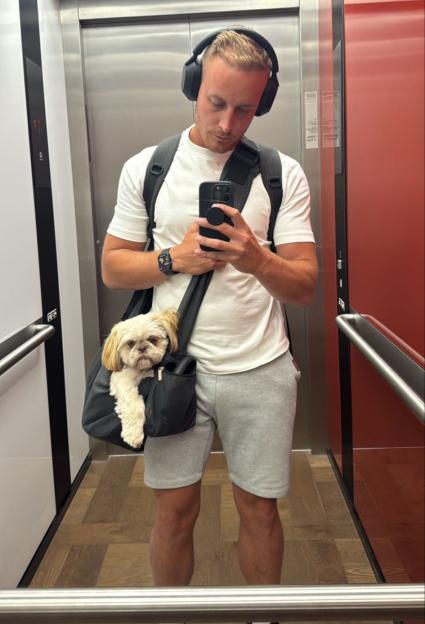 George was advised by the charity Overcoming MS to get a dog – here he is with adorable shih-tzu Luna Credit: Supplied
George went on to have a relapse – a flare-up with symptoms including vision loss, balance issues and extreme fatigue – following his .
A second MRI scan showed more lesions in his brain and spinal cord, meaning he qualified for the highest efficacy treatments, including an intravenous drip of ocrelizumab, a disease modifying drug, every six months.
“This has really stabilised my condition, which isn’t progressing at the moment, but it’s not a cure,” he says.
Sufferers with MS today can live a near-normal lifespan, with some recent studies suggesting a reduction of life expectancy as low as two years.
Spot the common signs of MS
The 8 most common symptoms of MS include:
- Feeling extremely tired ()
- Problems with your eyes or your vision, such as blurred vision or eye pain
- Numbness or a tingling feeling in different parts of the body
- Clumsy (uncoordinated), feeling off balance or dizzy/mobility issues
- Muscle cramps, spasms and stiffness
- Needing to pee more often or not being able to control when you pee
- Problems with
- Sexual problems, including a or
George, who is now 30, has never asked for an individual prognosis.
He has the most common type of MS known as relapsing-remitting, which involves flare-ups that last from a few days to several months.
“My bladder is the most annoying symptom because it gives me nocturia, meaning I get up four or five times a night to use the toilet,” he says.
“I’ve recently been told it’s paralysed, it’s called a neurogenic bladder, which is caused by MS disrupting signals sent between my brain and bladder,” he says.
It’s taken me years but I’m starting to feel much better with it and confident in myself.
“They are looking into treatments to alleviate this.
“And I’ve still got double vision in my right eye, which means I can’t do a lot of sports.”
George, who has always been sporty, has not let this stop him – he recently completed three in three days for the Overcoming MS by walking the routes and has plans to complete another challenge soon.
He has continued to forge ahead with his career in the finance technology industry too, saying he wants to “change the perception that people with MS have to leave work”.
Early intervention is key when it comes to preventing the condition from progressing and maintaining a healthy lifestyle, with an anti-inflammatory focus when it comes to diet, is also advised by the .
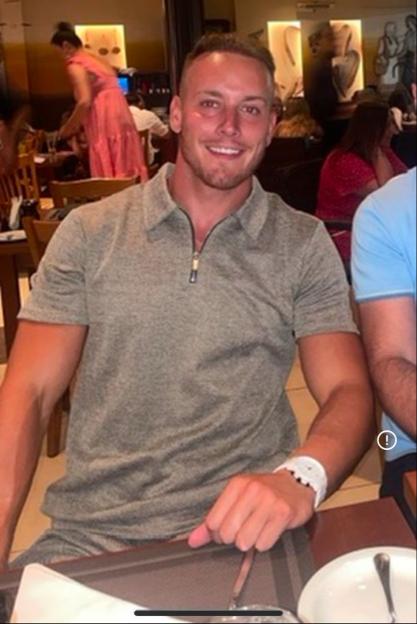 George, who has always been sporty, has not let his diagnosis stop him as he forges ahead withh is career and completing three marathons in three days Credit: Supplied
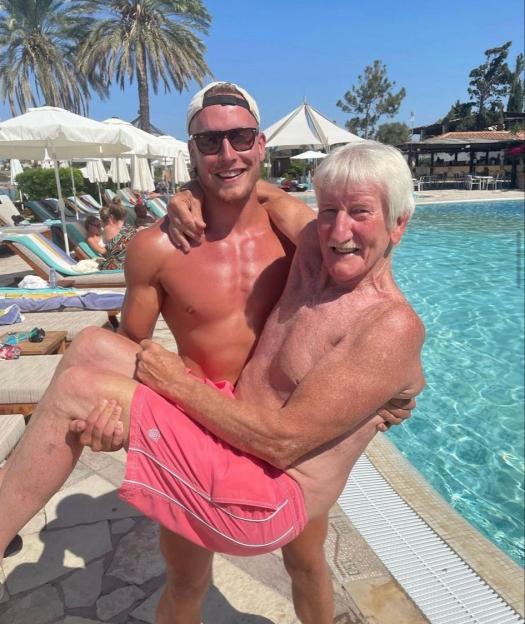 George pictured with his dad Bob on holiday Credit: Supplied
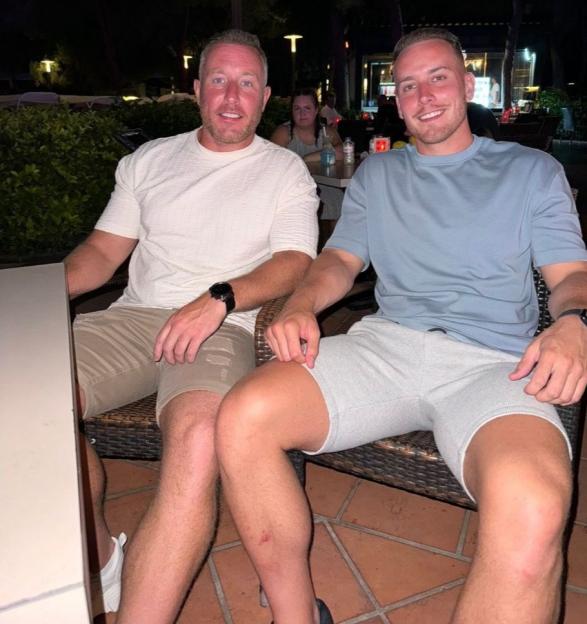 George, pictured with his brother Chris, says the hardest part of his journey has been a sense of identity loss but he is determined to stay positive Credit: Supplied
“It’s quite liberating in a sense, I don’t have a choice but to be healthy,” says George, who is single.
“I can’t drink like I used to and luckily some of my friends are pretty healthy themselves; they’ve been really supportive.
“The Overcoming MS charity promotes a lifestyle approach or holistic approach to the condition: high dose flaxseed oil for omega-3, a plant based diet plus seafood, very low amounts of saturated fat, meditation, and plenty of sleep.
“I practise the best sleep hygiene I can – if I have limited sleep my cognition, my executive functioning and my mobility is impacted.”
“The charity is not against medication but this approach gives back the feeling of control because that feeling is swept away from you all of a sudden,” he adds.
The hardest part of George’s journey has been a sense of identity loss but he is determined to stay positive, with a drive to help other young people hit with a similar diagnosis.
“Everything changes – your outlook, your social life, your work life, you always have to be mindful of it,” he says.
“It’s taken me years but I’m starting to feel much better with it and confident in myself.
“I say it’s both the best and worst thing to ever have happened to me and I’m positive about my future.”