 Credit: Getty
A TEENAGE girl with an extraordinary memory can “time travel” to any day of her life and re-live it like an HD movie.
The 17-year-old – nicknamed TL in a report describing her case – can not only recall past experiences in abnormally vivid detail, she’s also able to preview possible future events like she’s watching a trailer.
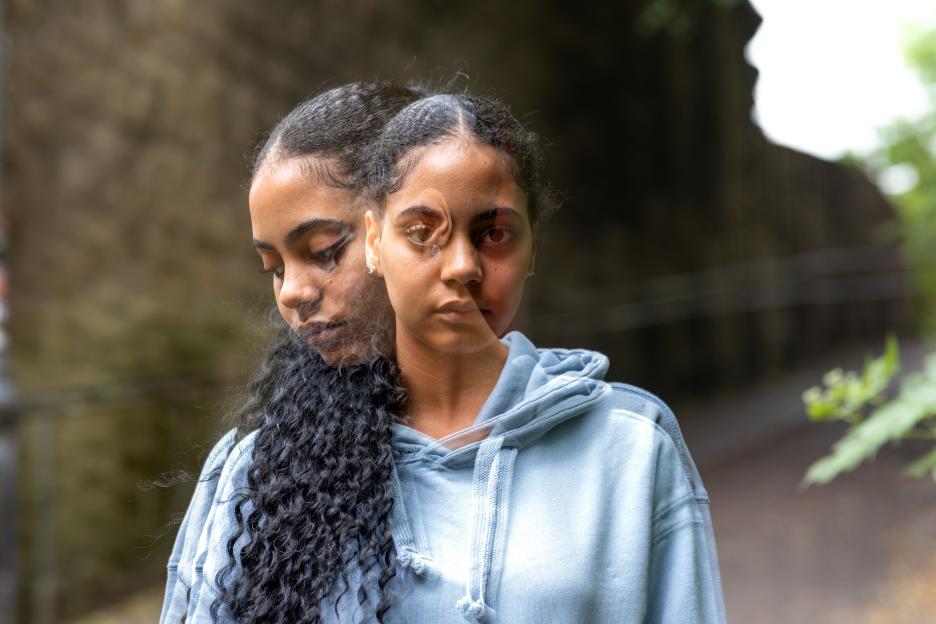 Teenage TL can recall past personal events in vivid detail and also view her future like a trailerCredit: Getty
TL has an extremely rare condition called hyperthymesia, which literally translates to ‘over-remembering’ – having a above and beyond the average person.
Someone with hyperthymesia has a very strong autobiographical memory that lets them recall personal life events in vivid detail.
They’re often able to bring up from childhood with no effort at all – while the average person might only have a hazy recollection of events, which loses its sharpness over time.
A handful of such cases have been documented in the literature, but hyperthymesia remains rare and poorly understood
French researchers, led by neurologist Valentina La Corte at the Université Paris Cité, said TL’s case was unique.
“This is the first observation of hyperthymesia with a full evaluation of mental time travel capacities in different temporal distances, encompassing the individual capacity to retrieve personal events from the personal past as well as to foresee personal events in the future,” they wrote in the journal Neurocase .
TL, a 17-year-old schoolgirl living in , first realised there was something special about her recall of personal events when she was eight years old.
As a child, she’d casually mention her ability to mentally time travel to past events to check for details, only to be accused of lying.
She eventually revealed this memory quirk to her family when she was 16, a year before she came to researchers’ attention.
Not only is TL’s recollection of past events extremely detailed and accurate – she also has a unique organisational system in her head.
She describes information that carries no particular meaning or emotional weight, mainly acquired at school, as “black memory”,
Meanwhile, her personal memories live in a large, rectangular “white room” with a low ceiling.
Her memory palace is organised thematically and chronologically in binders.
These include binders dedicated to family life, , friends, and even her collection of soft toys.
Each toy has its own memory tag, including information about when she was given it and by whom.
TL mentally scans through the binders to retrieve specific episodes. Some memories are even stored in the form of text messages or photographs.
TL can mentally relive events both from her perspective and from an outsider’s view, and this recall is steeped in emotion.
For example, she described her first day of school in striking detail: what she wore, the , the image of her mum watching her through the fence.
TL also has three additional rooms in her memory palace, each with a specific emotional function.
A cold “pack ice” room helps her cool down when angry, while “problems room” is where she goes to pace and think.
Researchers assessed TL’s autobiographical memory, and she scored above average when recalling instances in her childhood and adolescence.
The second task measured her ability to recall or imagine brief, detailed episodes from both the past and the future.
Her imagined future events seemed plausible and carried a strong feeling of “pre-experience”, which is like remembering, but applied to anticipated events in the future.
Fewer than 100 people around the world have been identified as having the condition, according to Cleveland Clinic.
While it may seem like a useful skill to be able to conjure up the past in minute detail, hyperthymesia can make it hard for people to forget painful or upsetting memories.
TL has a mechanism to deal with this.
For example, the memory of her grandfather’s death is kept in a chest inside the white room.
And she used the “pack ice” to soothe her anger and a “problems” room to reflect on difficulties.
It’s not known what causes hyperthymesia.
A recent study examined brain regions that may be associated with the ability to vividly recall the past.
Scans showed people with the condition had more connections in the middle of their brain, especially in regions called the medial prefrontal and posterior cingulate cortices.
The medial prefrontal cortex is for regulating emotion, social behaviour and decision-making
Meanwhile, the posterior cingulate cortex becomes more active when someone accesses an autobiographical memory or imagines the future.
Some connections between these and other brain structures, mostly near the middle of the cerebral cortex, were found to be stronger in people with hyperthymesia.
These connections might explain the ability to hold on to detailed autobiographical memories.
Dr La Corte wrote: “It is difficult to generalise findings about hyperthymesia, since they rely on only a few cases.
“Does ageing affect the memories of these individuals? Do their mental time-travel abilities depend on age?
“Can they learn to control the accumulation of memories? We have many questions, and everything remains to be discovered.
“An exciting avenue of research lies ahead.
“The process responsible for hyperthymesia is still largely unknown and most knowledge comes from case studies,” she added.
She said researchers’ observations of TL “could pave the way to further research on superior autobiographical abilities, studied in the context of personal temporality”.