A MUM has told how her daughter was born with a rare condition that has left her neck and lips purple.
Cristen Gluch assumed something was “terribly wrong” with her newborn baby, Kinley, when she suddenly turned purple as soon as she started to cry.
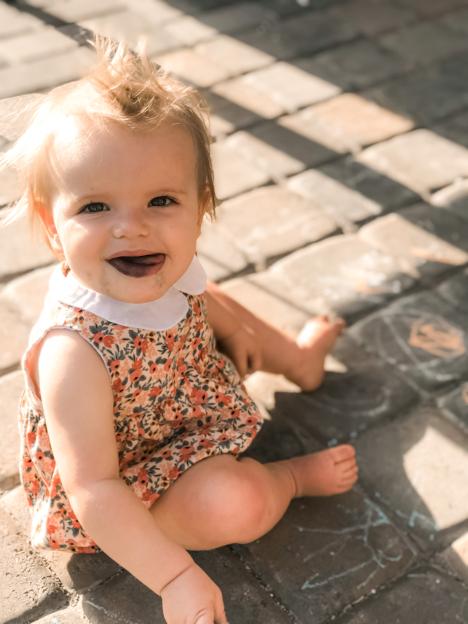 Kinley was born with a rare condition that has left her lips and neck looking purple Credit: Cover Images
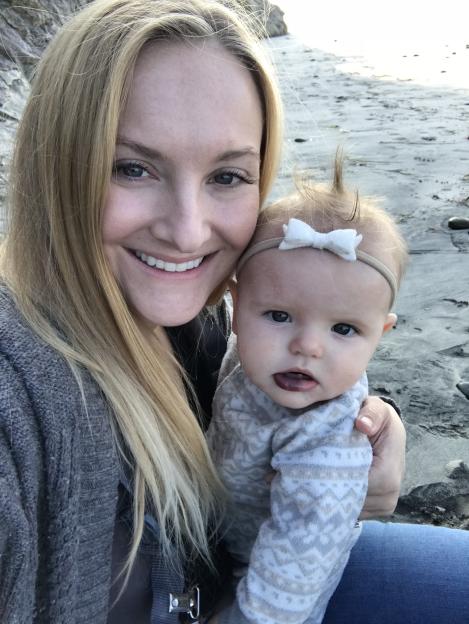 Kinley’s mum, Cristen, was terrified and didn’t know what was wrong with her daughter Credit: Cover Images
The mum had barely had a chance to hold her before doctors rushed Kinley away to check if something was wrong.
Thankfully, Kinley’s vital signs appeared to be normal, but doctors were left puzzled and had no immediate answers.
Cristen, from Utah, said: “We were terrified when they sent us home. We had no idea how this would impact her life, or if this could potentially be fatal. There were so many fears and unknowns.”
At one month old, however, Kinley finally received the diagnosis of extensive venous malformations – abnormally formed blood vessels that lack normal muscular walls and allow blood to pool inside them.
These occur when veins do not form properly and are characterised by swelling, skin discolouration, pain and bleeding, according to the NHS .
The rare vascular condition affects Kinley’s face, lip, neck, mouth and airway.
Venous malformations do not always need treatment, but in Kinley’s case, more than 22 surgeries were required.
She underwent her first sclerotherapy procedure – a minimally invasive treatment in the veins – at just one year old.
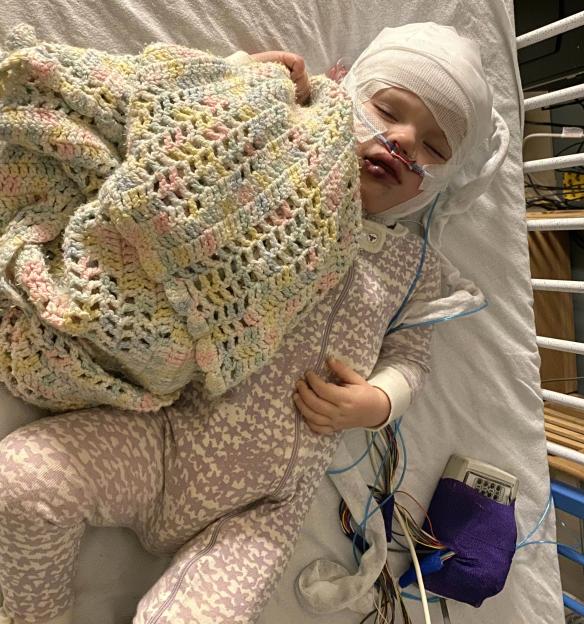 Kinley was finally diagnosed at one-month-old with a condition called extensive venous malformations Credit: Cover Images
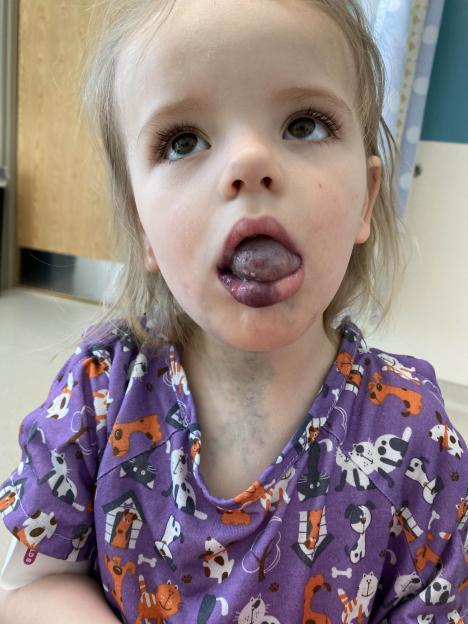 She underwent her first procedure at one and has had over 22 surgeries in total Credit: Not known, clear with picture desk
But during the process doctors were shocked to discover the malformation was far larger and more complex than expected, with blood flowing rapidly towards Kinley’s jugular vein.
Had doctors proceeded with the treatment, the medication could have travelled directly towards her heart and lungs.
Describing the incident, Cristen said: “Seeing the expert in these malformations not know what to do was terrifying.”
Traditional treatments that normally work for venous malformations were considered too dangerous because of the size of the growth and the sheer volume of blood flowing through it.
By the time Kinley was three-years-old, the situation had become even more serious as she began developing blood clots within the malformation.
Because the abnormal veins were directly connected to her jugular vein and major blood vessels leading to her heart and lungs, doctors feared the consequences could be catastrophic.
The toddler was placed on blood-thinning injections as a temporary solution while her medical team consulted specialists across the board.
They eventually came to the difficult decision to surgically remove the large malformation from Kinley’s neck – an extraordinarily high-risk operation.
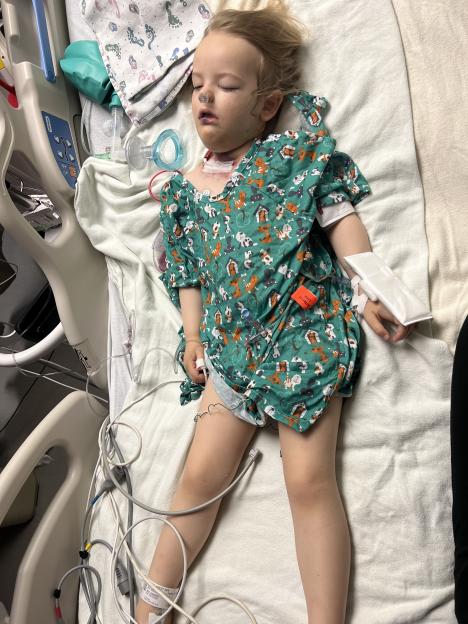 The situation worsened by the time Kinley was three and she began developing blood clots Credit: Not known, clear with picture desk
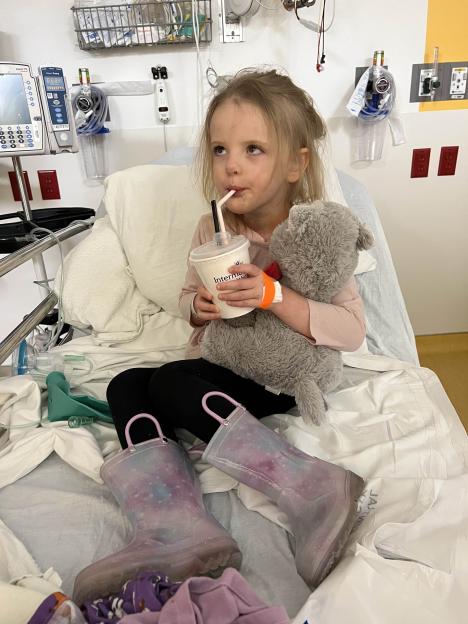 Doctor’s eventually decided to remove the large malformation from her neck Credit: Not known, clear with picture desk
Cristen said that the risk of Kinley bleeding and it not being able to be stopped was “significant”.
Surgeons brought in a microvascular specialist to assist and even removed part of Kinley’s collarbone to gain access to the malformation.
Speaking about the ordeal, Cristen said: “During that eight-hour surgery, we genuinely thought we might lose her. It was the most terrifying day of our lives.”
But thankfully, the operation was a success, with surgeons removing the malformation and Kinley only requiring one blood transfusion.
The mum continued: “It was after that surgery that I knew our baby was going to be okay. The worst was finally behind us.”
Kinley is now seven, and she continues to undergo minimally invasive bleomycin sclerotherapy treatments every few months to control the remaining venous malformations.
She also suffers from severe obstructive apnoea caused by malformations in her airway and wears a CPAP machine every night while she sleeps, to deliver a steady stream of pressurised air.
Despite everything she has endured, Kinley refuses to let her condition define her.
Her mum said: “She doesn’t like the extra attention and just wants to get back to being a normal kid.”
Unsurprisingly, Kinley gets a lot of attention because of her condition as it often resembles bruising on her neck and face, but Cristen says she hasn’t let this frustrate her.
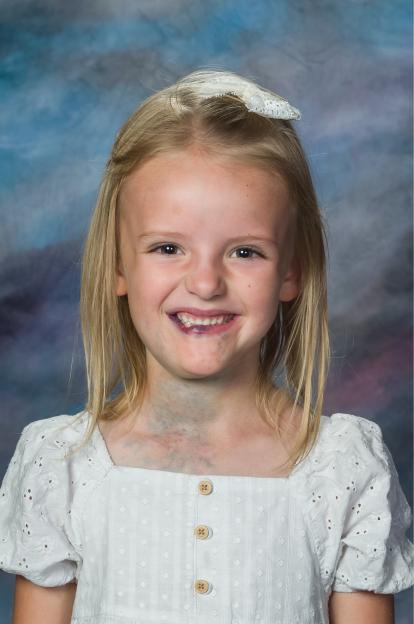 Kinley is now seven and she continues to have treatment every few months Credit: Cover Images
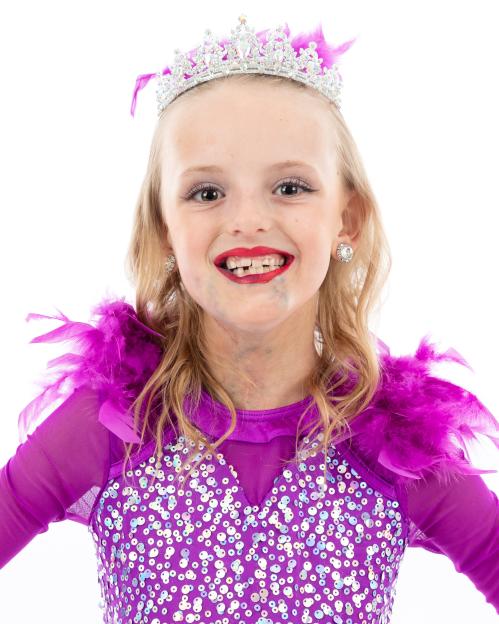 Cristen says her daughter is very resilient and refuses to let the condition define her Credit: Cover Images
Cristen added: “Sometimes people ask if she’s been eating something blue or chewing on a marker. She just giggles and politely explains.
“I’ve had kids ask her about her venous malformations and then tell her they think it’s her superpower.
“Most children have been incredibly kind and accepting of Kinley.”
Her mum believes the challenges her daughter has faced have shaped her into an exceptionally compassionate young girl.
“She’s stubborn and feisty, but I think she was made that way so she could fight through these challenges. She’s also incredibly kind and empathetic,” Cristen said.
The family’s focus is now on a specialist clinic in offering an innovative treatment known as electrosclerotherapy – Cristen heard about the procedure from another mum on .
Electrosclerotherapy uses the same medication that Kinley has in her treatment in the US at the moment, but it combines this with electrical pulses that help it penetrate the abnormal blood vessels far more effectively.
While doctors are careful not to promise a cure, Cristen says the treatment is the closest thing currently available for children with vascular malformations.
She said: “Kinley’s condition has improved over the years, but it’s still very visible and the malformations are still very much there.”
Kinley’s medical team have warned that the abnormal blood vessels can continue to stretch over time and may worsen during puberty and other hormonal changes.
What’s more, the medication used in her current treatments, bleomycin, also has lifetime dosage limits because excessive exposure can carry risks.
Taking all of this into account, Cristen and her family are hopeful that Kinley can get the treatment in Italy.
The mum said: “Our biggest hope is that the malformations can be eliminated.
“No more worries about her airway, no more blood clots, no more surgeries and anaesthesia every few months, and no more bleomycin treatments.
“We hope she can just be a normal kid and not have to worry about an upcoming surgery or someone asking why she looks bruised.”
But this option also comes with a lot of stress.
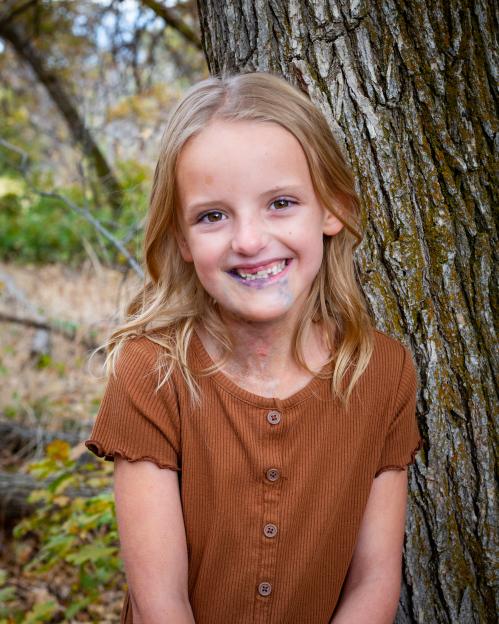 The family are hoping to travel to Italy to allow Kinley to undergo a groundbreaking treatment Credit: Not known, clear with picture desk
 What are venous malformations?
Venous malformations are abnormalities that affect the blood vessels.
Normally, the walls of a blood vessel are made up of smooth muscle cells.
This holds the vessel in shape, and allows it to enlarge and slow the pressure of blood flowing through it.
When a person has a venous malformation the smooth muscle layer is abnormal.
The abnormality means the vessel doesn’t hold its shape and can’t slow down blood flow.
What do they look like?
Venous malformations look like soft, lumpy blue marks on the skin.
They will be there from birth, but parents may only begin to notice them as their kid grows.
Lots of things can affect how visible they are.
A rush of blood to the area, such as when a baby cries, for example, can make them more prominent.
Temperature changes and if a child puts on weight can also affect it.
How common are they?
The condition is relatively common, but they can be confused for other vascular marks.
At Great Ormond Street Hospital, specialists tend to see the most severe cases.
The hospital has treated more than 350 kids with venous malformation in the last 20 years.
Cristen added: “Taking a leap like this is scary. Going outside our country for medical treatment is very overwhelming.
“It’s exhausting. You’re constantly battling , constantly getting in the mail, constantly going to appointments and surgeries, and constantly carrying the weight of hoping everything will work out and that you’re doing enough to get your daughter the best care possible.”
Although the family has health insurance, Kinley’s extensive medical needs mean they reach their annual limit by February every year.
The Italy treatment will not be covered and must be paid for entirely out of pocket.
The family have set up a GoFundMe page to try and raise for their daughter’s treatment.
Cristen said: “It’s not easy being vulnerable and asking for help. But when it comes to your daughter’s life, you do whatever you have to do to make it happen.
“There’s a promising potential cure across the world. Of course we’re going to get her there.”
Speaking about Kinley, the mum added: “She is brave, resilient, inspiring, tough and loving. She’s the strongest little girl I know.”