THE festive season is fast approaching – a time of joy, celebration and, often, increased alcohol consumption.
But “heavy drinkers” have been warned they could be putting themselves at increased risk of the deadliest form of , with scientists revealing exactly how many pints or glasses of a day it takes to put them in danger.
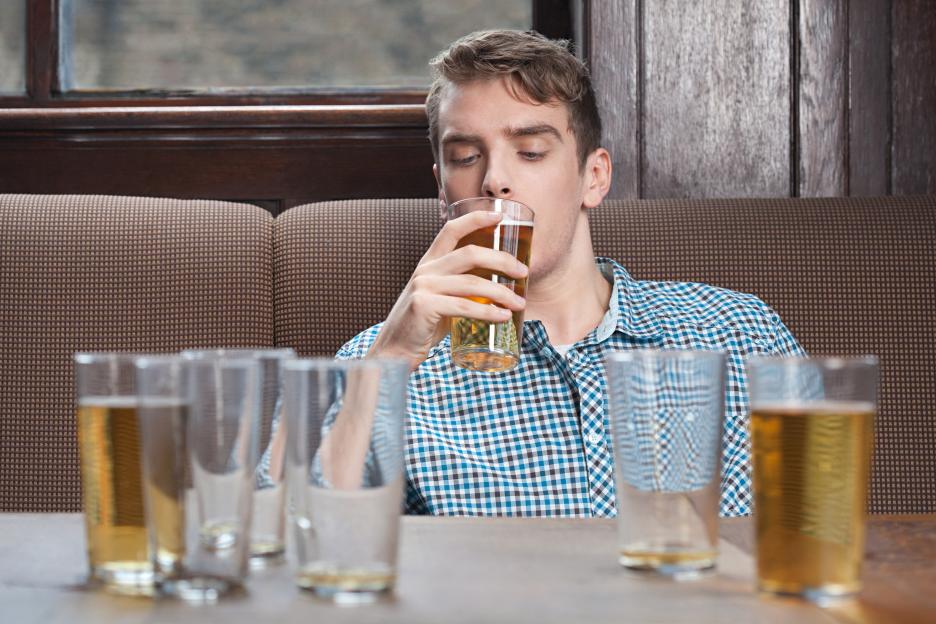 Heavy drinkers are more likely to experience intracerebral haemorrhage at a younger age, say researchersCredit: Getty
An American study found people who regularly down three or more alcoholic drinks a day are more likely to experience intracerebral haemorrhage – a type of stroke caused by bleeding in the brain – 11 years earlier than non-heavy drinkers.
They were also three times more likely to show signs of brain ageing.
Additionally, the sobering findings, published in the journal Neurology, show were more likely to show signs of cerebral small vessel disease, which is damage to small blood vessels in the brain and a type of long-term brain damage.
Study lead author Dr Edip Gurol, of Harvard University, Boston, said: “Intracerebral haemorrhage is the most deadly type of stroke with cerebral small vessel disease being its leading cause.
“While heavy drinking has been linked in previous studies to an increased risk of stroke, our findings suggest that it doesn’t just increase the severity of a bleeding stroke, it may also accelerate long-term harm to the brain’s small vessels.”
The study included 1,600 adults with an average age of 75 who were hospitalised for intracerebral haemorrhage.
Information on use was provided during hospital admission, either by the patient or a person with them at the hospital.
Researchers defined heavy alcohol use as regularly drinking three or more alcoholic drinks per day with one drink having the equivalent to 14 grams, or 0.6 ounces, of alcohol. One UK unit of alcohol is eight grams.
Of the study participants, 104 people (7 per cent) met the criteria for heavy alcohol use.
Participants underwent brain scans to assess the severity of their strokes and to look for signs of cerebral small vessel disease.
The research team then compared heavy drinkers to participants who drank fewer than three drinks a day or not at all.
They found heavy drinkers suffered a stroke at an average age of 64 compared to an average age of 75 for non-heavy drinkers.
Heavy drinkers also suffered brain bleeds that were 70 per cent larger on average.
Dr Gurol said heavy drinkers were twice as likely to have bleeding in deep brain regions, and nearly twice as likely to experience bleeding that spread into the brain’s fluid-filled spaces, a complication called intraventricular extension.
He said the findings typically indicate “poorer recovery and outcomes” among people who had brain bleeds.
Heavy drinkers were also more than three times as likely to show severe signs of white matter damage – called white matter hyperintensities – that are usually caused by cerebral small vessel disease.
They were also nearly twice as likely to have a pattern of cerebral small vessel disease that reflects chronic damage caused by high blood pressure.
Dr Gurol says they also had lower blood platelet counts and slightly higher blood pressure on hospital admission than non-heavy drinkers, factors that may also contribute to stroke severity and how well a person recovers.
He said: “Reducing heavy alcohol use may not only lower a person’s risk of bleeding stroke, it may also slow the progression of cerebral small vessel disease, which in turn may reduce the chances of having another stroke, cognitive decline and long-term .”
He added: “Promoting lifestyle changes like quitting alcohol should be part of stroke prevention efforts, especially for those at higher risk.”
Symptoms of intracerebral haemorrhage
A subarachnoid haemorrhage is a rare but life-threatening type of stroke that needs emergency treatment.
The main symptoms include:
- an extremely painful headache that starts suddenly and does not go away (called a ‘thunderclap headache’)
- neck pain or a stiff neck
- feeling and being sick
- being very sensitive to light
- having a seizure (fit) or shaking uncontrollably
- fainting, feeling sleepy (drowsy ) or being confused
- drooping on one side of your face, slurred speech, or weakness on one side of your body
A subarachnoid haemorrhage can happen at any time, but it may be more likely when you’re doing something like coughing, going to the toilet, lifting something heavy or having sex.
If you suspect yourself or someone else has subarachnoid haemorrhage you should call 999.
Do not drive yourself to A&E.
The person you speak to at 999 will give you advice about what to do.
Source: NHS