Table of Contents
Security forces in Abuja blocked major roads on Monday as demonstrators called for the release of Nnamdi Kanu, the leader of the banned Indigenous People of Biafra (IPOB).
The roadblocks and the presence of security personnel led to significant traffic congestion throughout various parts of the city.
Witnesses reported that the initially peaceful protest became tense when security operatives allegedly discharged tear gas to disperse the gathering.
Some protesters accused the police of assaulting them and seizing their personal belongings. Others were forcibly taken to different police stations in the Nigerian capital, prompting the organizer of the protest, Omoyele Sowore, to rush to the police stations with his supporters to secure the release of the detained protesters.
Earlier, a video surfaced showing Sowore and others fleeing when police arrived at the protest site and opened fire on the demonstrators.
An aide to the FCT, Lere Olayinka, ridiculed Sowore in a video he shared, captioned, “Why did Cashtivist Sowore run away like this?”
Reports also indicate that Kanu’s lawyer and his younger brother have been arrested and are currently detained in Abuja.
His post has since sparked significant reactions from activists and supporters of Nnamdi Kanu.
In response to the incident, Amnesty International condemned the actions of the security forces, labeling them a violation of fundamental human rights.
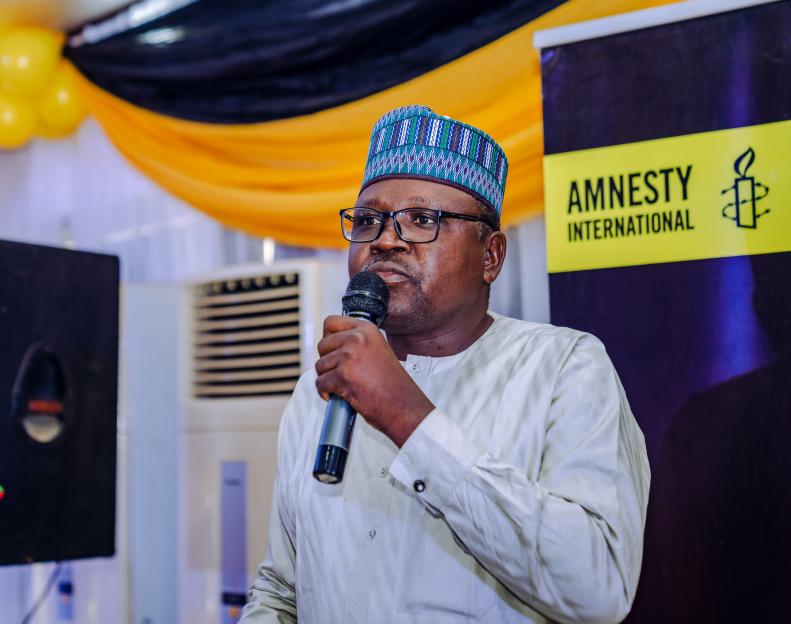
In an exclusive interview with DAILY POST on Tuesday, Amnesty International’s Country Director in Nigeria, Isa Sanusi, stated that the events of the previous day were “deeply regrettable” and highlighted the government's failure to uphold citizens' rights to peaceful protest and freedom of expression.
“What transpired yesterday is unfortunate and indicates that the Nigerian government is not genuinely committed to respecting the rights of citizens to peaceful protest,” Sanusi said.
“We witnessed assaults on journalists, arrests, and the confiscation of their equipment. Even lawyers were detained. This clearly illustrates that there has been no change in how authorities handle peaceful demonstrations.”
Sanusi also criticized the use of tear gas by security personnel, emphasizing that it breaches established human rights standards. “We observed security operatives using tear gas to disperse peaceful protesters. This is unlawful,” he stated.
“The government should set a standard for respecting the law and protecting human rights. If such actions persist, it will pose a significant threat to human rights protection in Nigeria.”
This is not the first instance in which Amnesty has accused Nigerian security agencies of employing excessive force against demonstrators. A 34-page report released by the organization in 2024 accused the police of unlawful arrests and killings during protests against the rising cost of living on October 1, 2024 — allegations that the police have denied.
Monday’s protest marked the first significant demonstration in Abuja calling for Kanu’s release since his arrest in 2021.
Frequently Asked Questions
What was the reason for the protest in Abuja?
The protest was organized to demand the release of Nnamdi Kanu, the leader of the Indigenous People of Biafra (IPOB), who has been detained since 2021.
How did security forces respond to the protest?
Security forces responded by blocking major roads and allegedly using tear gas to disperse the crowd, leading to accusations of excessive force.
What has Amnesty International said about the incident?
Amnesty International condemned the actions of the security forces as a violation of human rights and criticized the government's failure to protect citizens' rights to peaceful protest.