A WHITE influencer with over one million followers has been accused of photoshopping her face onto a black creator’s body.
Tatiana Elizabeth, who is African-American, took to this week to explain to her 350,000 followers how Lauren Blake Boultier had lifted her likeness.
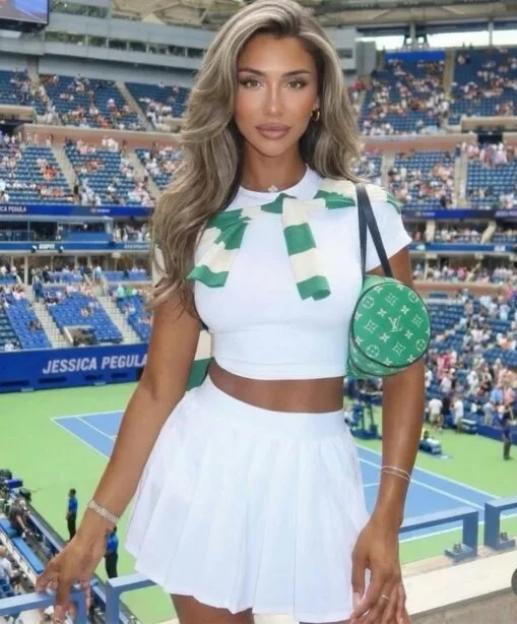 Lauren Blake Boultier shared the image to her InstagramCredit: Instagram
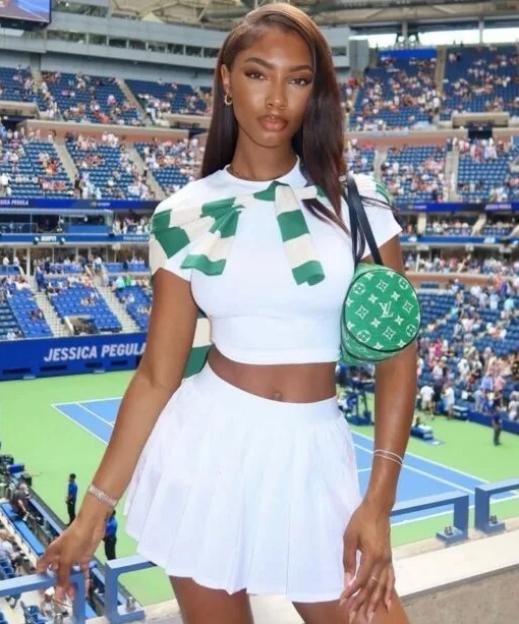 Tatiana Elizabeth took to TikTok to call Boultier out for her strange behaviourCredit: Instagram
Elizabeth attended the 2024 US Open in , sharing an image of herself dressed in a tennis-inspired outfit.
To her amazement, she then saw the very same photograph on Boultier’s feed two years later.
“So, this photo to the right is a photo of me at the US Open in 2024,” Elizabeth said.
“This photo to the left is a photo I came across this morning on of someone who castrated me and decided to use my image and my environment.”
Side by side, the two photos look almost identical – except for the face.
Boultier’s version features the same outfit, including a Louis Vuitton handbag, and even the same pose.
Perhaps the most telling clue is that Boultier has the same tattoo on her right wrist.
“Bar for bar, the weirdest part about this is that it’s not even an AI influencer,” Elizabeth said.
“This is a real person who used AI to put her head on my body.”
To make matters worse, Boultier tagged the location as the recently finished Miami Open – even though it is clearly the Arthur Ashe Stadium in Queens.
To that end, global tennis superstar Coco Gauff commented: “this court is not even in Miami…”
“By no means am I trying to bash this girl. Mental health is real, and I’m not a bully,” Elizabeth said.
“I’m just a little perplexed. I just want to know the reason.
“Has gotten into our heads so much that we are disregarding couth?”
Elizabeth said she has not heard anything from Boultier, despite commenting on her picture.
“She has not apologised, she has not given an explanation, and she is probably embarrassed but I think that the nice and accountable thing to do would be to reach out and at least apologise to the person whose photo you took,” she said.
Unsurprisingly, Elizabeth has since deleted the controversial image.
This strange incident fits into a broader category of behaviour exhibited by “virtual “.
These AI-generated content creators often stick electronically-generated faces on real ‘ bodies.
Many of these accounts are often linked to models, offering paid subscriptions for sexually explicit content.
Face-swap apps have also become more popular, allowing users to create deepfakes directly on their phones.
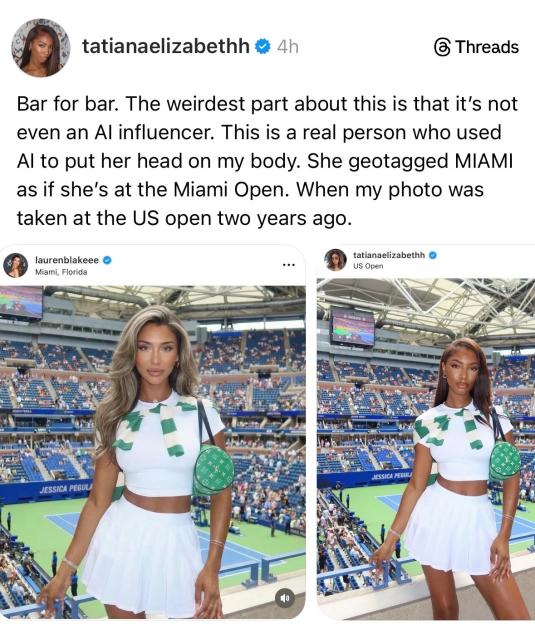 This incident fits into the wider trend of deepfakes taking over social mediaCredit: Threads
 What is deepfaking?
- Deepfaking is the use of artificial intelligence to create realistic but fake videos, audio, or images.
- It involves training algorithms to mimic real human voices, faces, and behaviors.
- These creations can be nearly indistinguishable from reality, often making it hard to tell what’s real and what’s not.
- While deepfakes have legitimate uses in entertainment and education, they also raise concerns about misinformation, privacy, and security.
- The technology works by analyzing vast amounts of data to replicate details with uncanny accuracy.
- As deepfakes become more advanced, it’s crucial to remain vigilant about their potential risks.