TIMMY the whale has been found dead – with officials now warning the carcass “could explode” at any moment.
The humpback whale captured global attention after becoming stranded off the German coast for 41 days.
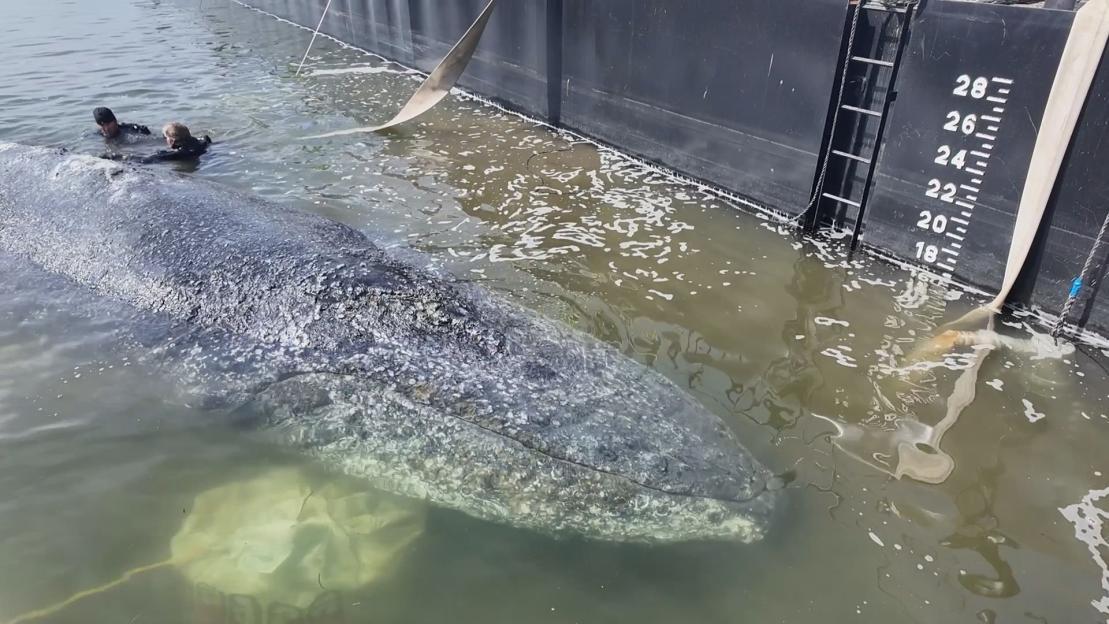 Timmy the whale has been found dead Credit: Action Press
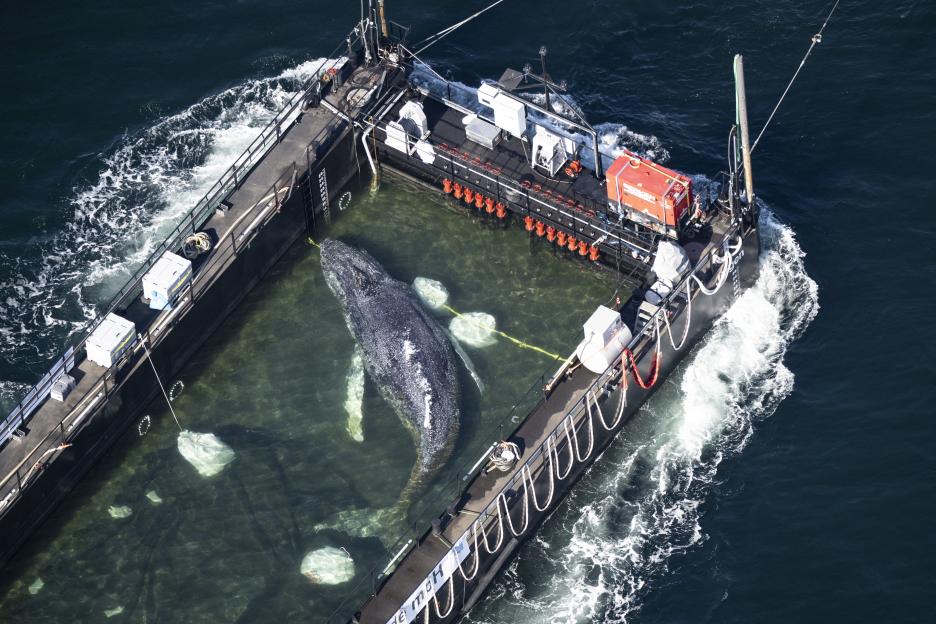 The whale was stranded for 41 days before a daring rescue operation Credit: Cover Images
The 32ft mammal has now been found dead near the Danish island of Anholt.
Timmy’s lifeless body was first spotted floating in the Kattegat Sea between and on Thursday.
Bad weather initially prevented authorities from reaching the carcass, but Danish Nature Agency officials were finally able to confirm the whale’s identity on Saturday.
In a statement, the agency said: “It can now be confirmed that the stranded humpback whale near Anholt is the same whale that was previously stranded in and was the subject of rescue attempts.”
 Officials were able to confirm the whale’s identity thanks to a GPS tracker Credit: AFP
Officials were able to identify Timmy thanks to a GPS transmitter attached to the carcass.
The Danish agency also issued a stark warning urging members of the public to stay away from the whale.
Authorities said the carcass “may carry diseases that can also be transmitted to humans” and warned there was also “a risk of explosion”.
Experts say decomposing whales can build up huge amounts of gas internally.
This can cause their bodies to suddenly burst, sending chunks of flesh flying into the air.
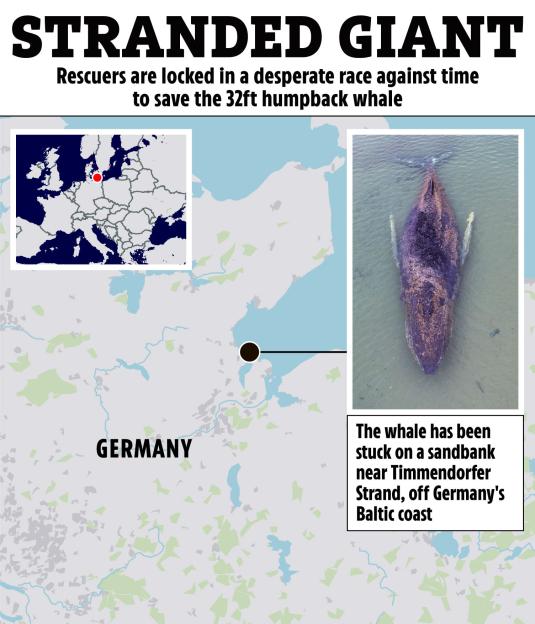
Timmy first became stranded on March 23 after wandering into the Baltic Sea.
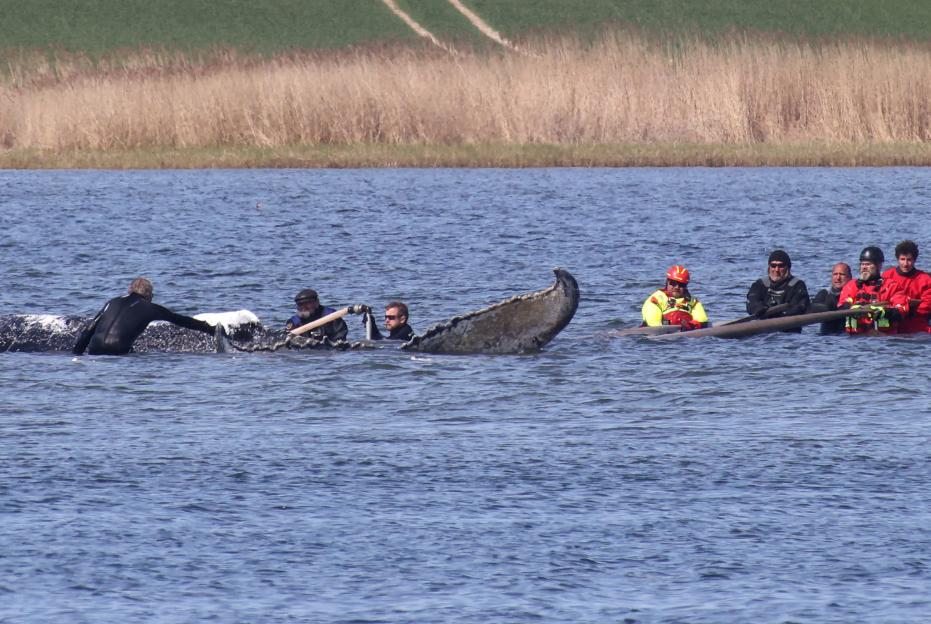
Although the giant mammal initially managed to free itself, it repeatedly became trapped again in shallow waters.
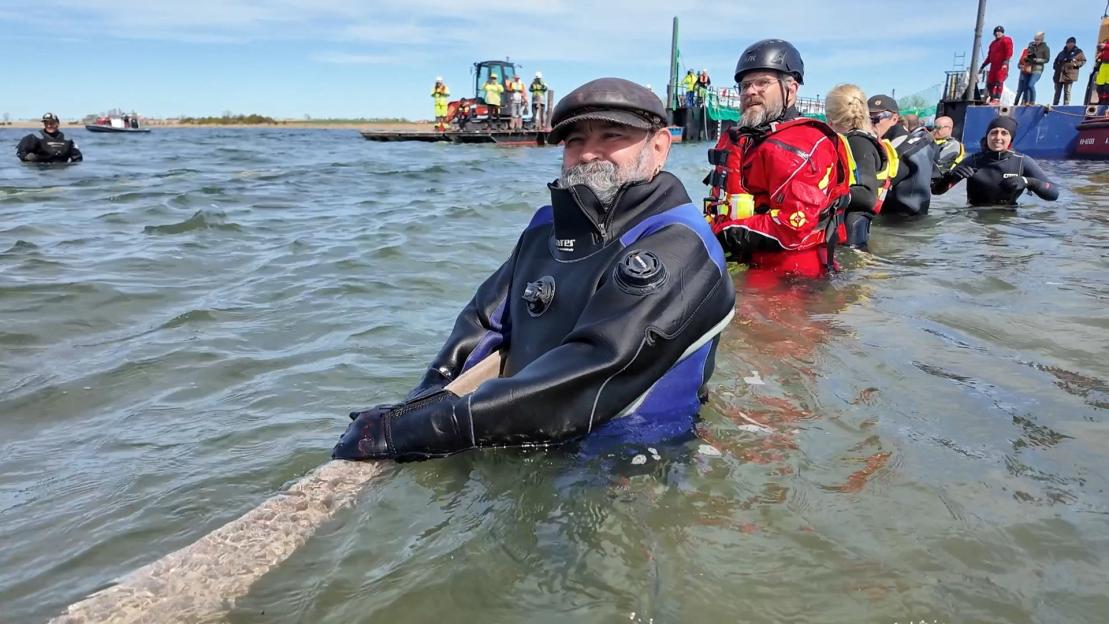
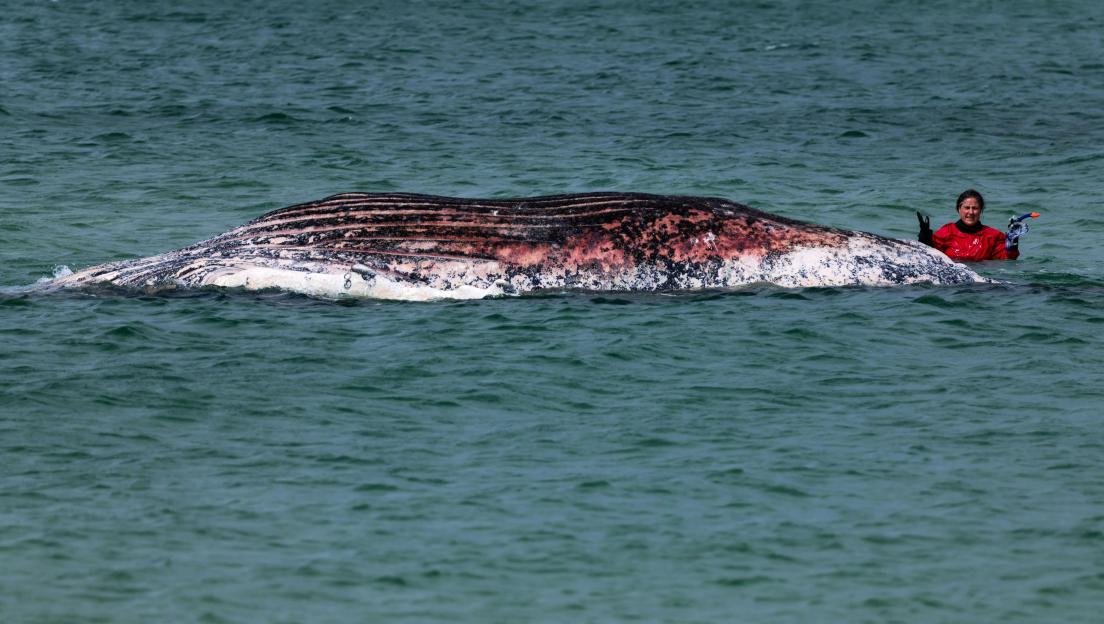 The move to free Timmy was extremely divisive Credit: Alamy
 Authorities have said there is no immediate plan to move the carcass Credit: Reuters
German authorities eventually abandoned rescue efforts after concluding the whale had become too weak to survive.
A group of donors later funded to try to save Timmy by guiding him into a water-filled holding pen before towing him back towards open sea.
Regional environment minister Till Backhaus praised the mission at the time as a success and “an example for Germany of what can be done”.
However, the rescue attempt sparked fierce debate.
Critics argued the operation would only prolong the whale’s suffering.
Some marine experts had already warned that Timmy was likely seriously ill and may not survive regardless of rescue efforts.
It remains unclear why Timmy entered the Baltic in the first place.
Some experts believe he may have become disoriented while following shoals of herring or migrating.
The Danish Nature Agency has since said there are “no concrete plans” to remove the carcass because it is “not currently considered to pose a problem in the area”.