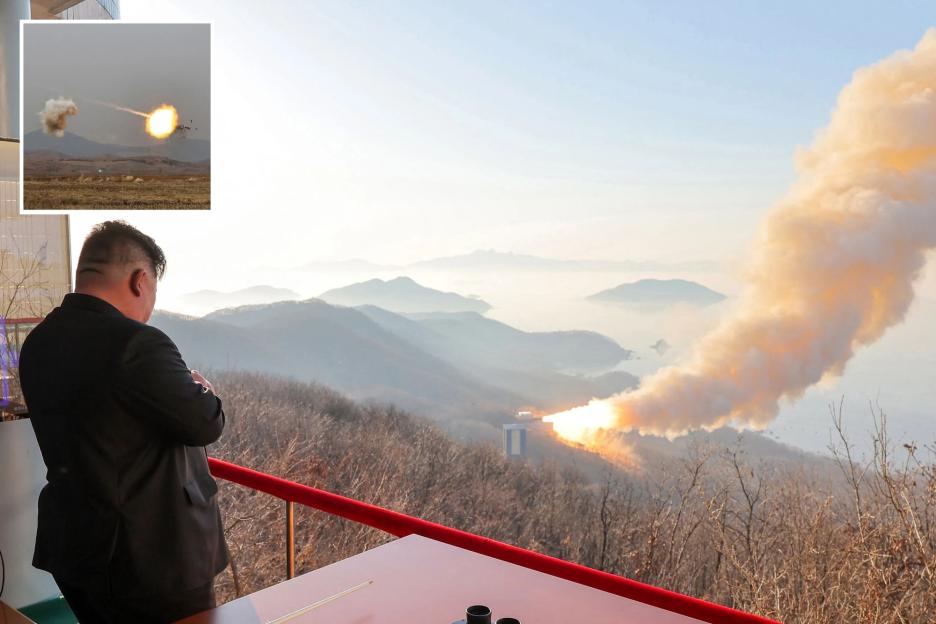
KIM Jong-un has maniacally watched a new North Korean missile engine test as the rogue dictator ramps up efforts to build a terrifying weapon capable of striking the US mainland.
The tyrant personally observed a test of a powerful new high-thrust solid-fuel engine, state media revealed.
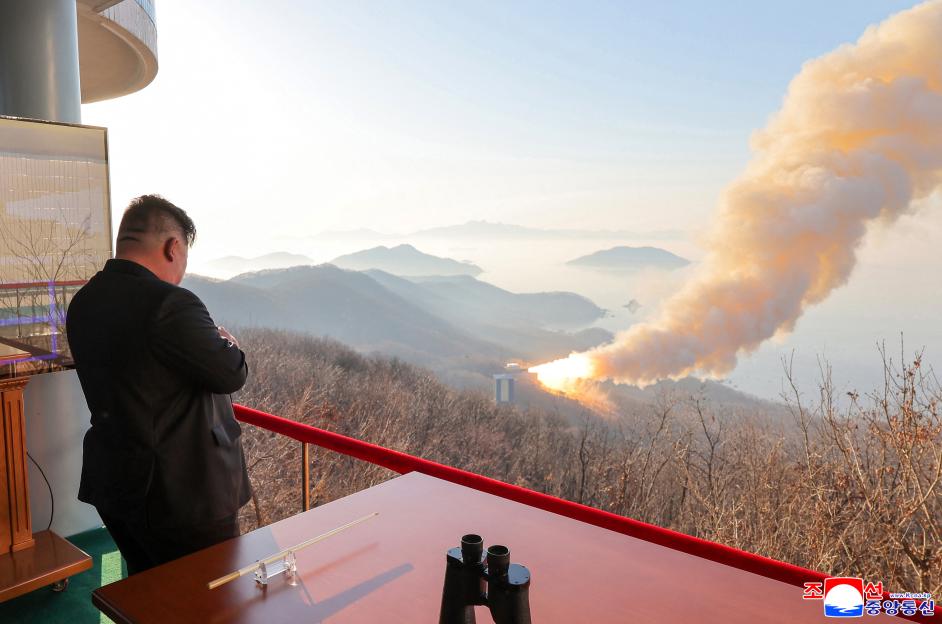 Kim Jong-un watching a new North Korean missile engine testCredit: AFP
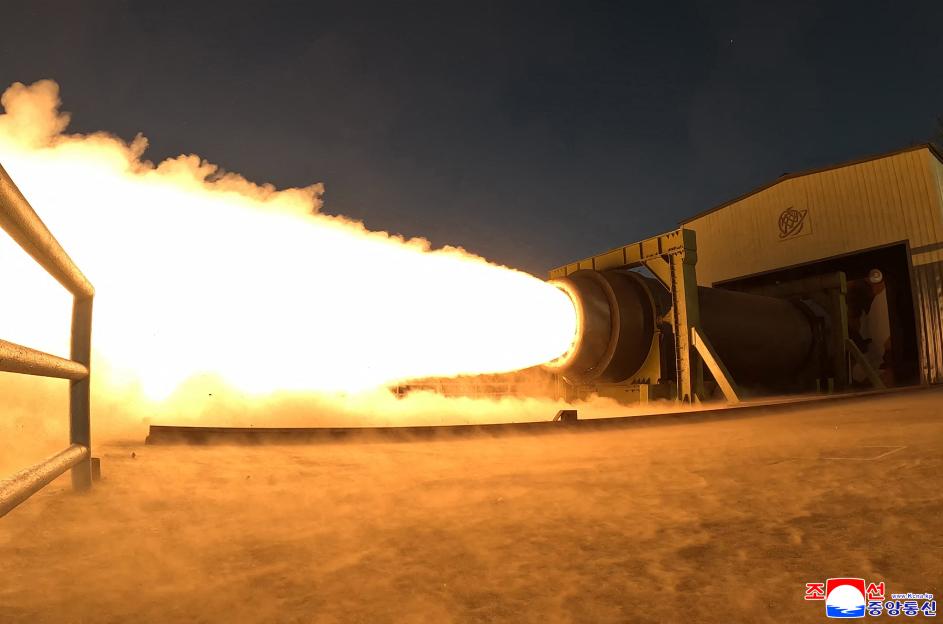 A combustion test of a solid-fuel rocket engine in North KoreaCredit: AFP
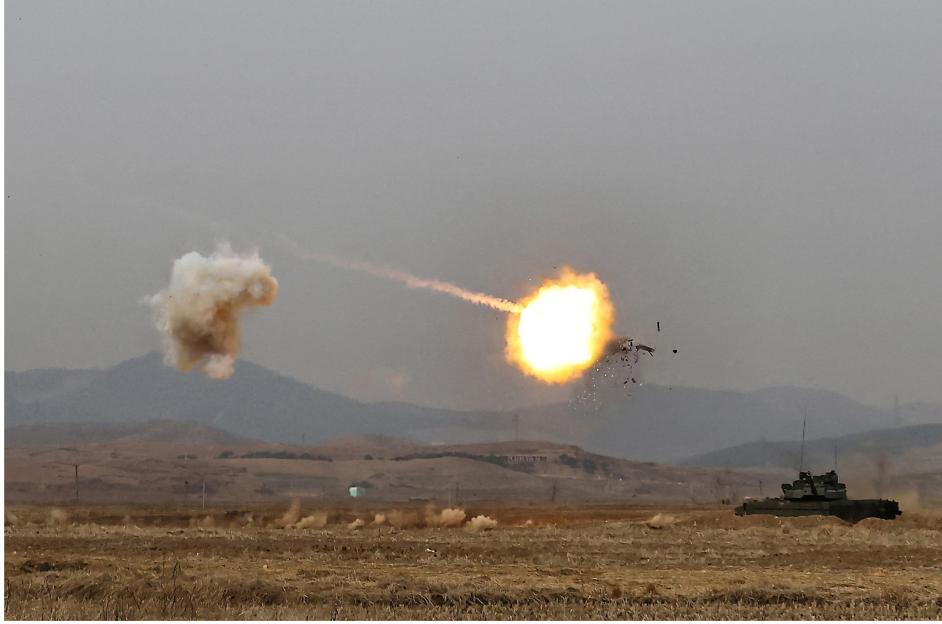
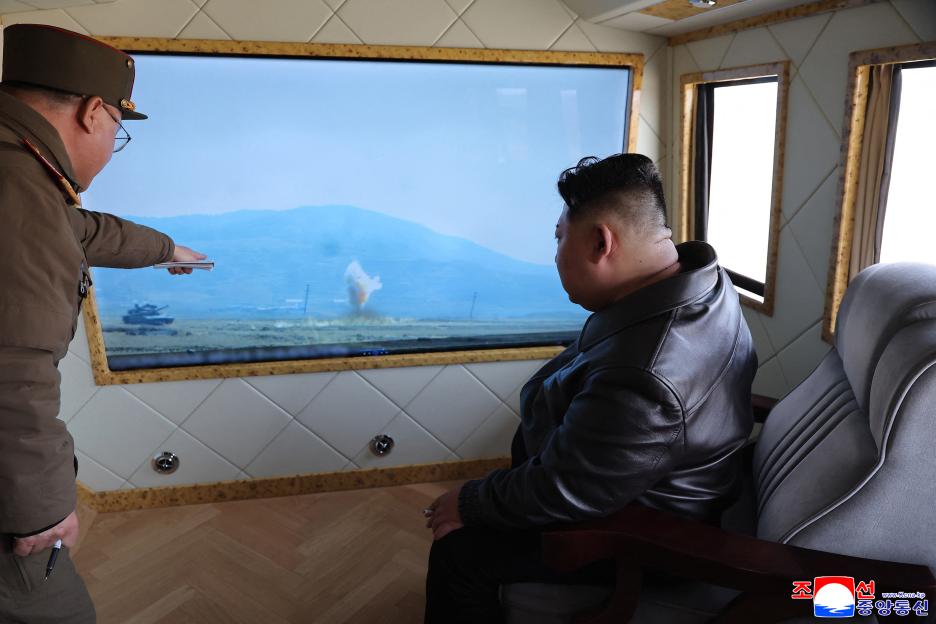 Kim Jong Un inspecting a test to verify the active protection system of a new main battle tankCredit: AFP
He hailed the development as a major leap in boosting Pyongyang’s “strategic military capability”.
The test is widely seen as part of Kim’s push to expand and modernise his arsenal of nuclear-capable missiles that could one day reach the .
According to the Korean Central Agency (KCNA), Kim oversaw the ground jet test of a newly upgraded engine made using composite carbon-fibre material.
The engine reportedly produced a maximum thrust of 2,500 kilotons, a sharp jump from the 1,971 kilotons recorded during a similar solid-fuel engine test in September.
Experts believe the increased could help fit multiple nuclear warheads onto a single missile, boosting the chances of overwhelming American missile defences.
KCNA did not reveal exactly when or where the test took place.
But the development forms part of Kim’s five-year military escalation programme, which includes plans to upgrade the regime’s “strategic strike means” – a phrase widely understood to refer to nuclear-armed intercontinental ballistic missiles capable of targeting the continental United States.
Kim said the test had “great significance in putting the country’s strategic military muscle on the highest level,” according to the state outlet.
North Korea has spent years aggressively developing intercontinental ballistic missiles (ICBMs) capable of reaching America.
In recent tests, the regime has showcased missiles powered by solid fuel, which can be launched far more quickly than older liquid-fuel rockets.
Liquid-fuel missiles must be filled shortly before launch – making them easier to detect and destroy before liftoff.
Solid-fuel systems, however, can remain fuelled and ready, allowing them to be fired with little warning.
Some foreign experts believe Pyongyang still faces serious technological hurdles, including ensuring nuclear warheads survive the intense heat of atmospheric re-entry.
But others say the country’s decades-long nuclear and missile programmes mean those obstacles may already have been overcome.
The missile test comes as , vowing to massively expand North Korea’s nuclear arsenal.
In a defiant message aimed at and , the unpredictable declared he was prepared for “peaceful coexistence or eternal confrontation.”
But
Pyongyang is ready to retaliate if provoked, he claimed, boasting the regime had “more than sufficient means and methods” to strike back.
Kim pledged to ramp up weapons development – including submarine-launched intercontinental ballistic missiles.
“We will focus on projects to increase the number of and expand nuclear operational means,” he said.
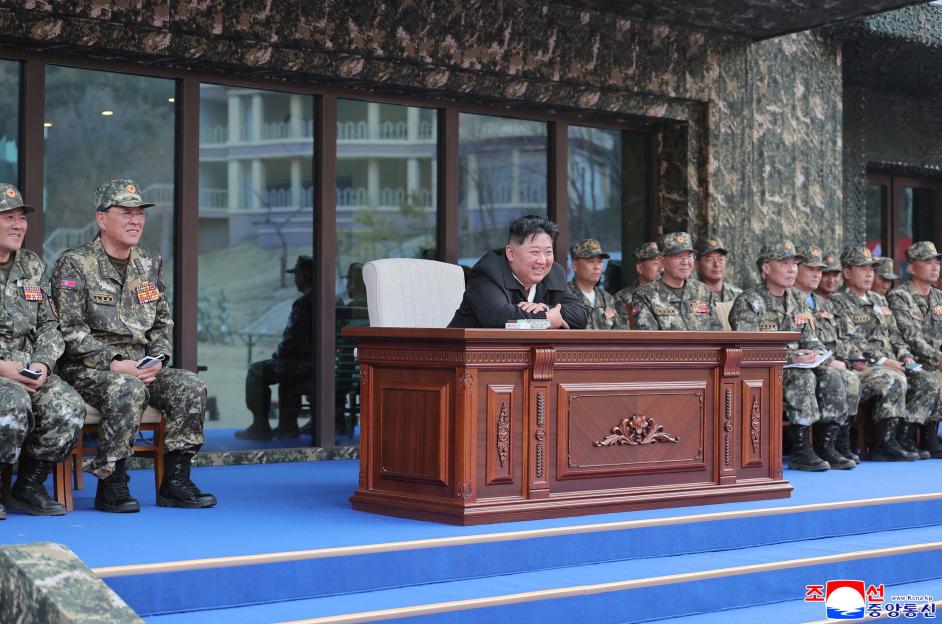 North Korea’s Kim Jong Un visits a special operations training base in North KoreaCredit: Reuters
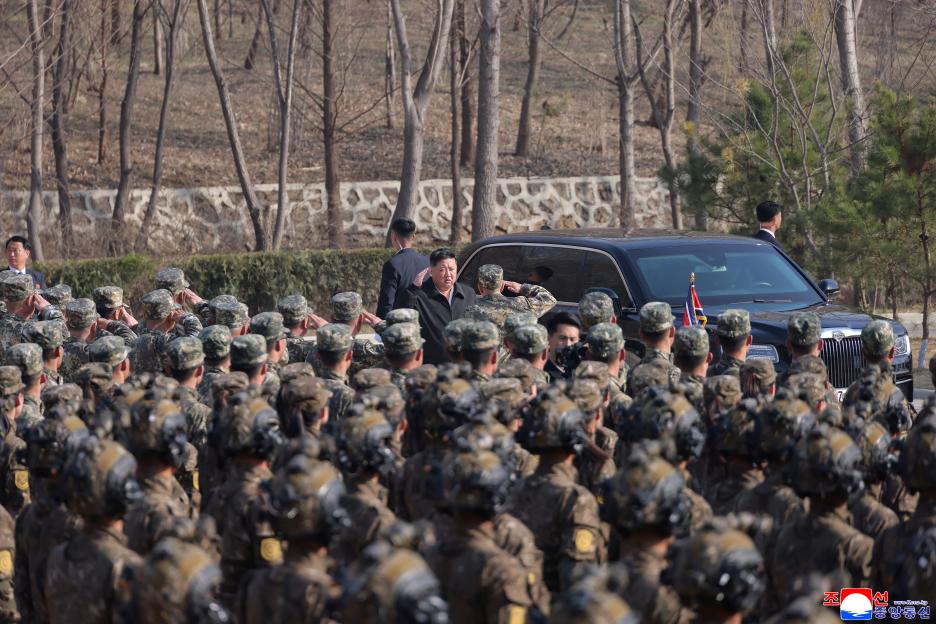 The development forms part of Kim’s five-year military escalation programmeCredit: Reuters
North Korea has repeatedly defied international sanctions to pursue nuclear weapons and advanced missile systems.
The threats came as Kim flexed his military muscle with a massive propaganda parade in Pyongyang, where 14,000 troops marched through the capital while fighter jets roared overhead.
But the parade notably lacked some of the regime’s most menacing weapons – several of which Kim had already shown off days earlier.
In a separate display of power, the tyrant was caught cackling with delight as nuclear-capable rocket launchers rolled through the streets of Pyongyang.
The bizarre scenes showed Kim grinning like a Cat as rows of the terrifying launchers lined up in the capital’s House of Culture plaza.
North Korean state media frequently stages such lavish spectacles to boost Kim’s image at home while warning enemies abroad.
During the ceremony, the dictator even climbed behind the wheel of one of the hulking launchers before addressing a carefully choreographed crowd.
“When this weapon is used, no force would be able to expect God’s protection,” he warned, according to KCNA.
“It is really a wonderful and attractive weapon.”
He added that the launchers were “appropriate for a special attack, that is, for accomplishing a strategic mission.”
“There is no need to further explain its destructive power and military value,” Kim said.
“This is because it can reduce the aimed target to ashes through surprise and simultaneous attack by focusing its destructive .”
The rocket systems are believed to have a range of around 250 miles, putting the entirety of within reach.
The South Korean capital Seoul lies just 30 miles from the heavily fortified demilitarised zone dividing the peninsula.
Kim has also ordered weapons factories to accelerate the expansion and modernisation of military production ahead of a major ruling party congress.
Analysts believe the surge in testing and weapon displays is designed to intimidate the United States and trial weapons that could later be exported to .
At a recent speech during the Ninth Congress of the Workers’ Party of Korea, Kim insisted future relations with the US depended on allowing North Korea to retain its nuclear arsenal.
“If Washington respects our present [nuclear] position… and withdraws its hostile policy… there is no reason why we cannot get along,” he said.
Kim added that relations between the two countries “depend entirely on the US attitude.”
His latest threats come after the dramatic collapse of his high-stakes nuclear diplomacy with in 2019.
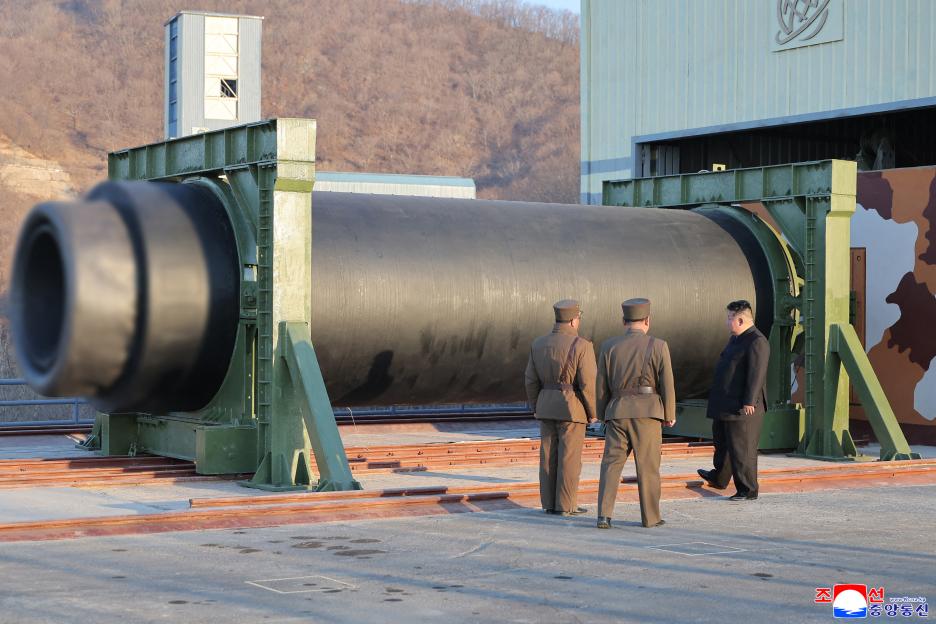 The rocket systems are believed to have a range of around 250 milesCredit: AFP
 Experts believe the increased power could help North Korea fit multiple nuclear warheads onto a single missileCredit: AFP