
Kebbi Governor Idris Approves N642.9 Billion Budget for 2026
Kebbi State Governor Nasir Idris has signed the N642.9 billion 2026 Appropriation Bill into law following its passage by the State House of Assembly. The govern...
 Written byEze Chidiebere Paul
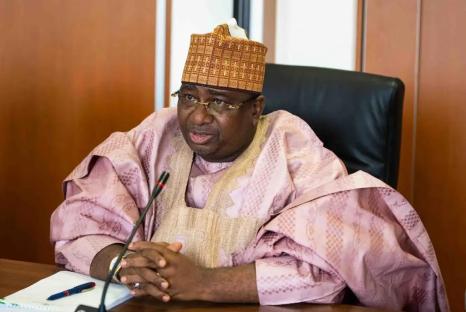
Table of Contents
Kebbi State Governor Nasir Idris has officially signed the N642.9 billion 2026 Appropriation Bill into law after its approval by the State House of Assembly.
The governor gave his assent to the budget on Tuesday at the Government House in Birnin Kebbi, after receiving the appropriation bill from the Speaker of the House, Alhaji Usman Muhammad-Zuru.
Idris praised the speaker and assembly members for the prompt passage of the budget, highlighting the legislature's responsiveness to its constitutional duties and the welfare of the citizens.
He emphasized that both the executive and legislative branches would continue to collaborate to promote development in the state, pointing out that enhancing internally generated revenue (IGR) is crucial due to the limitations of federal allocations.
The governor clarified that the budget reflects projected revenue from both federal allocations and IGR, rather than funds that are readily available.
Earlier, Muhammad-Zuru stated that the passage and signing of the budget signify a significant milestone in the state’s democratic process, noting that it followed thorough consultations and scrutiny by lawmakers.
He revealed that the 2026 budget allocates N163.57 billion for recurrent expenditure, which accounts for 25 percent, and N479.36 billion for capital projects, making up 75 percent of the total budget.
The speaker reaffirmed the assembly’s commitment to ongoing collaboration with the executive to foster development throughout the state.
Frequently Asked Questions
What is the total amount of the 2026 Appropriation Bill signed by the Kebbi State Governor?
The total amount of the 2026 Appropriation Bill signed by the Kebbi State Governor is N642.9 billion.
What are the main components of the 2026 budget?
The 2026 budget comprises N163.57 billion for recurrent expenditure and N479.36 billion for capital projects.
How does the governor view the collaboration between the executive and legislative branches?
The governor views the collaboration between the executive and legislative branches as essential for advancing development in the state.
Continue reading

Emir Sanusi reveals how Boko Haram, other terrorist activities started in Nigeria
The Emir of Kano, Muhammadu Sanusi II, has revealed what aided the persistence of insecurity in the country. Sanusi stated this while elucidating the underlying...

I’m responsible for delaying telcos’ entry into financial services – Sanusi
Former Central Bank of Nigeria Governor and Emir of Kano, Muhammadu Sanusi II, has admitted that delaying the entry of telecommunications companies into Nigeria...
Andy Burnham told to build warship armada NOW as Navy chief warns Putin is ‘greatest threat’ to Britain
ANDY Burnham must turn Britain into a naval superpower to counter Vladimir Putin’s fleet, the head of the Navy says. General Sir Gwyn Jenkins is demanding more...
Passenger arrested on Britain-bound flight after ‘crashing into boy on zebra crossing’ leaving him with fractured skull
A MAN has been arrested after an alleged hit-and-run of a schoolboy which left the youngster with a fractured skull. Police cuffed the suspect on a plane – just...