A WOMAN has told how she discovered she was living with a brain tumour after going to hospital to get an MRI scan for her back pain.
Amy Seagar, 38, had experienced numbness and tingling on the left-side of her face for months, as well as losing the hearing in one of her ears.
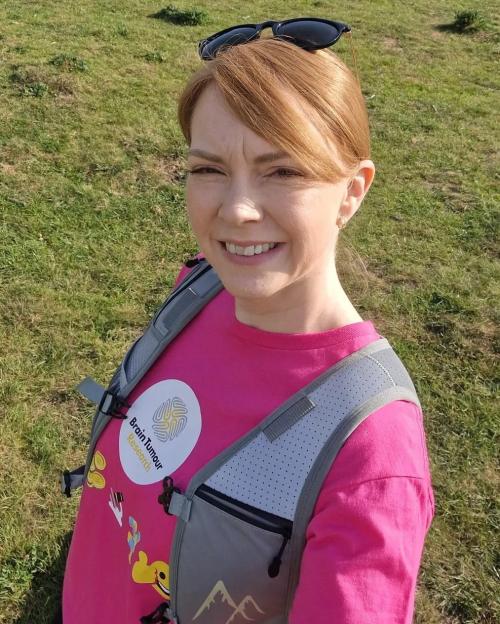 Amy Seager was experiencing numbness and tingling on the left-side of her face in early 2025 Credit: SWNS
 Amy (pictured left) had an MRI scan booked for March Credit: SWNS
But despite visiting the in January 2024, she said she was told she had not had a or facial palsy and was instead asked to return if her symptoms persisted.
It was only because Amy, from New Malden in London, had a scheduled MRI scan later in March for an unrelated back pain issue that the true cause of her pain was revealed.
The branch manager for a and beauty wholesaler was “shocked” to be told that her scan at Kingston Hospital had showed “there was something” on her brain.
In May she underwent surgery to remove the tumour at St George’s Hospital in Tooting.
 She was diagnosed with a brain tumour, known as an acoustic neuroma Credit: SWNS
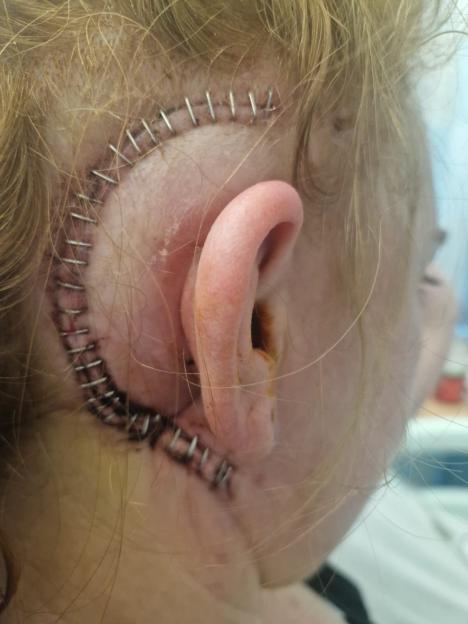 Amy underwent surgery to remove the tumour at St George’s Hospital in Tooting Credit: SWNS
Now, she is calling for greater awareness of brain tumours and for people not to ignore any concerning symptoms and push for an answer.
Recalling her terrifying ordeal, Amy said: “When I was told I had a brain tumour, I thought I was going to die.
“The brain tumour just crept up on me.
“I was just getting on with normal life, not realising I had this massive tumour in my head because I wasn’t being affected in big, obvious ways.
“When I look back now, I had reduced hearing in one ear so I should have gone to the doctors.
“But because it wasn’t impacting my daily life and wasn’t really causing any problems I just got on with things, but these were actually the symptoms of something so scary.”
After her GP appointment she was referred for a neurology assessment, however this never happened.
“The nurse phoned me the following week, telling me that neurology had rejected my referral and advised that I have cognitive behavioural therapy (CBT),” Amy said.
“How could they dismiss me without physically seeing me and assessing me for themselves?
“I requested a second opinion with another GP, but I never had that appointment because my scheduled MRI scan for my back problem came first.”
She was diagnosed with – a rare, noncancerous tumour that grows on the main nerve connecting the inner ear to the brain.
It usually grows slowly over many years and does not spread to other parts of the body, but and unsteadiness.
Acoustic neuromas tend to affect adults aged 30 to 60 and usually have no obvious cause, although a small number of cases are the result of a genetic condition called neurofibromatosis type 2 (NF2).
After her tumour diagnosis Amy underwent surgery to remove it.
“The operation went really well, although it resulted in me losing the hearing in my right ear – something the doctors had warned would happen,” she said.
“I thought half my world was going to be silent but it’s manageable and I’ve got cross aids, which are specialised devices for people with single-sided deafness, which really help.
 Now, Amy (pictured right) is raising money for Brain Tumour Research by walking 200km across May in the May Your Way challenge Credit: SWNS
 The most common symptoms of a brain tumour
More than 12,000 Brits are diagnosed with a primary brain tumour every year — of which around half are cancerous — with 5,300 losing their lives.
The disease is the most deadly in and adults aged under 40, according to the Brain Tumour .
Brain tumours reduce life expectancies by an average of 27 years, with just 12 per cent of adults surviving five years after diagnosis.
There are two main types, with non-cancerous benign tumours growing more slowly and being less likely to return after .
Cancerous malignant brain tumours can either start in the brain or spread there from elsewhere in the body and are more likely to return.
Brain tumours can cause , , , vomiting and , according to the .
They can also lead to changes in personality weakness or paralysis on one side of the problem and problems with speech or vision.
The nine most common symptoms are:
- Headaches
- Seizures
- Feeling sick
- Being sick
- Memory problems
- Change in personality
- Weakness or paralysis on one side of the body
- Vision problems
- Speech problems
If you are suffering any of these symptoms, particularly a from the ones you normally get, you should visit your GP.
Source: NHS
“Because the tumour was attached to my facial nerve, they left a tiny sliver of the tumour there, because removal would have damaged the nerve irreparably, and I would be paralysed on one side of my face.”
Today, Amy has check–up scans every six months. Her most recent scan in March was clear.
She is now raising for Brain Tumour Research by walking 200km across May in the May Your Way challenge.
Amy said: “During my recovery, I walked absolutely everywhere to help get my balance get back on track.
“This cause is so close to my heart and it’s vital that research into brain tumours is properly funded.
“There are so many different types of brain tumour and there needs to be more awareness and more money to research this disease.
“Before I went through this massive surgery, I wasn’t an active person but now I go to the gym, and I’m walking 200km.”
Charlie Allsebrook, community manager at Brain Tumour Research, said: “Amy’s story is truly inspiring and it’s great to see how well she is doing.
“We are incredibly grateful to her for taking on this challenge to help shine a light on the devastating impact of brain tumours and the urgent need for increased research funding.”
Around 13,000 people in the UK are diagnosed with a brain tumour every year.
But medics are struggling to boost survival rates and just under 90 per cent of patients die within five years.
are a top cause of cancer death in under-40s and singer died of the disease in March.
Four in 10 cases don’t get caught until someone is in , by which time survival chances are slim.