A WOMAN who used a commonly prescribed cream for years has told how she was left with skin “like a crispy fried chicken” after suffering a horrific reaction when she stopped using it.
Sophie Purvis, now 37, was first prescribed the steroid cream as a child to treat patches of itchy eczema in the folds and creases of her legs and arms.
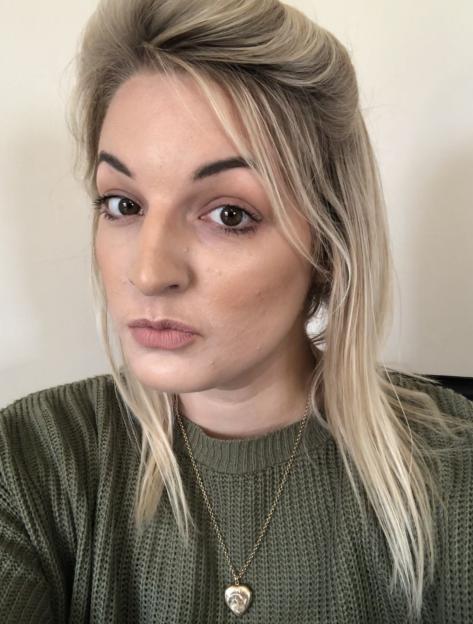 Sophie Purvis, now 37, was first prescribed the steroid cream as a child Credit: Jam Press/Sophie Purvis
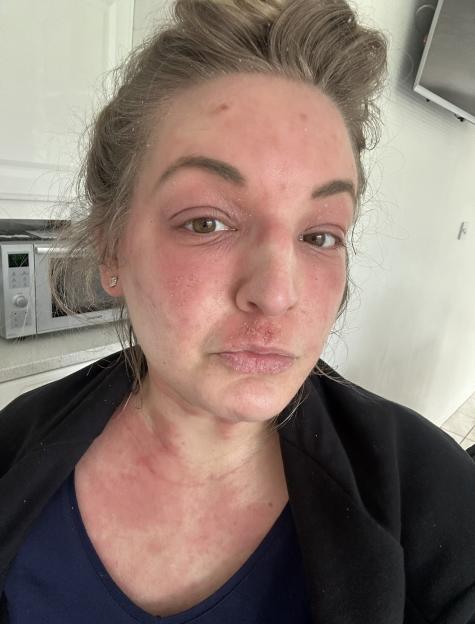 She used the creams on and off throughout adulthood until three years ago Credit: Jam Press/Sophie Purvis
The cessation advisor from Peterborough in Cambridgeshire, the continued to use the creams as an adult on and off whenever she suffered a flare up – not knowing that prolonged use .
While she recalls being warned that steroids could “thin” the skin, Sophie said she wasn’t particularly concerned, given the regular prescriptions she was given.
But, three years ago, after more than 25 years using the creams sporadically, she suddenly noticed her face becoming dry and flaky.
Visiting the , Sophie said she was told she may have seborrheic dermatitis – a common form of eczema – and was recommended anti-dandruff shampoo and another steroid prescription to treat it.
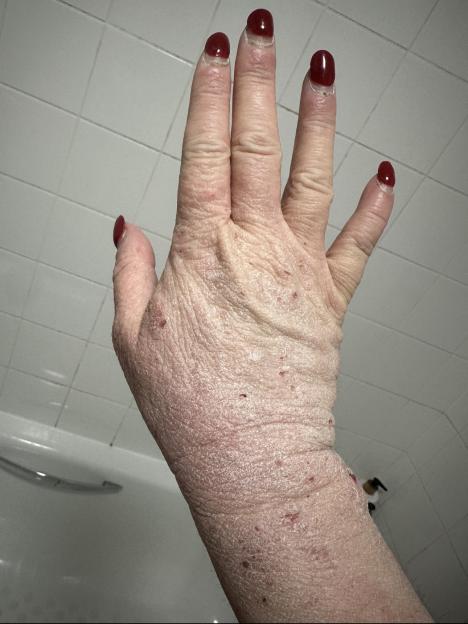 Three years ago Sophie suddenly noticed her face becoming dry and flaky Credit: Jam Press/Sophie Purvis
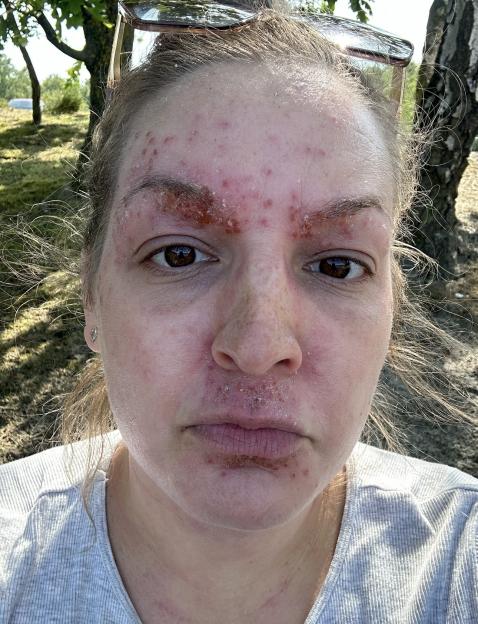 As the rash spread, Sophie’s skin began to get increasingly itchy. Pictured, Sophie in June 2025 Credit: Jam Press/Sophie Purvis
But weeks later, Sophie erupted in red patches of skin across the top half of her body, and a rash.
She saw another GP, who this time believed it was , a chronic inflammatory skin condition, and was again prescribed the steroids and moisture creams – yet nothing helped.
As the rash spread, Sophie’s skin began to get increasingly itchy, and she noticed fluid was leaking from the cracks.
She said a third doctor then described it as “severe eczema” and gave her antihistamines and further moisturisers, as well as Protopic, a non-steroid ointment.
While her symptoms calmed for a short while, soon she felt “like a volcano erupted in me” and was left suffering “red hot skin”, burning and spasms.
With doctors stumped over the cause of her terrifying symptoms, she soon discovered online that she could be .
The condition, thought to affect hundreds of thousands of people every year, occurs when patients reduce or stop steroids.
Skin , becoming red, burning, painfully dry and intensely itchy, trapping patients in a cycle whereby starting steroid creams is the only relief from symptoms.
Now, despite taking immunosuppressants, two-and-a-half years later she is still struggling with the effects and wants to warn others of topical steroid withdrawal.
Recalling her horrifying ordeal, she said: “I would wake up every morning in a of my own dead skin that had come away in the night.
“I felt like I had fallen in a bush of stinging nettles or I was sat in a glass of coke covered in hives.
“My whole body from head to toe was itching – it wasn’t surface level, it was deep to my bones.
“I dug so deep into my skin to suppress the itch, my nail beds were so sore.
“My skin was turning purple in some areas, and there was always blood coming from somewhere.”
After her third GP visit where she was prescribed a non-steroid treatment, she said: “Initially it calmed for a short while, but then it was like a volcano erupted in me – everything returned, but worse.
“I started getting sunburn symptoms – my skin was red hot to the touch, and I was burning like a radiator.
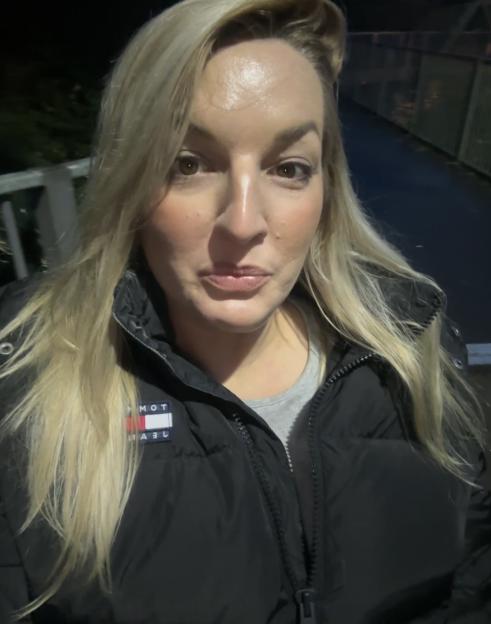 Pictured, Sophie before suffering topical steroid withdrawal Credit: Jam Press/Sophie Purvis
 What is topical steroid withdrawal?
The term ‘topical steroid withdrawal’ (also referred to as topical steroid addiction or red skin syndrome) refers to a constellation of symptoms that may emerge in the days and weeks after a person stops using topical steroid medication.
The potentially debilitating symptoms of TSW can include:
- burning, weeping, flaking, shedding, cracking and peeling of skin
- swelling and redness
- wrinkling
- thin skin
- pus-filled bumps
- nodules
- pain
- insomnia
- hair loss
- shivering
- fatigue
- depression
The NHS says it’s important to follow your doctor’s advice if you’ve been taking a steroid medicine for longer than three weeks, or given a high dose of a steroid medicine.
You’ll usually need to reduce your dose gradually.
Stopping taking some steroids suddenly can cause symptoms such as:
- feeling extremely tired
- feeling and being sick
- dizziness
- loss of appetite and losing weight without trying
- joint pain
- redness or changes in skin colour (this may be harder to see on brown and black skin)
- peeling skin, or skin that stings, burns or itches
“I’d remove my duvet but would then have shivers immediately, which led to me not sleeping.
“I was in a horrific mess of a cycle.”
After researching topical steroid withdrawal, she said “everything made sense, every symptom matched mine.”
She added that she was offered various creams and medications, and says she “felt like a human guinea pig”, and was adamant that they were not working.
Finally, she was put forward for phototherapy – where UV light is used to treat skin conditions like eczema – but found this, too, didn’t work.
Sophie said: “It was a disaster because my skin was constantly falling off.
“I was just burning fresh layers of skin. My flakes were crusting – I used to refer to myself as a crispy fried chicken.
“It was absolutely not the answer for anyone in the initial stages of topical steroid withdrawal – the skin is extremely sensitive, and the skin barrier is weak and compromised.”
She was referred to a specialist doctor in April 2025, who finally confirmed that she was experiencing topical steroid withdrawal – which Sophie describes as a “huge relief”.
But treatment was still limited, and the sleepless nights and torturous itching had a huge knock-on effect.
Sophie said: “I didn’t have any form of life at this point.
“Luckily I was working four days a week remotely at the time and in the thick of this, and they then supported [me doing] five days at home.
“I struggled to focus. I struggled to live – I was tired, sore, depressed and fed up.
“I felt like a disease was in my body. I cried nearly every day.”
She became desperate enough to try the medication that carried risks to her liver, Methotrexate, starting at a low dose in June 2025.
But things took a turn for the worst when she discovered a grape-size lump in her breast the following month.
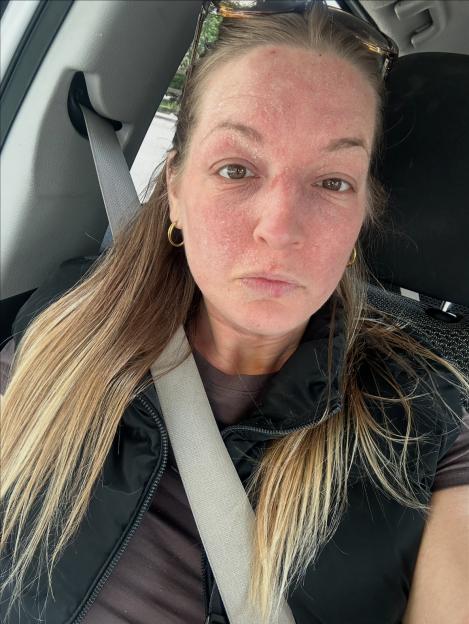 Sophie was put forward for phototherapy but found it didn’t work Credit: Jam Press/Sophie Purvis
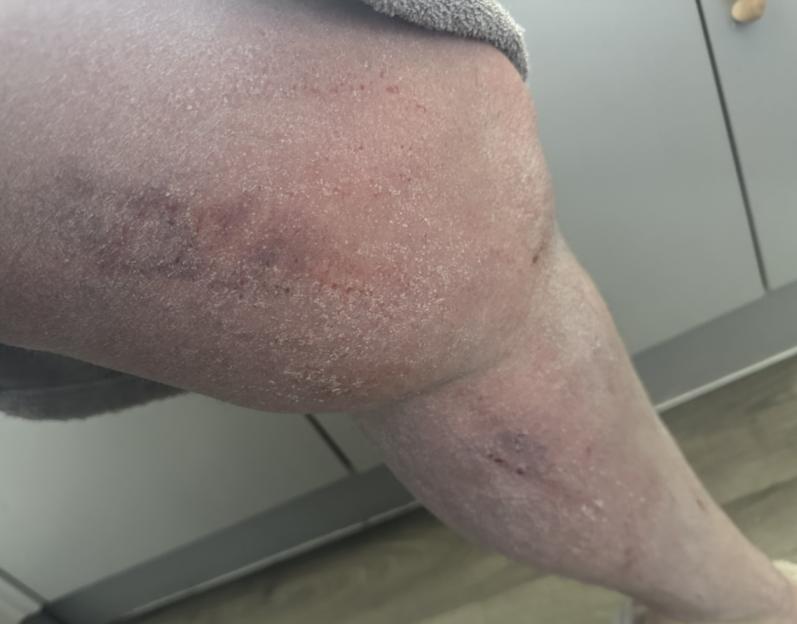 Sophie said she was hoovering the floor daily after her skin began to shed rapidly Credit: Jam Press/Sophie Purvis
Sophie said: “My heart sank. The body struggles to manage with immense inflammation after the withdrawal of steroids, which causes the lymphatic system to work overtime.
“I didn’t have a full understanding of this [at the time], and my body had this all over, but the lump in my breast was the biggest and didn’t disappear like the rest did.
“I had read of people developing cancer whilst going through topical steroid withdrawal or using immunotherapy, so I was absolutely terrified.
“I was extremely worried and my mind was in overdrive.”
Thankfully, a biopsy gave her the all-clear, and she was later told it had been caused by her excessive itching.
Sophie took some time off work to deal with her symptoms but the adverse effects of topical steroid withdrawal were still “relentless”, she said.
Her skin was also shedding at a rapid rate.
“I was hoovering it off the floor daily – the skin was like sand,” she said.
She made the decision to come off of Methotrexate and while Sophie has tried another immunosuppressant, two-and-a-half years into her ordeal, she is still struggling with the effects.
She said: “Everything is still very much an issue for me, and I honestly don’t see a way out anytime soon.
“I’m so tired and sore, and I feel like I’m simply existing not living, in a weird bubble.
“I’ve forgot what normality feels like.
“Even on the manageable days, there’s black clouds lingering of the fear of what tomorrow brings.”
She is currently waiting to go on another medication called nemolizumab, which is specifically designed to target the relentless itch.
In the meantime, Sophie is doing all that she can to raise awareness for the condition and warn people about what can happen if you use topical steroids without understanding the risks of long-term use, like her.
Topical steroid withdrawal was recognised by the National Association in 2013.
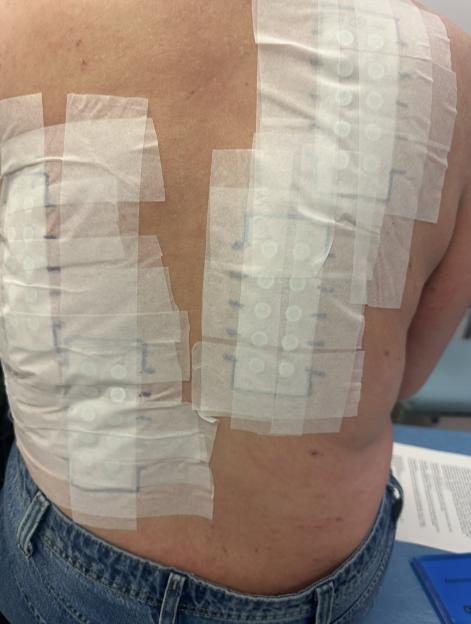 Pictured, patch tests on Sophie’s back in February 2025 Credit: Jam Press/Sophie Purvis
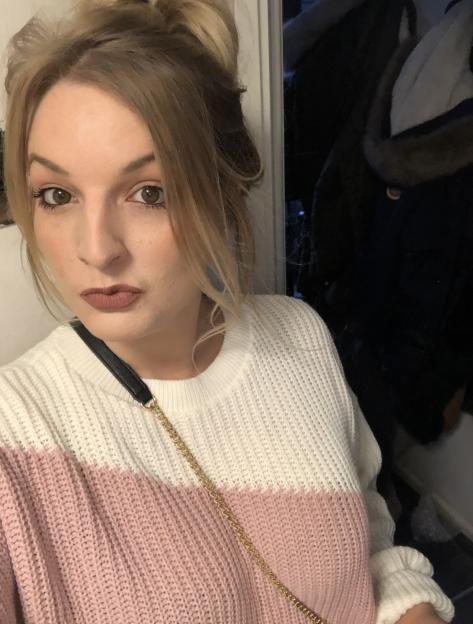 Pictured, Sophie before suffering topical steroid withdrawal Credit: Jam Press/Sophie Purvis
Also known as red skin syndrome, the disorder does not have clear statistics to show just how common it is.
But one 2003 study from , found that 12 per cent of adults who were taking steroids to treat dermatitis developed red skin syndrome.
In 2018, the medical journal Dermatitis published the results of a three-year study of Australian patients presenting with TSW and acknowledged that it is often dismissed as being a result of over-use of steroids, or even steroid phobia.
Following a safety in 2021 by the UK regulator, the Medicines and Healthcare products Regulatory Agency (MHRA), the condition finally became formally recognised in the UK.
Steroids — including creams, lotions or gels — often do not cause side effects if they are taken for a short time, but if a high dose is taken for a longer time, there is a higher chance of getting more serious side effects.
Most people will not have side effects when they stop taking steroid medication, the says, but it is important to follow advice from doctors as patients may need to reduce their dose gradually.
Sophie said: “This is not ‘severe eczema’ – it’s so much more than that, and that’s why I actively try and promote this where I can.
“The real eye-opener for me was the topical steroid withdrawal support groups. I joined the main page on in 2024 and it had 21,000 members.
“It’s now on 25,400, two years on, and that’s just the people that know about the condition and the group.
“The support there, and my determination, is the only thing that has kept me alive.
“The advice and being able to relate and explain your symptoms along with side effects without feeling crazy is everything.
“I will never not talk about this condition – the systems and side effects go way beyond ‘severe eczema’ and people have the right to know this.”