SITTING in the courtroom, Chloe was shaking. There was only a curtain that separated her from the man who her family had trusted for many years.
The same man Andrew Starenczak who had groomed and sexually abused her as a young girl.
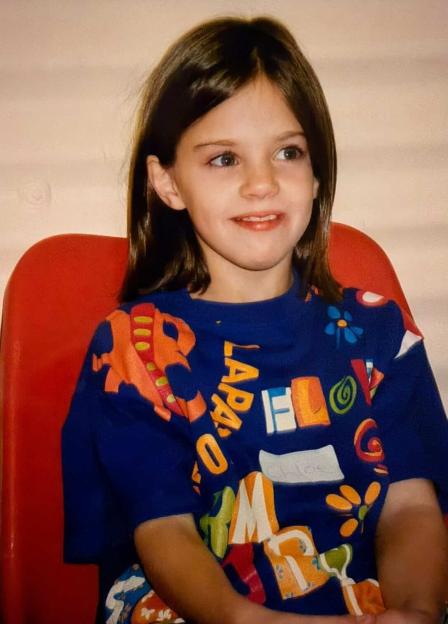 Chloe, pictured as a young child, has bravely waived her anonymity to speak about the shocking abuse she allegedly endured at the hands of her family’s taxi driver Credit: Supplied
 Even more shockingly, Chloe told us, the driver would sometimes have his daughters – one of whom was just two – in the car whilst he was performing the sick acts on her Credit: Supplied
Bravely waiving her anonymity to share her story, Chloe, now 37 says the abuse began when she was just nine years old – and that shockingly the perpetrator would sometimes have his daughters, one of whom was aged just two, in the car while he performed sick acts on her.
Chloe’s abuser was her family’s Starenczak had driven the Surrey-based family to the several times and regularly took her to and from school – a school that was miles away from the one her two sisters attended.
While he was trusted by her family, nobody could imagine he would slowly and sexually abuse Chloe in a horrific ordeal that lasted for three years.
She says: “He started telling me jokes and swearing in front of me and for a nine-year-old, that’s quite exciting. You’re thinking, ‘Oh, this is fun. I’m not normally allowed to swear and allowed to hear dirty jokes’.’’
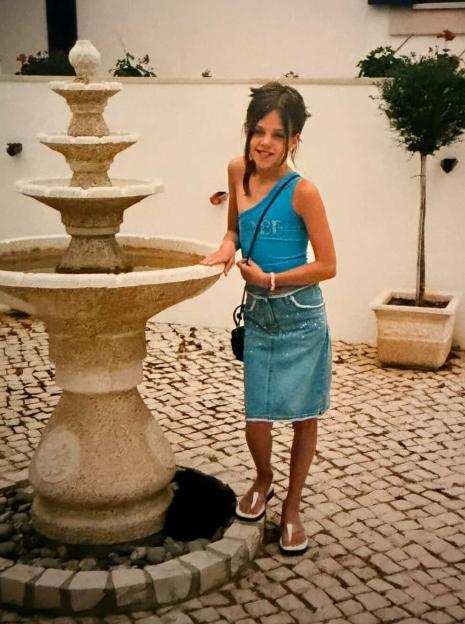 Chloe’s horrors began at the age of nine when her parents hired their trusted taxi driver to drop her to and from school Credit: Supplied
 Help after rape and sexual assault
If you've been sexually assaulted it's important to remember that it was not your fault. Sexual violence is a crime, no matter who commits it or where it happens. Don't be afraid to get help.
There are services that can help if you’ve been sexually assaulted, raped or abused.
You don’t have to report the assault to the police if you don’t want to. You may need time to think about what has happened to you.
But you should get medical help for any injuries and because you may be at risk of pregnancy or sexually transmitted infections (STIs) . If you want the crime to be investigated, it’s best to have a forensic medical examination as soon as possible.
Try not to wash or change your clothes immediately after a sexual assault. This may destroy forensic evidence that could be important if you decide to report the assault to the police (although you can still go to the police even if you have washed).
Where to get help
Sexual assault referral centres (SARCs) offer medical, practical and emotional support to anyone who has been raped, sexually assaulted or abused. SARCs have specially trained doctors, nurses and support workers to care for you.
Other places you can get help include:
- a doctor or practice nurse at your GP surgery
- a voluntary organisation, such as Rape Crisis , Women’s Aid , Victim Support , The Survivors Trust or Male Survivors Partnership
- the 24-hour freephone National Domestic Abuse Helpline, run by Refuge , on 0808 2000 247
- the rape and sexual abuse support line run by Rape Crisis England and Wales – you can call the helpline on 0808 500 2222 or use the online chat (both are free and are open 24 hours a day, every day of the year)
- a hospital accident and emergency (A&E) department
- a genitourinary medicine (GUM) or sexual health clinic
- a contraceptive clinic
- a young people’s service
- call NHS 111 or get help from 111 online
- the police, or dial 101
- in an emergency, dial 999.
But the jokey acts then turned more sinister when the driver, who at the time was in his 30s, started sharing details of his intimate life with his ex-partner.
Chloe, who doesn’t wish to share her surname, says: “He would tell me about their sex life and what they used to do in bed, and the positions that he would put her in.’’
At one point, Starenczak even made her look inside a camcorder – which contained vile footage of the former couple having sex.
She says: “I don’t remember saying, ‘No, I didn’t want to’ but I also don’t remember saying, ‘Yes’. It was kind of just something that I just did.’’
Starenczak then started to physically sexually abuse her – first by placing his hand on her leg, which over time turned into him touching her privates. He would then ask Chloe to do the same to him.
She says: “That is one thing I didn’t like. I hated doing that and I sometimes used to say no, but he would get round it and eventually I would.
“He would say things like ‘That’s okay. Don’t worry. I’ll touch you but you know you should really do it to me too cause I’m making you feel good so you need to make me feel good’.
“It happened over three years, so it was a long time and if you think I’m in a car with this person every single day – it’s a long time it’s a long time to build someone’s trust.’’
On several occasions, Chloe remembers coming home – aged 12 – and dashing to her bedroom to hide the blood-stained knickers.
Although Chloe was growing scared of him, she didn’t tell anyone about what was happening to her on the daily drives.
While she was aware that the acts were ‘wrong’, she was too young to realise the severity of the crime – and the vile paedophile had also threatened her “mum might get hurt’’.
The horrific abuse only ended when Chloe’s mum was able to take her to school and the driver’s services were no longer needed. But although the physical abuse was over, the mental and emotional torture was only about to begin.
Chloe, who eventually opened up about the abuse to her sister when she was 15, fell into the deep abyss of trauma and depression. She turned to alcohol, partying and sex – not just as her coping mechanisms but also to regain some control over her life.
She says: “The only thing I could control was the intake of alcohol and who I slept with.
“It was something that I felt like I had control over because in every other aspect of my life everything was falling apart around me,’’ Chloe says, admitting that over time she also became ‘hypersexual’.
While many victims of sexual abuse and assault often shun intimacy and physical touch, there’s also another, usually overlooked, way of coping with the trauma – hypersexuality.
For victims like Chloe, hypersexual behaviour – an obsessive pursuit of casual sexual, preoccupation with sexual fantasy as well as pornography – is all about control, a desperate attempt to gain that power and dominance back.
For years Chloe was able to mask the pain, but then in 2017, came the breaking point.
The media was dominated by headlines about the disgraced late Jimmy Savile who, it is thought, sexually abused up to 1,000 young girls over several decades.
Chloe says: “It was all over the news everywhere you looked. That’s what you saw. It just all got too much. I was mentally really bad.’’
It was then when Chloe decided she needed to do something about her deteriorating mental health and she finally reached out to NSPCC and RASAC helplines.
Although Chloe, 28 at the time, felt like nobody would believe her, the counsellor told her to call the police.
She says: “I think within a matter of an hour I had two police officers at my house taking my statement and then it was just a really big spiral and the investigation went on for nearly three years.”
In December 2019 the Starenczak’s trial began and after two weeks Chloe, who had lost a significant amount of weight due to stress, was given the news he was found guilty.
She recalls: “I remember that feeling like it was yesterday. I was looking out the window and I sort of collapsed to the floor and a really strange sensation washed over me – it was more like I felt guilt. I thought, ‘F**k, I’ve put a man in away in prison’.’’
The taxi driver who had destroyed Chloe’s life for several years was sentenced to nine years in the following weeks.
The paedophile, who hasn’t participated in any of the psychology sessions, was up for parole last year but wasn’t granted it, as the authorities concluded he was still “posing a threat and a danger to society and to children’’.
Chloe says: “He’s up for parole again at the end of this year, so he could be released in November. However, when I was in contact with the parole officer, he said if they’re not granted parole the first time, it’s quite unlikely that they’re granted parole the second time.’’
Prior to the arrest, he was living in the neighbouring town just five miles away – and Chloe fears she could be forced to face him on the streets again.
To help heal from her trauma, Chloe launched a podcast, The B Brave Project for victims of sexual abuse.
She says: “It’s been a long time to get where I am now and I think I want to make it really clear to people that healing is not linear. I find a lot of healing from the podcast, speaking to other survivors, feeling like I’m being heard, like they’re being heard, having therapy.”
Chloe says there needs to be more awareness around the fact that predators are often closer to home than people realise – hiding behind trusted relationships and familiar faces.
“You might not know it, but they’re in your circle,” she says. “They’re dads, uncles, brothers, cousins. They are there and if we don’t talk about it, children will still be in danger.
“I’m an advocate for children and an advocate for survivors and I will continue to do so until the day I die.’’