WHEN Liam Jeffries laughed with friends after continually falling over, he had no idea it was the first sign of a debilitating condition that would leave him in a wheelchair.
Liam, from Essex, first noticed a tingling sensation and slight weakness in his feet in May 2025.
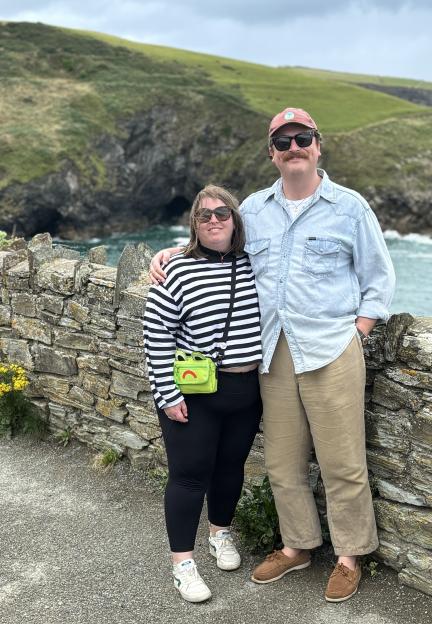
 Liam, from Essex, first started experiencing symptoms in May 2025. Pictured, with girlfriend Kate Credit: Cover Images
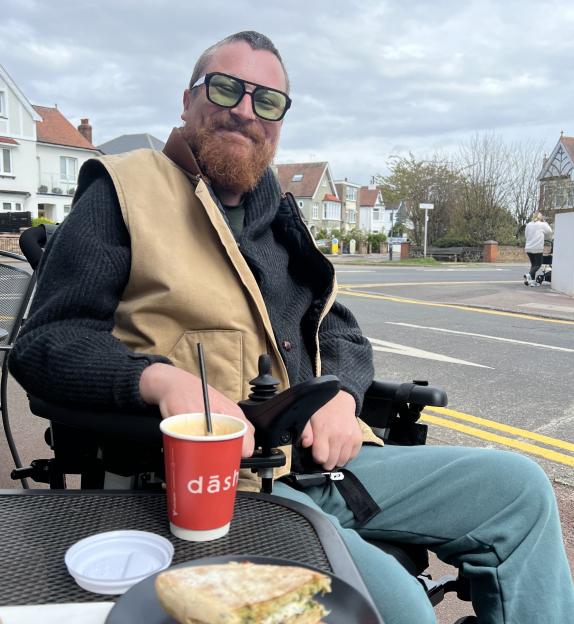 He laughed with his friends about how he kept falling over Credit: Cover Images
But the fit and active now 34-year-old dismissed the symptom as merely something minor.
It was only after the weakness worsened quickly and he was tripping over his feet more often that alarm bells began to ring.
After 10 months of tests, doctors revealed earlier this year in March that Liam had .
The rare neurological condition , resulting in difficulties walking, speaking and breathing as the condition progresses.
It’s not fully understood why it occurs and there are no effective treatments to halt its cruel march.
Around 5,000 adults in the UK have MND and there is a the condition over the course of a person’s life.
Recalling his devastating diagnosis, Liam said his initial symptoms were a “sort of tingling down my leg and I was catching my foot a lot. ”
He added: “From there, it quite relatively quickly progressed to my left leg being, like, really hard to use.
Liam, who worked in an office on Savile Row in London, soon noticed the tingling sensation spreading into his arms and hands, as his mobility deteriorated at an alarming pace.
“It was a matter of months before I was having to use a stick, then a walking frame, and then eventually a wheelchair because it was sort of compounded by the fact that I’m fairly tall,” he said.
Before long, everyday movements that he had once taken for granted became major obstacles.
“It was a matter of not being able to get up from a seated position and it very much affected my legs, which you don’t really realise, being an able-bodied person, how big an impact something like that can have,” he added.
 After 10 months of tests, doctors revealed earlier this year in March that Liam had MND Credit: Cover Images
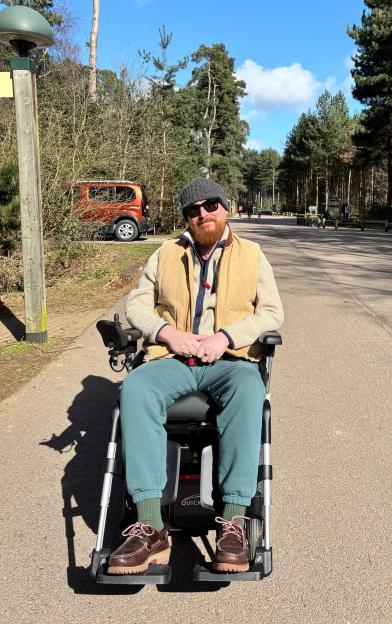 Now he says he is confined to a wheelchair Credit: Cover Images
“Something as simple as getting the train into London to go to work was really quite fraught with peril.”
Liam said doctors spent months ruling out other possible conditions before reaching a diagnosis.
“They have to sort of run through a process of elimination and for quite a while, there was a glimmer of hope that it was a different thing called MMN, which is mono neuropathy, which is can mimic the effects of the symptoms of motor neuron disease, but is actually treatable,” he said.
Liam underwent two rounds of treatment for MMN, but when those proved unsuccessful, doctors were able to confirm the diagnosis.
While the diagnosis was devastating, Liam said that finally knowing what he was facing brought a degree of certainty after months of unanswered questions.
“In a way, it was… I’m very reluctant to use the word relief, but it gave you a sort of an almost like a sense of closure, because it’s the hope that will kill you,” he added.
“And it gave me something to focus on and then move on and be like, okay, we know what it is now, now we can finally start to sort of address it and see it for what it is rather than sort of praying and hoping and living on faith.”
As part of efforts to slow the progression of the disease, Liam’s neurologist prescribed the drug Riluzole.
However, he quickly experienced severe side effects, including fatigue and additional weakness.
“And this was still at a point where I could stand and, and having that sort of weakness already, and then the weakness from the was putting me in quite an unsafe position,” he said.
Although his neurologist suggested reducing the dosage, she was clear that the medication was not a cure.
“She had quite a frank conversation where she said, it’s not a miracle drug by any means, and it’s not like turning down chemotherapy,” Liam said.
“It’s something that can be proven to extend your lifespan, but not by a great amount. I think the average that they said was something like three to six months.”
Liam decided to stop taking the medication temporarily to regain some before gradually reintroducing it.
Now, just over three months after receiving his diagnosis, Liam remains in work and has been allowed to work fully remotely, describing his job as a “great distraction” from what he is going through.
He has also joined a support group, where he has met others living with motor neurone disease and facing many of the same challenges.
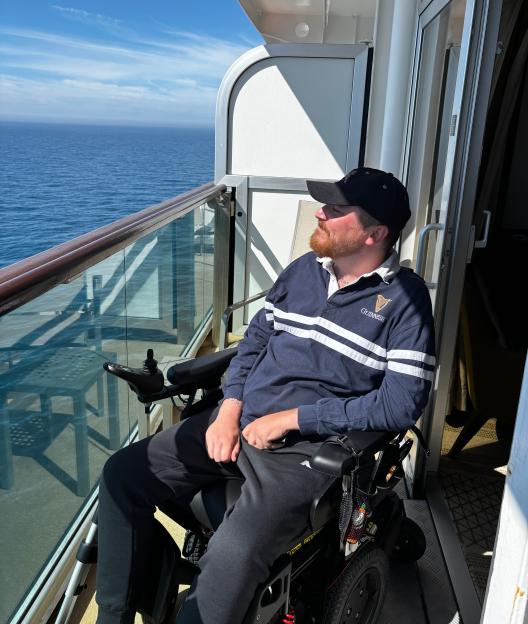 Liam’s girlfriend Kate recently organised a cruise through the Norwegian Fjords for the pair, allowing them to visit the last Scandinavian country they had yet to explore Credit: Cover Images
 How is motor neurone disease treated?
Medical research is yet to find a cure for the rare illness, and there are no therapies to reverse or halt progression of the disease.
Despite this, there is some treatment that can help those with motor neurone disease have a better quality of life, as well as helping with their mobility and bodily functions.
For those who struggle with respiration, a breathing mask may be prescribed.
Riluzole is a medication that is used to help people with motor neurone disease, although it doesn’t prevent the condition progressing.
As it stands, this treatment has only shown a very small improvement in patients’ survival.
For more information, visit the MND Association’s official website.
“I go to meetings with other people with motor neuron disease,” he said.
“And aside from being the youngest one there by, like, quite a quite a large amount, it also seems that mine has progressed quite a lot quicker than others.”
“I have spoken to people who have been diagnosed for, like, six years, and they can still sort of get about, and mine seems to have come on quite quickly and across my whole body.”
Alongside support from his group, Liam has received a huge amount of help from the and MND charities, enabling him to access equipment including a wheelchair.
Despite the diagnosis, he and his girlfriend Kate, who he described as his rock, have continued to make the most of life together.
“Without my girlfriend, I wouldn’t be in the same place that I am today,” Liam said.
“She’s been like, not only a rock through this but, you know, she does so much for me and still manages to make life worth living.”
The couple, who have been together for 16 years, most enjoy travelling the world together and initially thought the diagnosis was going to put an end to this.
However, Kate recently organised a cruise through the Norwegian Fjords for the pair, allowing them to visit the last Scandinavian country they had yet to explore.
“We did it through a company called Limitless Travel, which is all set up to help people in wheelchairs, go on these sorts of and cruisers, and that was absolutely fantastic,” Liam said.
Recently, Liam’s close friends also launched a GoFundMe campaign to help him and Kate continue living life as normally as possible following his diagnosis.
To date, his page has raised more than £9,200.
“I’ve been absolutely blown away,” Liam said.
“I was always quite active on , but when I first started getting symptoms, I was posting hardly at all and it led to a lot of confusion with friends and co-workers.”
When he felt ready, Liam eventually shared of his diagnosis publicly.
“I received a massive amount of support and comments and messages from people that I hadn’t spoken to for years, and that was really, really lovely.”