WHEN Beth Brown discovered a small red patch on her face she dismissed it as merely eczema thinking little of it.
But after the flaky patch continued to grow bigger, the then 29-year-old knew something was amiss.
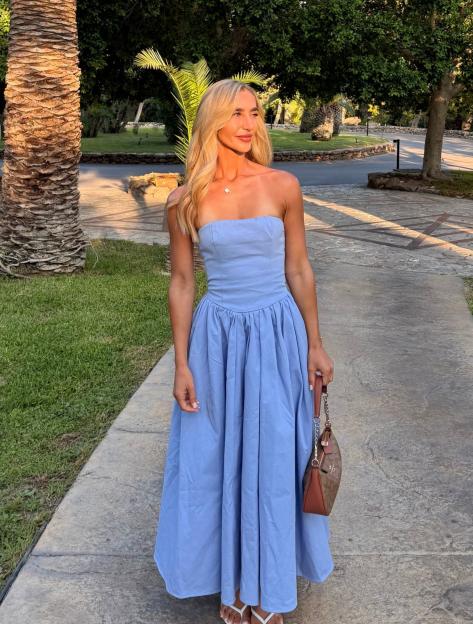 Beth Brown, 30, never wore sun cream and would use sun beds for 20 minutes at a time Credit: SWNS
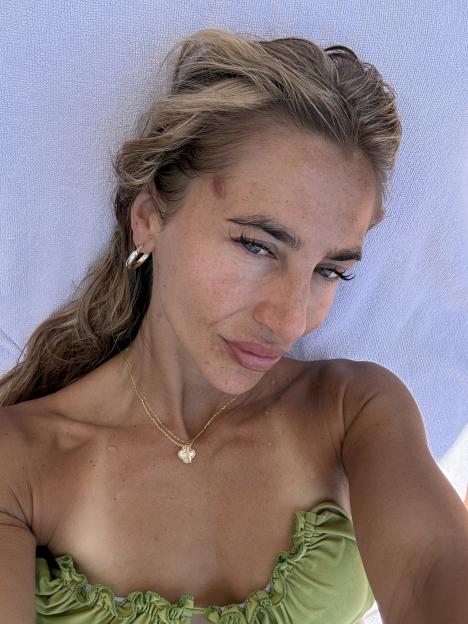 Beth initially dismissed the red patch that had appeared on the side of her face as eczema Credit: SWNS
By October 2025, Beth, from Weymouth in Dorset, was no longer able to cover up the patch with .
Concerned, she spoke to her boyfriend’s mum, a doctor who told that she could have basal cell carcinoma (BCC), the most common type of and urgently booked a appointment.
Devastatingly, tests confirmed her suspicions and Beth, a flight attendant, who rarely wore SPF and had used sunbeds frequently since 22, was diagnosed with BCC.
After a six month wait to have the tumour removed, she was left with a gaping hole in her face that has taken weeks to recover.
Now, as Brits prepare for the holiday season, already relishing what has been a hot , many will be topping up their tan.
But, Beth, now 30, is begging others to take chasing UV rays and a tan seriously, warning people against sun beds.
Recalling her terrifying ordeal, Beth said: “I was very naive, I thought it would never happen to me.
“I definitely regret using sun beds now.
“When I was diagnosed with BCC, I felt so freaked out and also really stupid.
“I thought, ‘have I done this to myself?’.
“I just want to help other girls and raise awareness that it is more common than you think, and it could happen to you.
“My mum never used sun cream, her generation were always frying in the sun.
“I never really used it either, as it’s what I’d grown up with.”
Since 2018, aged 22, Beth visited sun beds at least twice a month – beginning at six minutes and by her late twenties, spent 20 minutes at a time in them.
 After being diagnosed with BCC, Beth faced a six month wait to have the cancer removed Credit: SWNS
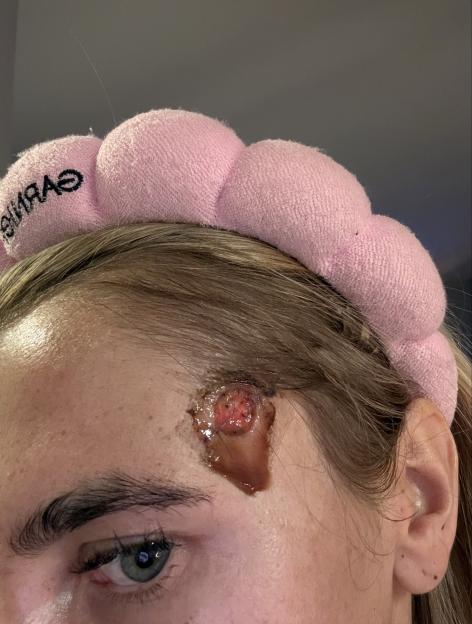 Pictured, Beth’s red patch at the top of her head Credit: SWNS
“It scares me now, but it was just the norm,” Beth said.
“On social media, being tanned is portrayed as being cool, but it’s quite sad really, as actually you are damaging your skin.
“I was so shocked, I hadn’t realised the extent of what could happen from not wearing sun cream and using sun beds.”
It comes as the Government is now cracking down on shops.
They will be required to enforce the 18-plus age limit by IDing customers and banning self-service sunbeds.
Public health minister Sharon Hodgson said: “cause cancer and yet children as young as 14 are still accessing them illegally. That is not acceptable.”
Department of advisers in June said ministers should consider banning sunbeds entirely. UK Melanoma Focus estimates that four in 10 people aged 18 to 35 use them.
It reckons they are behind 100 cancer deaths per year in Britain.
Non-melanoma skin cancer, which includes BCC, accounts for roughly 156,000 new cases in the UK every year.
The three most common types of skin cancer are melanoma, BCC and squamous cell carcinoma.
Experts warn the cancer can form in the ear, eye, under your fingernails, face or even within your buttocks.
Around two years ago, Beth noticed a small red patch on the side of her head, that would go flaky, and scab over.
As she had had as a child, Beth assumed this was the same thing, but the patch started to get bigger and would sometimes bleed.
After her diagnosis, she was put on a waiting list, to have the BCC removed, and waited six months for her appointment.
“I was so scared that it would grow while I was waiting for the appointment,” she said.
Beth’s mum decided to go for a check-up as well, and was also diagnosed with BCC.
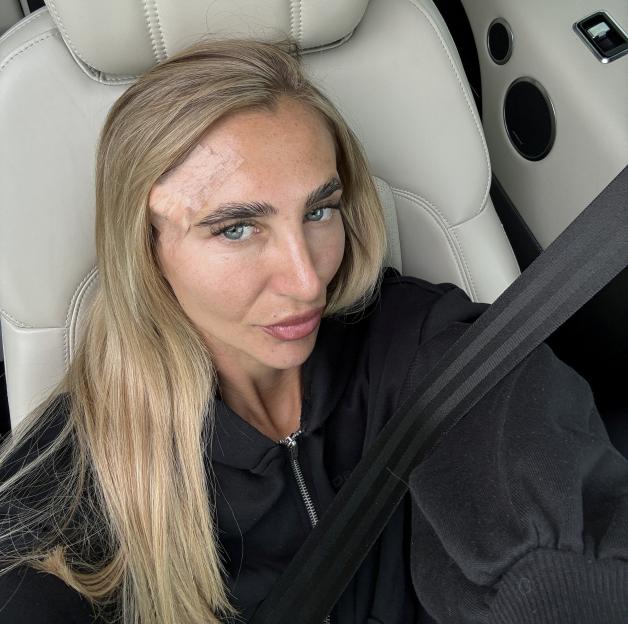 Beth is now raising awareness about the importance of wearing sun cream and staying away from sun beds Credit: SWNS
 Can you spot the cancerous marks and moles from the harmless ones?
IF you've spotted a new mole or lingering mark on your skin, don't be too quick to dismiss it.
It’s important to know what your skin looks like normally, to helps you notice any unusual changes.
The ABCDE rule can be followed to assess the health of a mole.
If your mole falls into the following, it’s worth getting checked:
- Asymmetrical – melanomas usually have two very different halves and are an irregular shape
- Border – melanomas usually have a notched or ragged border
- Colours – melanomas will usually be a mix of two or more colours
- Diameter – most melanomas are usually larger than 6mm in diameter
- Enlargement or elevation – a mole that changes size over time is more likely to be a melanoma
Most melanomas don’t give you symptoms like pain or itching.
Meanwhile, some non-cancerous moles or abnormal patches of skin can be itchy.
So having some of these changes on their own doesn’t mean you definitely have melanoma, but you should still get it checked out.
There are two main types of skin cancer – non melanoma skin cancer and melanoma skin cancer.
Non-melanoma skin cancer includes:
- Basal cell skin cancer – this is also called basal cell carcinoma
- Squamous cell skin cancer – this is also called squamous cell carcinoma
There are a few different types of melanoma too:
- Superficial spreading melanoma
- Nodular melanoma
- Lentigo maligna melanoma
Find out more about distinguishing moles
On May 17, 2026, Beth had a procedure to remove the BCC, and chose to leave her wound open, rather than having a skin graft.
“I hadn’t how intense the healing process would be,” she said.
“I’d told my work I’d be back the next day as I thought I’d just have a little stitch, but I walked out with a hole in my face,” she said.
Following the procedure, Beth took a month off work, to heal, and went for weekly hospital appointments so her wound could be redressed.
Her skin is now fully healed but remains sensitive.
Since her diagnosis, Beth has stopped using sun beds, and now prioritises going in the shade, and wearing factor 50.
“I’m a sunshine baby at heart, but I make sure to look after my skin,” she said.
“I wear SPF every day now, I can’t imagine going outside without putting it on my face.
“I don’t think girls realise you can still get a tan whilst wearing sun cream. It just protects your skin.”
“Being outside and getting vitamin D is so important, but just make sure you don’t fry.
“Sit in the shade, wear sun cream, wear a hat.”