A HERO diver who recovered four tragic Italians in the Maldives has revealed chilling details on the “breathing” cave they were found in.
Sami Paakkarinen, one of three Finnish rescue divers who helped retrieve the bodies, refuted a leading theory on the mystery-shrouded disaster.
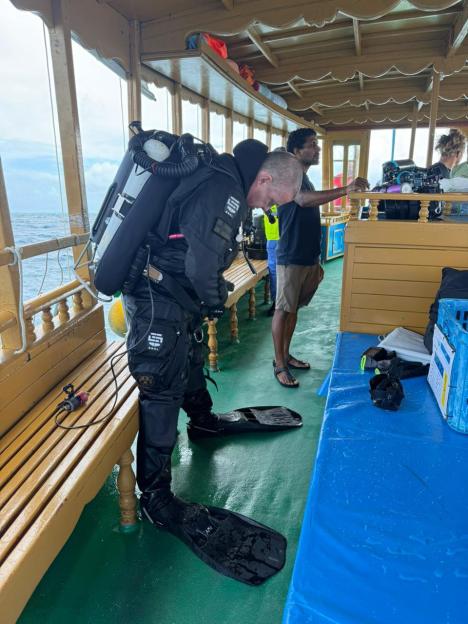 Sami Paakkarinen gearing up during the rescue operation Credit: EPA
 Giorgia Sommacal died in the tragedy Credit: UGC/UNPIXS
The highly experienced diver, who can reach depths of 460ft, said it was impossible that the group were sucked into the shark-infested cave.
He told Italian paper Corriere della Sera: “It’s a huge cave, but it’s not possible they were sucked in.”
The comments come after one popular theory floated by Alfonso Bolognini, president of the Italian Society of Underwater and Hyperbaric Medicine.
He previously told Italian outlet Adnkronos that the five holidaymakers may have been caught out while checking out the cave for future dives.
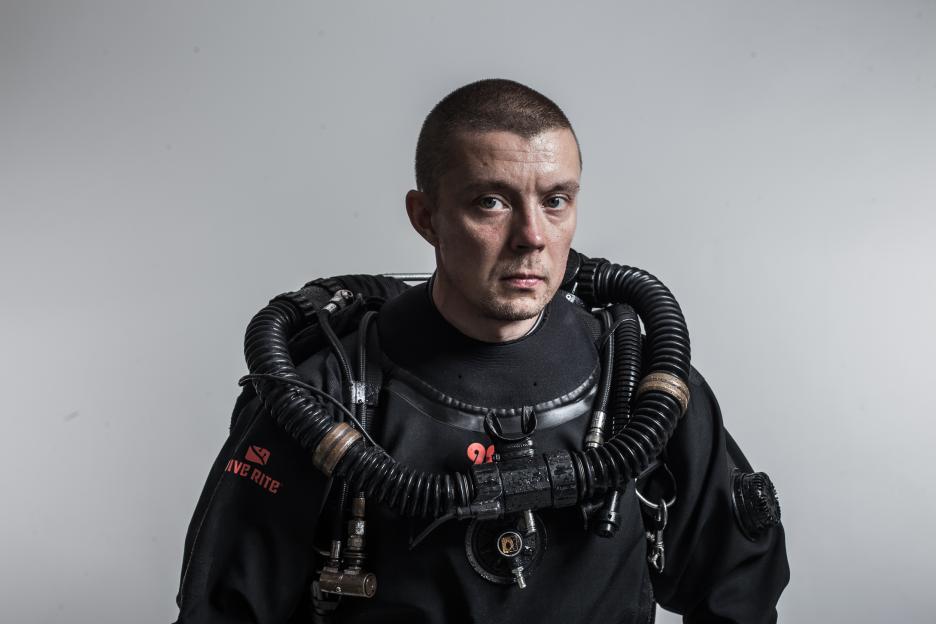 Paakkarinen said it was unlikely the group were sucked in Credit: Monami Agency
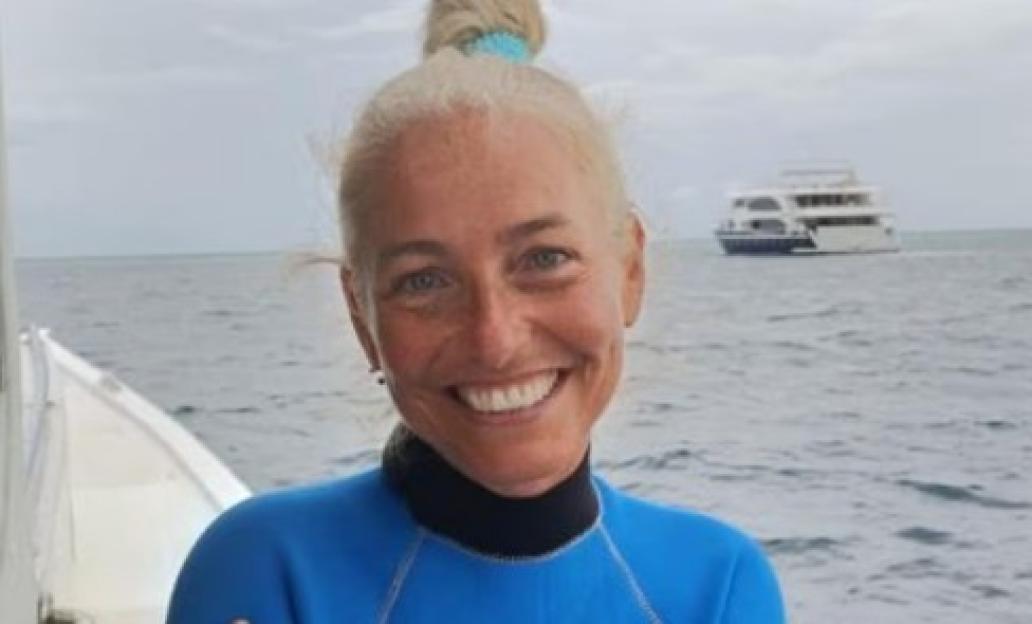 Monica Montefalcone was also killed in the disaster
Bolognini suggested that the group may have been sucked into the cavern complex by a strong current caused by the site’s unique entrance.
The cave’s narrow pathway may have created a “Venturi effect” where fluid must speed up to maintain a constant flow, causing a pressure drop and creating a vacuum.
Addressing the theory, Paakkarinen said he could only comment based on his personal experiences diving.
He said: “The water moves in one direction for 12 hours and then in the opposite direction for another 12… Continuous currents.”
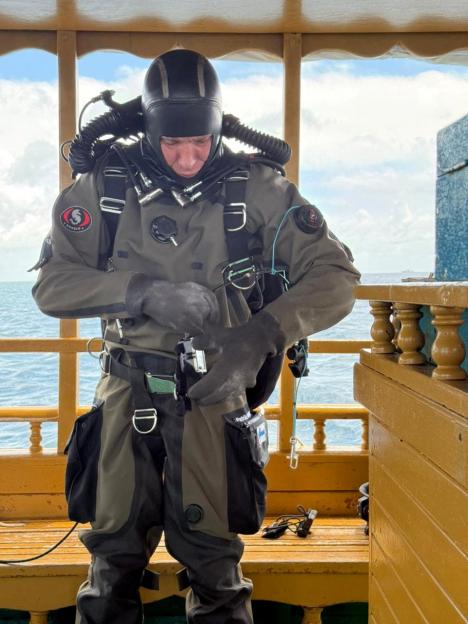 Three Finnish divers were deployed to the Maldives to help recover the bodies Credit: Reuters
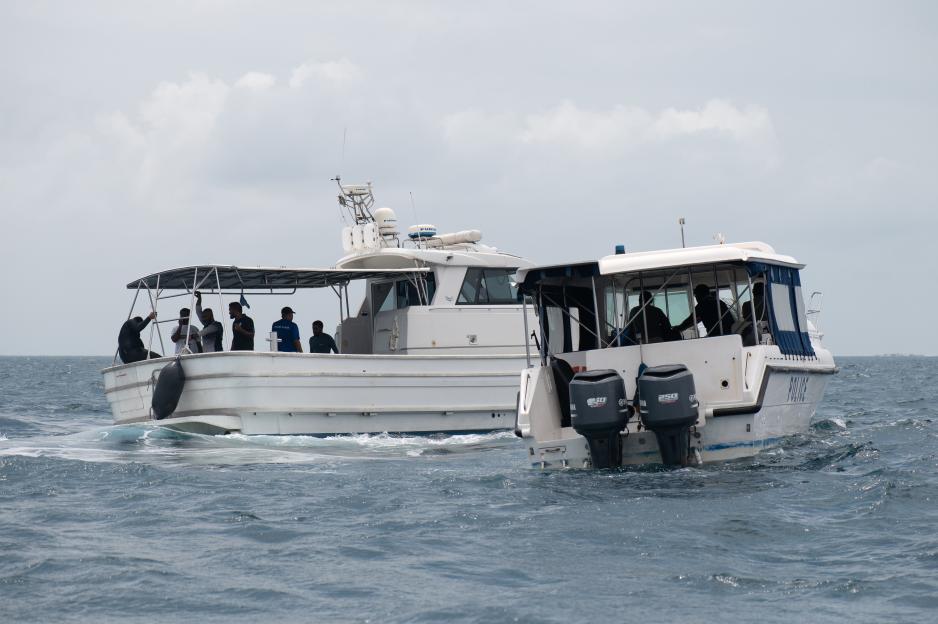 A huge search operation was launched in the wake of the horror Credit: EPA
The expert added that currents are “very predictable” in coral reefs.
He added that when the rescue team entered the cave, the trio felt a “very light current inside it”.
“It’s true that there is a current going in and out of the cave,” the pro-diver said.
“The cave, so to speak, is breathing. But it’s really not very strong. It couldn’t have sucked anyone in.”
All five bodies have now been recovered Credit: EPA
Paakkarinen also revealed that the Dhekunu Kandu cave has “never been mapped”, and said that descending to such depths required “a different type of equipment and approach”.
He also said it was near impossible the divers accidentally entered the cave.
“It’s a huge cave… in the Maldives, the sun shines up to 100 meters deep,” he said.
“So at 60 meters it’s still daylight, and when you enter a cave, you know it because it gets dark, you don’t risk accidentally entering a cave.”
 One of the three Finnish divers who helped recover the bodies of tragic Italian divers Credit: Reuters

The tragic tourists include Monica Montefalcone, a marine biology professor; her daughter, Giorgia Sommacal; two young researchers, Federico Gualtieri and Muriel Oddenino; and their guide Gianluca Benedetti.
Giorgia’s heartbroken boyfriend has broken his silence – revealing he sent a message to her just moments before she decided to go in the water.
It comes after the Finnish divers said a “sand wall illusion” could have been behind the disaster.
The Italians could have taken the wrong turn while trying to navigate out of “shark cave”, the pro-divers working under research organisation Dan have suggested.
Other popular theories have speculated that the group were using air tanks, not specialised mixtures of gas needed for extreme deep diving.
Monica, her daughter and the two researchers were found in a corridor with a dead end nearby, La Repubblica reported.
Benedetti was found near the mouth of the cave in the Vaavu Atoll on Thursday before the other four bodies were located.
But commenting on the location where four of the bodies were found, Dan Europe CEO Laura Marroni said: “There was no way out from there.”
The Finnish divers reportedly said the cave starts with a very large and bright cavern that features a sandy floor.
The end of this section contains a corridor which has a small amount of light but good visibility when artificial lamps are used.
The corridor is about 30 metres long and three metres across.
It leads to a second chamber of the cave – a large, round space with no natural light.
And there is reportedly a sand bank between the corridor and the second room.
It would have been easy for the divers to get into the second chamber without seeing the sand bank, the expert Finns say.
But when the group turned around, the bank would have looked very much like a wall, according to the outlet.
This sand wall could have hidden the original exit out of the second room.
To the left of the sand bank, there is reportedly another corridor that is only a few metres long and eventually leads to a dead-end.
The four Italians were found inside this small chamber “as if they had mistaken it for the right one”, according to the newspaper.
Marroni said it would have been “very difficult to return, especially with the limited air supply” if they took that turn by accident.
Since the divers are understood to have been using standard tanks, they would have had very little time to visit the second cave at such a depth, Marroni added.
She said: “We’re talking about 10 minutes, maybe even less.
“Realising that the path is the wrong one and having little air, perhaps after going back and forth, is terrifying.
“Then you breathe quickly, and the air supply decreases.”
Local authorities are probing how the Italians were allowed to descend nearly 200ft below the surface – as the Maldives‘ maximum diving depth is 98ft for tourists.
have also been found which are hoped to help officials piece together their final moments.
The s are now also taking place to aid with the investigations.
A four-word message scrawled in chalk helped kick-start the recovery mission for the Italian divers, it has emerged.
After first locating the four bodies trapped inside a crevice in the complex cave, the Finns returned to the surface with a single message to relay: “We found all four.”
in total helping find the bodies.