A MAJOR holiday hotspot has been plunged into chaos after a choking cloud of Saharan dust smothered the Greek island of Crete.
The dramatic storm has grounded flights and battered the coast with violent winds, even unleashing a just days before the Easter break.
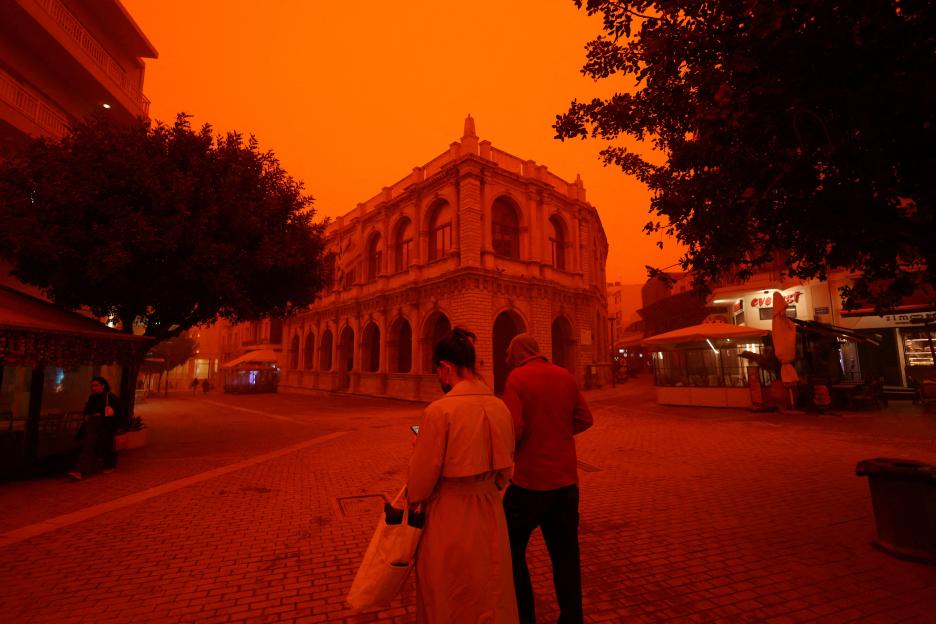 A blood-orange atmosphere has swallowed the streets of creteCredit: Reuters
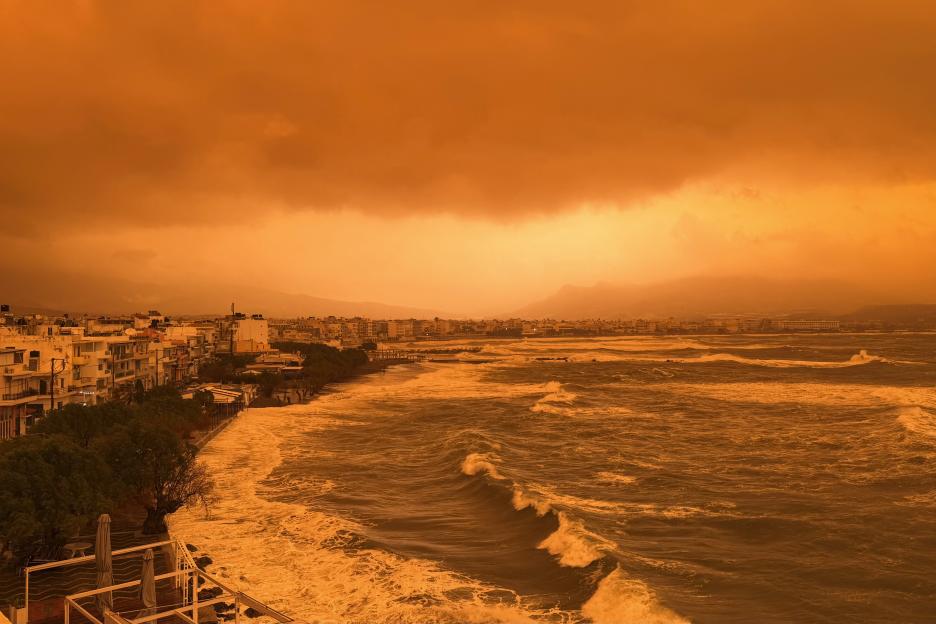 The dramatic storm has battered the coast with violent windsCredit: AFP
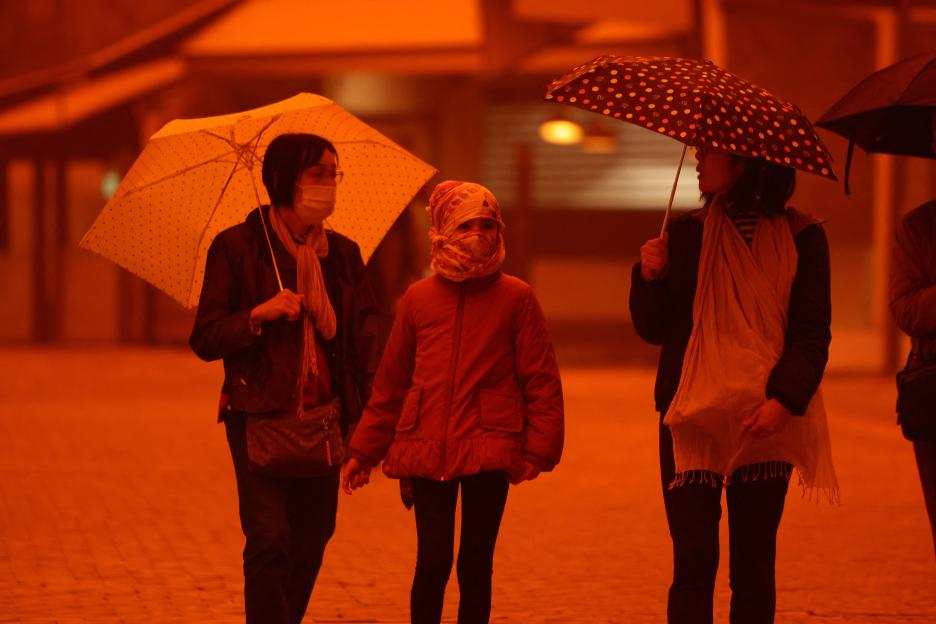 The major holiday hotspot has been plunged into chaosCredit: Reuters
The popular tourist destination has been cloaked in an eerie red-orange haze as thick African dust swept across the island, turning skies apocalyptic and forcing planes to divert.
Travel disruption quickly unfolded at Heraklion’s “Nikos Kazantzakis” Airport, the island’s busiest gateway for tourists, where visibility plunged to dangerously low levels.
So far, three international flights due to land in the holiday hotspot were unable to touch down and were forced to divert to other airports including Athens, Corfu and Chania.
Among them was a service from London which was rerouted to Corfu after conditions became too dangerous to land.
A Express flight travelling from Brussels was also forced to divert to Athens.
In another dramatic diversion, a plane that had departed from bound for Rhodes was redirected to Heraklion.
The aircraft was unable to land due to the choking dust and had to move on to Chania’s “Ioannis Daskalogiannis” Airport instead.
Officials say visibility dropped to around 1,000 metres, a level considered unsafe for aircraft landings, sparking delays and operational disruption at the holiday hotspot’s airport.
Air travel across Crete remains under pressure as the dense cloud of African dust continues to hang over the island.
The shocking scenes were worsened by a fierce wave of bad known as “Erminio”, which meteorologists had already warned could intensify the dust .
Across Heraklion – one of Greece’s most visited tourist hubs – the landscape now resembles the Sahara itself.
A thick veil of dust has almost completely obscured the city’s port while the air has turned suffocating.
Experts say extremely high concentrations of suspended particles have made the atmosphere hazardous, particularly for vulnerable residents and tourists.
According to meteorologists, dust levels have surged to more than 1,000 micrograms per cubic metre, an exceptionally high concentration.
Regional monitoring stations have classified the air quality as “very poor”, with far exceeding safe limits.
Authorities have urged locals and visitors in the holiday hotspot to exercise caution and avoid unnecessary travel while the extreme conditions persist.
The chaos has not been limited to the skies.
In the coastal area of Pachia Ammos, a powerful tornado flipped a truck that was preparing to load agricultural exports.
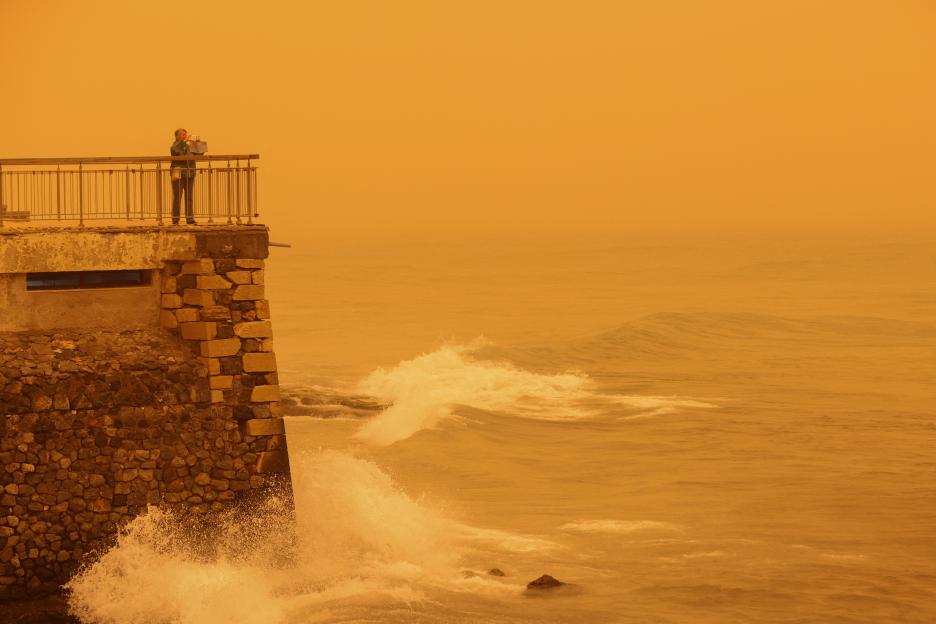 Officials say visibility dropped to around 1,000 metresCredit: Reuters
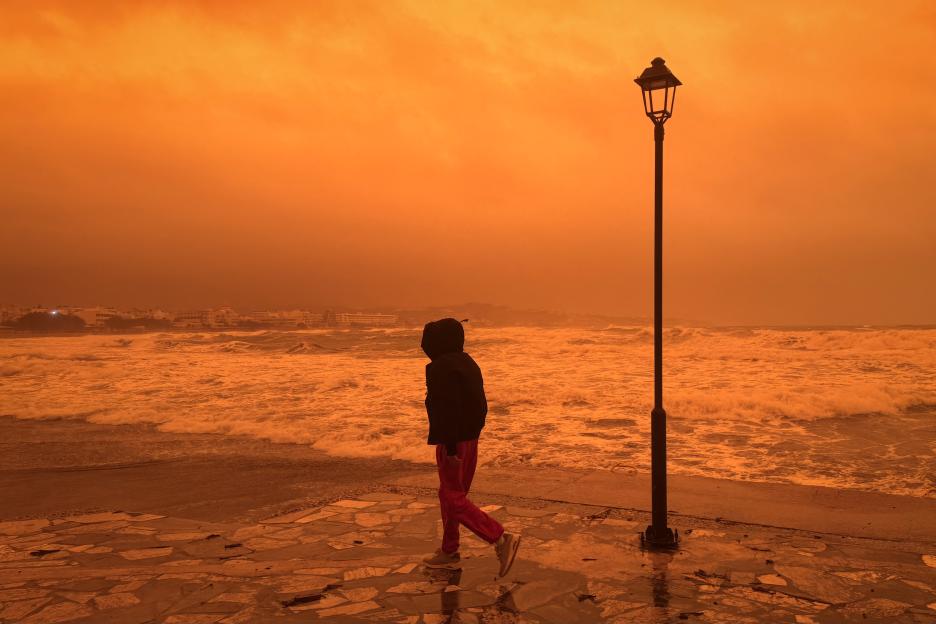 A thick veil of dust has almost completely obscured the city’s portCredit: AFP
The violent weather also uprooted pine trees, damaged greenhouses and caused part of a wall at a ceramics factory to collapse.
Meanwhile in Ierapetra, towering waves surged into the first houses along the old town as fierce southerly winds whipped up dangerous conditions along the coast.
Further across the island in Chania, light rain mixed with the Saharan dust to create thick mud that coated , cars and streets.
The African dust has blanketed other parts of the holiday hotspot too, including Rethymno, where the landscape now appears almost tropical under the yellow-tinged sky.
Even the iconic island of Santorini has been affected, with the usually pristine skies turned a deep orange, casting a surreal glow over its famous white-washed buildings and volcanic cliffs.
Across , thunderstorms, heavy rain, strong winds and even hail are wreaking havoc in the days before Easter weekend.
Storm Erminio is sweeping swiftly east from Sicily into Cyprus and Greece, with wind speeds reaching 31mph.
Flights across the mainland and islands were disrupted, with ferries mostly kept in port.
State weather service EMY forecast “severe weather” through Thursday for most parts of the country, warning of prolonged and intense rain, thunderstorms, and possible localised hailstorms.
In northern Greece, heavy snowfall is obscuring the mountainous regions of Epirus and Macedonia, adding to travel chaos.
Emergency red alert warnings have been issued for eastern Peloponnese, Central Greece, Evia, Thessaly, the Sporades Islands, Attica, and the Dodecanese, with orange alerts covering the Cyclades and eastern Aegean islands.
Social media footage shows torrential rain and hail flooding streets in the north, while authorities warn that almost the entire country and its islands will be impacted over Wednesday and Thursday, though conditions are expected to ease by the end of the week.
Even the Canary Islands have felt the effects of extreme weather.
Tenerife experienced what locals are calling “the storm of the decade,” with rain, and winds reaching 73mph disrupting flights, roads, and daily life.
To the relief of British holidaymakers, the wild weather looks set to ease over the Easter weekend, though the Saharan dust may continue to smother Crete and neighbouring islands
Skies may remain orange and conditions hazardous for vulnerable residents and tourists.
Authorities continue to urge caution, advising visitors to remain indoors where possible and drive carefully as the holiday hotspot reels from one of the most dramatic dust storms in recent memory.
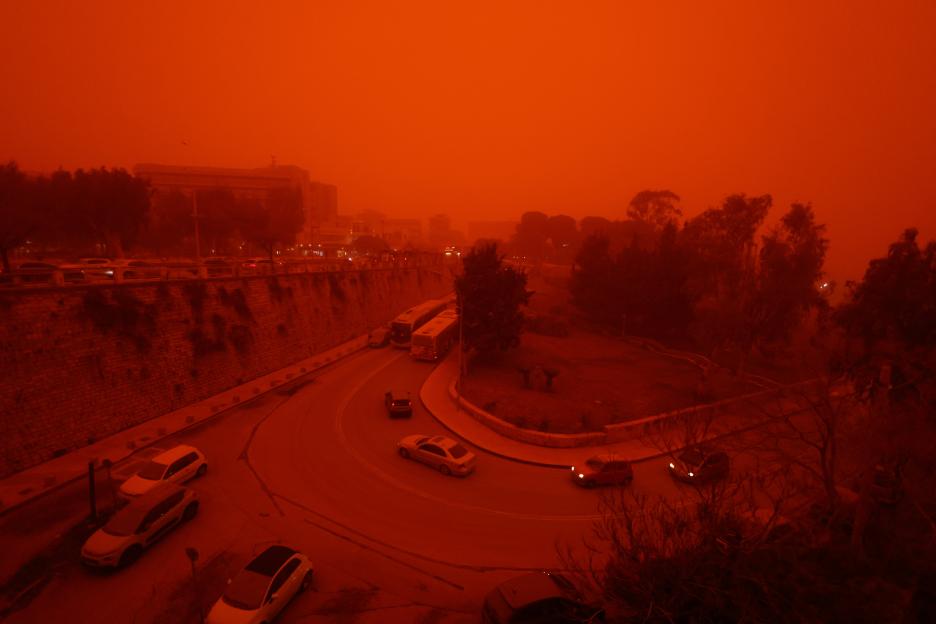 Authorities have urged locals and visitors to exercise caution and avoid unnecessary travelCredit: Reuters
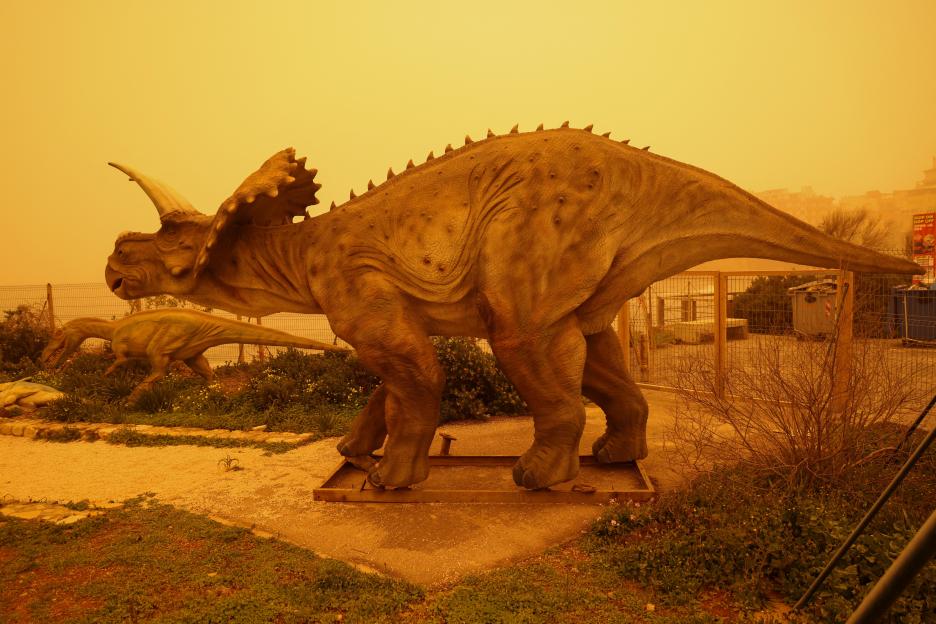 Skies look apocalypticCredit: Reuters
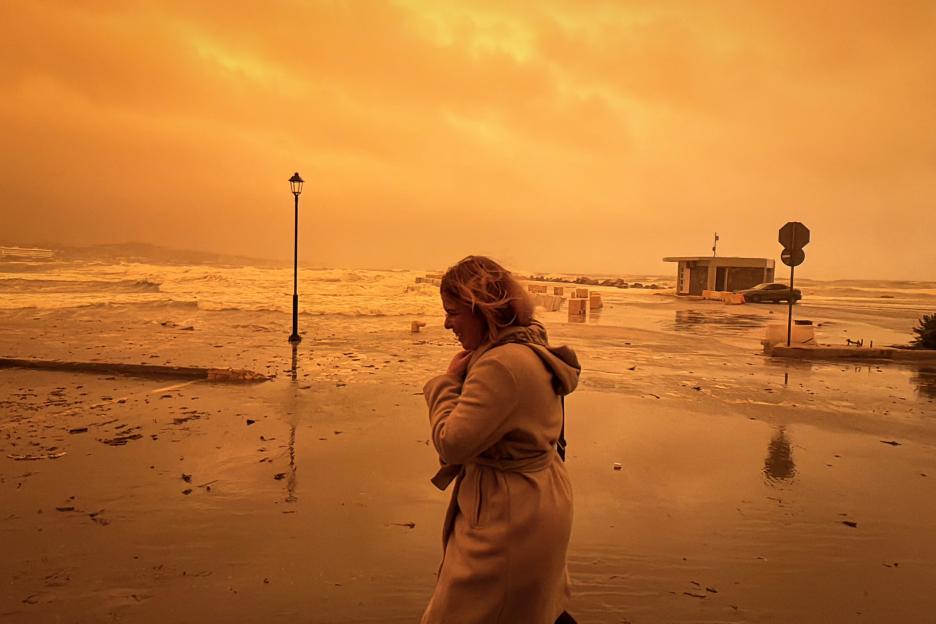 Planes were forced to divertCredit: AFP