
"Analyst: Army Commander Transforms Security Landscape in Taraba"
A security analyst, Deji Adesogan, has said the security architecture of Taraba State recorded a major turnaround in the last two years under the leadership of...
 Written byEze Chidiebere Paul
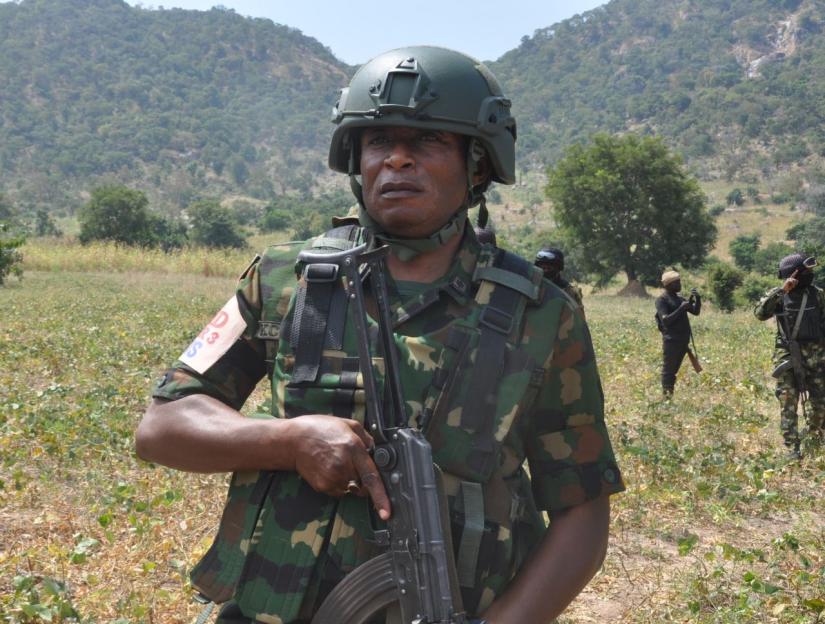
A security analyst, Deji Adesogan, has said the security architecture of Taraba State recorded a major turnaround in the last two years under the leadership of the Commander, 6 Brigade Nigerian Army, Brigadier General Kingsley Chidiebere Uwa.
Adesogan stated that the period, which coincides with Uwa’s redeployment, marked a defining phase in Taraba’s fight against banditry, terrorism and organised criminal violence.
According to him, when Brigadier General Uwa assumed command on January 24, 2024, the state was grappling with complex security threats including bandit attacks, kidnappings and cross-border criminal movements exploiting forests and difficult terrain.
Rather than adopting reactive military responses, Adesogan said the commander introduced a strategy of sustained operational dominance driven by intelligence gathering, mobility and constant troop presence.
“Under his leadership, 6 Brigade evolved into a forward-operating formation capable of conducting continuous offensive and stabilisation operations across some of Taraba’s most challenging environments,” he said.
The analyst noted that leadership by example was a defining feature of Uwa’s command, adding that the Brigade Commander frequently led operations from the frontline, personally supervising missions against bandit and terrorist elements.
“This approach significantly boosted troop morale, discipline and operational effectiveness, earning him deep respect within the ranks,” Adesogan stated.
He said intelligence-led operations under Uwa resulted in the dismantling of criminal camps, neutralisation of armed elements and recovery of arms and ammunition, while criminal networks operating in forests, border communities and key routes were systematically disrupted.
Adesogan added that inter-agency collaboration improved during the period, leading to faster response times and reduced operational gaps among security agencies operating in the state.
Beyond combat operations, the analyst said Brigadier General Uwa prioritised civil-military relations through regular engagement with traditional rulers, community leaders and youth groups, which helped rebuild trust and improve intelligence flow.
He also described the commander as media-friendly, noting that his professional engagement with journalists and civil society organisations helped promote transparency and public confidence in military operations.
“In recognition of his impact, Brigadier General Uwa received several awards from media organisations and civil society groups. In 2025, he was widely regarded as one of the most performing Brigade Commanders and security heads in the country,” he said.
Adesogan stated that the security improvements under Uwa’s command were evident, as farmers returned to farmlands previously abandoned due to insecurity, major routes became safer, several kidnapping attempts were thwarted and abducted victims rescued unharmed.
He added that officials of the Taraba State Government, including the governor, publicly acknowledged the commander’s contributions, describing him as a “God-given gift” to the people of the state.
The analyst further attributed Uwa’s performance to the strategic leadership of Army Headquarters, noting that the posting of experienced officers to sensitive field commands continues to yield positive security outcomes.
He also acknowledged the mentorship and support provided by senior commanders, including Major General Abdulsalam Enesi Abubakar, former GOC 3 Division and now Theatre Commander, Operation Hadin Kai, and Major General Foluso Oyinlola, the current GOC 3 Division.
Adesogan noted that the Chief of Army Staff, Lieutenant General Waidi Shaibu, ensured consistent institutional support that enabled effective field operations.
According to him, Brigadier General Uwa’s redeployment to the Army Headquarters, Department of Operations, approved by the Chief of Army Staff, reflects confidence in his operational experience and capacity to contribute to national-level security planning, following the completion of his mandatory two-year service tour.
“As he departs Taraba, he leaves behind a stronger Brigade, more resilient communities and a security environment better positioned to sustain the gains recorded,” Adesogan said.
Continue reading
Curfew imposed in three Taraba communities over communal unrest
The chairman of Sardauna Local Government Council in Taraba State, Mohammed J. Umar, has declared a 24-hour curfew in Mbamnga and two neighbouring communities f...
Brit soldier, 40, killed in crash in Ukraine pictured as heartbreaking tributes paid to ‘exceptional leader’
THE UK armed forces member who died in Ukraine this weekend has been named by the Ministry of Defence as 40-year-old Major Paul Wilks. Tributes flooded in to th...
Nasarawa: Police present N30.8m insurance benefits to families of deceased officers
The Nasarawa State Police Command has presented Group Life Assurance and Group Personal Accident cheques totaling N30,845,424.03 to families of deceased police...

Newborn mauled to death by pet dog Chomp as beast bit helpless baby 180 times at family’s squalid home
A NEWBORN baby has been mauled to death by a pet dog called Chomp, suffering 180 bites. Baby Jason Anthony Weaver was just a week old when the husky and pit bu...