
"Senator Ndume Explains His Role in Screening Ambassadorial Nominees"
Former Senate Leader Senator Ali Ndume has explained why he took part in the screening of ambassadorial nominees by the Senate Committee on Foreign Affairs, des...
 Written byEze Chidiebere Paul

Table of Contents
- Explanation from Senator Ali Ndume
- Concerns Raised by Ndume
- Committee's Influence
- Lopsided Nominations
- Diplomatic Representation
- Conclusion
Former Senate Leader Senator Ali Ndume has clarified his participation in the screening of ambassadorial nominees conducted by the Senate Committee on Foreign Affairs, despite his earlier request for President Bola Tinubu to withdraw the list.
Prior to the screening, Ndume expressed concerns regarding what he deemed an unbalanced selection of nominees, arguing that it contravened Section 14(3) of the 1999 Constitution, which requires the federal character principle to be applied in the formation of the federal government to foster national unity.
In a conversation with reporters on Sunday, the senator from Borno South stated that he was persuaded by his colleagues on the committee not to abstain from the screening and confirmation process. He also mentioned that he received assurances from the committee's leadership that the issues regarding the imbalance in the nominations would be formally communicated to the President.
“I still believe that the list is unbalanced,” Ndume remarked. “During our committee meeting, I raised a constitutional point of order, and we agreed that while the screening would move forward, our report would clearly recommend to the President that the remaining nominations should be adjusted to rectify the violation of the federal character principle.”
Ndume emphasized that states lacking representation in the current nominations must be included in the final list submitted to the Senate for screening and confirmation. He noted that some states, such as Gombe and Yobe, were not represented, while others only had career ambassadors, whom he characterized as predominantly non-political appointees.
“We have 109 diplomatic missions. For non-career ambassadors, each state should have at least one to ensure fairness,” he stated. “Ideally, each state should have two or three ambassadors, including at least one career ambassador, given that we operate 76 embassies, 22 high commissions, and 11 consulates globally.”
Ndume contended that such an arrangement would help rectify the imbalance and ensure adherence to Section 14(3) of the Constitution, highlighting that Nigeria maintains diplomatic relations with 194 countries worldwide.
The Senate Committee on Foreign Affairs completed the screening of ambassadorial nominees last week.
Ndume had previously rejected Tinubu’s nomination due to the absence of federal character.
Frequently Asked Questions
Why did Senator Ndume participate in the screening despite his objections?
Senator Ndume was persuaded by his colleagues on the committee to participate and received assurances that his concerns regarding the nominations would be communicated to the President.
What concerns did Ndume raise about the nominees?
Ndume raised concerns about the lopsided composition of the nominees, arguing that it violated the federal character principle mandated by the Constitution, which promotes national unity.
What did Ndume suggest regarding ambassadorial representation?
Ndume suggested that each state should have at least one non-career ambassador and ideally two or three ambassadors, including one career ambassador, to ensure balanced representation.
Continue reading
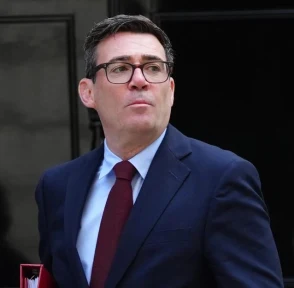
Andy Burnham doubles down on trying to reach Net Zero by 2050 despite soaring energy bills
ANDY Burnham has doubled down on trying to reach Net Zero by 2050. The PM rejected demands to pull back on the eco dash to try to keep down . Prime Minister And...
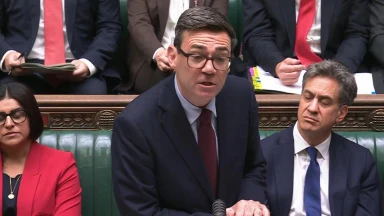
Andy Burnham’s ‘acting like Santa’ and must make tough cuts to get Britain back on track, blasts Iceland boss
ANDY Burnham has been told to stop acting like Santa and make the tough cuts Britain needs to get back on track. boss Lord Walker, the Government’s former cost...
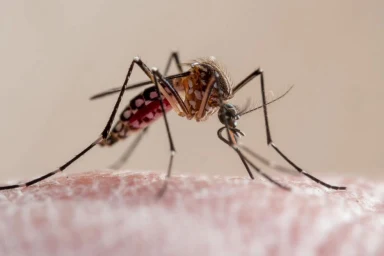
Third person dies from malaria linked to Frankfurt Airport after ‘mosquito gets trapped on plane’ in rare outbreak
A THIRD person has died after contracting malaria from a mosquito reportedly trapped on a plane to Germany. Several people were rushed to hospital following the...
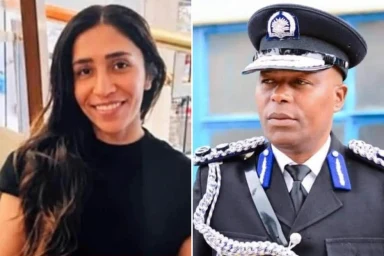
Brit mum, 47, snatched from car after school run is found safe as family praise ‘hero’ cop who took a bullet to save her
A BRIT mum who was abducted in broad daylight has been found safe as family praised the “hero” cop who took a bullet to save her in a dramatic rescue. Nusrat Ji...