

Table of Contents
A massive duck-billed dinosaur, referred to as the "cow of the Cretaceous," has been discovered, marking its first recognition in the scientific community.
This enormous creature may have reached lengths of up to 40 feet and likely traveled in herds, similar to cattle.
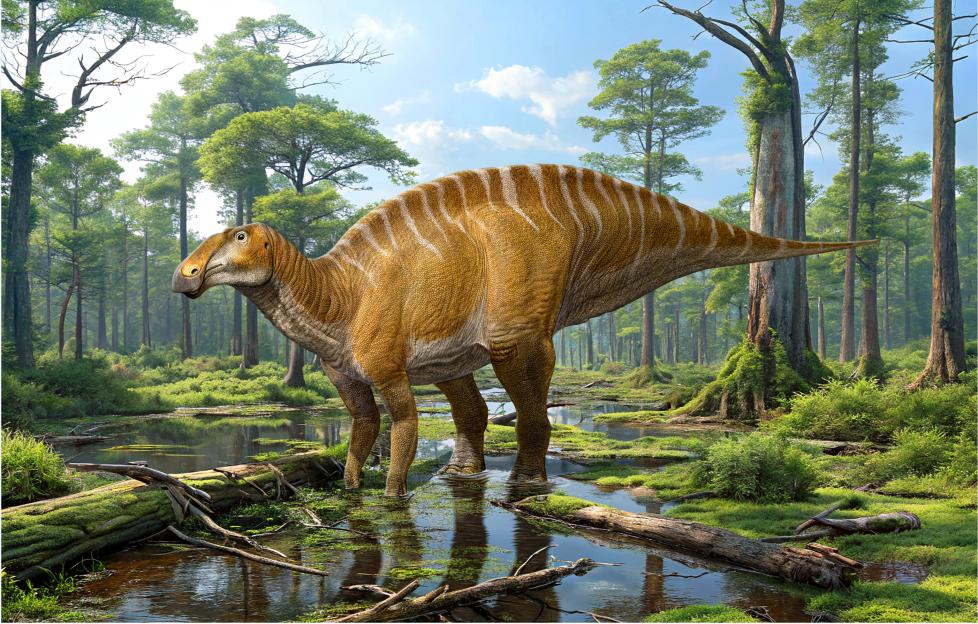 This illustration depicts what the giant duck-billed dinosaur might have looked like.Credit: Harrisburg University of Science and Technology
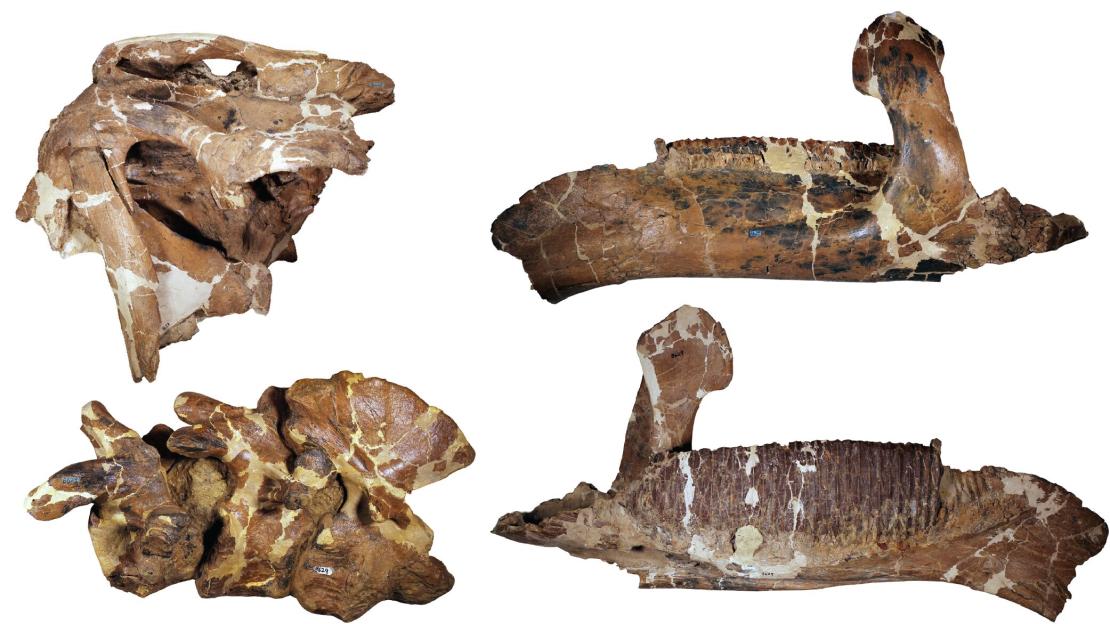 The fossils were discovered over a century ago but have been re-evaluated recently.Credit: Harrisburg University of Science and Technology
This newly identified species has been named Ahshislesaurus wimani by researchers.
The dinosaur existed approximately 75 million years ago, long before well-known species such as Tyrannosaurus rex and Triceratops.
Its remains were uncovered in New Mexico, providing new insights into this creature.
“Hadrosaurs have often been vividly described as ‘the cows of the Cretaceous,’” stated Dr. Steven Jasinski, one of the researchers involved in the discovery.
“While this may not be a perfect analogy, they likely lived in herds,” Dr. Jasinski, from Harrisburg University of Science & Technology, added.
“They would have been a prominent presence in the landscapes of northern New Mexico towards the end of the Cretaceous period.”
The dinosaur would have had a significant body size, potentially growing between 35 and 40 feet in length.
It is estimated to have weighed just over eight UK tons, which is roughly equivalent to six Focuses.
Notably, it featured a flat, duckbill-shaped mouth.
The fossils were discovered at a renowned site known as Ah-Shi-Sle-Pah in northwestern New Mexico.
Famous fossil collector Charles H. Sternberg visited this site in the early 1900s and distributed his findings worldwide.
The bones belonging to this new dinosaur species were first unearthed in 1916.
These remains were discovered by another notable collector, John B. Reeside, Jr.
Although the fossils were initially described by scientists in 1935, they were incorrectly associated with another hadrosaurid species named Kritosaurus navajovius.
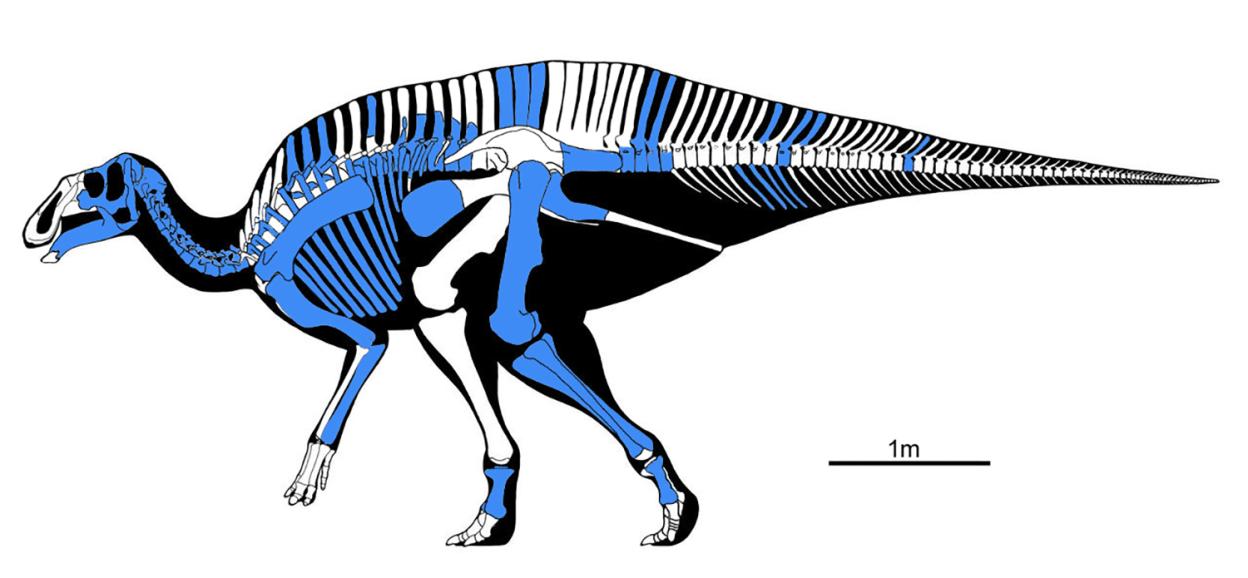 The creature could have grown to lengths of 35 to 40 feet.Credit: Harrisburg University of Science and Technology
However, scientists have now re-analyzed the fossils and confirmed that they belong to a completely new dinosaur species.
“Ahshislesaurus wimani is a fascinating discovery,” Dr. Jasinski remarked.
“The more we uncover about this species, the more we realize there is to explore.”
“I am eager to learn more and share knowledge about this extraordinary world we inhabit.”
A Timeline of Life on Earth
Here is a brief history of life on our planet:
- 4.6 billion years ago – the origin of Earth
- 3.8 billion years ago – first life appears on Earth
- 2.1 billion years ago – multicellular life forms evolve
- 1.5 billion years ago – eukaryotes, which are cells with a nucleus, emerge
- 550 million years ago – first arthropods evolve
- 530 million years ago – first fish appear
- 470 million years ago – first land plants appear
- 380 million years ago – forests emerge on Earth
- 370 million years ago – first amphibians transition from water to land
- 320 million years ago – earliest reptiles evolve
- 230 million years ago – dinosaurs evolve
- 200 million years ago – mammals appear
- 150 million years ago – earliest birds emerge
- 130 million years ago – first flowering plants
- 100 million years ago – earliest bees appear
- 55 million years ago – hares and rabbits emerge
- 30 million years ago – first cats evolve
- 20 million years ago – great apes evolve
- 7 million years ago – first human ancestors appear
- 2 million years ago – Homo erectus emerges
- 300,000 years ago – Homo sapiens evolves
- 50,000 years ago – colonization of Eurasia and Oceania
- 40,000 years ago – extinction of Neanderthals
Continue reading

Infinix SMART 20 HD Is Bringing a Smoother Smartphone Experience to More Users
For many smartphone users, the difference between a frustrating phone and one that feels good to use comes down to the everyday details: how smoothly the screen...
Save
Draconid meteor shower 2026 – when, where and how to see it
STARGAZERS could be in for a treat this week as the Draconid meteor shower lights up the night sky. The is already active and is expected to reach its peak in t...
Save
Apple Watch Series 12 & Ultra 4 review: Mind-bendingly good smartwatches that I simply don’t want to take off
EVERY year, I grow more convinced that an Apple Watch is one of the greatest health investments you can make. I’ve been wearing them for about a decade and they...
Save
AI data centres asking for almost TWICE as much electricity as the whole UK uses in a year
POWER-hungry AI data centres want almost twice as much electricity as the whole UK uses in a year. Tech firms have asked for 73 gigawatts of grid connections fo...
Save