TWO WEEKS to go!
In just 14 days, the Fifa gets underway with hosting at the iconic Azteca Stadium.
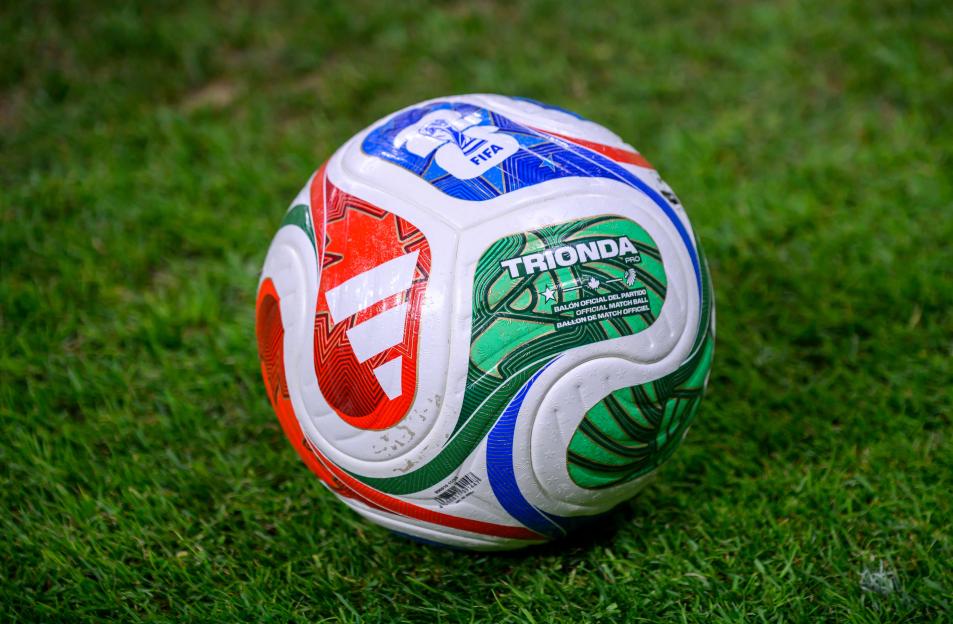 Adidas have produced the World Cup ball ever since way back in 1970 Credit: Shutterstock Editorial
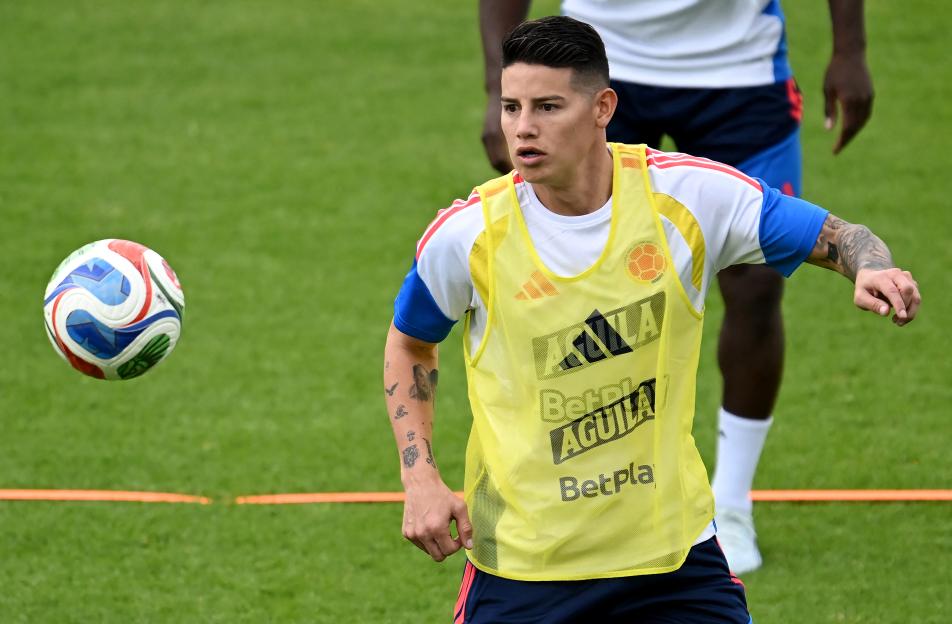 Colombia’s James Rodriguez puts the ball to the test in a pre-tournament training session Credit: AFP
get their campaign underway a few days later when the Three Lions face 2018 finalists .
As Thomas Tuchel’s side prepare to head Stateside early next week, there’s already some fantastic deals for fans at home to get their hands on.
Decathlon have reduced the official World Cup training ball by 20% , down to just £19.99.
It’s much the same as the official match ball, only cheaper, and is filled with colours representing host nations , Mexico and .
Adidas say the ball’s six-panel design supports consistent and predictable flight, unlike the memorable Jabulani ball from the 2010 tournament in South Africa.
The German sports giant has made the match ball for every World Cup since 1970 – four years after England got their hands on the trophy for the first and only time to date.
The official match ball for this summer’s tournament, however, takes ‘hi-tech’ to a whole new level.
The Trionda sensor capable of tracking every single touch and movement in real time.
Adidas' World Cup balls
ADIDAS have designed every ball used at the World Cup since 1970.
The German sports manufacturer has had some iconic editions, such as the wobbly Jabulani in 2010 and the stunning Azteca in 1986.
- 1970 (Mexico): Telstar
- 1974 (West Germany): Telstar Durlast / Chile Durlast
- 1978 (Argentina): Tango
- 1982 (Spain): Tango España
- 1986 (Mexico): Azteca
- 1990 (Italy): Etrusco Unico
- 1994 (United States): Questra
- 1998 (France): Tricolore
- 2002 (South Korea / Japan): Fevernova
- 2006 (Germany): +Teamgeist (Final: Teamgeist Berlin)
- 2010 (South Africa): Jabulani (Final: Jo’bulani)
- 2014 (Brazil): Brazuca (Final: Brazuca Final Rio)
- 2018 (Russia): Telstar 18 (Knockouts/Final: Telstar Mechta)
- 2022 (Qatar): Al Rihla (Semifinals/Final: Al Hilm)
- 2026 (Canada / Mexico / USA): Trionda
Weighing just 14g, players won’t notice the difference or even know it’s there, but fans certainly will as the tracking system works in tandem with the dreaded (we all know it’s going to cost England at some point, let’s face it).
The 500Hz motion sensor records data a staggering 500 times every second, and so, that takes up quite a lot of battery life!
It’ll be charged before every single game to ensure it doesn’t run out of juice.
The added tech means it’s the most expensive World Cup ball to date, coming in at £130.