DEEP undercover in the world’s most secretive regime, a retired Danish chef turned spy spent ten gruelling years exposing North Korea’s crime-ridden engine.
Ulrich Larsen, known as “the Mole”, rubbed shoulders with the powerful foreign representatives and figures in the Hermit Kingdom – eventually getting his hands on a weapons list that resembled a “pizza menu”.
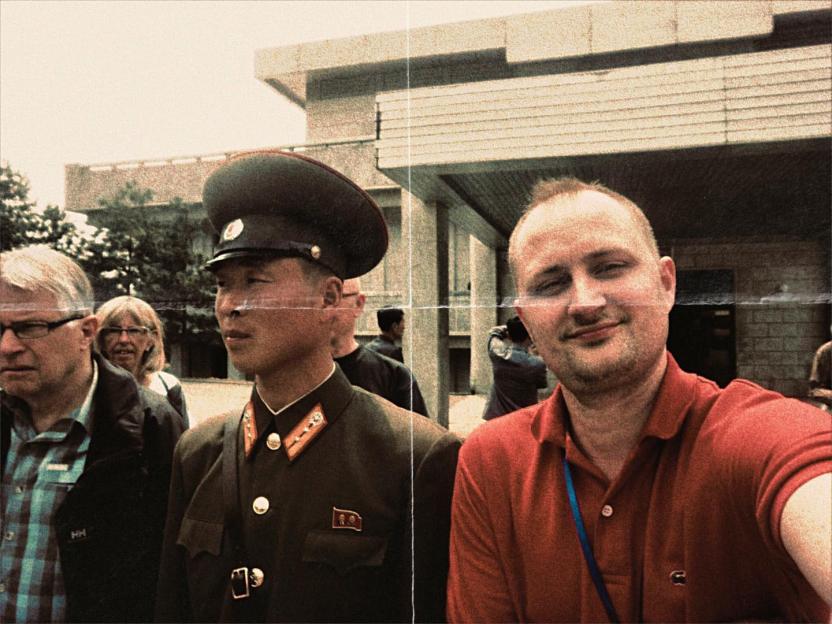 Former Danish chef Ulrich Larsen first visited the Hermit Kingdom in 2012 Credit: Instagram/ulrich_themole_larsen
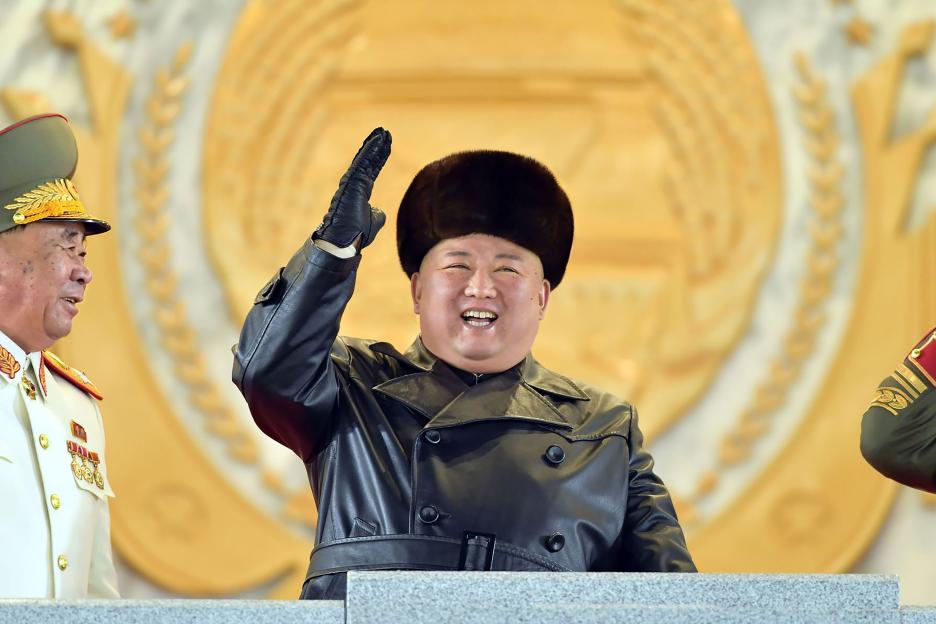 North Korean dictator Kim Jong-un has used shadowy schemes to evade UN sanctions Credit: AFP
He told The Sun the inside story of how he found the smoking gun that proves how organised crime keeps Kim Jong-Un’s evil regime afloat.
Ulrich’s journey to Pyongyang all started with an inflamed pancreas.
The illness became chronic, and forced an early retirement from a career as a successful Copenhagen chef.
During one of many long stints in hospital, the Dane stumbled across a documentary called The Red Chapel, by storied filmmaker Mads Brugger.
The 88-minute exposé follows two comedians disguised as a vaudeville act, who methodically lay bare North Korea’s iron-fisted oppression.
The Hermit Kingdom has long been the subject of sweeping UN sanctions – its punishment for pursuing an aggressive programme and threatening an on the West.
Within its borders, millions are subjected to violations beyond comprehension and dystopian bloodhounds work tirelessly to sniff out dissenters.
As Supreme Dictator Kim lines his pockets and triple XL stomach, the majority of his people starve on stale rice.
But in order to rake in the much-needed cash to fund his lavish diet and nuclear hobbies, Kim and his cronies have been forced to hatch plots to traffic military-grade weapons and class A .
Paranoid state police keep an eagle eye over every square inch of the regime, but for all their guile, were outfoxed by a daring Danish man with a handheld camera.
Brugger’s documentary flicked a switch in Ulrich, who recalled childhood trips behind the Iron Curtain to the communist dictatorship of its day, East Germany.
Inspired by Brugger’s work, Ulrich wanted to help expose the reality of life in North Korea and wormed his way into Denmark’s Korean Friendship Association – a fanatical society of North Korea supporters.
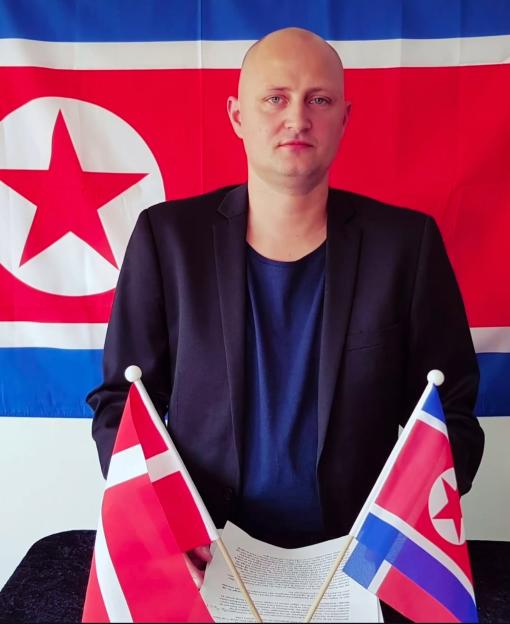 Larsen infiltrated North Korea and exposed arms trafficking deals Credit: Instagram/ulrich_themole_larsen
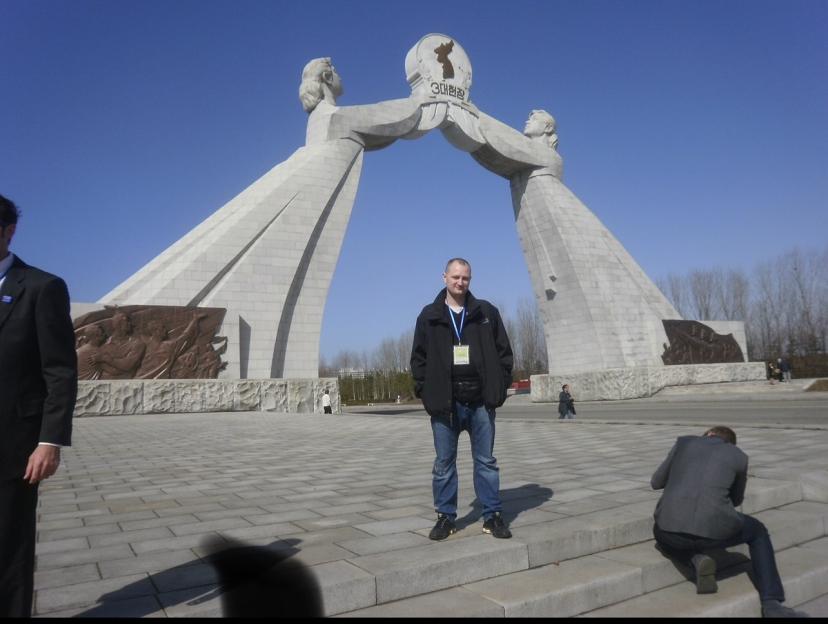 The Mole was granted special access and even awarded a medal for his supposed propaganda work Credit: Instagram/ulrich_themole_larsen
He told The Sun: “I found a little old Danish association supporting , all everyday people aged 60 and over, who were having a meeting in Copenhagen.
“I started creating a lie for the Danish chairman, writing that when I was a kid I experienced East Germany and it was the most fantastic place on Earth, because everybody had a job.”
Ulrich’s bait worked, and Korean Friendship Association President and diehard communist Anders Kristensen welcomed him in with open arms.
The next step would be to team up with filmmaker Brugger, who was by this point a recognised opponent of the regime, to create a trap and gain access to North Korea.
Ulrich said: “I reached out to Brugger on but did not expect an answer. He said later that I was his lottery ticket back to .”
What followed was a carefully crafted infiltration, pinned on a stroke of genius that paved the way for their documentary – The Mole: Undercover in North Korea.
To maintain his cover and a reason to film, Ulrich introduced himself as an propagandist to the Korean Friendship Association.
He pitched the idea of producing small clips to show the “true story” of the Hermit Kingdom.
Ulrich said: “The Korean Friendship Association are just a bunch of useless idiots for the regime.”
Ulrich was promoted to board member, which eventually gave him access to North Korea itself.
The Danish Korean Friendship Association, like other branches around the world, were invited to Pyongyang for recognition.
Ulrich was personally awarded a friendship medal for his loyalty and perceived propaganda efforts.
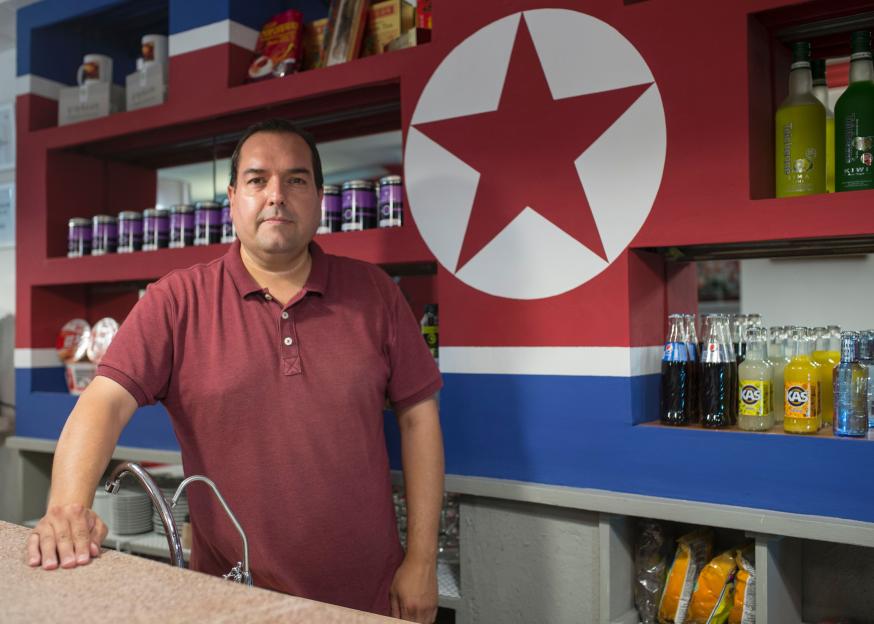 Alejandro Cao de Benos has helped raise donors for Kim’s trafficking deals Credit: AFP
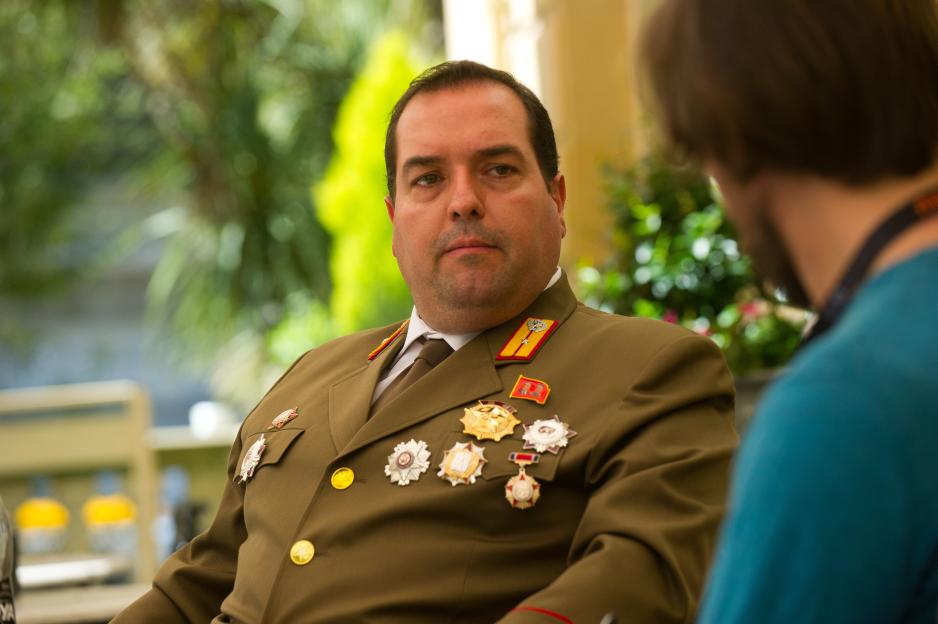 Ulrich described the Spaniard as the ‘most powerful Western man in North Korea’ Credit: Getty
In turn, he was allowed to record far more freely than most visitors – and continued building credibility over repeated trips, embedding himself deeper into the secretive regime.
His connections eventually led him to Alejandro Cao de Benos – a Spanish aristocrat and infamous Kim family bootlicker.
As the head of central Korean Friendship Association and known as the “Gatekeeper of North Korea”, Cao de Benos worked for the regime soliciting donations to fund the sanction-dodging schemes.
“In North Korea, he was the most powerful Western man, no doubt about it,” Ulrich said.
Cao de Benos was acquiring donations to fund his authoritarian overlords and bolster his own dictatorial status.
After three years building trust with Cao de Benos, Ulrich needed another character to act as a businessman with money to invest in North Korea.
They brought in Jim Latrache-Qvortrup – a convicted drug dealer coming off the back of an eight-year stint – to pose as “Mr James”, a wealthy businessman reminiscent of a suave Bond villain.
The aim was to set up a meeting between Cao de Benos and Mr James in a bid to expose North Korea’s illegal arms trade.
Ulrich served as the mediator at the introduction between Alejandro and Mr James at a plush Oslo hotel suite, which was secretly recorded.
“After only five minutes, [Alejandro] started talking about drugs, weapons, regular pharmaceuticals and missiles”, Ulrich recalled.
“We were sitting in front of a man who represents the North Korean regime.
“He’s been awarded several medals. He met the leaders. At that point, we didn’t know if he was also just bragging to maybe gain 10,000 in the pocket.”
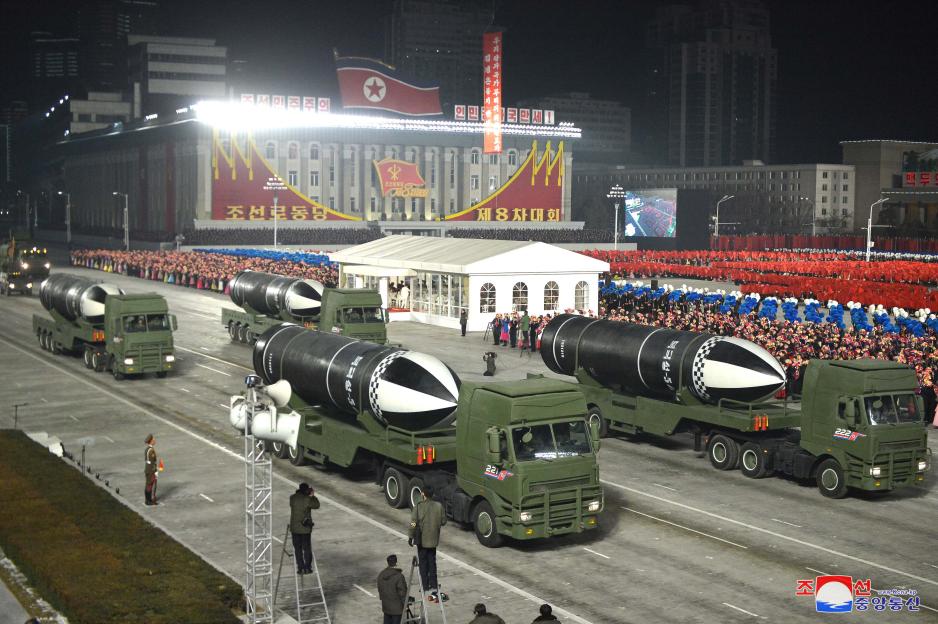 The communist dictatorship is desperate to raise funds for its aggressive nuclear programme Credit: EPA
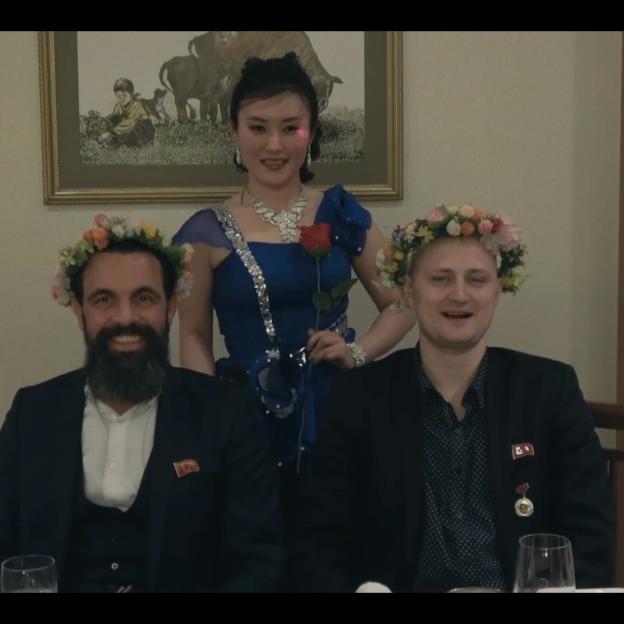 Ulrich and former con ‘Mr. James’ visited the regime to arrange a bogus arms deal Credit: Instagram/ulrich_themole_larsen
Ulrich said they took the “big and dangerous step” of going from working with “stupid” people supporting North Korea to “people doing criminal activities with North Korea”.
Before returning to the Hermit Kingdom to hammer out a staged arms deal, the spy was flown out to to receive special security training from a former CIA agent called “Max”.
Ulrich said: “He made it quite clear to me. If you get found out, you die.”
After a nerve-racking flight, Ulrich and Mr James were greeted with VIP treatment in Pyongyang from friends of Cao de Benos.
Maintaining their deep cover, they were gearing up for a secret meeting that would expose the regime’s dodgy deals.
The pair were driven to the outskirts of Pyongyang – an area no foreigner would be welcome on one of the regime’s carefully choreographed tours.
They were led into a crumbling building and directed towards a stairwell.
Ulrich said: “They asked us to go down to a basement in the building.
“From those roughly 50 steps from the car to the door, I was expecting to be killed, but I couldn’t show any fear.
“I was walking in front, down to the basement, and it was getting darker and darker. I thought, ‘in a second, I’m going to hear this sound from the gun, and then lights out’.”
Miraculously, after pushing through a heavy black leather door, Ulrich was greeted by an absurd sight.
He said: “There were lights like the ones you see at a disco, and I thought – my God, they’re gonna do some psychological terror on us and then they’re gonna kill us.
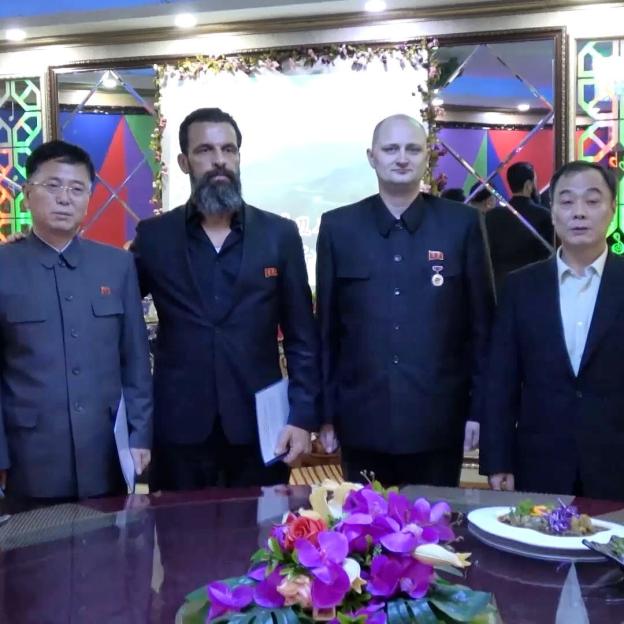 The daring duo met with Pyongyang bigwigs to hash out the criminal scheme Credit: Instagram/ulrich_themole_larsen
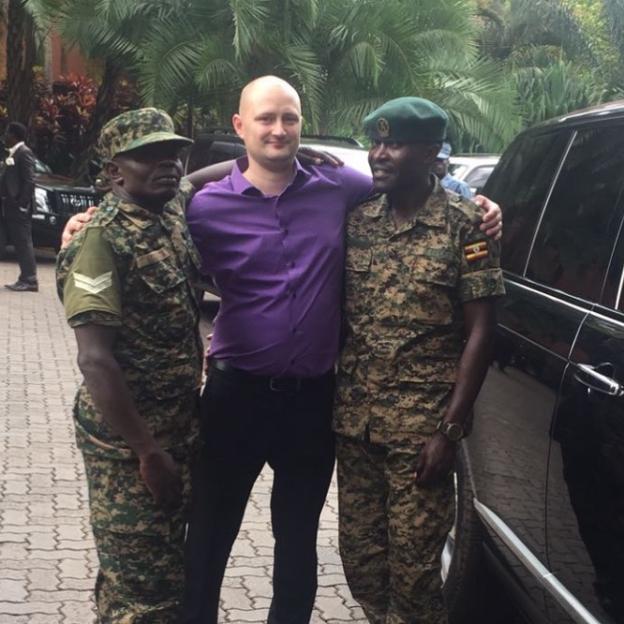 Ulrich helped concoct a plan to build an arms factory in North Korea, which he would eventually sabotage Credit: Instagram/ulrich_themole_larsen
“There was this huge table filled with every kind of food you could expect in the Western world. The people outside the door have never seen this kind of stuff before. There were beers, Coca-Cola, everything.”
Later, North Korean arms and “pharmaceutical” chiefs stopped by to talk business.
As they discussed trafficking plots over household snacks, Ulrich and Mr James were greeted by a weapons list that resembled a “pizza menu”.
The meeting took an even stranger turn when an arms boss called a pause and broke into an impromptu karaoke performance.
Ulrich said: “In the middle of everything, he just walks to a laptop, takes a microphone in his hand, and starts singing.
“We were talking about buying an island in Africa to build a factory… and now I’m singing North Korean karaoke.
“Then they gave me the microphone and said, ‘your turn, Mr Larsen’. And the music starts and I was expecting Let It Be or Hey Jude, but they put on Celine Dion’s My Heart Will Go On from Titanic.
“I’m a bad singer, but not to lose face, I start improvising a Danish children’s song I would sing for my daughters when they were small, and doing funny things with my arms and legs.
“Then I sat down and emptied a bottle of beer to relax, when a North Korean who’s been standing behind me puts his hands on my shoulders.
“I thought, ‘s*** he’s gonna kill me’, but he said, ‘I can feel that song came directly from you heart. I can feel in your heart that you love our dear leader’.
“It was because it reminds me of my children, but for them, everything is about the three Kims.”
Once the meeting finished, Ulrich, Mr James and their North Korean handlers got to work.
 Ulrich and Mr. James were told to say they were building a hospital, pictured here in the documentary Credit: Instagram/ulrich_themole_larsen
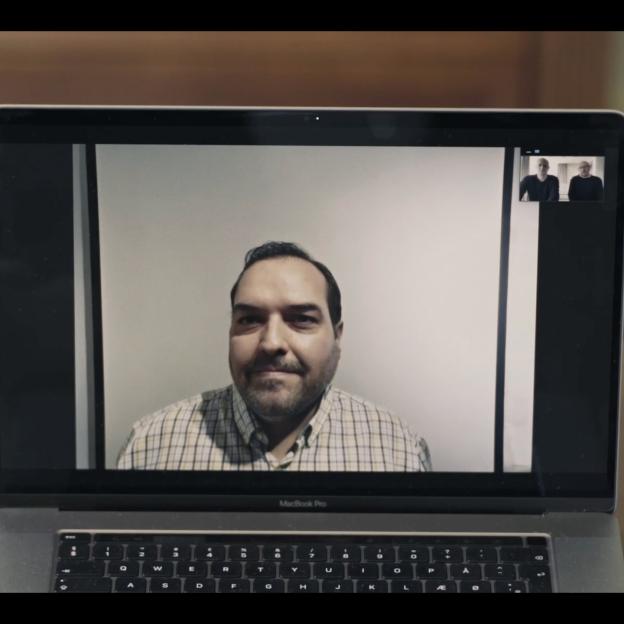 Cao de Benos was told he’d been played in the documentary’s finale Credit: Instagram/ulrich_themole_larsen
After earmarking Namibia as a potential host to build a weapons factory, diplomatic ties were severed and attention turned to Uganda.
Ulrich said: “We found an island for sale in Lake Victoria and we went there to see it. We were told there were maybe 300 or 400 people living there who could be moved.
“So we hired a helicopter to take a flyover, and so the North Koreans could see it from above. From above, there were probably more like 3,000 4,000 people in total on the island.”
Local intermediaries appeared unfazed at the prospect of booting their people out.
They said that once $5million (£3.7m) was transferred, the islanders would be removed.
To maintain the cover story, Ulrich and his team were forced to play along, promising things they could not deliver.
Efforts were being made to solve the challenge of moving building materials and payments without breaching international sanctions.
This led to the introduction of a Jordanian businessman who claimed to have the necessary connections.
He told Ulrich and Mr James that he could arrange shipments from and move them using ghost tankers that could not be traced.
The ships would sail in areas without satellite coverage, change identity, or transfer cargo at sea so it could not be tracked.
Instead of paying money, North Korea would send workers and equipment to skirt around the sanctions.
A meeting was arranged in Copenhagen to outline the iron out the final details of the deal.
“We met at the most exclusive hotel in for everything to be signed and we got a whole menu of weapons with the manuals,” Ulrich said.
At this point, the filmmakers were preparing to bring the scheme to an abrupt end.
They would withdraw the fictional investor and cause the deal to collapse before any real transaction could take place.
Ulrich said: “Mr James disappeared, and was told to become a ghost.”
He was surprised when Cao de Benos appeared unfazed and was willing to move the plan along.
But Brugger and Ulrich decided it was time to make the grand reveal in a carefully orchestrated video call.
He said: “I just start telling him about who I am and what I did. And then after about 20 seconds, Mads sat next to me and told him we got everything on tape.
“He simply switched [the video call] off. And that’s the last I heard from him.”
Far from fearing for his life, it has returned to relative normality, Ulrich said.
Keen to share his story, he said: “I don’t hate North Korea. I don’t hate North Korean citizens. I hate the people running the country.”
Reflective on what he was able to achieve, Ulrich said: “I’m proud of all the nice words I had, but I feel a bit scared because the CIA or MI5, MI6 or FBI are not able to do what I did.
“I think the reason they couldn’t do it is because they are acting like agents, where I was 95 per cent myself and the last 5 per cent was the mole.”
But Ulrich ultimately achieved what he set out to do, saying: “It was my fault that there will be even more sanctions on North Korea after the release of The Mole.”