TERRIFIED passengers have been ordered to stay on a virus-ravaged cruise ship where three people have died and a Brit was left fighting for his life.
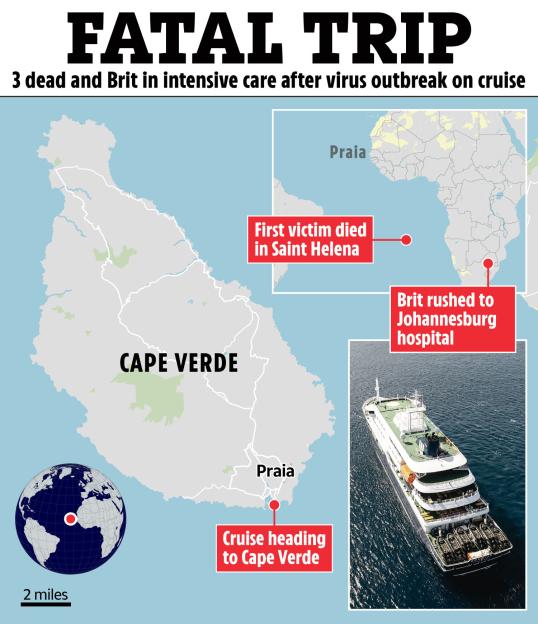
Six suspected cases of hantavirus have been reported on the MV Hondius, travelling from Argentina to Cape Verde, according to the World Health Organisation.
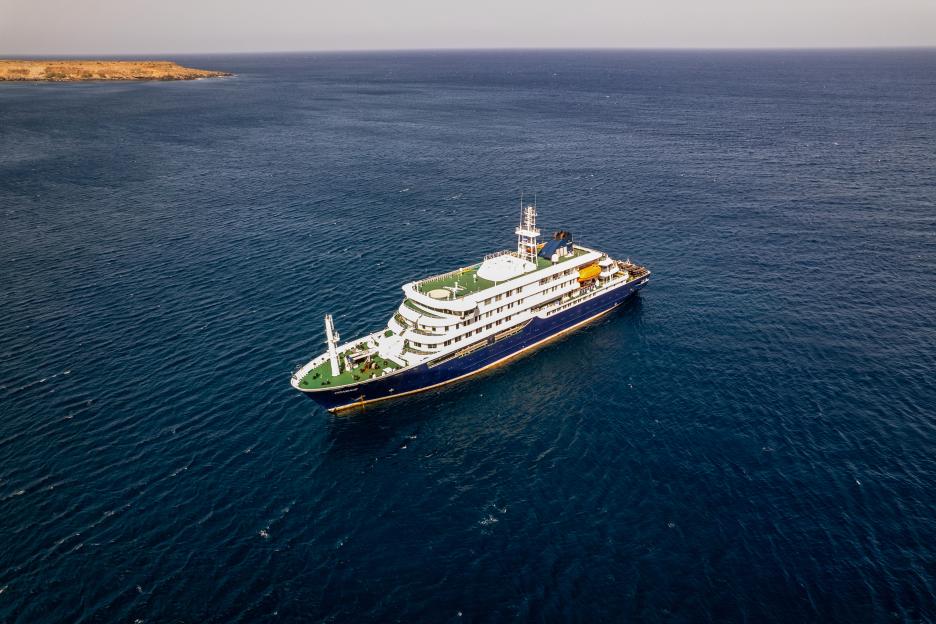 The MV Hondius cruise ship has faced a virus outbreak Credit: AFP
So far has been confirmed – the same illness that killed , on March 7, 2025.
Five more cases are currently under investigation.
Passengers have now been told to stay on board while “awaiting approval” to disembark.
A letter to guests from Oceanwide says: “We are currently anchored offshore of Cape Verde and awaiting approval from the Cape Verde authorities to disembark, with priority given to those who require immediate medical care.”
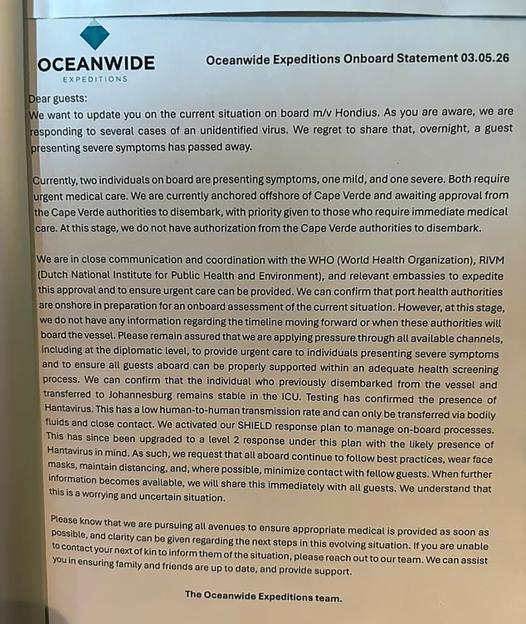 A letter distributed to customers from cruise company Oceanwide Expeditions on Sunday
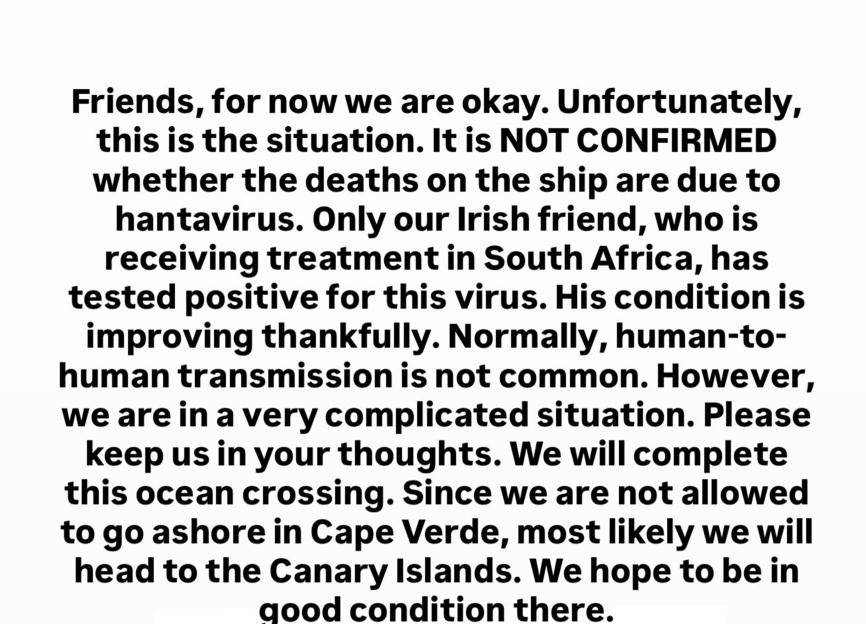 One passenger posted on social media outlining the situation Credit: Instagram
It continues: “At this stage, we do not have authorisation from the Cape Verde authorities to disembark.”
The note advises guests to “follow best practices, wear face masks, maintain distancing, and, where possible, minimise contact with fellow guests”.
A passenger told the Daily Mail: “We have not heard from Oceanwide at all. We still have friends on the ship.”
The first person to show symptoms was a 70-year-old passenger who died on board.
He had suddenly fallen ill, experiencing fever, headache, abdominal pain and diarrhoea. He died on arrival in St Helena, a UK territory in the South Atlantic.
Meanwhile, his 69-year-old wife also fell ill and was evacuated to South Africa, where she died in a Johannesburg hospital.
With her was a British man, also 69, who is being treated in intensive care.
A source close to the case speaking on condition of anonymity said the provisional toll was three dead, including a Dutch couple.
They said the third fatality was still on board the ship, and discussions were under way to decide whether two other sick passengers should be placed in isolation in hospital in Cape Verde.
The World Organisation has been informed and is now providing support.
“To date, one case of Hantavirus infection has been laboratory confirmed, and five other cases are suspected,” a statement from WHO said.
“Of the six people affected, three have died and one is now in intensive care in South Africa.”
The MV Hondius is listed as a polar cruise ship. It is operated by a Dutch-based tour company, Oceanwide Expeditions.
One of the cruises offers an itinerary departing from Ushuaia for Cape Verde, with stops in the islands of South Georgia and Saint Helena.
According to online ship-tracking sites, the MV Hondius was just off the port of Praia, the capital of Cape Verde, on Sunday.
The vessel can accommodate around 170 passengers and has around 70 crew members.
Hantavirus refers to a strain of viruses carried by rodents, spread through inhalation of airborne particles from dried rodent droppings.
While rare, it can also be transmitted through rodent bites or scratches.
The UK Foreign Office confirmed it is “closely monitoring reports of a potential Hantavirus outbreak” and “stand ready” to support British nationals if needed.
“We are in touch with the cruise company and local authorities,” a statement added.
What is Hantavirus?
HANTAVIRUS is one of the deadliest diseases for humans, comparable to Ebola.
It is a rare pathogen primarily carried by rodents but can also be transmitted to humans via droppings and urine.
The virus can lead to serious illnesses, including hantavirus pulmonary syndrome (HPS) and haemorrhagic fever with renal syndrome (HFRS).
Each hantavirus strain is associated with a specific rodent species and is transmitted to humans through exposure to infected rodents’ urine, feces, or saliva, and less commonly through rodent bites.
The virus was first identified during the 1950s Korean War near the Hantan River and is not easily spread between humans.
Despite its rarity, hantavirus has a high mortality rate of 38 percent, based on CDC data.
There is no specific treatment or cure.
Symptoms of hantavirus infection include fever, kidney damage, fatigue, vomiting, and reddish cheeks, with an incubation period ranging from four days to two months.
Humans are at risk of infection through contact with wild or pet rodents, their droppings, or through the mucous membranes of the eyes, nose, or mouth.
To date, no confirmed cases of direct human-to-human transmission of hantavirus have been reported.