TODAY marks 25 years since a driver nodding off at the wheel triggered a catastrophic chain of events that left 10 people dead.
The Selby rail crash is Britain’s worst train disaster of the 21st Century in a catastrophe that hit a quiet stretch of track in North Yorkshire.
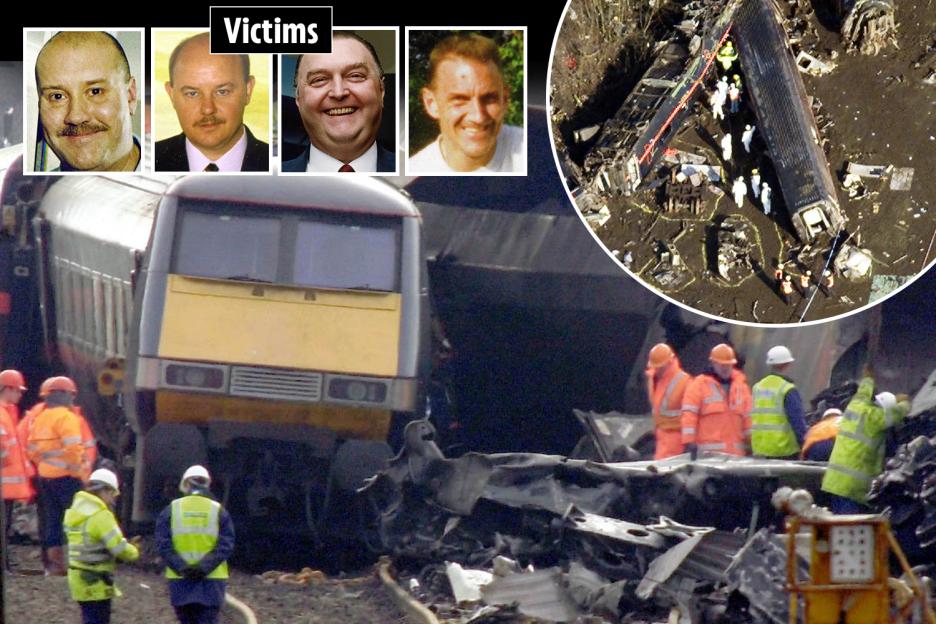
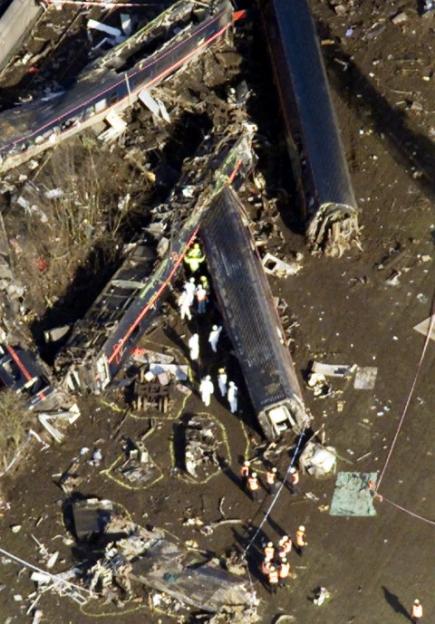 An aerial view of the aftermath of the Great Heck rail disasterCredit: Phil Noble
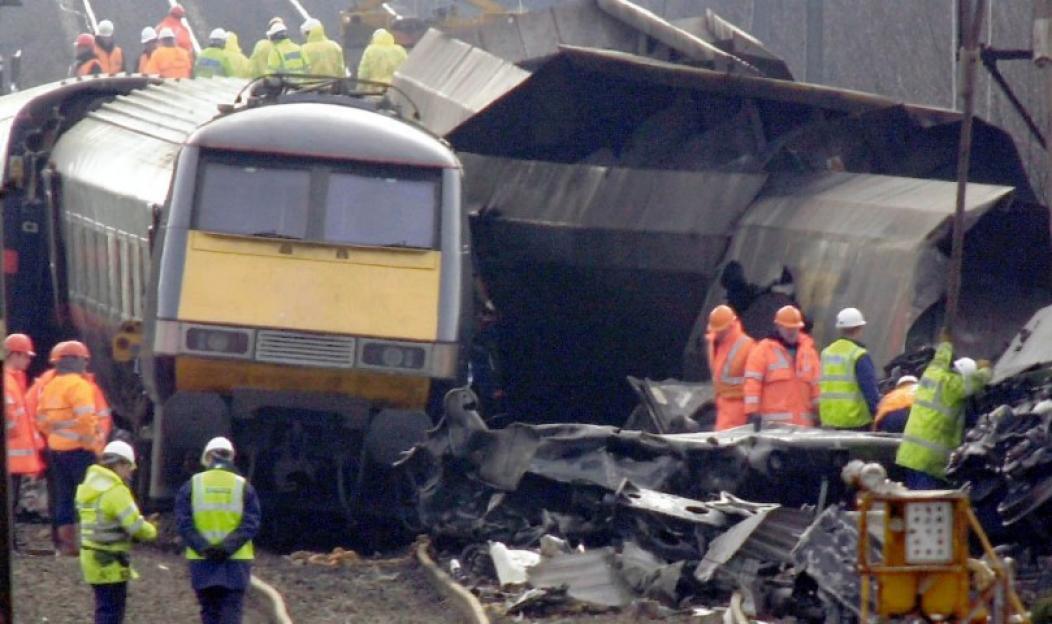 One of the carriages had rolled 360 degrees anti-clockwise and ended up in a field 427ft (130m) from the bridgeCredit: John Giles
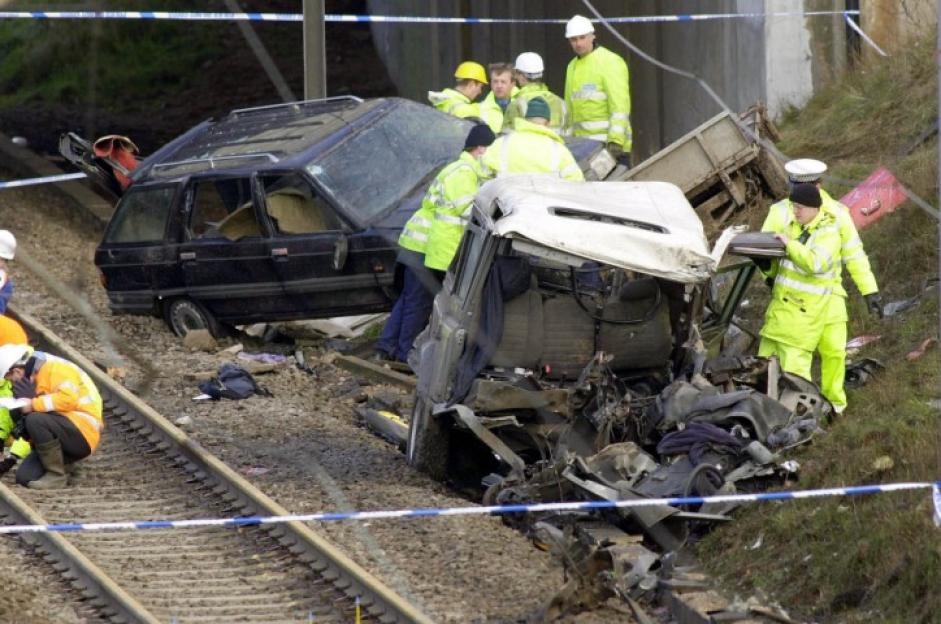 Emergency crews were drafted in from across Yorkshire, with ambulances and three helicopters used to transport the injured to hospitalsCredit: Not Known
In the half-light of a cold February morning in 2001, a Land Rover towing a car swerved off the M62 motorway near the tiny village of Great Heck.
It tumbled down an embankment and landed directly on the high-speed East Coast Main Line.
Tragically moments later, a passenger express with 99 people onboard slammed into it at a closing speed of 142 miles an hour.
The impact sent the train into the path of a 1,800-tonne Freightliner hauling coal in the opposite direction.
This triggered a catastrophic second collision that tore through carriages and left wreckage strewn across fields.
Emergency services from across the region raced to the scene.
Police, firefighters and paramedics battled devastation just as dawn broke in a desperate bid to save lives.
The disaster remains the deadliest rail tragedy Britain has suffered this century.
Now, 25 years on, we break down the terrifying chain of events minute by minute.
4.40am – Gary Hart leaves home
Gary Hart, 36, leaves his home in Strubby, Lincolnshire, to head to his work in Wigan.
It is a 145 mile drive.
The dad-of-two had been up all night chatting on the phone to a woman he met on the internet.
It begins a chain of events that leads to the death of 10 people.
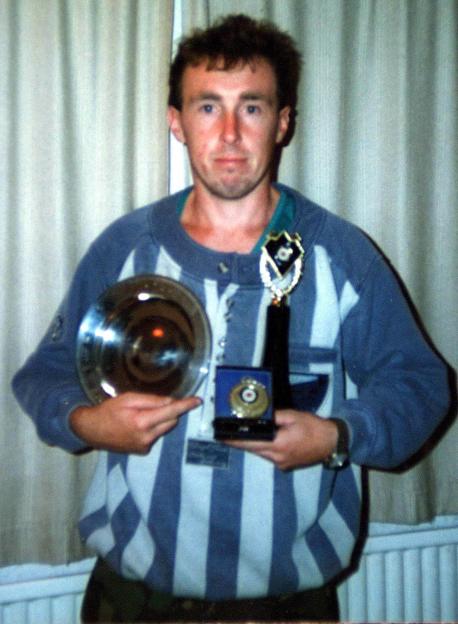 Gary Hart was behind the wheel of the Land RoverCredit: PA:Press Association
06:12am – A Fatal Error
Hart – who is also towing a Renault Savannah behind his Land Rover -is believed to have asleep at the wheel.
He always denied this – instead later telling a court he heard a “bang” before veering off the road.
The Land Rover and trialer leaves the westbound carriageway of the M62 near the bridge over the East Coast Main Line
It hurtles down the 377ft embankment and lands on the southbound railway track.
The scene is set for disaster
Moments Later – A Desperate Call
Gary Hart escapes the vehicle and uses his mobile phone to call emergency services, warning them a car is stranded on the line.
But time has already run out.
Hart's 999 call
HERE is an extract from Gary Hart's call to 999.
Gary Hart: Er, no, I wasn’t far from the M1, it’s just where the A1, just where the, the railway line.
Operator: Right, okay, it’s just that I’m going to need a better location than that, you’re through to North Yorkshire Police here.
Gary Hart: But there’s a train coming.
Operator: Oh my God. [Sound of train going past]
Gary Hart: F***ing hell, f***ing hell.
Operator: Hello?
Gary Hart: The train’s just gone straight through the front of me Land Rover.
Operator: Right.
Gary Hart: It’s … off.
Operator: Is, is the train still on the track?
Gary Hart: Yes.
Operator: It’s carried on going?
Gary Hart: Still going. For God’s sake.
Operator: Is the car now, is it off the line now?
Gary Hart: No, it’s, the Land Rover’s off the line, but there’s a car, the car’s on the line as well.
Operator: The car’s still on the line?
Chillingly, mid-way through his call to police, the passenger train, which had been travelling at speeds of up to 125mph, hit his Land Rover.
In a recording of the call, the screeching of brakes can be heard as Hart tells the operator the train has “gone straight through my Land Rover”.
06:13am – First Smash
The 04:45 Great North Eastern Railway InterCity 225 service from Newcastle to London had just left York travelling at high speed, smashing into the Land Rover.
The collision derails the leading undercarriage of the passenger train.
Around 99 people are on board.
Though damaged, the train remains upright and continues down the track — fatally destabilised.
Seconds Later – Disaster doubles
The derailed passenger train is deflected into the path of a northbound Freightliner coal train.
Inevitably, in a horrific second smash, the two trains collide head-on.
06:14am – Catastrophe
The force of the collision leaves locomotives and carriages mangled and scattered across both lines and into surrounding fields.
One coach comes to rest upright in a field. The driving part of the carriage at the front is flattened.
By the end of the morning, 10 people — including both train drivers — are dead.
A further 82 are seriously injured.
Three helicopters and a fleet of ambulances ferried the injured to seven different hospitals across Yorkshire, with snow, sleet and freezing weather creating difficult conditions for the rescue efforts.
The Aftermath
It was later found the Land Rover driver had little sleep the night before and was found guilty of 10 counts of causing death by dangerous driving.
He was sentenced to five years in prison.
Shockingly his trial heard he fell asleep at the wheel after staying up all night chatting on the phone to a woman he met on the internet.
After a sleepless night of online flirting, he then embarked on a 145-mile (230km) journey to work at 4.40am.
The 10 who died
- Raymond Robson, 43, GNER senior conductor
- Paul Taylor, 42, GNER buffet chef
- John Weddle, 47, GNER train driver
- Steve Dunn, 39, freight train driver
- Steve Baldwin, 39, passenger
- Chris Terry, 30, passenger
- Alan Ensor, 44, passenger
- Barry Needham, 40, passenger
- Clive Vigden, 39, passenger
- Robert Shakespeare, 43, passenger
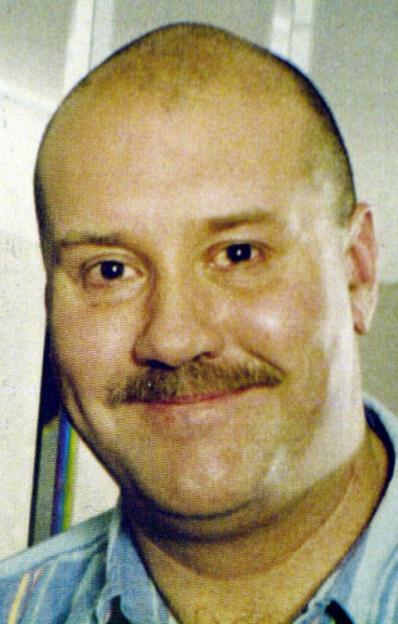 Goods train driver Stephen Dunn, 39, from Brayton, was one of the ten victims of the Selby train crashCredit: Not Known
On the morning of Feb 28, 2001, Tony Thompson, a superintendent for the British Transport Police, was on a train into central London to take his post at the Tavistock Place office when he learned of the news of the disaster.
He reported straight at the HQ for a briefing on the smash before hopping in his boss’s unmarked police car and driving more than 200 miles north to the scene.
Having worked on other notable train crashes – and the Paddington crash in the same year – in his 32 years at BTP, he said this was the “most devastating”.
He estimated there were at least 1278 emergency responders at that scene.
This included 472 police officers, 167 firefighters and 128 ambulance personnel—a testament to the extraordinary multi-agency effort.
‘IT WAS LIKE A WAR SCENE’
“I have been to so many crashes during my career, but this one was different,” Tony, who is now 77, told The Sun.
“There were carriages on either side of the bridge and even one of the Freightliner carriages had passed under the bridge.
“It was like a war scene, you would only really see stuff like this in movies and on TV, but of course this was real, the scale of it was just unbelievable.
“But from an emergency services point of view, we had a job to do. The physical aspect of the crash was one thing, but the emotional aspect was another.
“First thing first, and what everybody was most desperate to find out was the exact extent of the devastation to human life.
“And amid the chaotic scenes, it was going to be a big task to work that out. This was the most devastating crash I had ever seen; it was totally unprecedented.
“I will never forget standing on the little bridge over the railway line with sort of wreckage scattered around on both sides.
“You certainly appreciate how large and complicated trains are when they are derailed.
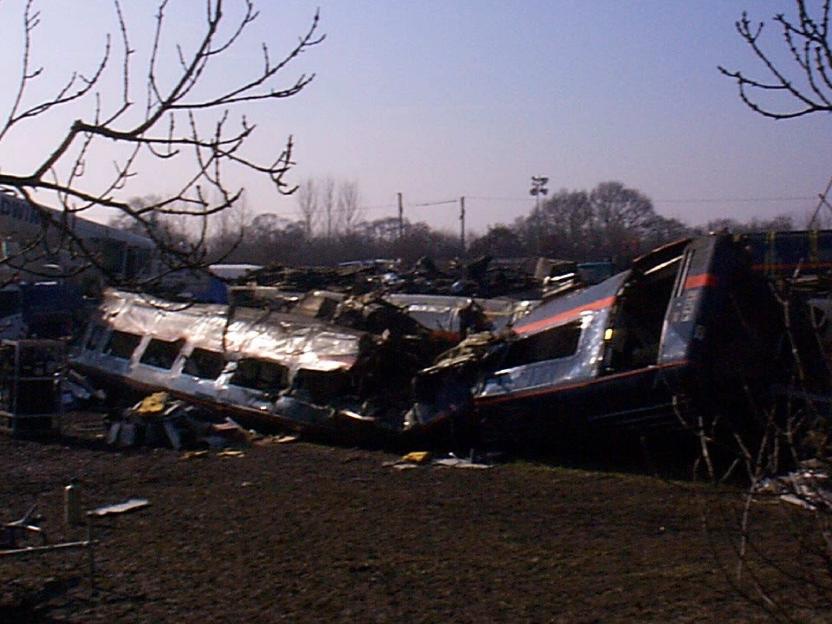 A picture Tony took of the devastation of the Great Heck disaster at the timeCredit: Tony Thompson
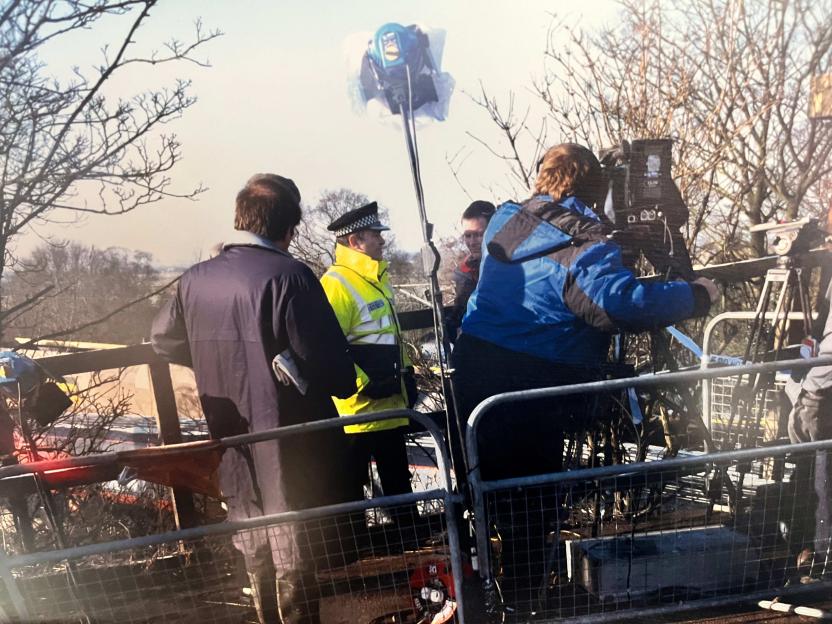 Tony being interviewed by the press at the crash siteCredit: Unknown
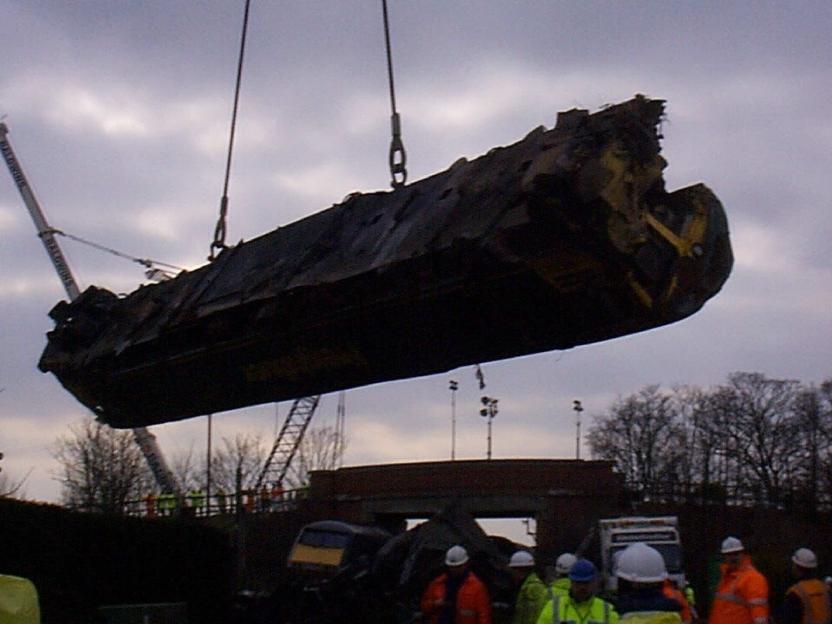 Tony captured a picture of one of the carriages being carried away during the clear upCredit: Tony Thompson
He continued: “This was described in one of the national papers as a billion to one horror, and that was right.
“The death toll would have been so much worse if the incident hadn’t occurred moments after sunrise.”
Tony was tasked with hosting the press conferences for the disaster.
When it was safe to do so he opened a vantage point at the top of the bridge which is where he held them.
But in addition to that, he had the responsibility of dealing with the victims’ families.
He said one of the most poignant moments was when he showed one the families around the crash scene.
A boy, 7, left a drawing he had done for his father – intending to give it to him when he next saw him – at the wreckage.
“I gave them a private moment there, and days later when I inspected [the wreckage], the boy had left his drawing there,” he said.
“Eventually when the site was being cleared I took the picture he had drawn with me and later gave it to their mother.”
In total, Tony showed seven of the 10 families that lost their loved ones in the tragedy around the site.
Today (Feb 28) is speaking at a memorial service held at Selby Abbey.
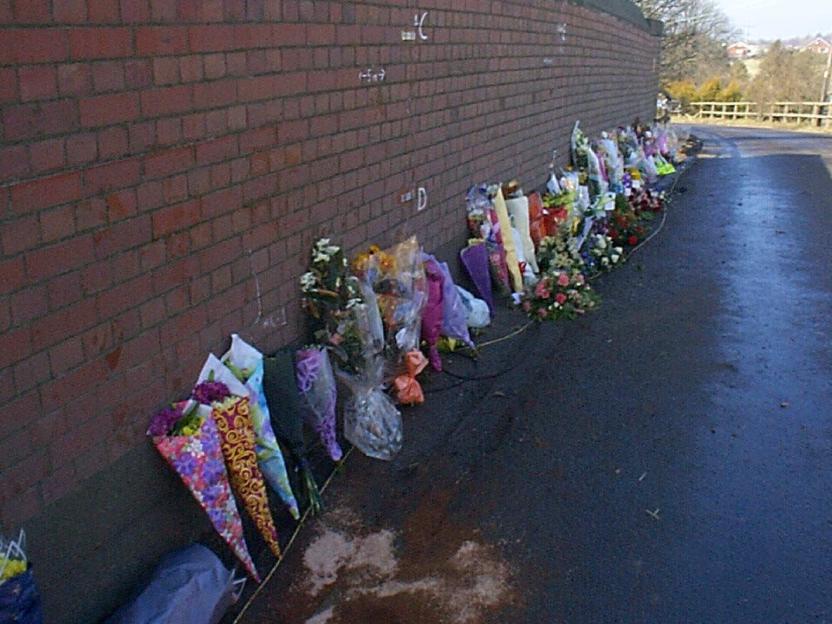 Floral tributes to the victims laid at the sceneCredit: Tony Thompson
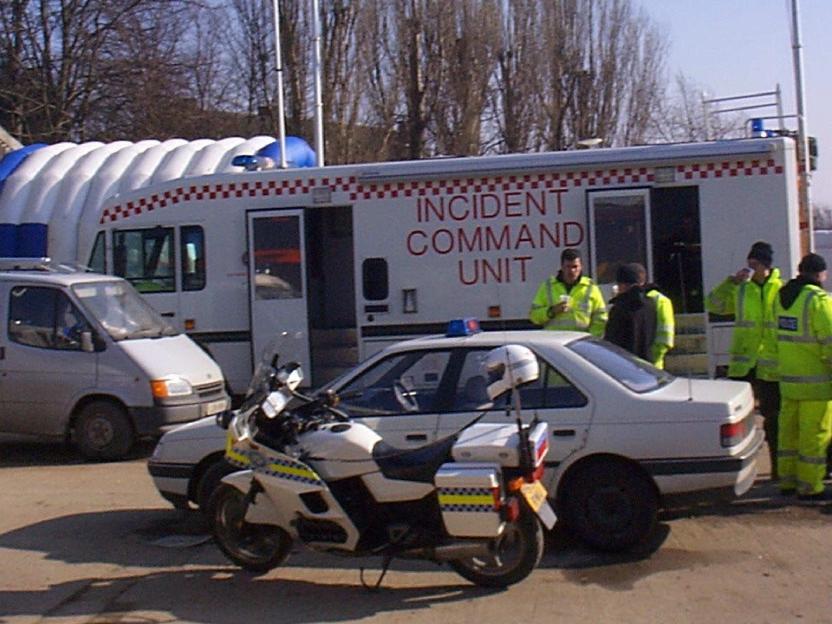 Emergency services at the sceneCredit: Tony Thompson
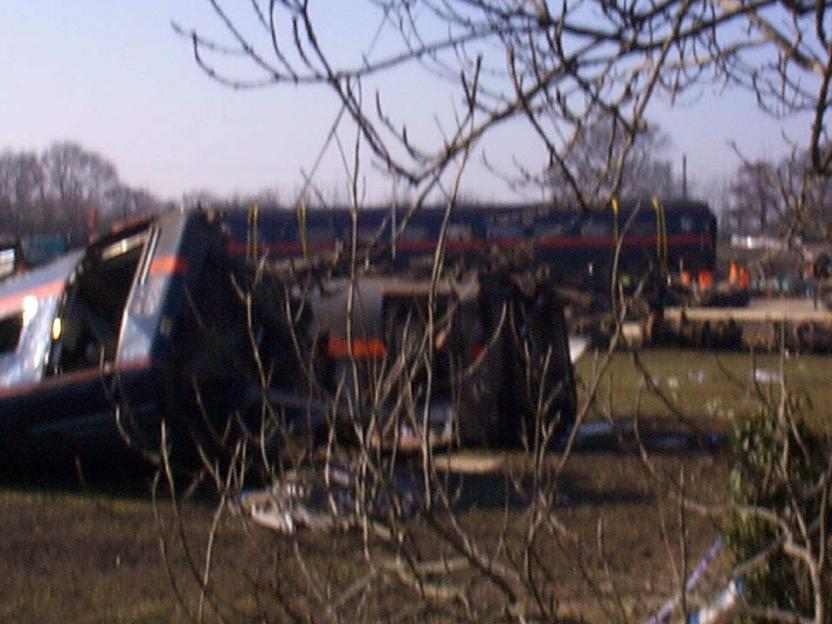 A picture Tony took of the devastation of the Great Heck disaster at the timeCredit: Tony Thompson