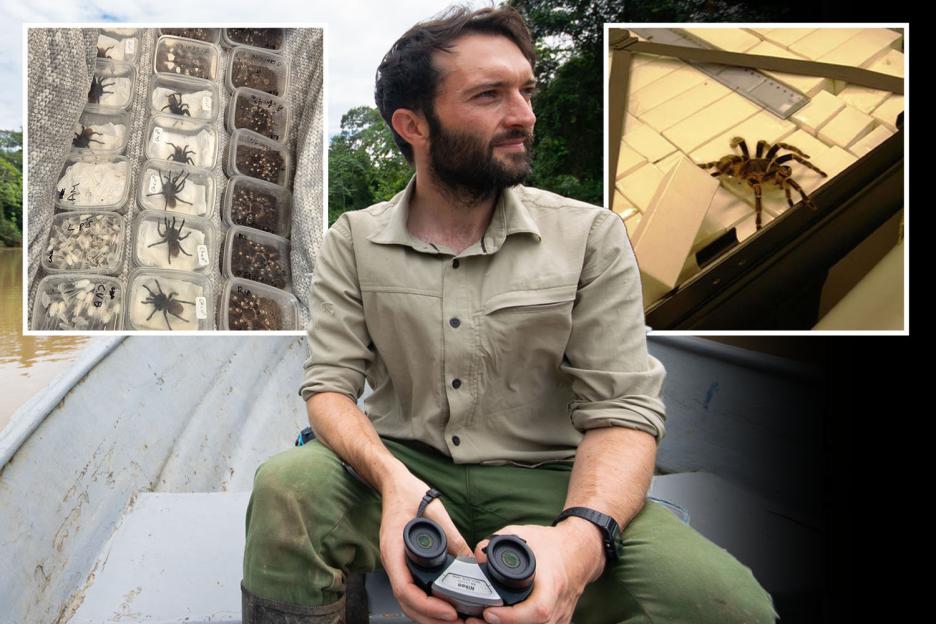
RUMMAGING through a suitcase, a customs agent finds exactly what they’re searching for – a treasure trove of illegal goods.
But this isn’t class A or illicit tobacco. It’s a massive collection of spiders that are being smuggled into the UK.
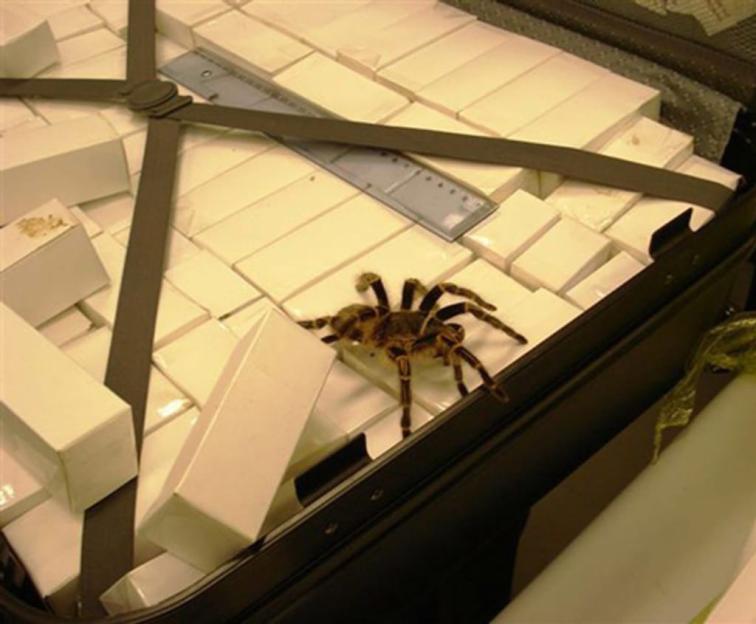 A Brit was caught attempting to smuggle two suitcases of spiders out of Brazil Credit: Supplied
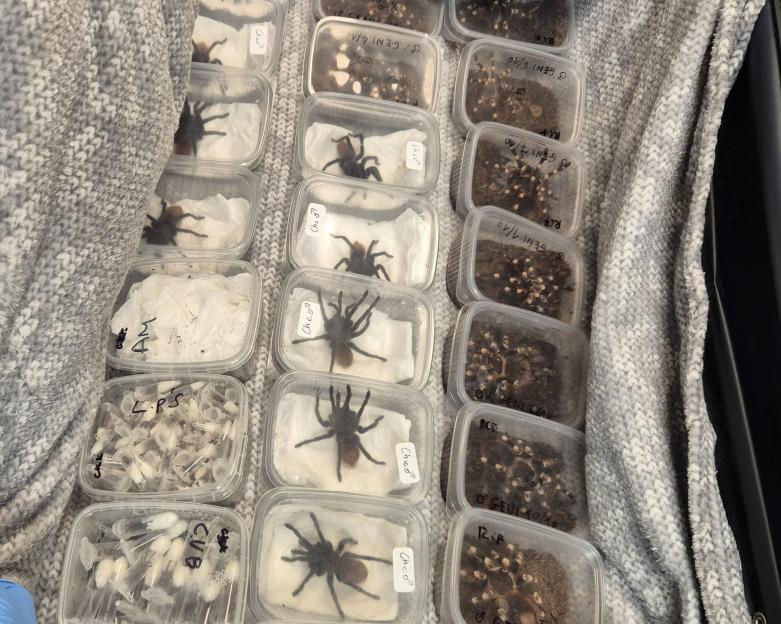 Operation thunder saw the discovery of 2,000 live tarantulas being smuggled into the UK Credit: Defra
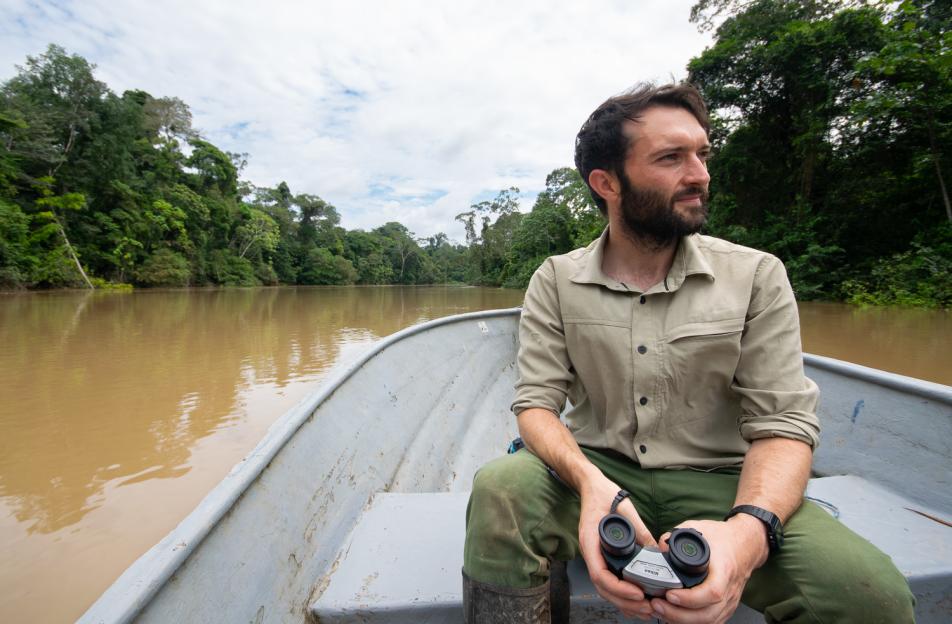 Dr Tim Cockerill says spiders are attractive to smuggle because they’re robust Credit: Supplied
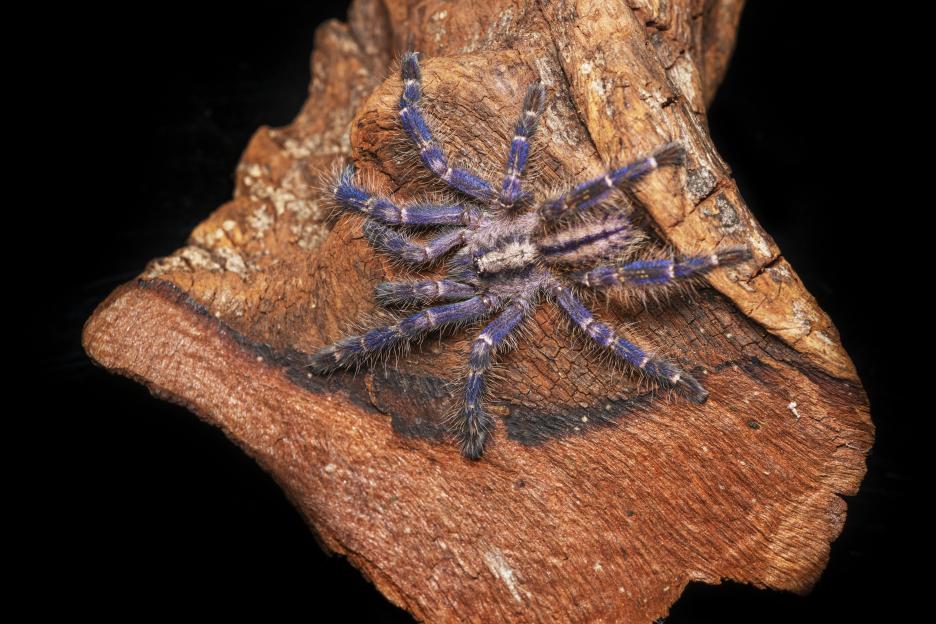 Blue spider “Poecilotheria metallica ” are classed as critically endangered and their trade is restricted Credit: Getty
The eight-legged creepy crawlies can fetch up to £500 a pop with collectors across the country.
And illegal animal smuggling is up 73 per cent since 2024 according to Border Force, with arachnid smuggling on the rise since 2023.
In May, Radoslaw Szymanski, 35, of Clagan Park, Coleraine, pleaded not guilty after being allegedly caught by cops with 2,000 spiders at a 12 Quay Ferry terminal in Birkenhead.
Cops claim he lacked the correct paperwork to be importing the live arachnids into the UK for further sale.
He is set to go to trial next year for allegedly trying to import spiders that are protected under the International Convention on International Trade of Endangered Species (CITES).
Szymanski is said to have had large burrowing tarantulas from , spiders of the Brachypelma genus, which are tarantulas originating from and Poecilotheria, a genus of tarantulas native to India and Sri Lanka.
CITES violations in the UK can result in up to seven years in and an unlimited fine.
Forums are full of collectors and enthusiasts boasting about their collections, and advising on where to get the best spiders around.
“In the UK, spider collecting is a muli-million pound industry and it’s a really popular hobby,” Dr Tim Cockerill, a fellow of the Royal Entomological Society, told The Sun.
“The worst thing for spiders is that because they are quite robust animals they can survive most conditions. So their evolution that has engineered their success is sort of their downfall when it comes to being smuggled.
“A tarantula can be perfectly happy in a fishtank in a way, as long as they’re kept warm enough and fed.”
Dr Tim, who also consults on TV when it comes to etymology, reckons tarantula fans can fall prey to stamp collector syndrome.
“The rarer a specimen becomes, the more people want it and then it becomes really sought after.
“Then for collectors, the rarer a specimen becomes, the more people want it and it can become really sought after. It’s like stamps.”
Spider expert Alice Hughes, an associate professor of Biology at the University of Hong Kong, told the BBC: “[These] forums show that people collect spiders a bit like people collect – they want to ‘catch ’em all’”
The Sun understands Szymanski runs Creatures From The North, one of the biggest spider selling sites in the UK.
In a tarantula forum, one former customer discussing the claims and illegal spider smuggling said: “I don’t condone the illegal practices going on in this hobby (smuggling, brown boxing etc) but there will be no moral outrage from myself about it either.
“Others will feel differently I’m sure and that is cool. Regardless, the smugglers will keep on smuggling, the buyers will keep on buying and every few years a dealer will get hit hard by the law. As long as there is a hobby, this wheel will keep turning.”
There are at least 1,000 known types of spiders in the world, but experts reckon there is likely more that have yet to be discovered and correctly identified.
Dr Sara Goodacre, Professor of Evolutionary Biology and genetics at the University of Nottingham, told The Sun: “People need to understand you can’t just take something from the wild because it’s unique, looks beautiful and you can make money from it.
“You could cause damage to the rest of the ecosystem by removing that creature when you didn’t need to and that can have knock on effects.
“The natural world relies on every bit in the ecosystem, those spiders were doing an important job and now they can’t.”
In 2006, two British scientists pleaded guilty in for attempting to take baboon spiders out of the country.
Richard Gallon, 30, of Llandudno, in North , and Guy Tansley, 36, from Tyne and Wear, had trapped 27 of the rare species alongside 20 other types of spiders and four scorpions.
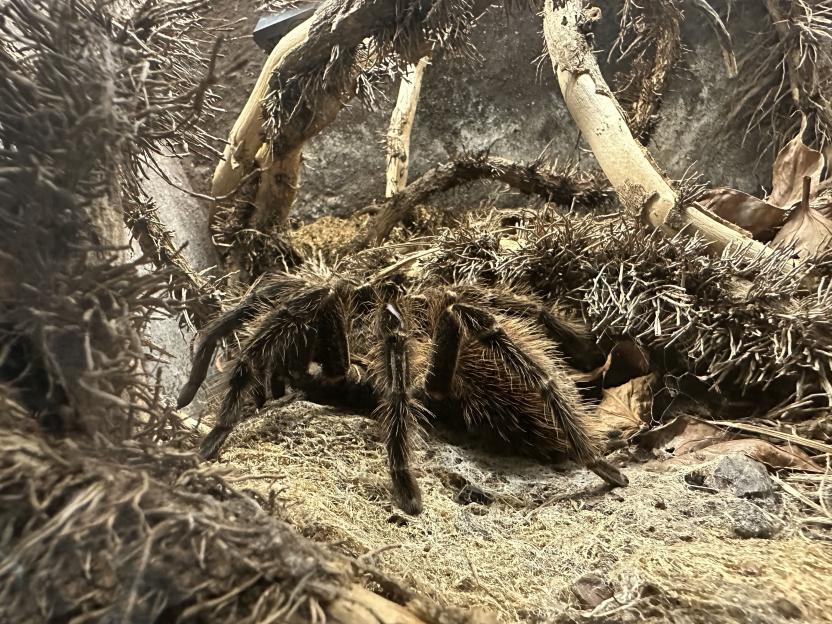 Spiders are being taken from their natural habitats for collectors who want to have them all Credit: Getty
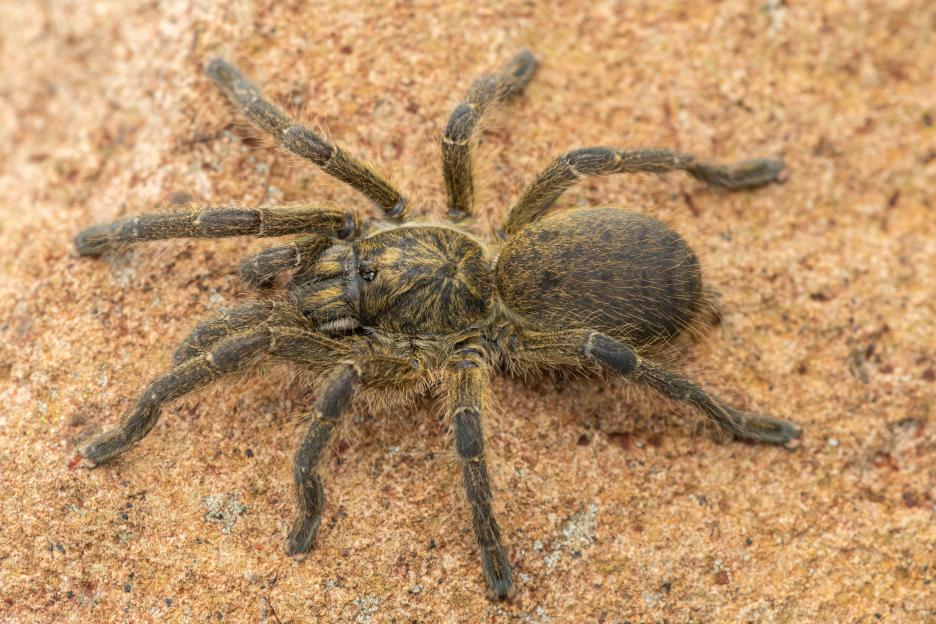 Gallon and co had caught Baboon Spiders in South Africa without the right permits Credit: Getty
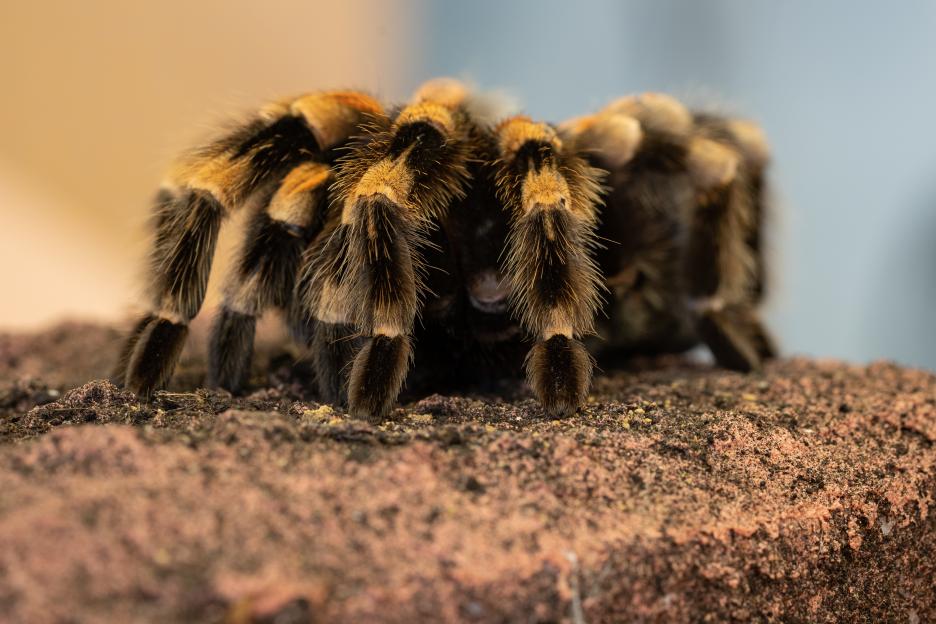 Some species, like Mexican redknee tarantulas can breed well in captivity Credit: Getty
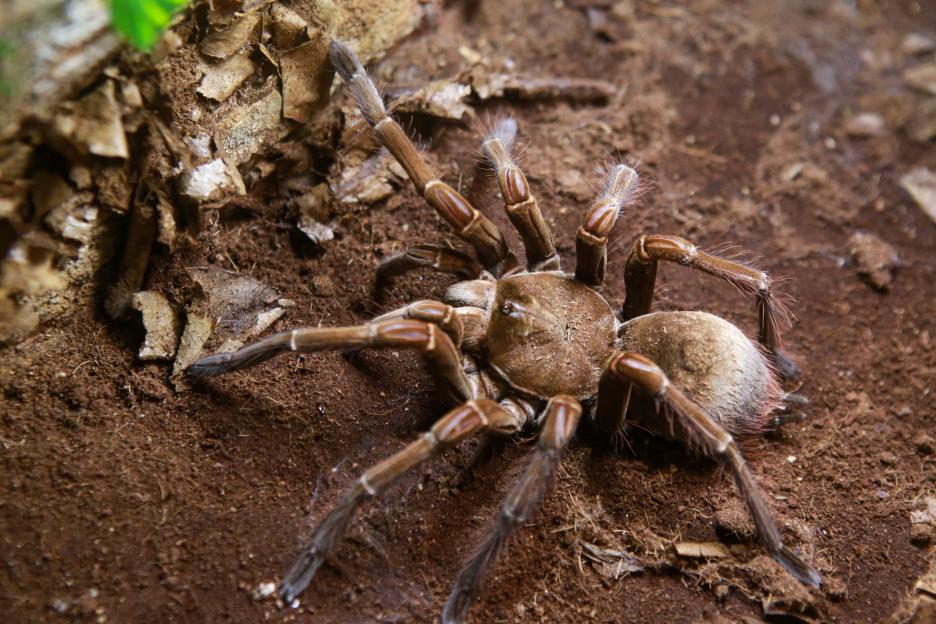 Mexican Brachypelma Harmorii tarantula is one of the spiders police have seen being smuggled Credit: AFP
“They were planning to take them back and breed them in laboratory conditions,” Carl Brown, an investigating officer with CapeNature, the organisation responsible for protecting the Cape’s fauna and flora from poachers, told The Times.
“They would have observed and studied them in minute detail. Some would have been dissected. We were tipped off by vigilant members of the public and workers in the reserve who saw them moving around the rocks in a suspicious manner.”
The pair, alongside a Dutch colleague, plead guilty to illegally collecting and planning to transport the arachnids and were fined £925 each.
Gallon is a world expert on Baboon Spiders.
They had attained permits to collect from South Africa’s national parks but not from the nature reserves which are managed at a provincial level.
Back in 2009, Lee Ardern was arrested in Rio De Janeiro’s airport while trying to smuggle 1,000 live spiders out of the country in two bags.
He was caught while his baggage was being scanned, before the arachnids were found inside.
“He’s the owner of a pet shop in London and was apparently selling spiders there,” Rafael Potsch Andreata, deputy head of airport , told one Brazilian newspaper.
“We are investigating if he has done this before and if there is some other kind of market such as selling them to extract poison in order to make ,” he added.
Police said he had arrived on a flight from and claimed he’d bought his cases of spiders for £3 each and planned to sell them on for £30 each.
Ardern was eventually fined £452,136 for the smuggling attempt and the spiders were taken to Brazil’s national museum.
Dr Sara added: “We can’t just go round raiding other parts of the globe like the Victorian’s did. Can we be better than that please?
“Referring to spiders like Pokemon is such a great way to put it. People want the rarest pokemon.
“I want to take their heads and knock them together and ask what they’re teaching the next generation about just taking things.
“Often these people are taking animals knowing most won’t reach the other end of the journey. It shouldn’t be acceptable to do that.
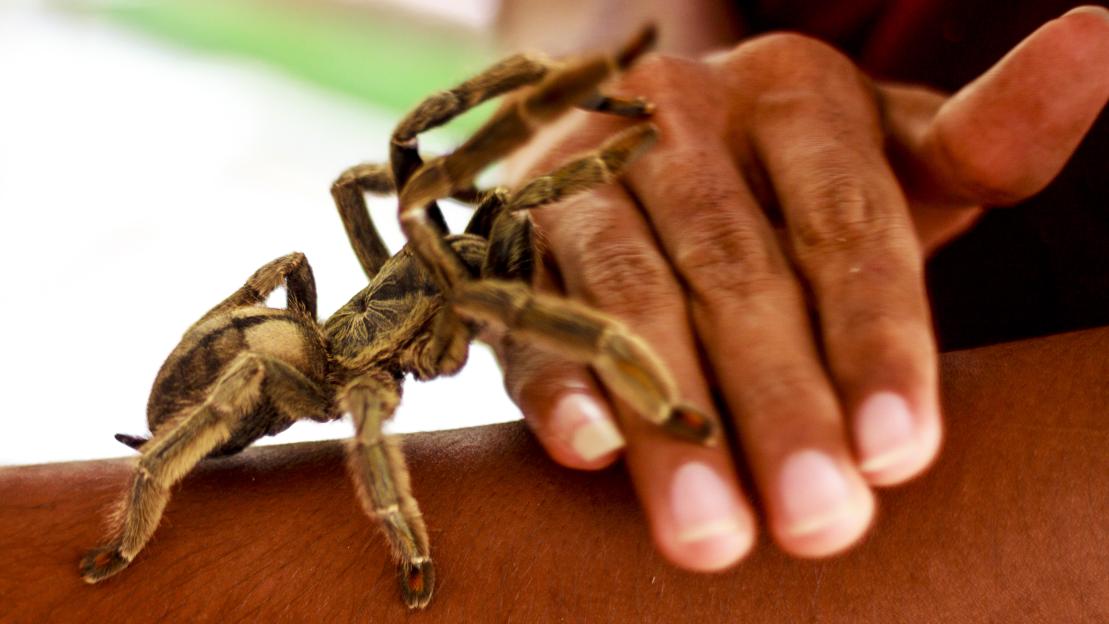 The UK has one of the world’s oldest Tarantula socities Credit: Getty
“These are creatures confined to a small place, being squashed, having to deal with humidity and temperature changes. All these things will stress the spiders out, just so someone can make a quick buck at the other end.”
Spiders aren’t the only creatures that people are attempting to smuggle into the UK.
Last year, Border Force revealed that Operation Thunder saw 250 endangered species and illegal wildlife products seized between 13 September and 15 October.
They noted that illegal spider smuggling has massively increased since 2023.
Alongside the eight-legged creatures they also found 2 rainbow boa constrictors under blankets in a car in Dover, and over 100 endangered birds crammed into a car, including scarlet ibis, green-cheeked conures and lovebirds.
Dr Tim added: “It’s not just spiders. In my lifetime, there has been a big interest in ants and reports of people smuggling in queen ants from countries like Africa.
“In the last ten years there has been a massive explosion in people keeping ants as , and it’s astonishing how popular it’s become.
“The other one that always amazes me is isopods, which is woodlice. People are now collecting rare species of woodlouse from the Ural mountains and other places.”
It’s estimated that wildlife crime is worth around £17billion globally making it the fourth largest crime after firearms, drugs and .
At the time, Minister Mary Creagh said: “The illegal wildlife trade is vile and destroys the natural world.
“By tackling wildlife crime we’re sending a clear message to the criminal gangs that this government will strain every sinew to bring those involved to justice.”

![2027: INEC publishes final names of governorship candidates across states [FULL LIST]](https://www.flyingeze.com/storage/posts/0943c1/inec-1.jpg)