
Sperm Donor with Cancer-Causing Gene Revealed: Father of 197 Children Across the EU
A SPERM donor who unknowingly carried a cancer-causing gene has fathered at least 197 children across Europe, some of whom have already died. Only a small numbe...
 Written byEze Chidiebere Paul
A SPERM donor who unknowingly carried a cancer-causing gene has fathered at least 197 children across Europe, some of whom have already died.
Only a small number of those who inherit the mutation – which carries a 90 per cent lifetime risk of developing – will ever escape the disease, according to the investigation.
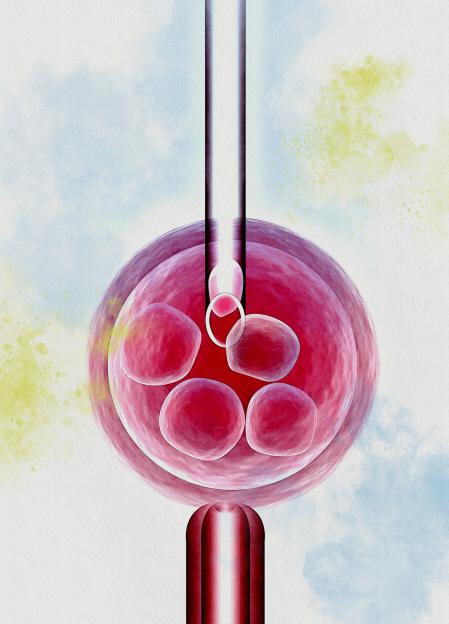 A sperm donor who unknowingly harboured a cancer-causing genetic mutation has fathered at least 197 children across EuropeCredit: Getty
Children affected require yearly full-body and brain scans, as well as abdominal ultrasounds, for the rest of their lives to spot tumours as early as possible.
Many also choose to have preventative to lower their risk, as almost all women who carry the gene end up developing breast cancer.
The sperm was sold to 67 fertility clinics in 14 countries, though not in the UK.
But a “very small” number of British women used the donor’s sperm while having fertility treatment in Denmark and have since been informed.
Denmark’s European Sperm Bank, which supplied the sperm, said it offered its “deepest sympathy” to affected families and admitted the donor’s sperm was used to create too many children in some countries.
The sperm came from an anonymous man who was paid to donate as a student in 2005.
Over the next 17 years, women seeking his genetics used his samples to conceive.
The man passed the donor screening checks and is classed as healthy.
But DNA in some of his cells had mutated before he was born, damaging the TP53 gene, which prevents cancer by stopping faulty cells from dividing.
Most of his body does not carry the dangerous version of TP53, but up to 20 per cent of his sperm do.
This means any child conceived from the affected sperm inherits the mutation in every cell.
This condition is known as Li Fraumeni syndrome and carries up to a 90 per cent lifetime cancer risk, including , , and such as .
“It is a dreadful diagnosis,” Professor Clare Turnbull, a cancer geneticist at the Institute of Cancer Research in London, told the BBC .
“It’s a very challenging diagnosis to land on a family, there is a lifelong burden of living with that risk, it’s clearly devastating.”
The rare TP53 variant was unknown to science at the time of the donor’s first samples and would not have been detectable through screening.
 British women travelled to the Denmark to receive fertility treatment using the donor’s spermCredit: Getty
The discovery follows an investigation conducted by 14 public service broadcasters, including the BBC, as part of the European Broadcasting Union’s Investigative Journalism Network.
The European Sperm Bank said the donor was ‘immediately blocked’ once the problem with his sperm came to light.
The bank added that the ‘donor himself and his family members are not ill’ and such a mutation is ‘not detected preventatively by genetic screening’.
Doctors treating children with cancers linked to the donor raised the alarm earlier this year at the European Society of Human Genetics, reporting 23 affected children out of 67 known cases at the time – ten already diagnosed with cancer.
Through Freedom of Information requests and interviews with doctors and patients reporters have indentified at least 197 children conceived with the donor’s sperm.
The true tally could be higher, as data from some countries is still missing.
It is also unknown how many of these children inherited the dangerous variant.
Dr Edwige Kasper, a cancer geneticist at Rouen University Hospital, in France, who presented the initial data, told the investigation: “We have many children that have already developed a cancer.
“We have some children that have developed already two different cancers and some of them have already died at a very early age.”
The sperm I was given wasn’t clean
Céline, not her real name, is a single-mother in France whose child was conceived with the donor’s sperm 14 years ago and has the mutation.
She got a call from the fertility clinic she used in Belgium urging her to get her daughter screened.
She says she has “absolutely no hard feelings” towards the donor but says it was unacceptable she was given sperm that “wasn’t clean, that wasn’t safe, that carried a risk”.
And she knows cancer will be looming over them for the rest of their lives.
While the sperm was not sold to UK clinics, Danish authorities have now alerted the UK’s Human Fertilisation and Embryology Authority (HFEA). Affected British women have been notified.
Peter Thompson, the chief executive of the HFEA, said a “very small number” of families were affected and ‘they have been told about the donor by the Danish clinic at which they were treated’.
More British women may have travelled to other countries where the sperm was available.
There is no international law limiting how many children a donor can father. Individual countries set their own limits, and the European Sperm Bank admitted these had “unfortunately” been breached in som countries and said it was ‘in dialogue with the authorities in Denmark and Belgium’.
In Belgium, for example, a single sperm donor is only supposed to be used by six families.
Instead 38 different women produced 53 children to the donor.
 The sperm came from an anonymous man who was paid to donate as a student in 2005Credit: Getty
Meanwhile, the UK limit is 10 families per donor.
“We need to have a European limit on the number of births or families for a single donor,” Dr Kasper warned.
“This is the abnormal dissemination of genetic disease. Not every man has 75 children across Europe.”
“We can’t do whole-genome sequencing for all sperm donors – I’m not arguing for that,’ she added.
“But this is the abnormal dissemination of genetic disease. Not every man has 75 children across Europe.’
Licensed clinics already screen for more diseases than most men are ever tested for and that cases like this are exceptionally rare.
Worried parents are encouraged to contact the clinic they used and the fertility authority in that country.
Prof Turnbull, added: “This represents a highly unfortunate coincidence of two exceptionally unusual events: that the donor’s sperm carry mutations for an extremely rare genetic condition affecting fewer than 1 in 10,000 people and that his sperm has been used in the conception of such an extraordinarily large number of children.
“Li Fraumeni syndrome is a devastating diagnosis to impart to a family. There is a very high risk of cancer throughout the lifetime.
“And, unlike most cancer genetic susceptibility syndromes we encounter in clinic such as Lynch syndrome or that caused by the BRCA-genes for which the cancers are adult-onset, inherited mutations (pathogenic variants) in TP53 are associated with a sizeable risk of childhood-onset cancers.”
What is Li Fraumeni syndrome?
Li-Fraumeni syndrome is a rare genetic disorder that increases the risk you and your family members will develop cancer.
Everyone with this condition has a 90 per cent chance of developing one or more types of cancer by age 60.
About half develop cancer before they turn 40.
Females with Li-Fraumeni syndrome almost always develop breast cancer.
Li-Fraumeni syndrome can’t be prevented.
But early and consistent cancer screenings and treatment can limit its impact on your life.
Meanwhile, researchers are actively investigating new ways to identify and treat cancers linked to Li-Fraumeni syndrome.
Li-Fraumeni syndrome is rare.
Researchers estimate that over 1,000 families worldwide carry the gene mutation that causes it. Less than 50,000 people in the United States have Li-Fraumeni syndrome.
Source: Cleveland Clinic
Continue reading
Should fried food and Coco Puffs be off the menu at schools? Two parents go head-to-head
SCHOOL kids’ traditional fish-and-chip Fridays could become a thing of the past. including fried eggs, pizzas, and Coco Pops, to make room for healthier alte...
Fat jabs have turned me from 22st binge-eater into a sex machine having 6-HOUR romps… what happened when I came off them
AT her lowest moment, Lizz Adair was eating herself into an “early grave” at 22 stone, scoffing takeaways for dinner followed up by a family-sized Galaxy bar or...
The 23p fruit you need to scatter over your lawn this winter to stop weeds growing on grass
NOW that we’re officially into autumn, it’s time to prepare our gardens for the colder months ahead. And the wet and icy seasons are the perfect time to tackle...
I had no idea an OTC COLD REMEDY could leave me in the grips of horror 10-year addiction… don’t make my, common, mistake
WHEN Louise Gough went into a chemist to find medicine for a cold at the age of 18, she didn’t imagine she’d still be using it ten years later. The 30-year-old...