
Skincare Secrets for Every Decade: Essential Routines from Your 20s to 60s!
KNOWING which products are right for your skin at which age can be a minefield. And knowing what time of day to use them, how to layer them and whether they’re...
 Written byEze Chidiebere Paul

KNOWING which products are right for your skin at which age can be a minefield.
And knowing what time of day to use them, how to layer them and whether they’re actually working can be equally as baffling.
Georgina gives her tips for through the decades
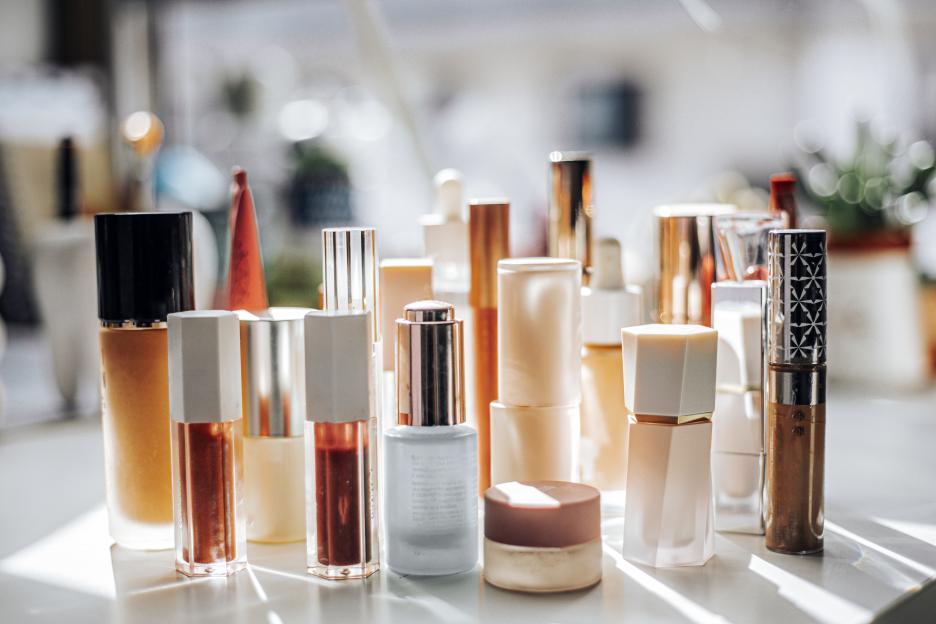 The number of products out there can be overwhelming Credit: Carol Yepes
With viral product launches, social media trends and influencer-endorsed 12-step routines it’s no wonder people are confused.
The terminology can be just as mind boggling – from skin cycling and slugging, to barrier flooding and glass skin.
But while the products on the shelves multiply, for many people, the results do not improve.
Georgina Tang, a multi-award-winning beauty expert and founder of skincare brand YNNY , says walking into a store or looking for the right products online can be really overwhelming.
She says: “There is so much noise surrounding the latest ‘must use’ or ‘wonder’ ingredient that I find women either end up doing too much and damaging their skin or they do the opposite, give up and do nothing.
“Neither of these is a good option for your skin. And we seem to have lost sight of the fact that the fundamentals of a good routine are actually very straightforward whatever your age – cleanse, tone and moisturise, twice a day, morning and evening.
“Everything else builds on that foundation depending on where you are in life.”
Here, Georgina offers her advice, decade by decade:
IN YOUR 20S
At this age, skin is resilient with an efficient cell turnover and a robust collagen production, so the priority is simply protection and the establishment of good habits – not an aggressive regime.
Georgina says: “A basic cleanse, tone and moisturise is genuinely all that is needed at this stage.
 A simple routine is recommended in your 20s Credit: gorodenkoff
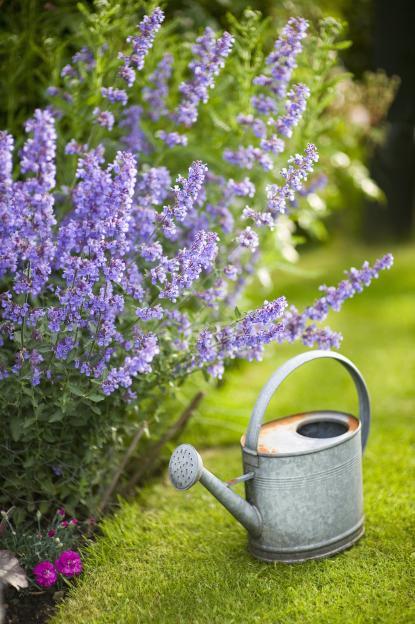 Water made from lavender is a good product at this age Credit: Getty Images/GAP Photos RM
“I would advise to use a natural or organic cleanser – a good-quality soap bar or liquid – and to avoid any alcohol-based products as these will strip the skin’s natural oils. That will compromise the barrier and can trigger excess oil production. Instead opt for a light moisturiser which will be more than sufficient.”
Introduce exfoliation carefully, Georgina explains, as dead skin cells will shed naturally every 28-to-30 days. When they accumulate it will lead to a dull, uneven and sometimes flaky complexion. Using an exfoliating face mask every week keeps the process on track without over-stripping.
For those with oily skin, Georgina recommends using lavender water as a toner – it’s been used for its natural antiseptic properties for centuries and its ability to regulate sebum without being aggressive.
Then opt for a face mask containing sandalwood powder, used two to three times a week.
From around the age of 25, collagen production begins to slow.
She added: “Applying a collagen-boosting product before your moisturiser is worth adding to your routine, then opt for a richer moisturiser or an oil-based serum.”
IN YOUR 30S
This is when the first visible signs of ageing show, such as fine lines, a slight loss of luminosity or skin texture less even than it once was.
Collagen continues to decline at one per cent per year so it’s the ideal time to change to a more targeted approach to skincare, as the products need to work harder.
The expert says: “In your 30s, you still cleanse, tone and moisturise. But a collagen booster should now be a standard part of your routine.
“Move from a light moisturiser to a richer face cream or, better still, an oil-based anti-ageing serum that provides deeper moisturisation and starts actively working to delay the visible signs of ageing.”
Face masks should be used two to three times a week at this stage, while a daily broad-spectrum SPF is a must regardless of weather, as UV exposure is the single greatest accelerant of external skin ageing.
She says: “What you do in your 30s is the single biggest predictor of what your skin looks like in your 50s. Consistency matters more than any individual product.”
IN YOUR 40S
Georgina revealed that your 40s is when cumulative sun damage becomes more visible, oil production begins to slow and the skin barrier requires more active support.
And it’s during this time that you should really pay attention to the ingredients in your skincare products.
The pro says: “You want to use a collagen booster, an oil-based anti-aging serum and if your skin is very dry, use a richer face cream on top of the oil based serum.
“But the ingredients inside those products carry much more weight now. Hyaluronic acid for deep hydration, vitamin C for brightness and collagen stimulation, and niacinamide – vitamin B3 – for barrier strengthening.”
This is also the decade to consider alpha hydroxy acids, or AHAs, she suggested, explaining that glycolic acid and the milder lactic acid both improve skin tone, boost hydration and help address scarring or uneven pigmentation.
For those with sensitive or dry skin, Georgina recommended colloidal oatmeal – finely milled oats – as an alternative exfoliating ingredient that delivers renewal without the risk of irritation or microtears.
And it is vital to stay away from over-exfoliating, heavy fragrance, combining too many strong actives at once and over-laying too many products when you’re in your 40s.
She added: “There’s no magic number, but the rule I follow is a maximum of two to three actives per routine step, and only one potent active per session.
“If you’re using a retinoid at night (not every night), that’s your hero – it doesn’t need a strong acid or high-strength vitamin C alongside it.”
IN YOUR 50S
The 50s bring hormonal changes that will have a direct, and often dramatic, consequence on the skin.
Declining oestrogen levels will reduce the skin’s natural oil production while accelerating moisture loss and causing a loss of firmness and volume. Age spots also become more common.
This is the decade where women see the steepest rate of visible signs of ageing.
For Georgina, this decade was also a personal turning point. When searching for an anti-ageing serum that delivered real results, she couldn’t find one, so she created her own.
She added: “‘I could not find a serum with a high enough concentration of active ingredients that actually did what it claimed. So I made my own from scratch”
The result was the Elixir which has been described by users as ‘Botox in a bottle’.
A skincare routine at this age needs to be rich, intensive and consistent, she says.
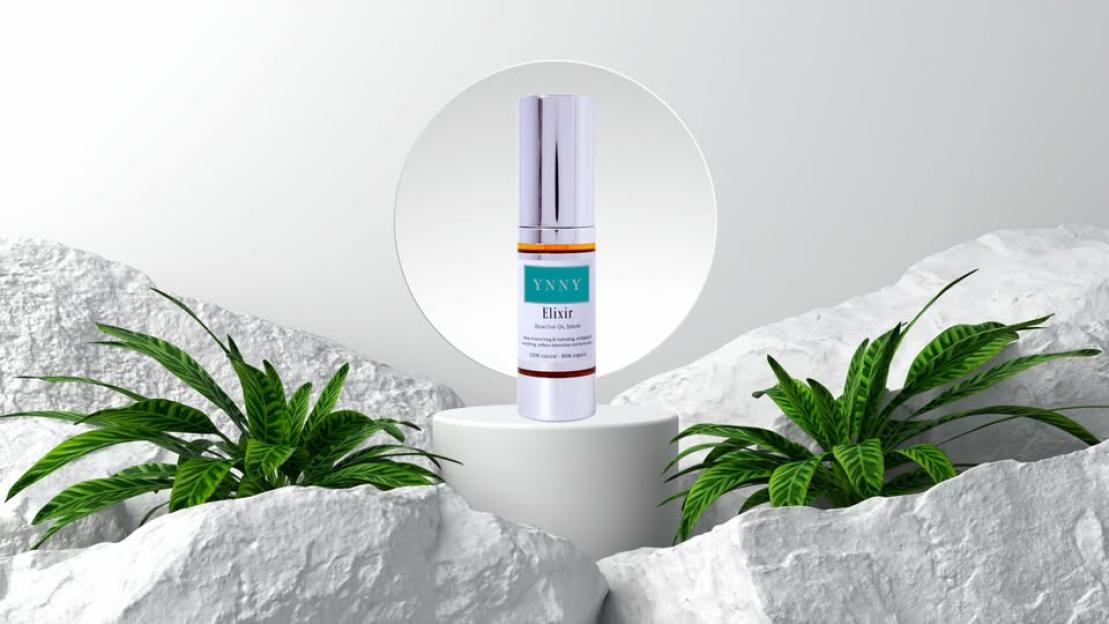 Georgina created her own product Credit: Bahobank – stock.adobe.com
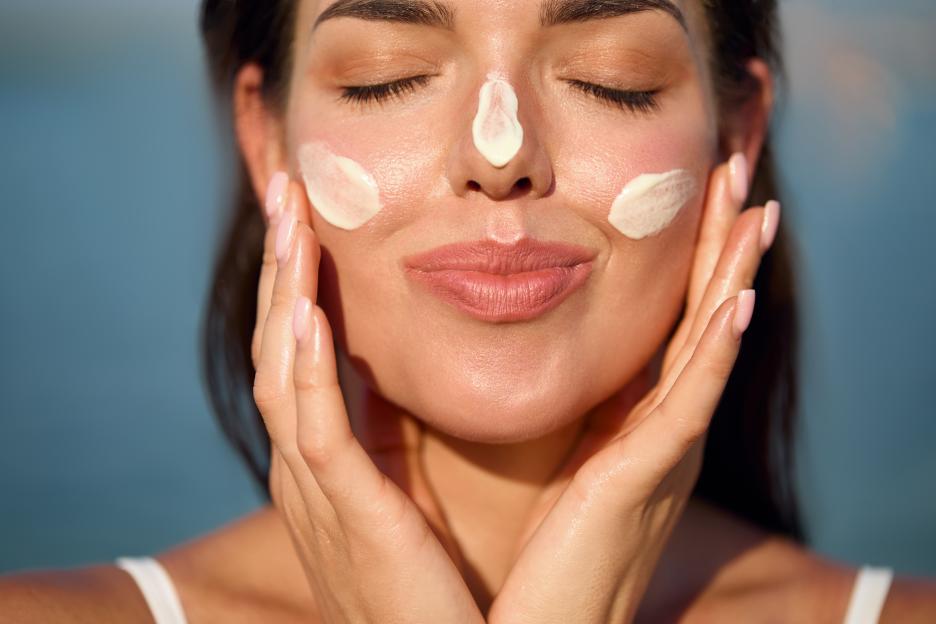 Using SPF is vital to protect the skin Credit: Getty Images
Peptides will stimulate collagen synthesis and Retinol, introduced gradually at night, encourages cell turnover and helps rebuild collagen.
SPF – minimum factor 30, ideally higher – must be worn daily without exception.
IN YOUR 60S AND BEYOND
Skin in the 60s and beyond is thinner, drier and considerably more sensitive than in previous decades. Collagen fragmentation is measurable and structural changes in the dermis are evident.
The approach for skincare during these decades should be one of sustained, gentle nourishment rather than aggressive correction.
Georgina, 63, says: “The skin does not need more products at this stage. It needs the right products, used every single day without fail.”
The expert advises using a gentle, non-stripping cleanser, a hydrating toner and a rich moisturiser containing ceramides, peptides and hyaluronic acid form the daily foundation.
While she says an oil-based serum with a high concentration of actives should remain the cornerstone of any effective anti-ageing effort. Georgina cites this is due to standard face creams containing a high amount of water, so look for oil-based ones.
Retinol, if already established in the routine, can continue at a well-tolerated strength, and exfoliation should be mild – a low-strength AHA or a colloidal oatmeal mask once or twice a week – as a way to maintain radiance without aggravating sensitivity.
SPF protection remains essential as UV damage does not pause with age, and unprotected skin at this stage is significantly more vulnerable to both accelerated ageing and pigmentation.
Georgina added: “‘Great skin in your 60s and beyond is entirely achievable. The key is understanding what the skin needs now, not what it needed 20 years ago.”
Continue reading

I sold my parents’ home to pay the man I loved £500k to save his life – then I found out the horrifying truth
When Gaby received a LinkedIn message from a handsome stranger in 2019, she thought she had found the man of her dreams. Handsome, green eyed and in his forties...

GBBO finalist Ruby Bhogal’s bakes are our fave showstoppers right now
Credit: Matt Russell WITH a new series of about to begin, what better way to celebrate than with a selection of recipes from 2018 finalist Ruby Bhogal? Around T...

I was raped 15 times by Mohamed Al Fayed when I worked at Harrods – he had ‘favourite girls’ and made us have STI tests
SARA Blackiston remembers being thrilled when she secured a job as a hosiery assistant at Harrods as a young woman – and even more elated when she was quickly s...

Autumnal M&S collarless jacket fans say is ‘perfect’ fit slashed from £50 to just £26 – it’s a new season must-have
M&S shoppers are snapping up a popular autumn jacket reduced from £50 to £26 in the sale. The Collarless Jacket is a staple for any work-wear wardrobe, with its...