
Sanwo-Olu Justifies Makoko Demolition, Emphasizes Public Safety Risks
Governor Babajide Sanwo-Olu of Lagos State has defended his administration’s demolition of waterfront shanties in parts of Makoko, saying the action was taken s...
 Written byEze Chidiebere Paul
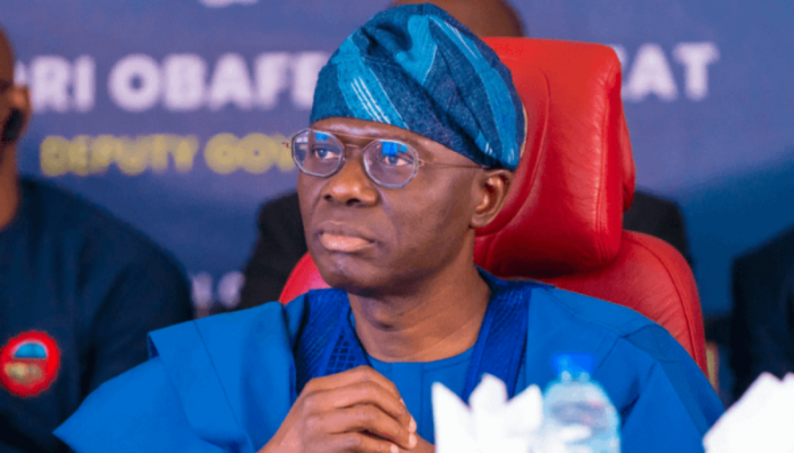
Governor Babajide Sanwo-Olu of Lagos State has defended his administration’s demolition of waterfront shanties in parts of Makoko, saying the action was taken solely to protect lives and prevent what he described as an impending humanitarian disaster.
The governor spoke on Friday during a closed-door breakfast meeting with selected Managing Directors and Chief Executive Officers in Ikoyi.
The meeting was organised by the Lagos State Security Trust Fund, LSSTF, as part of efforts to mobilise resources for the state’s security needs in 2026.
Responding to public criticism and protests that followed the demolition of structures around the Third Mainland Bridge corridor, Sanwo-Olu said the settlement had expanded at an alarming pace and had encroached dangerously close to critical infrastructure.
“I have been accused of destroying Makoko. But the challenge is that the settlement was growing at an incredible speed and moving dangerously close to the bridge.
“There are high-tension power lines underneath. I am not going to sit down and allow a situation where, in one day, 100 to 500 people could die,” he said.
He stressed that the exercise was not politically motivated and was not intended to displace residents permanently, but to push them away from areas considered unsafe.
“Of what benefit would it be for the government to dislocate people?” Sanwo-Olu asked, adding: “It can only be for their own safety. We will not sit back, allow disaster to happen, and then be blamed for inaction.”
The governor disclosed that the state government had explored partnerships with international development agencies to redevelop Makoko in a sustainable manner, but said such efforts had yielded little progress.
“For six years, a United Nations agency said if I brought money, they would support development. I told them I already had my own money. Till today, they have not returned. Only last week they said they had no funds,” he said.
Sanwo-Olu also criticised some non-governmental organisations, accusing them of exploiting the Makoko situation to attract donor funding rather than offering lasting solutions.
Beyond the Makoko issue, the governor used the forum to call on the private sector to deepen its support for Lagos’ security architecture through the LSSTF.
He outlined priority security needs to include multipurpose helicopters and drones, armoured personnel carriers, water cannons, smart CCTV cameras, digital communication systems, patrol vehicles, tactical training and upgrades to police infrastructure.
According to him, the Lagos State Government currently shoulders more than half of the state’s annual security expenditure, adding that the LSSTF has continued to enjoy credibility due to transparency and accountability.
“We want to ensure Lagos remains secure. We are rebuilding the Command and Control Centre with state-of-the-art equipment and scaling up our Safe City CCTV initiative. Improving emergency response capacity remains a top priority,” Sanwo-Olu said.
The governor also announced plans to commission 35 junior and senior secondary schools in Tolu, Ajegunle, next month, noting that the facilities would accommodate about 22,000 students and help address education gaps in densely populated communities.
Drawing a comparison with the long-standing Okobaba sawmill challenge, Sanwo-Olu said his administration successfully relocated operators to Agbowa, ending years of recurrent fire incidents after investing billions of naira and providing over 500 housing units.
He emphasised that urban safety, security and social infrastructure must advance together if Lagos is to remain attractive to investors.
“We need to keep our people safe, secure the future and assure investors that Lagos remains the right environment for growth,” the governor added.
Continue reading
Failure of Primary Healthcare: New Nigeria not possible with citizens dying – Peter Obi
Peter Obi, the presidential candidate of the Nigeria Democratic Congress, NDC, on Monday, said it was impossible to build a new Nigeria while people are still d...
OGSA at 50: Alumni, stakeholders rally to renew school’s legacy
Fifty years after its establishment, Omoluorogbo Grammar School (OGSA) is set to celebrate its Golden Jubilee with a three-day programme that will bring togethe...
Dad, 48, ‘raped daughter for 17 years since she was just 12 and forced her to have four children’
A DAD is alleged to have raped his daughter over 17 years prompting urgent DNA testing to prove if he fathered her four children. The daughter, now 29, told rel...
Protest in Abuja as FG workers reject concession of Unity Colleges
Workers and trade union leaders in the Federal Ministry of Education on Monday in Abuja protested the proposed concession of Federal Unity Colleges. The protest...