Table of Contents
- Introduction
- Training Workshop Details
- Digital Extension Explained
- Climate-Smart Advisory Services
- Project Support and Objectives
- Conclusion
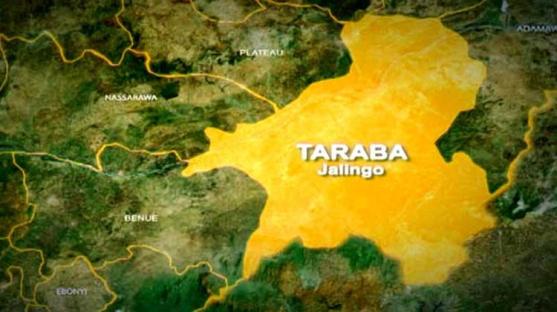
The Taraba State Commissioner for Agriculture and Food Security, Professor Nicholas Oliver, has stated that unpredictable rainfall, increasing temperatures, and changing pest patterns have rendered traditional farming methods inadequate.
During a three-day training workshop for 60 extension agents focused on digital extension techniques and climate-smart advisory services, which was held at the Farm Field School in Jimlari, Lau Local Government Council, he emphasized the necessity of modernizing agricultural extension services through digital technology.
The training, organized by the Livestock Productivity and Resilience Support Project (L-PRES), brought together extension agents from various local government councils in the state. According to the commissioner, its purpose is to enhance livestock productivity and resilience across Taraba State.
Represented by the Director of Livestock Services, Mr. Dame Musa Buhari, the commissioner explained that digital extension encompasses the use of mobile phones, internet services, and data analytics to provide timely agricultural advice, weather updates, and market information to farmers, along with location-specific guidance utilizing satellite data and soil mapping.
He added that the climate-smart advisory component would empower extension agents to assist farmers in achieving sustainable productivity, resilience to climate shocks, and a reduction in greenhouse gas emissions through practices such as efficient water management, soil conservation, and the use of resilient crop varieties.
“You are the frontline of this agricultural revolution. The knowledge acquired here must be communicated to the farmers and applied in the fields,” he stated, assuring participants of the ministry’s commitment to providing essential policy and infrastructural support.
Additionally, the State Project Coordinator of Taraba L-PRES, Mr. Hananiah G. Albert, who spoke through the L-PRES ICT Officer, Mr. Ezra Artimas, praised Governor Agbu Kefas for his ongoing support of the project, describing it as vital for the successful execution of its mandate in the state.
Albert explained that L-PRES is a livestock-focused initiative launched by the state government, financed by the World Bank, aimed at enhancing productivity, commercialization, and resilience within targeted livestock production systems while strengthening the capacity to respond to crises and emergencies.
He mentioned that the project emphasizes cattle, sheep/goats, and poultry, noting that Taraba State has distinct advantages in the production of these livestock species.
According to him, the training is part of Subcomponent 1.2 of the project and is designed to bolster extension services through digital tools and climate-smart advisory services on best animal husbandry practices.
“This training is essential as extension agents are crucial in disseminating information to farmers. Promoting digital literacy and climate-smart practices will greatly influence livestock production and the livelihoods of people in the state,” Albert remarked.
Supporting the commissioner’s viewpoint, he noted that participants would be instructed on digital tools for extension delivery, climate-smart advisory services, and best practices in animal husbandry, aiming to equip them to better assist farmers.
Albert also commended the State Ministry of Agriculture and Food Security, the National Coordination Office of L-PRES led by the National Project Coordinator, Dr. Sanusi Abubakar, as well as the trainers and facilitators for their ongoing support of the project.
Frequently Asked Questions
What is the purpose of the training workshop?
The training workshop aims to enhance livestock productivity and resilience by modernizing agricultural extension services through digital technology and climate-smart advisory practices.
Who organized the training?
The training was organized by the Livestock Productivity and Resilience Support Project (L-PRES).
What are the key components of digital extension?
Key components of digital extension include the use of mobile phones, internet services, data analytics, satellite data, and soil mapping to provide timely agricultural advice and market information to farmers.