RELAXING after dinner with a Baileys over ice, laughing and chatting with her family, Sally Ann Warner had no idea the horror about to unfold.
That innocent holiday – which later left the now retired NHS receptionist waking in the dead of night with burning yellow bile pouring from her nose – was the start of a brutal 22-year ordeal of agonising so severe she was forced to apart from her husband.
 Sally Ann Warner suffered from severe acid reflux for 22 yearsCredit: Sally Ann Warner
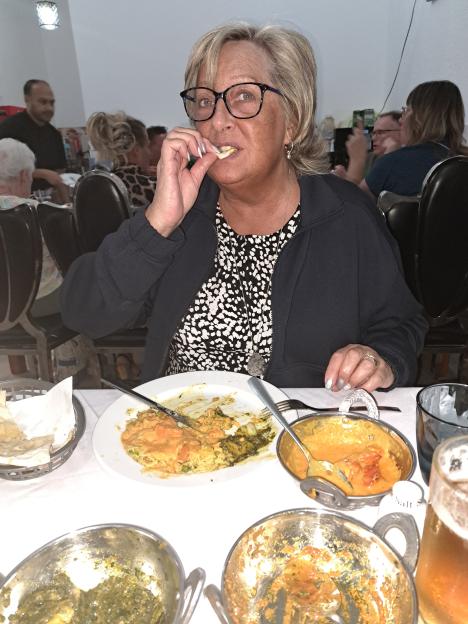 It was aggravated by lying down and spicy or fatty food, tomatoes, alcohol and chocolate.Credit: Sally Ann Warner
“I had no idea that a glass of Baileys could cause such extreme acid reflux,” says Sally Ann, who has two sons.
“A simple drink on holiday was the start of more than 22 years of agony.
“Acid reflux ruined my , sleep and state of mind.”
Sally Ann, now 64, was on holiday with her husband Jeff and some friends, in , in 2003 when the nightmare began.
“Previously, I had had the odd tummy cramps and indigestion,” she says.
“But I woke up in shock that morning to discover I had yellow liquid dripping out of my nose.
“I thought ‘Oh my God, what is this stuff?’ I was choking and I felt sick. It was shocking because it came on so suddenly. I kept thinking, ‘this isn’t right’.”
When she got back to the UK, Sally Ann, who is from Kings Lynn in Norfolk, went to see her , who referred her for tests at the local .
“I had a camera down my throat which was quite unpleasant but did confirm that I had chronic reflux – known as gastroesophageal reflux disease (GORD).”
affects around 20 per cent of people.
“This is different from occasional reflux that comes and goes,” explains Sally Ann.
“It means that after every meal, large amounts of acid come up your throat, especially at night when you are lying down.”
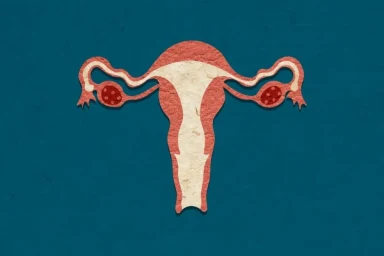
The condition occurs when contents from the stomach flow back into the oesophagus (food pipe).
Between the stomach and the food pipe is a muscle – the lower oesophageal sphincter – that acts like a trap door, letting food into the stomach but keeping things tight, to avoid stomach acid coming back up.
When this muscle weakens or relaxes at the wrong times, the acid ‘refluxes’ and causes nasty symptoms such as heartburn, regurgitation, difficulty swallowing, bloating, excessive salivation, coughing, nausea and a hoarse voice.
Over time, it can lead to teeth and , nutritional problems, and . It also has a higher risk of in the future.
I began to cough up yellow bile, my teeth and jaw ached, my throat felt raw
Sally Ann Warner
Going to bed can make symptoms worse because when you lie down, gravity no longer keeps stomach acid where it belongs. Fatty and spicy food and tomatoes, and chocolate can also cause flare ups.
Sally Ann was prescribed the standard dose of a class of which reduce how much acid the stomach makes, called (proton pump inhibitors).
They include and lansoprazole and should only be needed for a few weeks.
 Over time, acid reflux can lead to teeth and gum damage, nutritional problems, and sleep impairment.Credit: Sally Ann Warne
Sally Ann says: “These helped – to start with. But soon things got worse.
“At work, people said they would hear me coming because I was always coughing.
“I started to sleep in a separate room to my husband, Jeff, because I couldn’t sleep, even propped up with four pillows.
“I began to cough up yellow bile, my and jaw ached, my throat felt raw.
“I couldn’t eat out with the family. Jeff likes curry, but I couldn’t eat anything spicy as it made my symptoms worse.
“I couldn’t drink alcohol, so nights out with my girlfriends meant sticking to one or two drinks with lots of water in between.
“There wasn’t an aspect of life that was unaffected. I felt constantly exhausted and pretty down.”
Lifestyle changes can help reduce acid reflux, such as avoiding food four hours before , tight clothes around the waist, and drinking alcohol.
Long-term use of PPIs linked to serious health issues
But while Sally Ann gave them all a try, it didn’t fix the problem.
“I tried eating smaller meals early in the evening, I drank loads of water, but although that helped, it didn’t stop the acid,” she says.
“Three or four in the morning, it would start again and I’d be awake and in pain.
“I also developed problems swallowing food, and bread particularly would often get stuck in my throat, which made me panic.”
Sally Ann’s GP was understanding but said there was nothing he could do to help her, other than increase her dosage of PPIs, or switch the to another PPI.
“I was on at least three types of PPI,” she says.
“I worried because I know it’s not good for you to take medication for years on end, that just masks your symptoms rather than treating the condition itself.
“I have read that long-term use of PPIs can increase your risk of several serious diseases.”
Long-term use of PPIs is linked to worsening bone health, due to interference with calcium absorption, and a higher risk of , like , according to Yale .
“I desperately wanted to come off it,” says Sally Ann.
“I know about surgery to treat reflux: there’s one called fundoplication, which is offered in our local hospital and involves wrapping your oesophagus around itself to tighten it and stop the acid coming up into your throat.
“I didn’t like the sound of that because you can’t burp or vomit either, so that sounds unpleasant.”
A life changing new discovery
Everything changed when Sally Ann’s elder son, Thomas, 37, was watching TV on Eve two years ago and saw an item about a new operation being offered by St Mary’s Hospital in London to treat GORD.
Called RefluxStop, it was described as a minimally invasive way of stopping the acid rising to the throat through the oesophagus, without affecting its natural function or anatomy.
It takes between an hour and 90 minutes to perform, and early patients may be able to leave the same day.
Sally Ann read her son’s email, watched the TV piece online, and then spent the next few hours pondering how to reach the London-based NHS doctor featured on the .
“As an NHS receptionist, you’d think I would be used to dealing with doctors, but it took a few hours for me to work up the courage to find his contact information online and send him an email,” she says.
“I ended up sending it on Boxing Day 2023. Then I sent it, and thought, ‘There’s no way he will get back to me, for a start it’s Christmas, and I don’t live anywhere near London’.”
Just one day later, Sally Ann received an email back from Consultant Surgeon Mr Ahmed Ahmed, the St Mary’s surgeon who implants RefluxStop.
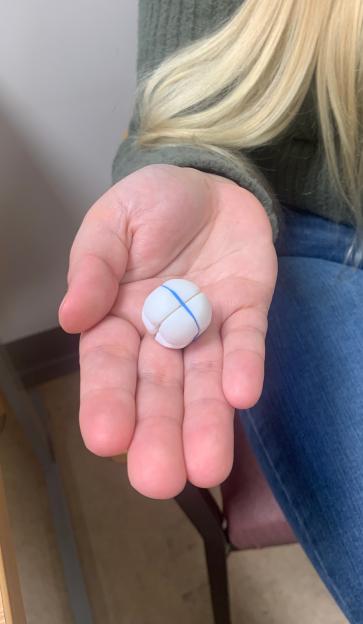 RefluxStop is a new implant designed to treat severe acid refluxCredit: NHS
“I was amazed, and so impressed that he got straight back to me,” she says.
“Mr Ahmed and his team at St Mary’s were brilliant. I had a telephone triage appointment with them, and I also attended St Mary’s for a barium meal X-ray, after which he told me that I am suitable for a RefluxStop.”
Sally Ann’s RefluxStop operation took place in July 2025.
She says: “Jeff and I went to London and stayed in a hotel the night before the operation. I went down to have surgery at about 11.30am, and I woke up about two hours later.
“I stayed the night in hospital and went home the next day.
 Surgeon Mr Ahmed Ahmed, the St Mary’s surgeon who implants RefluxStop.Credit: Supplied
“I was in a bit of pain from the five small incisions they made in my tummy to do the keyhole surgery, but I was expecting that.
“I was quite bloated as well, because they pump you with gas to inflate your stomach so they can see what they’re doing.
“But the bloating eased within hours – we managed an hour and a half train journey home the next day.
“All the pain stopped after a few days. I couldn’t eat solid food for a few days. But despite all of this, I knew straight away that my reflux had gone.
“It is the best thing I have ever done. It is brilliant. I have never had any reflux whatsoever since July.
“I have even had pickled onions with no problem, curry, Chinese, I can eat anything I want.”
What is RefluxStop?
RefluxStop is a new implant designed to treat severe acid reflux, also known as gastro-oesophageal reflux disease (GORD).
It is a small, rounded device, about the size of a ping pong ball, made from medical-grade silicone and fixed to the top of the stomach.
The implant works by holding the lower oesophageal sphincter (the valve between the stomach and oesophagus) in its natural position, stopping stomach acid from leaking upwards.
Unlike traditional surgery, it does not wrap or squeeze the stomach and has no moving parts.
The device is inserted using keyhole surgery, often with robotic assistance, and patients can usually go home the same day.
It could offer long-term relief for patients whose symptoms are not controlled by medication or who cannot tolerate standard reflux surgery.
They’re using it at University Hospital Southampton.
It’s the first NHS trust in the UK to implant RefluxStop using robotic surgery.
Even alcohol is no longer a problem, meaning Sally Ann can have a Baileys once again.
And an unexpected, surprise benefit was that she lost weight, too.
“I have been able to lose a stone since my operation, because I think since I had to eat a mashed-up diet after the operation,” she says.
“I am more aware of what I am eating and to eat in sensible portions. I am sleeping through the night for the first time in years.
“I feel fantastic.”
RefluxStop is a device that is fixed to the upper part of the stomach wall.
It prevents movement of the lower oesophageal sphincter to hold it in its original, natural position, preventing stomach acid from flowing back up.
The device measures around 25mm, smaller than a ping-pong ball, and is fitted in keyhole surgery.
The first NHS trust to start offering the op after Imperial College Healthcare NHS Trust (St Mary’s Hospital in London) was University Hospital Southampton (UHS) in 2024.
Therefore, it’s not a routine NHS op, and costs in the region of £11,000 to £16,000 privately.
If you are in the UK, the best first step is to ask your GP for a referral to an Upper Gastrointestinal (GI) Surgeon who specializes in “functional” reflux surgery.
 Since having the RefluxStop implanted Sally can now eat and drink what she wants, with no unwanted side effectsCredit: Sally Ann Warner
 The 4 signs your ‘normal’ heartburn could be serious
HEARTBURN is something that afflicts millions of Brits every day.
It happens when the muscle that allows food to flow from the oesophagus to the stomach doesn’t work as it should.
Stomach acid manages to seep through into the oesophagus, where it irritates.
Thankfully, heartburn is usually harmless and will disappear within a few hours – causing nothing more than a painful sensation.
It’s usually the result of eating certain foods or simply overeating.
But sometimes, it can indicate something more serious that needs to be investigated by a doctor.
1. Cancer
More specifically,
When stomach acid flows back to the oesophagus, it can cause tissue damage that can lead to the development of oesophageal adenocarcinoma.
2. Heart attack
can easily be mistaken for heartburn.
According to Harvard Health, both conditions can cause chest pains.
3. Hiatus hernia
This is when through an opening (hiatus) in the diaphragm.
The condition is usually found during a test to determine the cause of the or chest pain.
It is quite common in people over 50 and doesn’t normally need treatment if not too severe.
But if it is being accompanied by regular heartburn, then it might need to be dealt with through an operation or .
If it’s left untreated, persistent heartburn can cause long-term damage to the oesophagus, which can increase the risk of oesophageal cancer.
4. Peptic ulcer disease
This happens when acid in the digestive tract eats away at the inner surface of the stomach or small intestine.
The acid can create a sore that may bleed.
People with this condition can often mistake it for heartburn.
The symptoms are similar, but a symptom of the disease is heartburn.
5. Lung problems
Stomach acid can get into your lungs, causing various potential respiratory issues, according to medical centre Gastroenterology Consultants of San Antonio.
The buildup of acid can cause irritation or inflammation of the vocal cords or a sore throat, which could trigger harmless things like coughing, congestion and hoarseness, it says on their website.
But if the acid is inhaled into the lungs, it can lead to more serious conditions like , , or wheezing.