Table of Contents
- Introduction
- Comprehensive Strategy
- Digital Infrastructure
- Internet Governance
- Cybersecurity
- Leadership Role in Africa
- Conclusion
The Director-General of the National Information Technology Development Agency (NITDA), Kashifu Inuwa, stated that Nigeria's strategy to enhance robust digital infrastructure, internet governance, and cybersecurity is in line with the four core areas of the UN-led World Summit on the Information Society, WSIS+20.
This announcement follows the agency's unveiling of a comprehensive, multi-faceted strategy aimed at localizing the commitments of WSIS+20.
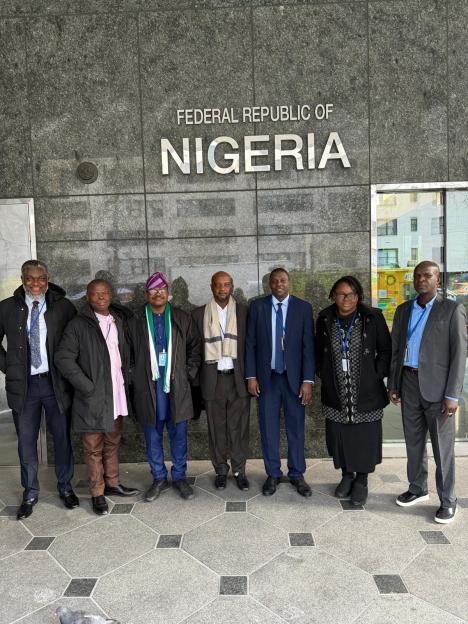
A statement from the Director of Corporate Communications, Hajiya Hadiza Umar, revealed that the new roadmap, which seeks to accelerate national transformation, was presented in New York during the Nigerian high-level side event titled “Re-Imagining Digital Cooperation for Sustainable Development: From WSIS+20 Vision to Local Action.”
The statement further noted that Inuwa, represented by the Director of Corporate Planning and Strategy, Dr. Dimie Shively Wariowei, emphasized that Nigeria's focus areas provide a practical framework for converting global digital commitments into measurable national outcomes, ensuring that international resolutions promote inclusive growth and sustainable digital development at the national level.
Inuwa pointed out that digital infrastructure is essential for effective localization, highlighting ongoing challenges in extending connectivity to underserved and remote communities. In addition to infrastructure gaps, he mentioned issues of affordability and digital literacy, asserting that tackling these challenges is crucial for Nigeria's digital inclusion efforts.
He elaborated that “the government cannot solely bear the responsibility of nationwide digital infrastructure deployment, considering Nigeria's extensive geographical landscape; thus, collaborative Public-Private Partnership (PPP) models are essential.
“In collaboration with the World Bank, Nigeria is executing a significant fibre-optic project covering approximately 90,000 kilometers nationwide to enhance connectivity.
“The existing National Broadband Plan, which has directed broadband expansion in recent years, is nearing its conclusion, with plans to renew and reposition it for the next five years. The updated plan will strategically focus on increasing broadband penetration as a catalyst for digital access and economic growth,” he stated.
Regarding internet governance, Inuwa referred to Nigeria's active involvement in the Internet Governance Forum (IGF), noting the successful hosting of its annual national IGF. He mentioned that the forum operates on a multi-stakeholder model, uniting government, private sector, civil society, and the technical community to promote cooperation and informed policy discussions.
He added that cybersecurity is a vital component of Nigeria's localization initiatives. He referenced the existing Cybersecurity Act and ongoing efforts to enhance the legal framework through a revised version currently awaiting parliamentary approval. These initiatives are aimed at mitigating risks associated with increased internet usage and protecting users and critical digital infrastructure.
Inuwa reiterated Nigeria's ambition to take a leadership role in promoting digital cooperation across Africa through inclusive, multi-stakeholder participation.
He noted that ongoing engagement and follow-up actions resulting from the WSIS+20 review would reinforce digital cooperation among African nations and ensure that global digital commitments yield significant national and regional impacts.
Earlier, Ms. Jennifer Chung, Co-Convener of the Informal Multi-Stakeholder Sounding Board (IMSB), commended Nigeria for assembling a diverse, multi-stakeholder delegation and for its dedication to the meaningful implementation of WSIS+20 outcomes.
Chung emphasized the increasing need for localized WSIS follow-up mechanisms, highlighting that platforms such as the annual IGF, National and Regional IGF Initiatives (NRIs), and youth-led forums are essential for monitoring progress towards the 2030 Agenda and Africa's Agenda 2063.
What is the WSIS+20?
The WSIS+20 refers to the 20-year review of the World Summit on the Information Society, which aims to assess progress in the field of information and communication technologies and their impact on development.
What is Nigeria's role in WSIS+20?
Nigeria is actively participating in the WSIS+20 process by implementing strategies to localize its commitments, focusing on enhancing digital infrastructure, internet governance, and cybersecurity.
How is Nigeria improving digital infrastructure?
Nigeria is working on a major fibre-optic project in collaboration with the World Bank, which spans about 90,000 kilometers to improve connectivity across the nation.