Table of Contents
- Nigeria First Policy
- Importance of Digital Transformation
- Nigeria's Progress in Digitalization
- The War Rooms Initiative
- Results and Achievements
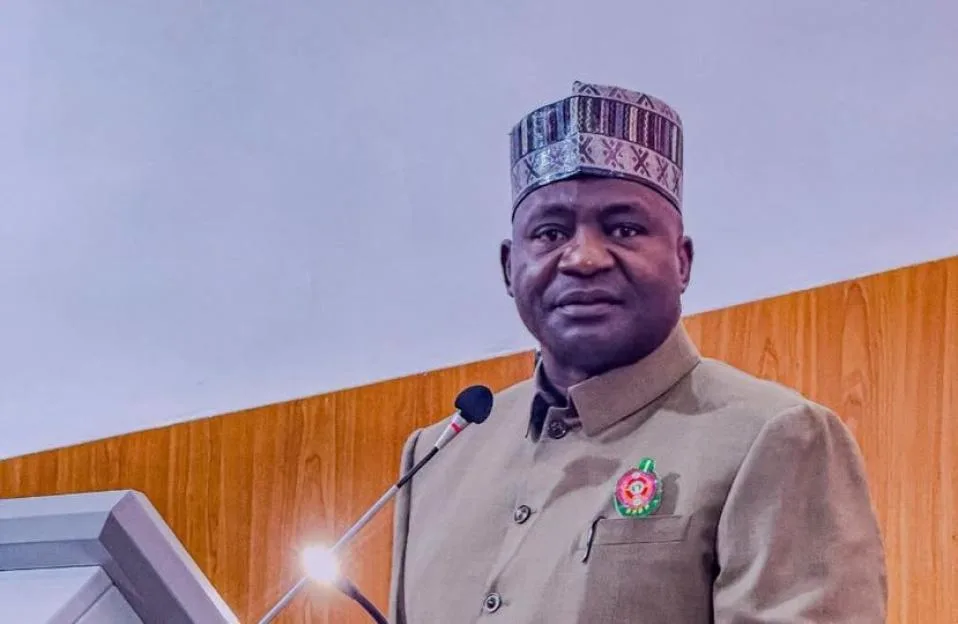
The Head of the Civil Service of the Federation, Didi Esther Walson-Jack, has emphasized that in accordance with the Nigeria First Policy, every digital initiative, system, and technology adopted in the Civil Service must prioritize locally developed solutions, support Nigerian expertise, build local capacity, and rely on homegrown innovation.
She stated that this approach would not only enhance the efficiency of the Public Service but also strengthen the nation's economy and highlight the creativity of Nigerians.
The HCSF also mentioned that countries that do not digitize their Public Services are not only lagging behind but are also becoming uncompetitive and increasingly irrelevant.
According to her, in today's interconnected environment, there are few options left other than digitalization.
Walson-Jack pointed out that governments are adopting digital transformation as a powerful equalizer, utilizing technology to surpass outdated systems, enhance service delivery, minimize corruption, and communicate more effectively with citizens.
She highlighted that Nigeria's advancements in the digitalization of its Civil Service demonstrate that African Public Services can innovate boldly and implement reforms that meet global standards.
Walson-Jack made these remarks at the Paperless Civil Service Gala in Abuja on Wednesday, where excellence within the nation’s workforce was celebrated in the presence of ministers and development partners.
She recalled that the COVID-19 pandemic marked a pivotal moment when digitalization transitioned from being a recommended pilot to a mandated policy.
Reflecting on her journey, Walson-Jack acknowledged the contributions of her predecessors but noted that by 2024, when she was appointed, only about three Ministries and Extra-Ministerial Departments had fully digitized their work processes.
“At the same time, FCSSIP25 was nearing its final phase, and I quickly realized that if we continued at a slow pace, we would conclude the strategy with impressive plans but modest results, which was not acceptable,” she stated.
“This is why the Seven War Rooms were established, not as venues for lengthy speeches, but as spaces where challenges were addressed, excuses were set aside, and results were demanded.
“I can assure you that the outcomes from those War Rooms have been nothing short of remarkable.
“Today, these reforms have been consolidated and accelerated with urgency and discipline, ensuring continuity and sustainability while delivering measurable results.
“In particular, the Digitalization War Room has facilitated the shift from aspiration to implementation, and the results are now visible throughout the Service.
“GOVMail, propelled by this coordinated effort, currently boasts 100,828 official email accounts as of this evening, providing secure government communication on a large scale, enhancing sovereignty over official correspondence, improving responsiveness, and saving the government billions of naira previously spent on external licenses.
“Equally crucial, core management systems are being modernized, not as ancillary projects but as the foundation of an effective Civil Service.
“The Performance Management System (PMS) is now automated in most Ministries, reinforcing accountability and aligning performance with national priorities.
“The Personnel Audit and Skills Gap Analysis (PASGA) is digitizing personnel records and skills data across the Service, offering the government, for the first time, a dynamic, evidence-based view of its workforce—who we are, what we can do, where our gaps lie, and how to plan for recruitment and training.
“In alignment with the Nigeria First Policy, every digital initiative, system, and technology we implement must prioritize locally developed solutions, support Nigerian expertise, build local capacity, and rely on homegrown innovation wherever feasible, ensuring that our Public Service not only operates efficiently but also bolsters our economy and showcases the ingenuity of our people,” she concluded.
Frequently Asked Questions
What is the Nigeria First Policy?
The Nigeria First Policy emphasizes the use of locally developed solutions and Nigerian expertise in all digital initiatives within the Civil Service to enhance efficiency and support the economy.
Why is digitalization important for the Public Service?
Digitalization is crucial as it allows governments to improve service delivery, reduce corruption, and effectively connect with citizens, making them more competitive in a global context.
What are the outcomes of the Digitalization War Room?
The Digitalization War Room has successfully driven the transformation from aspiration to delivery, leading to the establishment of GOVMail and the automation of various management systems, thereby enhancing efficiency and accountability.