Table of Contents
LIKE many mothers, Sarah Rusbatch found Christmas to be another hectic season to endure rather than a time for enjoyment.
She identifies ‘grey drinking’ as one of the primary reasons for her struggles and shares how to recognize the signs for yourself.
 Sarah Rusbatch disclosed how Christmas ‘grey drinking’ led her to sobrietyCredit: instagram/sarahrusbatch
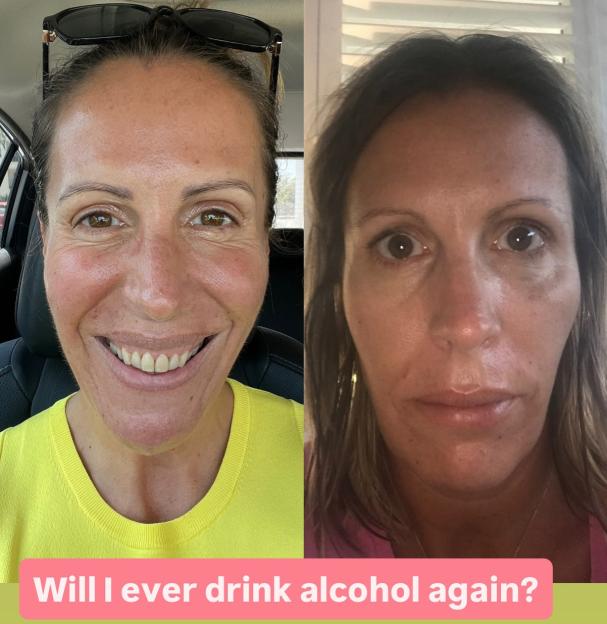 Sarah before and after quitting alcohol for goodCredit: instagram/sarahrusbatch
Sarah, who resides in Perth, reveals that she has been sober for over six years and has no regrets.
Although Sarah was not a binge drinker, she describes her habits as ‘grey drinking’ that gradually intensified during the holiday season.
“It didn’t happen in a single dramatic moment. It crept in quietly, as grey area drinking often does,” she shared with MamaMia .
“December felt like one long boozy buildup — year-end parties, work events, ‘drinks with the girls,’ and those casual nightly top-ups that somehow became my reward for simply getting through the day.
“By the time Christmas morning arrived, I wasn’t in a festive mood. I was drained.
“I recall my children jumping into bed early that morning, their little faces glowing with excitement, squealing about Santa and stockings. And there I was — exhausted, nauseous, with a pounding headache from yet another hangover I had promised myself I wouldn’t have.”
Although Sarah remembers smiling and joining in the fun, deep down, all she could think about was having her next drink.
She said: “But inside, I was just thinking, ‘When will this end so I can get to the afternoon… and pour another drink to ease the discomfort?'”
The realization that she wasn’t enjoying Christmas with her children struck her like ‘cold water,’ marking the beginning of her journey to change her relationship with alcohol.
Now a certified Women’s Health and Wellbeing Coach, Sarah assists others in recognizing the signs of ‘grey drinking’ and how to prevent slipping into it.
She adds: “Most women I work with were never “problem drinkers.” They were functional, high-achieving, capable women who gradually began to depend on alcohol for stress relief, numbing, unwinding, confidence, reward, and escape.
“That’s exactly where I found myself that Christmas morning — not at rock bottom, but trapped in a quiet, relentless cycle of drinking to cope, then coping with the drinking.”
After that morning, when Sarah poured her first drink, she realized this was not the life she wanted.
“I looked at the glass in my hand and felt more tired than ever — not just physically, but deeply exhausted. Worn out from the cycle. Worn out from concealing it,” she explained.
What to Do If You Think You Are An Alcoholic
IF you’re facing challenges with alcohol addiction, the most crucial step is to acknowledge the problem and seek support – you don’t have to confront it alone.
Seek Professional Help
- GP or Doctor – A healthcare professional can evaluate your situation and offer advice on treatment options.
- Therapists or Counsellors – Consulting with an addiction specialist can help address underlying issues and develop coping strategies.
- Rehab or Detox Programs – If physical dependence is significant, medically supervised detox may be necessary.
Consider Support Groups
- Alcoholics Anonymous (AA) – A well-known 12-step program that offers peer support.
- SMART Recovery – A science-based alternative to AA, focusing on self-empowerment.
- Local Support Groups – Many communities have groups tailored to various needs.
It was the first moment Sarah realized it was time to quit alcohol, and three months later, she became completely sober.
She shared that within weeks, she felt less anxious, enjoyed better sleep, had more energy, and was more present with her family.
By the following Christmas morning, Sarah felt pure joy as she fully embraced the day with her loved ones.
Sarah