WHEN Alli Bate woke up in hospital, she immediately saw the face of her terrified partner at the end of the bed, but was unable to move or speak.
The last thing she remembers was leaving a dinner the night before, when a migraine set in – the first and often only symptom of a killer disease that takes the lives of 34,000 Brits a year.
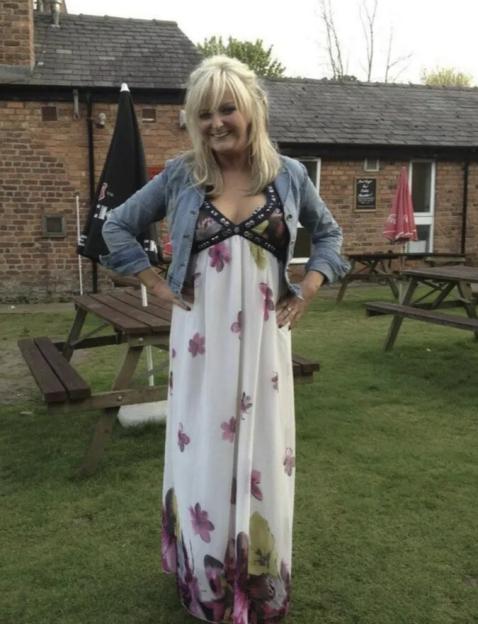 Alli Bate was at dinner with friends when an agonising migraine suddenly hitCredit: True Life Stories
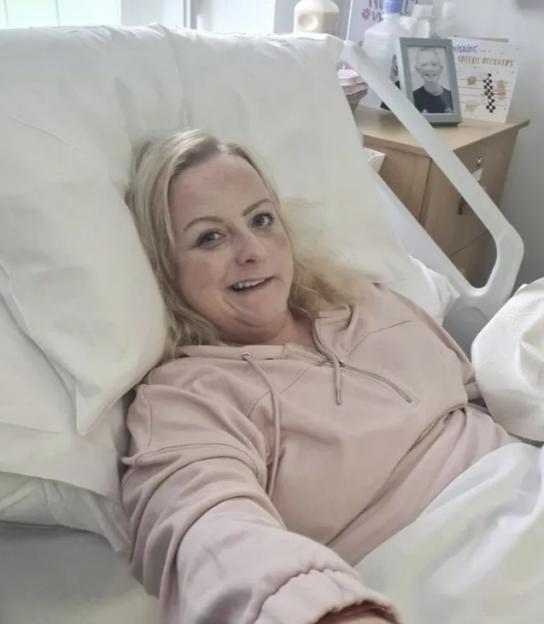 She climbed into bed at home and the next thing she remembers is waking up in hospital paralysedCredit: True Life Stories
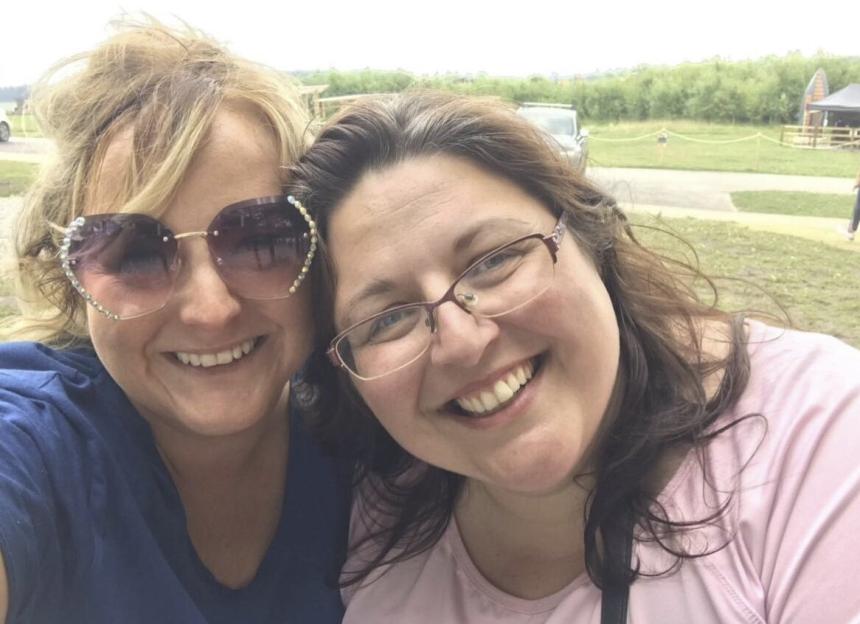 Alli’s partner Olivia Edwardson found her unresponsive in bed and called an ambulanceCredit: True Life Stories
The terrified mum was warned she only had a 5 per cent chance of survival.
Alli tells Sun Health: “One moment I was eating pasta in a restaurant, the next I was in hospital paralysed. In the blink of an eye, my life changed forever.”
The mum-of-one, from Warrington, had been looking forward to dinner out all week. That fateful night, in August 2022, was the last time things were normal.
“I worked two , as a teacher and a counsellor,” Alli, then 38, says.
“Life was stressful so that evening for dinner was a rare night off.
“I was really happy to be out. My partner, Olivia, even looked at me during dinner and said I looked happy.
“We were going for a few days with Mason, and I couldn’t wait.”
Alli and her partner, Olivia Edwardson, 50, a specialist mentor, lived together with Alli’s son, Mason, now 17, from a previous relationship.
Alli says: “At the restaurant, I ordered a creamy carbonara. It smelled delicious.”
But as Alli tried to enjoy her pasta, she felt a sudden pain.
She says: “It was a migraine coming on. It was throbbing away at my temples. I’d been suffering with them the past few weeks.
I tried to move but nothing happened. My entire left side of my body was completely frozen
Alli Bate
“Olivia asked if I was okay, but I needed to just go home and lie down.
“We cut the dinner short, said bye to our friends, and Olivia helped me into bed at home.
“I remember feeling unsettled, like something didn’t feel right. But I couldn’t put my finger on it.”
Alli woke up 20 hours later and panic set in. She realised she wasn’t in her own bed, and instead, she was in a hospital.
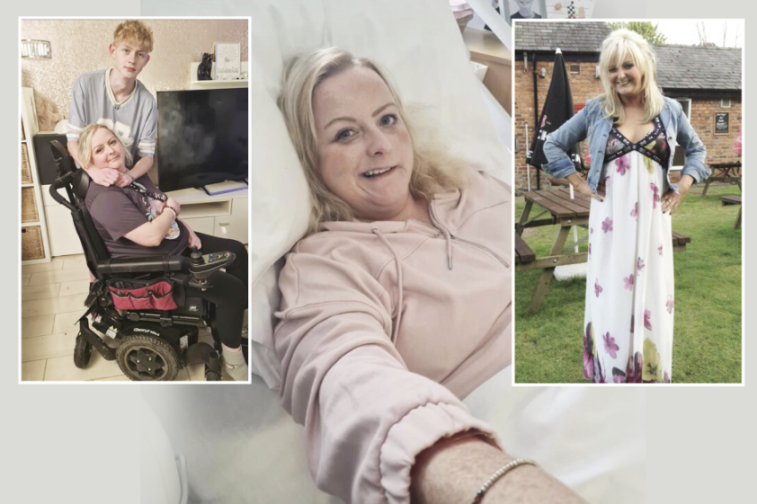
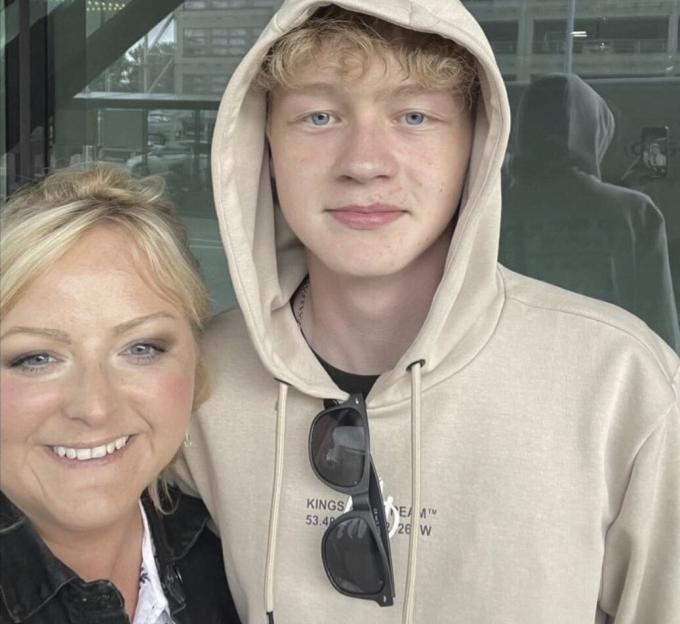 Alli, pictured with her son Mason, 17, had several migraines in the weeks leading up to her strokeCredit: True Life Stories
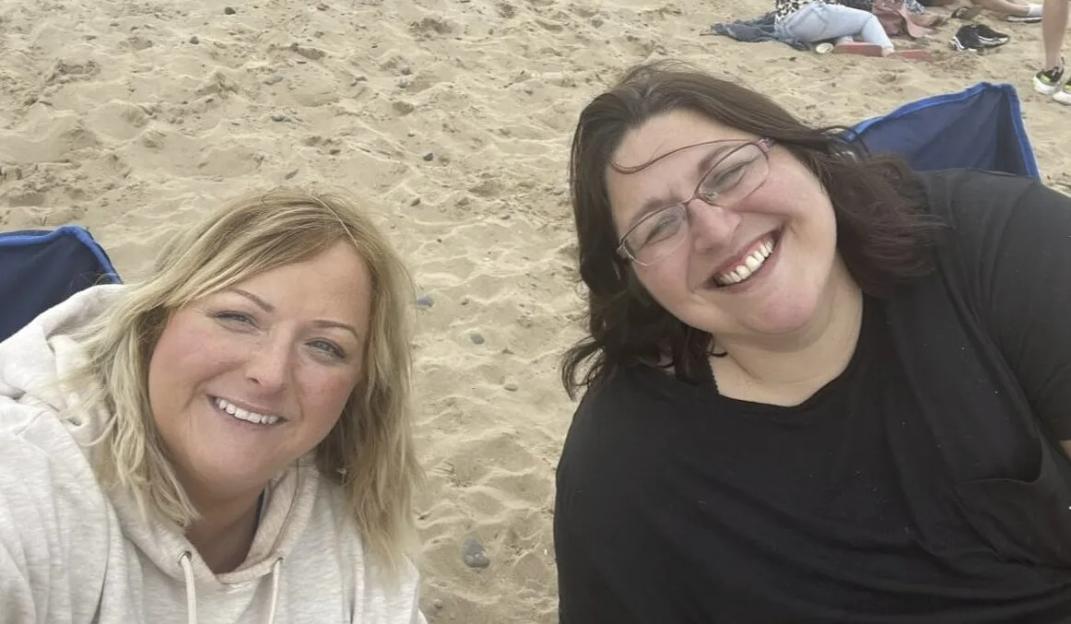 When she woke up, she saw Olivia at the end of her bed looking terrifiedCredit: True Life Stories
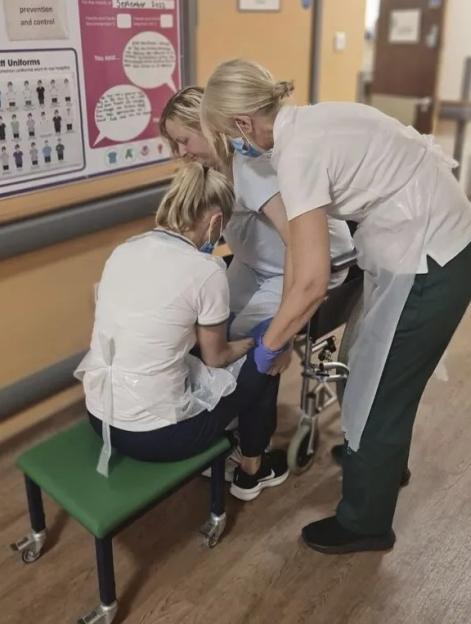 Alli’s world ‘flipped apart’ when was told she’d suffered from a haemorrhagic strokeCredit: True Life Stories
Alli says: “I was surrounded by doctors and machines beeping, I was so confused.
“. My entire left side of my body was completely frozen.
“I couldn’t move my arm or leg, I couldn’t speak properly. My face felt lopsided.
“I noticed Olivia on the end of the bed looking terrified. I knew something was very wrong.”
Olivia had found Alli unresponsive in bed the night before and called an ambulance.
A doctor informed Alli that she was in Warrington Hospital and she’d suffered a haemorrhagic .
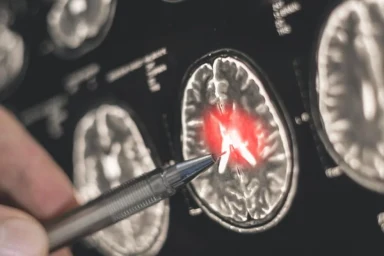
is when blood from a ruptured artery bleeds into the brain, damaging brain cells.
I was only 38 and too young to die
Alli Bate
It makes up 15 per cent of strokes in the UK and tends to be deadlier than ischaemic stroke – it’s estimated that more than 40 per cent of patients die within a month.
Stroke, broadly, is one of the UK’s leading causes of death, responsible for 34,000 deaths annually in the UK, according to Brain Research UK.
Many (but not all) people who have a haemorrhagic stroke experience a headache – which people describe like the worst pain they have ever had.
Stroke also causes a person to experience weakness in the arms, slurred speech and the face to fall on one side.
Alli was told by doctors she only had a 5 per cent survival rate.
She says: “In that moment, my world felt like it had flipped upside down.
“I was suddenly facing death. Doctors and nurses were rushing around me and as I put into an MRI machine, I started to cry.
“I was only 38 and too young to die. I didn’t want to leave Olivia and Mason still needed his mum.”
That night, Alli was taken to The Walton Centre – which had better care for stroke patients – 20 miles away, and admitted to ICU.
‘Trapped in my body’
For weeks, Alli remained in hospital as doctors fought to stabilise her condition.
Alli says: “Olivia barely left my side. When my voice started to return, I kept telling her I loved her.
“When Mason visited he looked so scared. We all cried together. I was determined to recover and get back home.
“After two weeks, I was well enough to be moved onto a main ward.
“Doctors made no guarantees I’d make a full recovery and reminded me every stroke patient was different.”
In September that year, Alli was transferred back to Warrington Hospital’s stroke ward.
She says: “My left side was still paralysed. I couldn’t walk, feed myself or even brush my own hair.
Symptoms of a haemorrhagic stroke
Stroke is a medical emergency and you should always call 999 if you have any stroke symptoms.
You can remember the signs with the FAST test:
- Face weakness: Can the person smile? Has their mouth or eye drooped?
- Arm weakness: Can the person raise both arms fully and keep them there?
- Speech problems: Can the person speak clearly and understand what you say? Is their speech slurred?
- Time to call 999: if you see any one of these signs.
Many (but not all) people who have a haemorrhagic stroke experience a headache.
A sudden, severe headache is very likely with a subarachnoid haemorrhage (SAH) but can also happen with an intracerebral haemorrhage (ICH).
You may sometimes hear this sudden, severe headache called a ‘thunderclap headache’.
People describe a thunderclap headache as the worst pain they have ever had, and like being hit on the head.
If you have a thunderclap headache, even if it goes away by itself or with painkillers, you should call 999.
Other common symptoms of SAH include a stiff neck, nausea and vomiting.
In stroke due to ICH, the symptoms depend on where the bleed happens in the brain, but can include weakness, numbness, visual loss or difficulty with speech, and you can have any of the signs of stroke in the FAST test.
Source: Stroke Association
“Olivia became my carer. She washed me, dressed me and spoon-fed me. She never once complained.
“But I suffered mentally. I felt like I’d been thrown into a very dark place. I didn’t want to live like that.
“Doctors warned me I might be in a wheelchair for life. The thought of losing my independence terrified me.
“At my lowest point, I thought about ending my life with assisted dying at , the facility in . I didn’t want to live trapped in my body, I was scared.
“But Olivia refused to let me give up on myself.
“She wrapped her arms around me and told me I was strong. That was the moment I decided to hold on.”
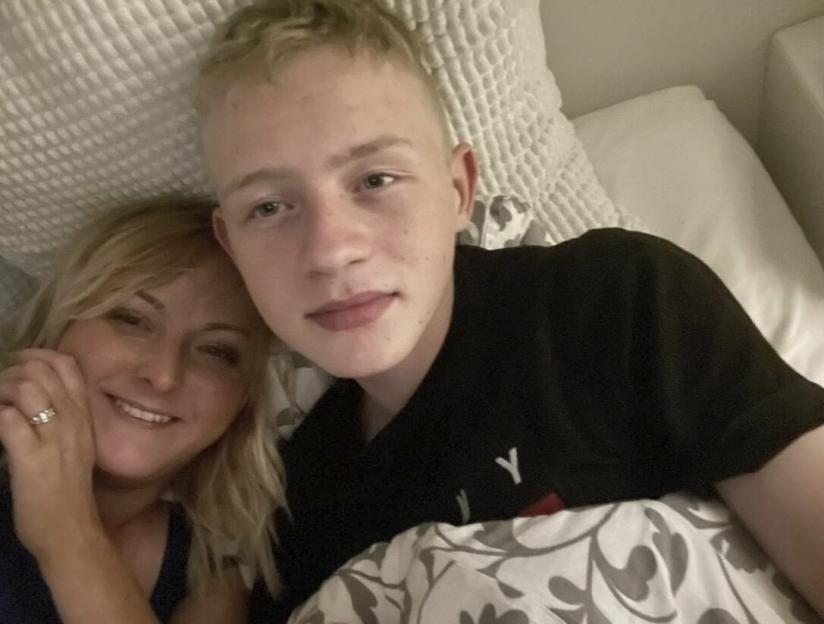 Alli was determined to recover so she could be a mum to MasonCredit: True Life Stories
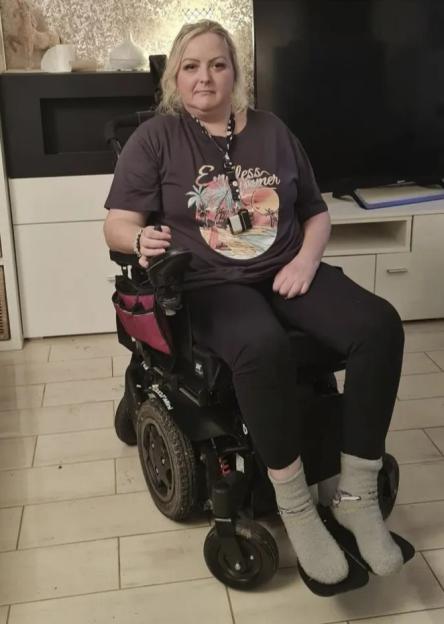 But the thought of being wheelchair-bound for life terrified herCredit: True Life Stories
‘All I want is my life back’
Alli began physiotherapy and after taking a few steps, it gave her hope. She slowly began to accept her new future.
In November 2022, Alli was allowed to go home.
With no sensation in her left arm or hand, she needed carers three times a day to help her wash, eat and get dressed.
Alli says: “Mason would cheer for me when I made it from the sofa to the kitchen. He kept me going.”
It’s been three years since Alli’s stroke and while she has gone back to work, she still needs help with basic tasks.
“It hasn’t been easy to accept this life but I’m trying my best,” she says.
When a headache is something sinister
You should see a GP if:
- Your headache keeps coming back
- Painkillers do not help and your headache gets worse
- You have a bad throbbing pain at the front or side of your head – it could be a migraine or, more rarely, a cluster headache
- You feel sick, vomit and find light or noise painful
- You regularly get headaches before or during your period
But call 999 or go to A&E if you have a have a headache that came on suddenly and is extremely painful, or you have a head injury.
Do the same if you or your child has an extremely painful headache and:
- Sudden problems speaking or remembering things
- Loss of vision
- Feel drowsy or confused
- Has a very high temperature and symptoms of meningitis
- The white part of the eye is red
Source: NHS
“I’m in an electric wheelchair and I’m still paralysed in my left arm and hand.
“My dream is just to have the chance to do basic tasks, like wash myself and cook. All I want is my life back.
“I really want my independence and my life back, it has been extremely hard.
“But I do have more independence, as I have a special one-handed [wheelchair].
“I’m again and last February I went back to work as a counsellor.
“I want to be a loving mum and partner again, worrying about bills, what’s for dinner and nagging my son.
“People need to be aware that a migraine could be a sign of something more serious.”
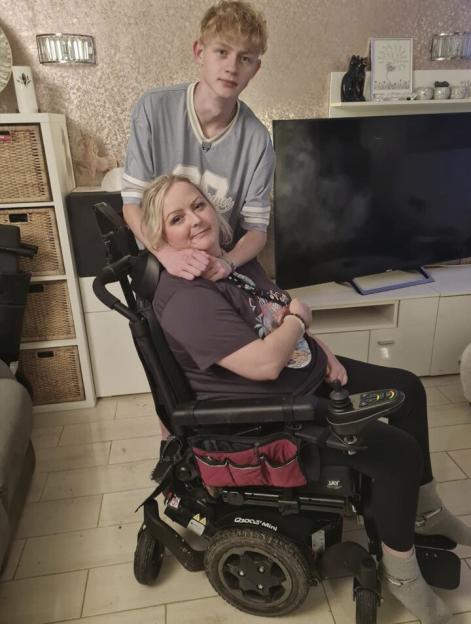 Mason and Olivia have been cheering Alli on during her difficult recovery processCredit: True Life Stories