
“WE’ll be touching ourselves together on a zoom call towards the end of the course, are you comfortable with that?”
“Is anyone really comfortable with that?” I wondered, but nodded obediently to my teacher Laura Walter. I was about to embark on an eight-week online workshop with eight other women in the hope of achieving more pleasurable sex – something I desperately needed with my partner of 16 years.
 Ruby Deevoy, 37, has struggled to enjoy sex since experiencing agonising vulvodynia in her 20sCredit: Ruby
 So she enrolled in an eight week tantric workshop – a therapy loved by the likes of Gwyneth PaltrowCredit: Getty
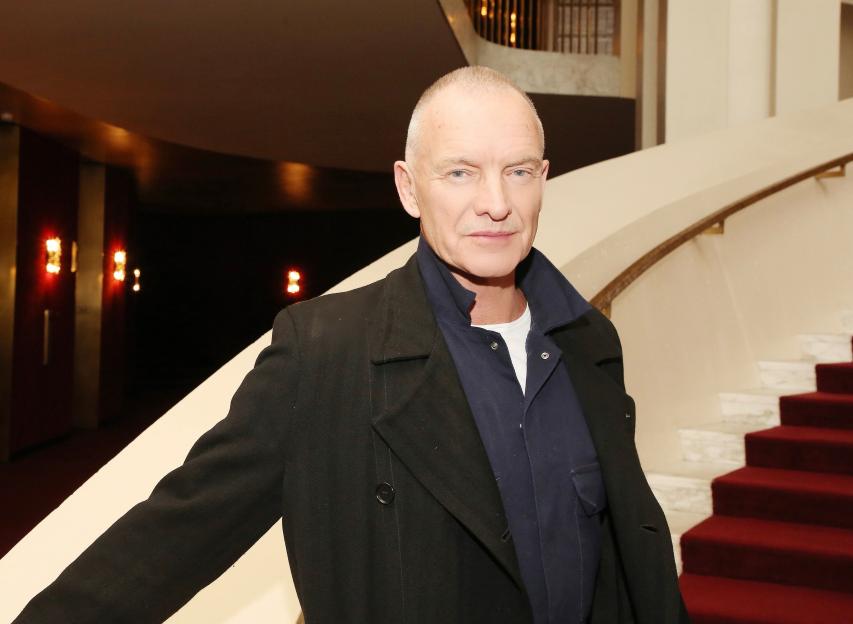 Sting is also reported to be a fanCredit: Getty
I’m 37, but struggled with the debilitating condition of – which causes severe, persistent pain of the vulva during sex and everyday life – between the age of 21 and 25.
The condition can come and go or be a constant battle and impacts up to 18 per cent of people with vulvas , studies suggest, yet there is very little understanding of it.
My experience with vulvodynia was at its worst between 2010 and 2016: during that time having sex literally felt like I was shoving shards of glass up my vagina.
I’d had scans and tests to assess if there was something more sinister behind my pain, like damage or irritation in the nerves of the vulva, infections or problems with the pelvic floor.
My tests never revealed anything physical, though I believe mine is connected to my – a disease in which tissue similar to the lining of the uterus grows outside the uterus.
That, compounded by other sexual trauma I experienced earlier in life, had made me feel pretty negatively about sex and really gets in the way of being able to have a good time in bed.
I wondered if tantra might offer the long-awaited toolkit I’ve been searching for.
Like many others, I’d always had an idea in my mind about tantra – that it was all about sex.
But the title and description of Laura Walter’s online workshop ‘from pain to pleasure’ struck a different chord with me and I decided to give her online workshop a go.
But I wasn’t getting my hopes up, after trying and failing many different therapies and methods, including sex-focused counselling.
Founder of Yoniverse , Laura says: “The ‘pain to pleasure’ aspect of my course is based on my own experience of achieving sexual freedom after pain that I never thought was possible.
“But it actually has little to do with the ancient practice of tantra. I work with what’s called neo-tantra, and they’re quite different.”
Neo-tantra is a Westernised interpretation of the ancient tantric traditions that focuses on sexuality as a path to spiritual growth and personal transformation.
and have both openly talked about using it for years.
 Lucy Walter started her ‘pain to pleasure’ tantric workshop after struggling with pain during sex herselfCredit: Johanna Kaisjoki
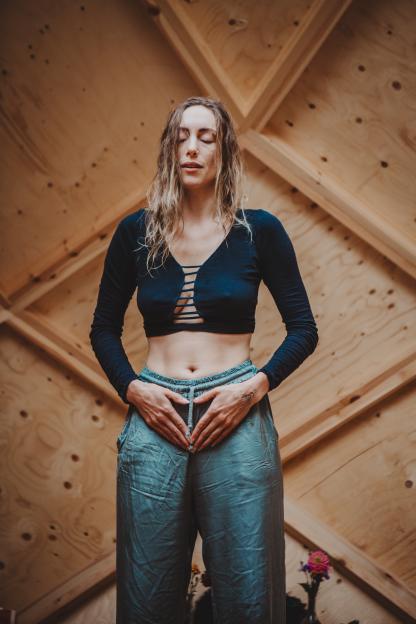 Laura practises neo-tantraCredit: Johanna Kaisjoki
“Within the neo-tantra framework, I bring in tools that can help women learn how to regulate their nervous systems, express their emotions more fully and discover the joys and freedom of self-embodiment,” says Laura.
“This very loosely connects to traditional Tantra through the belief that human existence is a pathway to enlightenment.
“We don’t exclude any experience as ‘good’ or ‘bad’, instead we learn how to meet it all, even pain, with unconditional love and awareness.”
Intimate expert Dr Shirin Lakhani says that for those experiencing vaginismus, vulvodynia, or pain related to trauma, bringing in breathing exercises or relaxation techniques can help regulate the nervous system, which may support healing and reduce the stress response that can exacerbate pain.
I felt energised and, much to my surprise, kind of turned on
But equally, it’s important to recognise that painful sex and sexual trauma are complex, often involving both physical and psychological factors.
Dr Lakhani explains: “Tantric practice, mindful movement, and body awareness can sometimes be helpful because they encourage women to reconnect with their bodies in a safe and gentle way.
“However, I would stress that tantric practice is not a substitute for medical assessment.”
I signed up to join the weekly Zoom calls with the group, bought the recommended – more on that later – and promised to do my ‘homework’ outside of class, without really knowing what to expect.
A SHY FIRST MEETING
In our first meeting, it was clear I wasn’t the only one feeling apprehensive.
Eight women logged into the Zoom call and we all shyly introduced ourselves and shared what we hoped to get out of the course. Hearing others sharing thoughts and feelings surrounding sex that were so similar to my own immediately made me feel less alone.
Laura explained that the first four group calls would focus on the ‘pain’ aspect of our sexual experience. During this time, she would be teaching us techniques to help us really get to know our bodies – how to fully identify physical feelings and regulate our jangled nervous systems.
This through gentle techniques like breathing deeply, stroking our own and (non-intimate) self-massage.
The first practices Laura took us through were very simple, but surprisingly powerful, as she guided us to stroke our fingers and forearms and run our fingers through our hair.
What is vulvodynia?
Vulvodynia is pain in the vulva - area around the outside of the vagina - that lasts at least three months and does not have a specific cause.
Vulvodynia can affect women of all ages. Anyone with a vulva can have vulval pain.
There’s usually no change to the way your vulva looks, but it may feel uncomfortable or painful.
The pain may feel like:
- Burning
- Throbbing
- Stabbing
- Soreness
The pain can also:
- Affect all or part of your vulva
- Be constant or come and go
- Start on its own or when your vulva is touched – for example, when inserting a tampon or having sex
- Affect other areas, such as the inside of your thighs, around your bottom, or the urethra
- Sometimes start when you have a poo
Vulvodynia can have a big impact on your life, affecting things like your sleep, concentration and sexual relationships.
See a GP:
- You have pain or discomfort in your vulva that does not go away or keeps coming back
- You find it difficult inserting a tampon into your vagina because of the pain
- You find having sex difficult because you feel pain, such as burning or stinging
Source: NHS
Allowing our defences to drop for a short while and a rewiring of the fact that pleasure doesn’t have to be about sex was an emotional experience.
Before our next call, we were told to spend the week bringing our awareness to physical feelings – the wind on our skin, a sock that’s too tight, the scrape of a hairbrush on the scalp – and to not only be present to the feeling, but name it too.
Laura suggested a selection of words to guide us, like ‘expansive’, ‘restrictive’, ‘prickly’, ‘tingling’ and ‘cool’.
This was a strangely difficult task, and at first it seemed much easier to name the uncomfortable or painful sensations, rather than pleasurable ones.
But over time, noticing pleasurable sensations throughout the day came a little easier.
WE HAD THE BEST SEX IN YEARS
In the weeks following, we learned to identify when we were in ‘fight or flight’ mode.
We also learned about freeze and fawn – when you run away or agree with everything, or everyone, as a means to stay safe.
Laura taught us how to let these normal responses run their course after facing threat, instead of holding on to them for the rest of the day.
She says: “The flight or freeze response can look like not speaking up in the meeting, or not saying no when we don’t want to do something, but checking out instead.
“It’s an incredibly intelligent survival strategy, but causes big problems in relationships and in modern life.
“Being stuck in the freeze response is often a big part of the reason many women experience pain and lack of pleasure in the first place.”
Laura says there may be times when women look peaceful during sex, but in reality, we’re feeling very disconnected and uncomfortable.
This work is about really knowing and loving yourself, and realising that pleasure is a human right that we all deserve and can all access, with a little work
Laura says: “If our partner doesn’t know how to spot this, and even more importantly, if we don’t know how to spot this in ourselves, this can cause emotional, psychological and even physical damage.”
It became apparent that flight or freeze had become my default response in my life.
So when I noticed the flight response kicking in mid-row with my partner, I deliberately chose to utilise my fight.
As Laura had taught us, I took myself into my bedroom, roared at the wall while pushing with all my might, smashed pillows on the bed and stomped around.
The feeling after was incredible – my anger and upset were gone, enough to have a calm, constructive conversation rather than a row; I felt energised and, much to my surprise, kind of turned on.
We had the best sex we’d had in years after that – it was very slow and I’d never been more aware of how I was really feeling and what I needed from moment to moment.
I ACCIDENTALLY ORGASMED
In the last few calls that we moved onto our jade egg practice.
The ancient tantric tool can be inserted into the vagina to heighten awareness and sensation, and improve muscle tone.
Tantric practitioners claim they can help ease physical, emotional and even spiritual issues surrounding sexuality – but Dr Shirin Lakhani warns there are some risks.
“The vaginal canal is very sensitive and self-cleaning. Placing a porous object like jade inside can increase the risk of infection, irritation, and even micro-trauma.”
Laura recommends using medical-grade devices specifically designed for vaginal health, such as the EmpowerRF from InMode.
We started by inserting our jade eggs, before Laura told us to touch ourselves – but with our cameras and microphones off.
So really, it wasn’t so bad after all, and by that point, we were all in it together.
Laura stressed the purpose was not to . In fact, she emphasised that doesn’t have to be the goal of sex and masturbation – thinking this is the end goal can actually take away from pleasure by piling on pressure.
She also explained that, in some cases, pain can actually be heightened sensitivity and simply making sound can change that.
 Ruby began implementing Laura’s teachings in her daily lifeCredit: Ruby Deevoy
 She’s been able to connect more deeply with her partner – and have the best sex of her life!Credit: Ruby
I often experience pain during foreplay and sex, but rarely when masturbating.
I did have discomfort while working with the egg, so I hummed, sighed and made some “ooohs!” as directed by Laura, and incredibly, it completely changed the sensation.
Sometimes I cried, sometimes I laughed, once I even accidentally orgasmed!
I’ve tried this during sex since and it really does help shift discomfort into a greater capacity for pleasure.
By the end of the eight weeks, it was clear that my journey with tantra is far from complete – after all, this is more of a than just a practice.
It has an ancient , and it takes a lifetime of devotion and dedication to self-mastery to really feel the full benefit.
But so far, it’s made clear that there’s considerably more pleasure in my life than I ever thought.
This work is about really knowing and loving yourself, coming back to your body and realising that pleasure is a human right that we all deserve and can all access, with a little work.
Turns out Sting might really be on to something.
Laura hosts a number of in-person retreats, workshops and 1-2-1 coaching. Her 12 week Pleasure Empowerment course costs £1200 (£900 early bird offer) – payment plans available.