SITTING watching the TV, Jordan Zwart was struck by a searing pain in her eye.
Then 18, she took painkillers but when they didn’t ease her agony, her mum took her to see an optometrist, who diagnosed inflammation at the back of her eye. It was only when she went to the GP with a , that the true diagnosis was found.
 Jordan Zwart, a student, had to have her eye removed after being diagnosed with cancer Credit: Jam Press/@jordyzwart.ocularjourney_
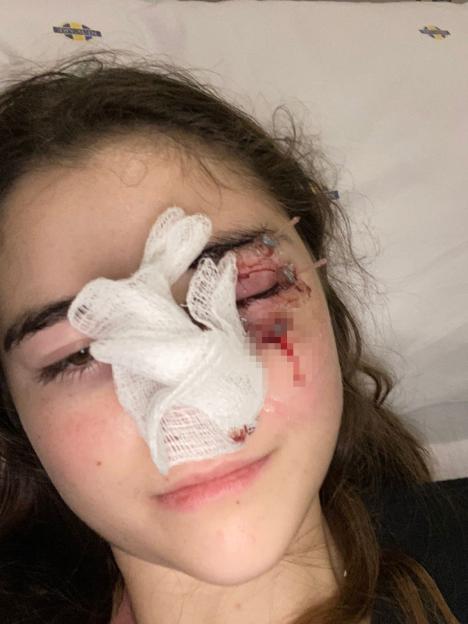 Jordan was just 18 when she was diagnosed with aggressive ocular melanoma Credit: Jam Press/@jordyzwart.ocularjourney_
Jordan was told she had aggressive ocular melanoma – a rare form of eye .
The teen was watching TV in the spring of 2024 and suddenly felt an excruciating pain, which felt like her eye was being constantly squeezed.
Jordan took medication for the pain, which didn’t go away, and woke up the next morning in tears.
Concerned, Jordan’s mum took her to the hospital for an eye pressure test with an optometrist.
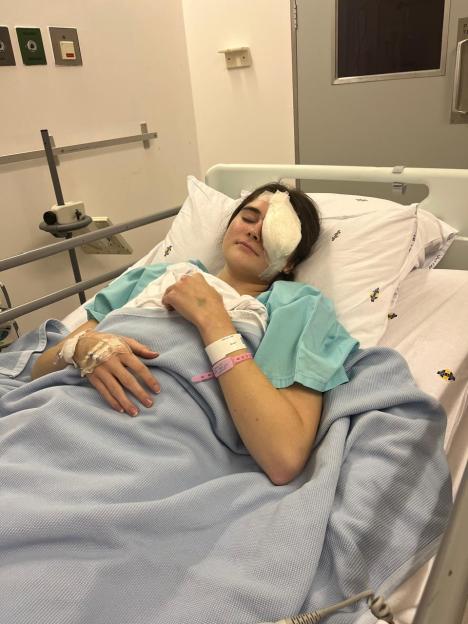 When she woke up in tears due to the pain in her eye, her mum took her to hospital Credit: Jam Press/@jordyzwart.ocularjourney_
 She experienced a pain in her eye while watching TV, which lead to the diagnosis Credit: Jam Press/@jordyzwart.ocularjourney_
Initially, doctors suspected uveitis, which is the inflammation of the eye’s middle layer.
But further checks days later – when Jordan returned for other symptoms – revealed the devastating truth.
“I had to see my as I had a sore throat, and during the checkup, I happened to mention that I was suspected of having uveitis,” Jordan, from Cape Town, South Africa, told Sun .
“This concerned my doctor as he thought it wasn’t normal being diagnosed with uveitis at such a young age and it didn’t make sense.
“He called another ophthalmologist for a second opinion. After looking at my dilated eye, he found the melanoma.
“I’ll never forget the look on his face when he found it. He said ‘Forget everything about uveitis – you have a melanoma’.”
Eye melanoma starts in the cells of the eye that makes melanin, which can’t be seen when looking in the mirror.
It’s hard to spot, but can create a growing dark spot in the coloured part of the eye (iris) or a change in the space of the pupil – usually making it larger.
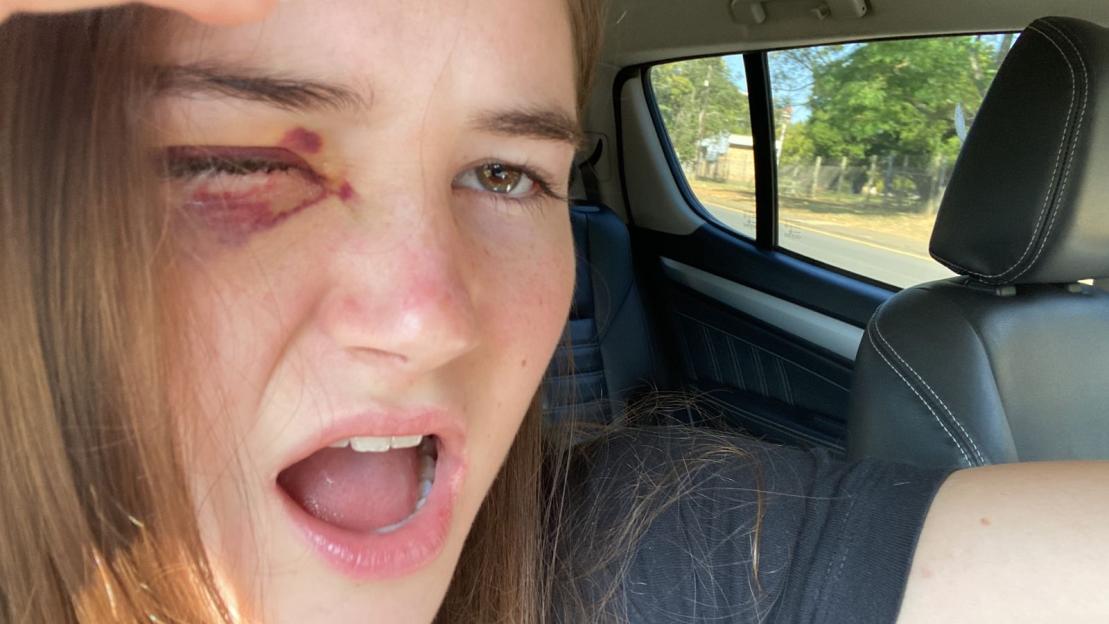 Doctors initially thought Jordan had uveitis when she raised concerns about her eye Credit: Jam Press/@jordyzwart.ocularjourney_
 Jordan says she was shocked by her diagnosis and that it took her some time to process fully Credit: Jam Press/@jordyzwart.ocularjourney_
Poor vision, loss of peripheral (side) vision and flashes of light or floaters are also symptoms.
Jordan says the diagnosis left her in shock, and she couldn’t process the severity of the situation, saying that it took her some time to actually process her diagnosis.
The family had gone through a previous cancer battle, with her dad being diagnosed, which made the news hit even harder.
Jordan says: “At this stage, I was quite confused as I didn’t know what a melanoma was.
“Until he [her dad] and my mum broke down into tears, and that’s when I realised this wasn’t good news.”
Tests later revealed Jordan also had a genetic predisposition to cancer, with her sharing the same cancer gene as her dad.
Jordan says: “I didn’t want to put myself on the same level of severity as my dad because I have seen how bad cancer is and can get, and thought my problem was so little compared to others’ struggles with cancer.”
Doctors told her that the only safe option was to remove the eye.
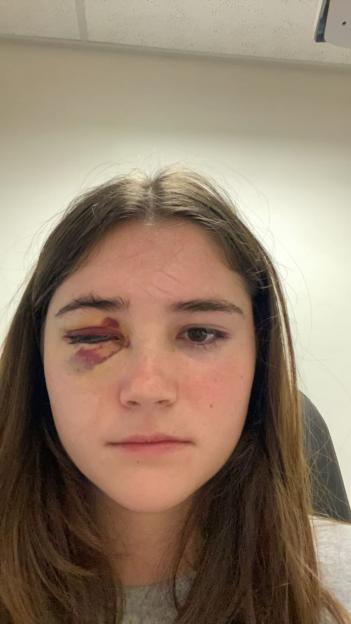 Doctor’s told Jordan that the only treatment option was to remove her eye Credit: Jam Press/@jordyzwart.ocularjourney_
 What you should know about eye cancer
Around 850 cases of eye cancer (ocular cancer) are diagnosed in the UK each year.
There are a number of different types of cancer that affect the eyes, including:
- Eye melanoma
- Squamous cell carcinoma
- Lymphoma
- Retinoblastoma – a childhood cancer
Cancer can sometimes develop in the tissues surrounding your eyeball.
Symptoms of eye cancer can include:
- Shadows, flashes of light, or wiggly lines in your vision
- Blurred vision
- A dark patch in your eye that’s getting bigger
- Partial or total loss of vision
- Bulging of one eye
- A lump on your eyelid or in your eye that’s increasing in size
- Eye irritation that is not going away
- Pain in or around your eye, although this is rare
These symptoms can also be caused by more minor eye conditions, so they’re not necessarily a sign of cancer.
But it’s important to get the symptoms checked by a doctor as soon as possible.
Melanoma of the eye is one of the most common types of eye cancer, but what exactly is it:
- Melanoma is cancer that develops from pigment-producing cells called melanocytes
- Most melanomas develop in the skin, but it’s also possible for them to occur in other parts of the body, including the eye
- Eye melanoma most commonly affects the eyeball. Doctors sometimes call it uveal or choroidal melanoma, depending on exactly which part of your eye is affected
- It can also affect the conjunctiva (the thin layer that covers the front of the eye) or the eyelid
Source: NHS
“They told me that the specialist had called them and had come to the conclusion that the safest option was to remove my eye,” she says.
“In that moment, everything finally felt real. My heart sank and I burst into tears.”
“That was the first time that I ever saw my dad cry.”
In June 2024, Jordan underwent surgery and had her eye removed.
After a brief stay at the hospital overnight, she was discharged and could return home.
But the hardest moment came when Jordan took off her bandages for the first time.
Jordan says: “I remember the first glimpse of myself with one eye. I felt sick to my stomach and nauseous.
“I asked for my eye to be repatched, I didn’t like how it looked. It all looked alien to me.”
Jordan confided in her friend, who says she was amazed by her eye, which resulted in her being less conscious.
She says: “I decided then that I would not cover my eye up and just accept the way I looked.”
Jordan also underwent further radiation treatment after traces of cancer were found upon further examination of her removed eye.
She was flown to Cape Town and had five days of isolated brachytherapy treatment, with six rods with radioactive seeds being implanted in and around her eye and left for the duration of her stay at the hospital.
She described the experience as “the worst five days I have ever experienced”, adding the pain was “agonising”.
In addition to the physical pain, Jordan was unable to have visitors for more than 20 minutes at a time due to the risks of radiation exposure.
Jordan says: “I felt awful and bloated from the meds and anaesthetic for a few days after.”
She had her exams at the time, but thankfully her school was accommodating and she was given extra time and catch-up lessons.
 When she first saw her eye after the surgery, she said she felt sick to the stomach Credit: Jam Press/@jordyzwart.ocularjourney_
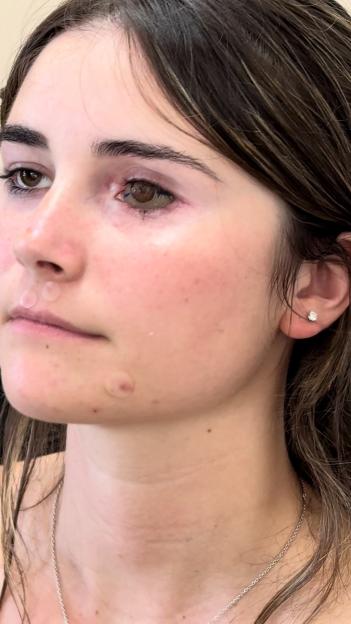 Jordan didn’t like how her eye looked after the surgery and initially asked for it to be repatched Credit: Jam Press/@jordyzwart.ocularjourney_
Despite setbacks, she has slowly rebuilt her life – learning to adapt to challenges like poor depth perception and fatigue.
She says: “It takes me longer to complete tasks as I need to take frequent breaks to rest my eye.
“Losing an eye has definitely been challenging.”
Jordan had a prosthetic eye fitted not long after having her eye removed, and now, she is finally in a better place and looking ahead.
She adds: “I have had to learn that healing takes time and I just need to be patient.
“I think my future is very bright and that good things are coming.
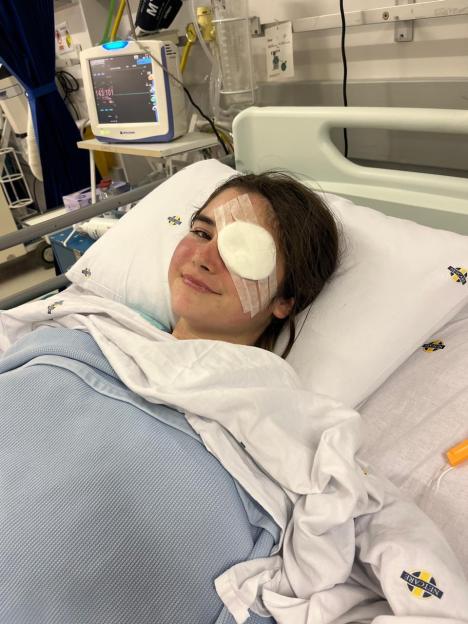 Jordan now has a prosthetic eye and says she is in a much better place now Credit: Jam Press/@jordyzwart.ocularjourney_
 Reg flags of cancer you must look for and act upon
THERE are more than 200 types of cancer, each with its own set of symptoms.
A cough lasting three weeks or more is a key sign of lung cancer – the most common cancer in the UK.
Changes to bowel habits lasting more than three weeks, such as diarrhoea, constipation, blood when you poo, or needing to go more often, are signs of bowel cancer, the second most common form of the disease.
There are also common symptoms that can be “red flags” of many forms of cancer, and should always be checked.
They include:
- Weight loss for no obvious reason.
- Pain that is persistent and unexplained, whether it be dull and consistent, or sharp and brief.
- Any lumps, bumps or swellings, such as in the neck, armpit, stomach, groin, chest, breast or testicle.
- Fatigue that makes you feel tired all the time and generally lacking in energy.
- Night sweats that are very heavy or a fever that can’t be explained.
- Changes to the skin, such as puckering on the breast, moles that have changed, very itchy or yellow skin.
- Unexplained bleeding from the bottom or vagina, or blood in urine, semen, stool, vomit or when coughing.
“I want to share my story to spread awareness of ocular melanoma and help others.
“If you are experiencing any symptoms or concerns with your eye, you should definitely get it checked out.
“Remember to always be grateful for what you have, don’t take life for granted because life can all change when you least expect it.”