Infrastructure often defines the economic trajectory of regions. Ogun State occupies a strategic position in Nigeria’s economic geography. Bordering Lagos State, the country’s commercial capital, it functions as a gateway between the southwest and other parts of the federation.
This strategic position also means the state carries one of the highest concentrations of federal highways in Nigeria. Many of these roads were constructed decades ago and have suffered prolonged neglect, leaving successive state governments to grapple with the spillover effects.
The result has been a vast network of deteriorating roads, some of which had become major obstacles to commerce and mobility.
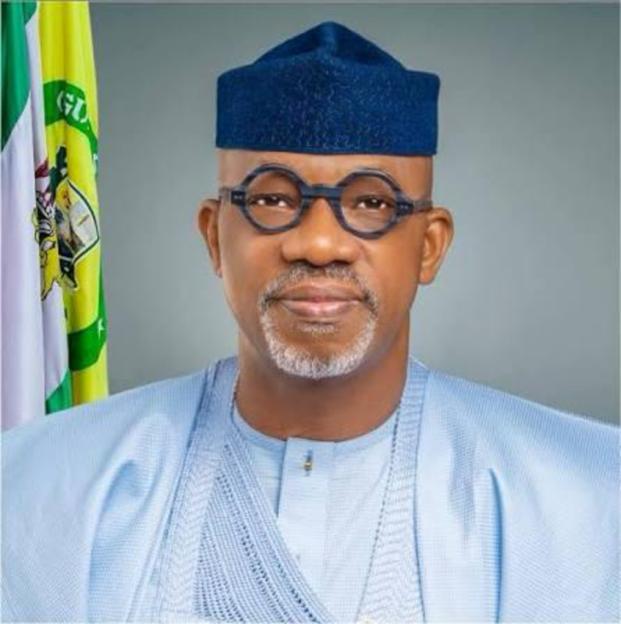
When Governor Dapo Abiodun assumed office in 2019, he inherited not only the expectations of residents but also the daunting reality of thousands of kilometres of roads requiring rehabilitation or reconstruction.
The administration’s response was to prioritise infrastructure as a central pillar of development policy.
During the commissioning of the Siun–Owode–Ofada Road, the governor articulated this approach in clear terms.
A detailed summary contained in the ministry’s report further shows the scope of the intervention. As of the reporting period, the administration had recorded 61 completed road projects across the state, while 53 additional roads were either ongoing or newly awarded. The report also indicates that 15 road projects inherited from previous administrations were continued and integrated into the current infrastructure programme. Taken together, these interventions amount to about 129 road projects handled under the administration since 2019, reflecting the scale of the state’s effort to address long-standing infrastructure deficits.
Collectively, these projects amount to over 1,650 kilometres of road construction and rehabilitation, linking urban centres, industrial clusters and rural communities.
Rebuilding the capital corridor
In Ogun Central, the government has prioritised improving mobility in and around the capital.
One of the most significant interventions remains the reconstruction of the Abeokuta–Sagamu Expressway, a 42-kilometre corridor that strengthens connectivity between the state capital and the Sagamu industrial axis.
The road serves as one of the most strategic transport links in the state, connecting Abeokuta with the Lagos–Ibadan and Sagamu–Benin expressways while easing the movement of goods and commuters across the region.
Another major intervention is the Panseke–Adigbe Road reconstruction, a 3-kilometre urban corridor designed to improve traffic circulation within Abeokuta and enhance access to commercial districts in the city.
The government has also undertaken new urban road projects such as the Elega–Miliki–Saje Junction Road, measuring 4.5 kilometres, alongside the Miliki–Bode Olude Extension, which spans about 1.05 kilometres. These roads are expected to improve access to residential neighbourhoods and commercial areas in Abeokuta North.
Taken together, these projects form part of a broader effort to modernise Abeokuta’s road network while easing congestion across key traffic corridors.
Linking towns in Ogun East
Ogun East, covering the Remo and Ijebu divisions, has also witnessed substantial infrastructure development.
Among the notable projects in the region is the reconstruction of the Ijebu-Ode/Epe/Sagamu-Benin Interchange Flyover Bridge, which serves as a strategic transport link connecting several highways in the region.
The administration also reconstructed the Molipa–Fusigboye–Ayegun–Ojofa Road, a 3.1-kilometre urban route within Ijebu-Ode aimed at improving mobility in the commercial heart of the city.
In the Remo axis, road interventions include the sectional rehabilitation of Oba Erinwole Road in Sagamu, covering approximately four kilometres, as well as the reconstruction of the Sagamu Junction–Iperu Roundabout Road, an important corridor linking Sagamu with neighbouring towns and the Lagos-Ibadan Expressway.
New road construction has also extended into other parts of Ogun East. The Ode Junction–Sapade Road, measuring 5.5 kilometres, and the Ilishan–Ilara–Akaka–Ode Remo Road, stretching about 12.3 kilometres, are among projects designed to improve connectivity between communities in Remo North and adjoining areas.
Meanwhile, newer projects such as Hospital Road to Ayepe Phase 1, covering 3.6 kilometres, are expected to further enhance connectivity between Sagamu and surrounding towns.
At several commissioning ceremonies, Governor Abiodun emphasised the broader impact of the projects.
“The previously degraded and flood-prone stretch has now been transformed into a modern, motorable road with proper drainage and pedestrian safety features,” he said at one of the road inaugurations in the district.
He added that improved roads would enhance safety, ease traffic congestion and stimulate economic activity across the communities served by the projects.
Expanding development in Ogun West
Ogun West, historically perceived as underserved in infrastructure development, has also benefited from several road and bridge projects under the current administration.
In the Yewa axis, the government has undertaken the reconstruction of the Ilaro–Owode Road, a major corridor linking communities across Yewa South and Yewa North.
Bridge construction has also been prioritised. The Odo-Afa Bridge and the Afon Bridge, both along the Imeko–Afon Road corridor, were completed to improve connectivity in rural areas and facilitate the movement of agricultural produce.
Other projects include the reconstruction of the General Hospital–Aferiku Road, measuring 2.8 kilometres, and the Oke Erinja–Erinja Road Phase 2, a 1.7-kilometre road project designed to improve access to communities in Yewa South.
New road developments in the Ado-Odo/Ota industrial axis also include projects such as the Ayobo–Ayetoro-Budo–Itele Road Phase 1, the Ayobo (MOPOL Junction)–Lafenwa Junction Road Phase 2, and the Lusada–Alapoti Road, all aimed at easing movement within one of Ogun’s fastest-growing industrial corridors.
These roads serve thousands of commuters who travel daily between Ogun State and neighbouring Lagos.
Roads as economic infrastructure
For Governor Abiodun, road development is closely tied to economic transformation.
Speaking during the commissioning of a road in Sagamu, he explained that infrastructure investment is essential to unlocking the state’s economic potential.
“Road infrastructure is one of the key catalysts of development,” he said, adding that improved roads would boost commercial activity in communities linked by the projects.
The strategy aligns with broader development initiatives, including the Gateway International Agro-Cargo Airport at Iperu, which aims to position Ogun as a logistics hub for agricultural exports.
The debate continues
Despite the scale of construction, and perpetual commissioning of roads, the government continues to face criticism from political jobbers, some residents and social media commentators.
Some critics highlight poor road conditions in certain areas, while others argue that the pace of development should be faster.
Yet the growing list of completed projects suggests that the state’s road network is undergoing gradual but significant expansion.
On X, some commentators argue that the government has not done enough. Others claim the projects are concentrated in certain areas.
Politics in Nigeria has always had a loud side. Every policy decision, every government project and every infrastructure effort inevitably attract scrutiny, commentary and criticism.
In the age of social media, those voices are even louder.
Over the past few years, the administration of Dapo Abiodun has faced persistent criticism over the state of roads in Ogun State. On X, photographs of pothole-ridden streets and complaints about traffic congestion frequently circulate, often accompanied by sweeping claims that little or nothing has been done.
Criticism is an essential ingredient of democracy. It keeps governments accountable and forces public officials to justify their decisions.
But criticism also demands honesty.
And when the conversation shifts from rhetoric to verifiable data, the narrative around road construction in Ogun becomes far more complicated than the popular social media storyline suggests.
But infrastructure development rarely satisfies everyone at once.
Road construction is a gradual process that requires financing, engineering design and months of physical work.
In a state as economically dynamic as Ogun, demand for new roads will always outpace supply.
It is also important to remember that road construction represents only one aspect of the administration’s broader development agenda.
For a state that serves as Nigeria’s industrial gateway between Lagos and the rest of the country, infrastructure development remains both an economic necessity and a political battleground.
But across Ogun—from Abeokuta to Ilaro, Sagamu to Ijebu-Ode—the kilometres of road already delivered suggest a transformation that is likely to shape the state’s future for years to come.
A transformation in progress
Infrastructure development rarely produces instant results.
But across Ogun State, the steady expansion of the road network is gradually reshaping how people travel, trade and interact.
From the industrial zones of Ota to the farming communities of Yewa and the historic towns of Ijebuland, the impact of these roads is becoming increasingly visible.
For residents who once navigated long stretches of deteriorating roads, the transformation is not measured only in kilometres.
It is felt in shorter travel times, easier access to markets and the growing sense that long-neglected communities are finally being reconnected to the wider economy.
And as new projects continue to emerge, the story of Ogun’s road revolution remains a work in progress.