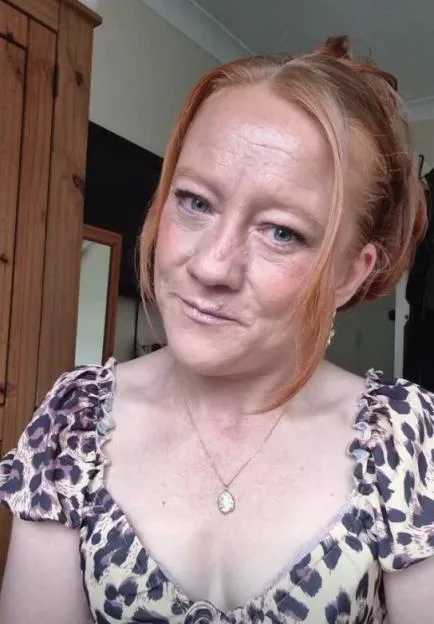
A DISTRAUGHT teen has shared how an agonising allergy left her with pus-soaked bedsheets and her skin flaking off.
Chloe, 19, features on the brand new series of TLC’s , where she seeks the help of Consultant Dermatologist
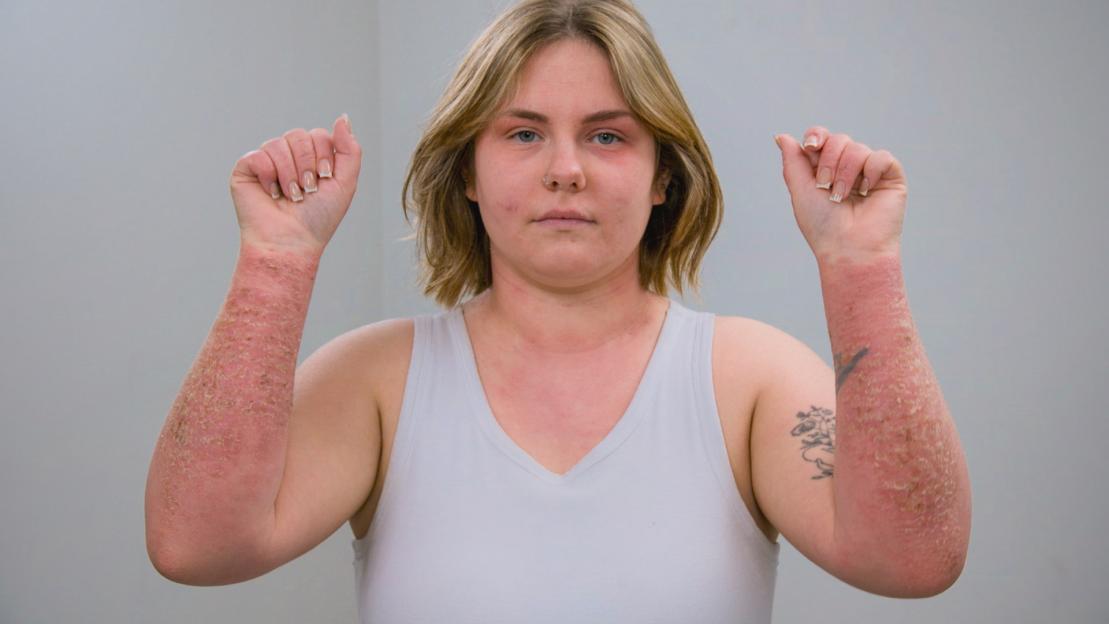 Chloe featured on the new series of The Bad Skin Clinic and showed how she has been left with painful flaking skinCredit: TLC
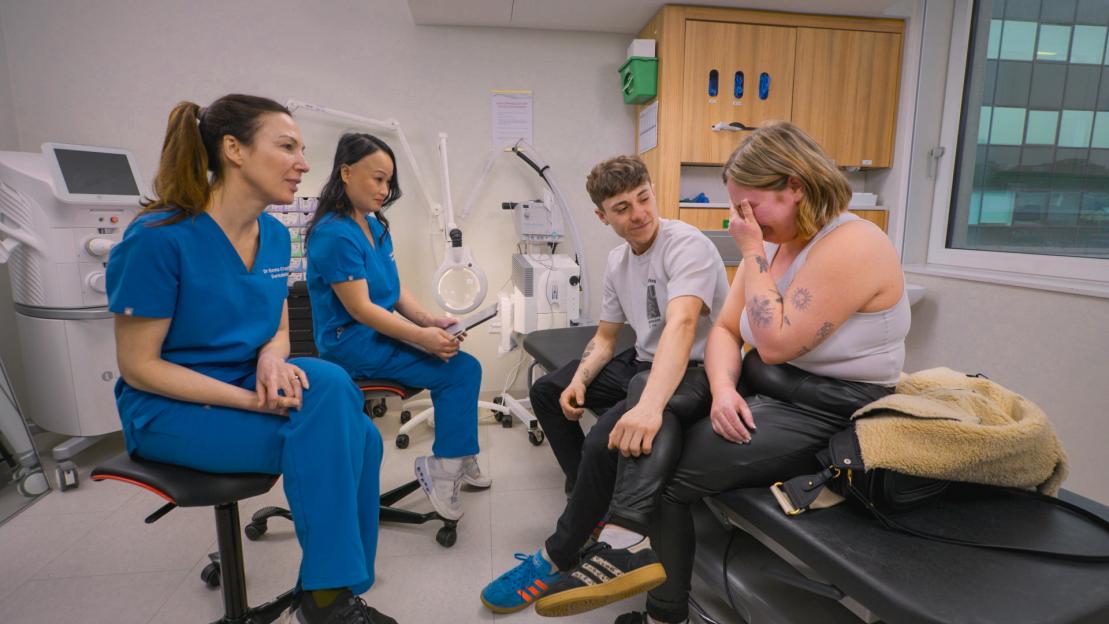 Chloe broke down in tears describing how her painful skin condition has shattered her confidenceCredit: TLC
The newly-trained revealed the skin condition on her face, hands and body started eight months ago, and has turned her life upside down.
Chloe shared: “I worry people think it is contagious.
“I always get really conscious. Is someone thinking ‘she’s gross, I wonder what is wrong with her?’
“Honestly I can’t remember the last time I was able to be just comfortable.”
The young woman said her skin gets so dry that it cracks and forms red patches, and revealed it can even hurt to blink.
Thankfully she has the support of dedicated fiance Ashton – who even helps to shower her when her skin flares up.
Chloe continued: “Sometimes my skin has been so severe he has had to actually help me shower and wash.
“Anytime I move my hands it is so painful. It burns. It feels like a cut when you get lemon juice in it.
“I think ‘what 21 year old is helping a 19-year-old to shower?’
“I should be doing that at 70, not my age now.”
Chloe also admitted her condition has started to affect her job “a lot” in the hair salon too.
Chloe explained: “Sometimes I’ll really struggle to hold a pair of scissors.
“Where they are dry and split, the hair sometimes gets caught in it, but I’ve learned to basically deal with it.
“If it was to get worse than how it is, I don’t know how I’d cope and that scares me a lot.”
‘I’m losing sleep’
In the episode, Chloe visited Dr Emma to see if she could help, and explained how it had started on her arms with small bumps but had ended up getting more severe.
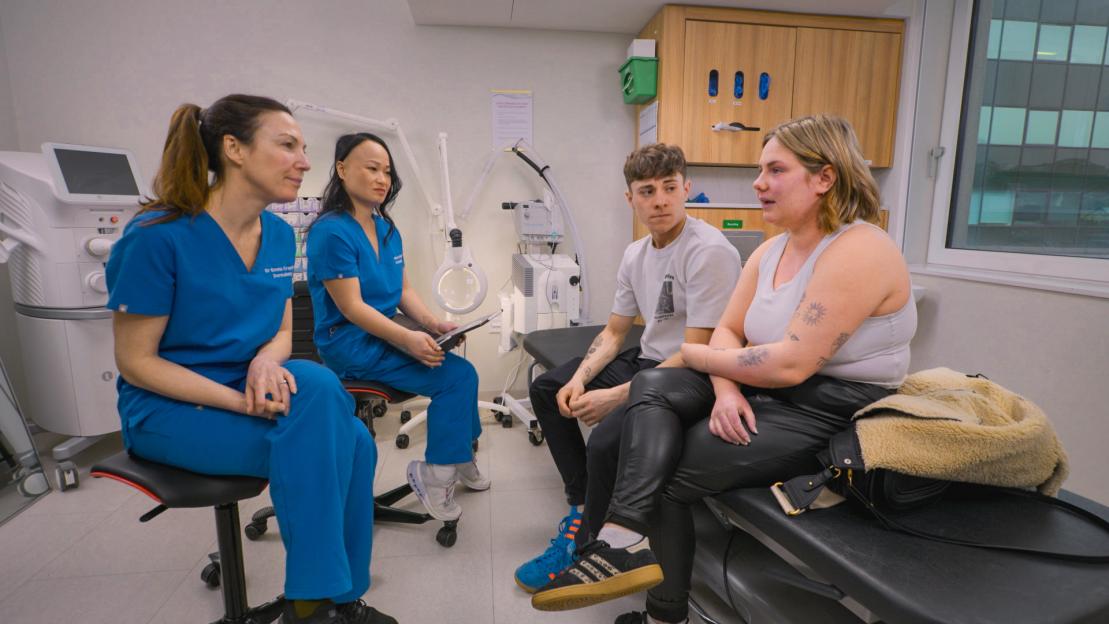 Chloe told Dr Emma that her skin condition was driving her ‘crazy’Credit: TLC
She added: “It is so itchy beyond belief. The itch is under my skin.
“I’ll itch and itch to the point where I don’t realise how far I’ve gone with it and I’ll split and crack my skin.”
Examining the inflamed skin, Dr Emma sympathetically asked: “Is it driving you mad?” to which Chloe replied: “Absolutely crazy.
I worry people think it is contagious
Chloe, The Bad Skin Clinic patient
“I’m losing . I can’t do anything properly as I’m just itching and scratching.”
Chloe told the dermatologist that she had been to the doctors “countless times” and they had given her steroid cream, which “helped at the start slightly”, but then had been ineffective.
Breaking down in tears, Chloe shared: “I used to wear so much make up and wear big lashes.
“That was just part of me and now it’s all been taken away. I just don’t feel like me.”
Work worries
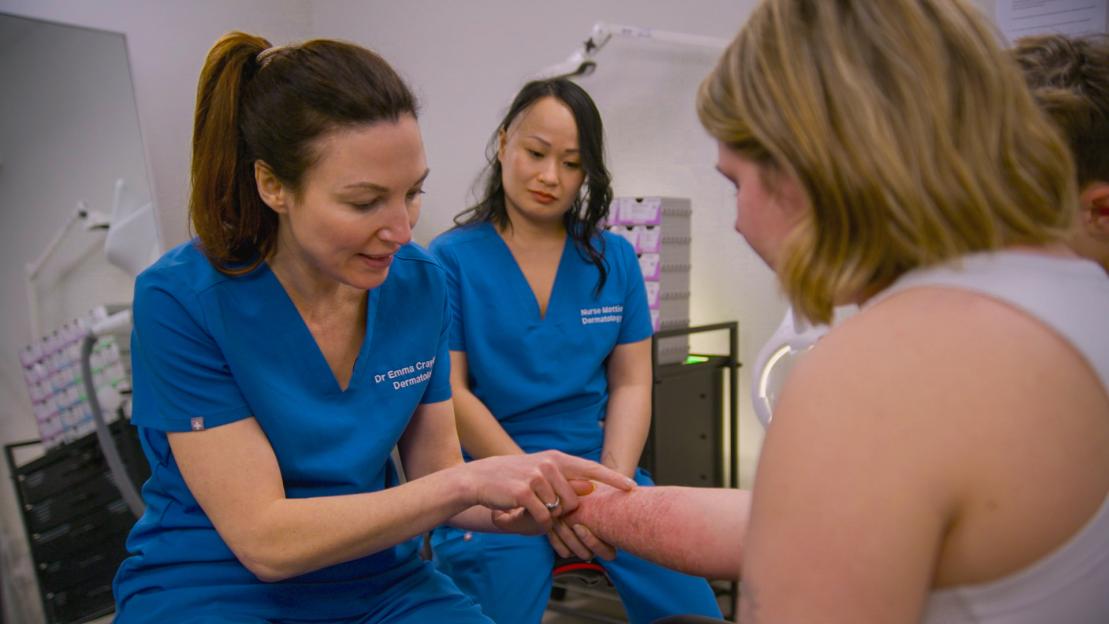 Dr Emma theorised that the skin condition could be caused by an allergyCredit: TLC
While Chloe had thought it was a form of , Dr Emma had another theory.
She explained: “Usually you are born with a tendency towards eczema. I actually think that what is happening to your skin is the result of an allergy.
“And I think there is a possibility it’s something you are in contact with on a daily basis that is causing your skin to be like this.
“We think of this as being contact dermatitis, which just means inflammation of the skin.”
She explained how Chloe’s condition could be caused by chemicals in creams, at work or in the environment.
Anytime I move my hands it is so painful. It burns. It feels like a cut when you get lemon juice in it
Chloe, The Bad Skin Clinic patient
And with Chloe starting her job as a hairdresser eight months ago, Dr Emma suspected that it could be part of it.
The hair stylist shared: “It makes me nervous knowing that I could be potentially allergic to something that I use at work, as that could be something that affects my career.”
After giving Chloe antibiotics to help her infected skin and a course of steroid tablets to calm her skin, Dr Emma signed her up for a patch test to work out definitively if she had any allergies.
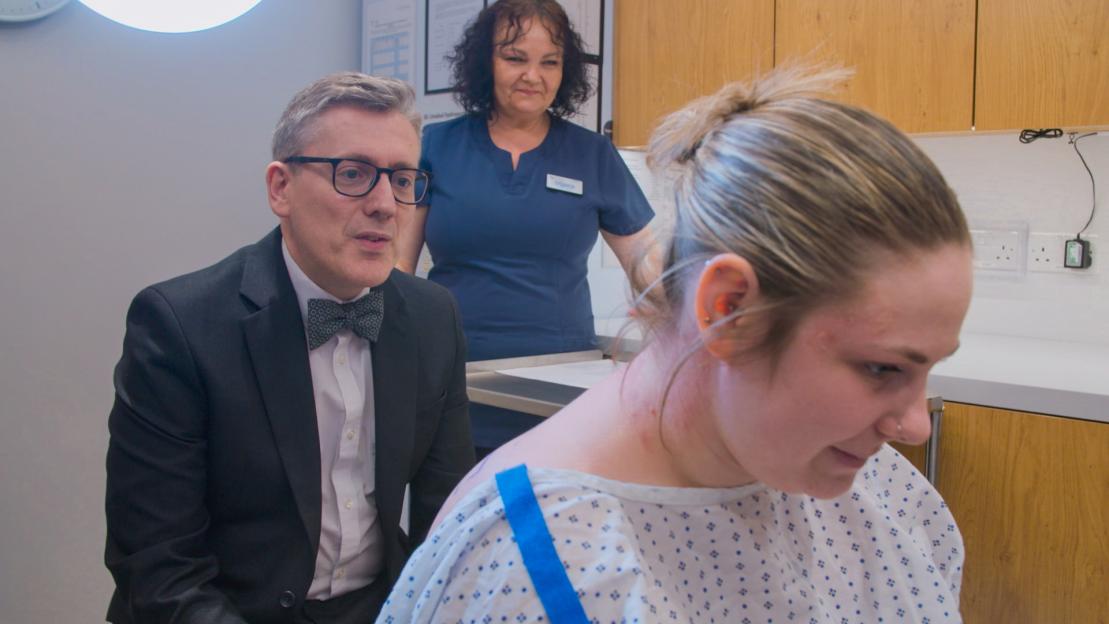 Chloe did a patch test with Professor White to find out what she is allergic tooCredit: TLC
 What is contact dermititis?
CONTACT dermatitis is a common skin reaction that occurs when your skin touches a substance that either irritates it or triggers an allergic reaction.
The good news is that it isn’t contagious and usually clears up if you can identify and avoid the trigger.
The symptoms usually appear exactly where the substance touched your skin, and can include the following…
- A red, itchy rash (on darker skin, it may look dark brown, purple, or grey).
- Dry, cracked, or scaly skin.
- Blisters that might ooze or crust over (common in severe or allergic reactions).
- Burning or stinging sensation (often more common with irritants).
- Swelling or tenderness.
If the rash is on your face or covers a large portion of your body, or shows signs of infection (like pus or increasing pain), it’s best to consult your doctor.
Reassuringly, she told the teen: “I don’t believe you are going to have to live with this forever.”
Chloe shared: “Being told I’m potentially allergic to something is life-changing. I’m just nervous to see what I’m allergic too.”
Meanwhile, Dr Emma later admitted to a colleague: “I’m worried she might have to rethink her career.”
Allergy reveal
A week after starting the antibiotics, her skin started improving, and the patch test – conducted by allergies and skin specialist Professor White – gave them more answers.
He told Chloe that one of the chemicals that flagged was ammonium persulfate, which is commonly used in bleaches and some dyes.
He advised: “Ideally you’d want to try and avoid it. If possible, have someone make it up and you definitely wear gloves to minimise your contact to it.”
It makes me nervous knowing that I could be potentially allergic to something that I use at work, as that could be something that affects my career
Chloe, The Bad Skin Clinic patient
Another chemical that showed up as an allergy was a chemical called cetrimonium bromide, which is found in some shampoos.
Professor White continued: “There is no cure for this allergy. In some cases, people are so sensitive that they have to think about retraining and doing something else.”
Feeling sad about the potential blow to her hairdressing dream, Chloe said: “That is my career, that is what I do, but hopefully there are ways to work about it and manage it.”
‘Changed for the good’
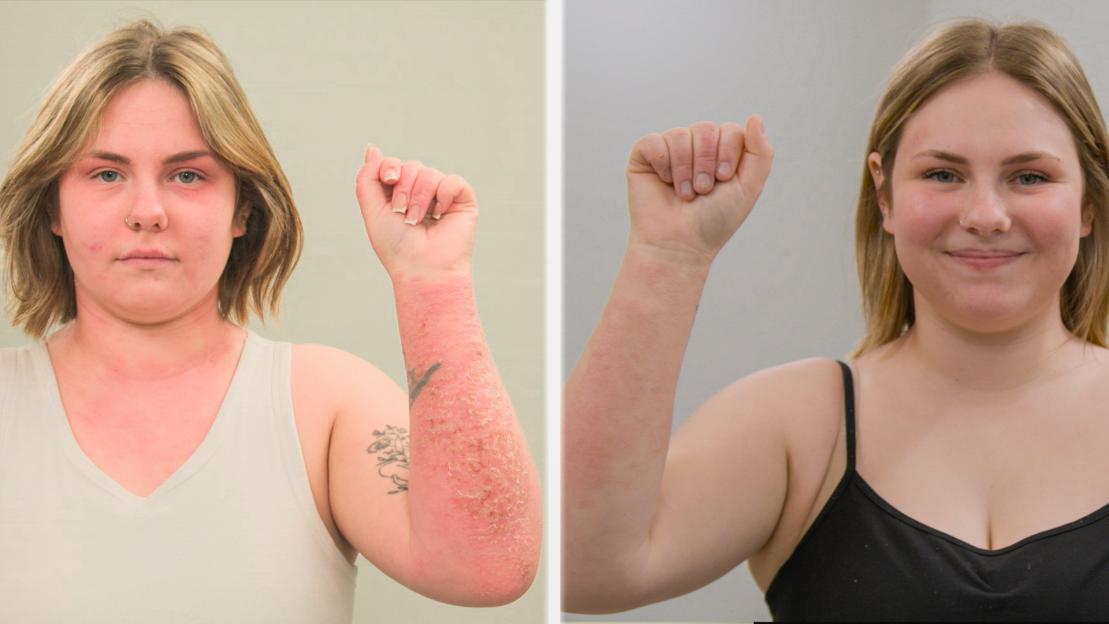 The difference in her skin was unrecognisable, after working out her allergyCredit: TLC
A few weeks later, Chloe saw Dr Emma again – and her skin was dramatically improved after taking a fortnight off work.
She told the healthcare professional: “Since having that time off, my skin has really changed for the good.
“But at the same time I’ve just started my career which is gutting really but health is more important.
“I did go back to work and it was near enough impossible to avoid it.
“I was going through gloves like crazy. I thought this is more stressful.”
 Chloe said she has accepted that she may need to leave hairdressing behind for her healthCredit: TLC
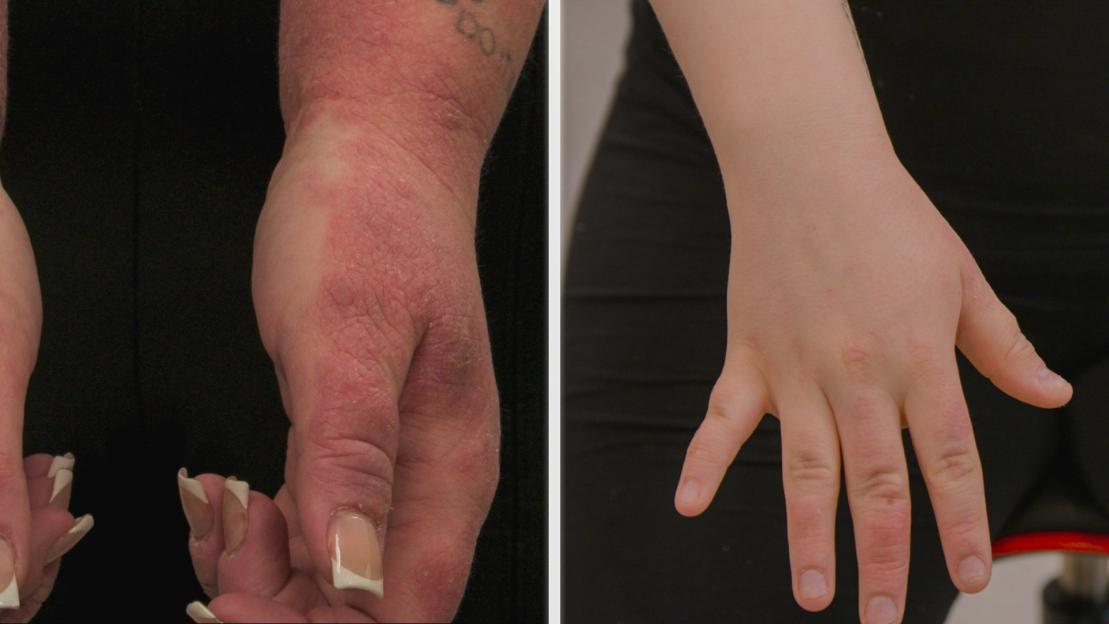 Chloe’s skin on her hands was hugely improved after taking time off workCredit: TLC
She revealed that she was coming to terms with having to leave her career as a hairdresser and find something new.
Chloe shared: “I am quite fortunate that I am young and I can change my career.
“Now I’m just going on with normal life.
“I feel like it is another chapter in my life. It is exciting. It opened up so many doors for me to do something else with my life and venture out there.”
The Bad Skin Clinic airs on TLC at 9pm on Wednesdays and streams on Discovery+.
Dr Emma’s diagnosis of Chloe
SPEAKING exclusively to Fabulous, Dr Emma revealed Chloe’s condition and the steps she took with the healing process…
Chloe came to see me through The Bad Skin Clinic, although her presentation is one that would be familiar to anyone working in specialist dermatology.
By the time I met her, her skin disease was severe and persistent.
She was sleeping poorly because of intense itch, scratching repeatedly through the night and waking to broken, bleeding skin.
Her hands were inflamed, fissured and painful, and she described marked discomfort with changes in temperature, particularly cold.
Functionally, her skin had become a constant source of distraction and distress, interfering with work, sleep and day-to-day life.
Until then, she had been treated for eczema, which was a reasonable working diagnosis given the distribution and severity of her symptoms.
Topical anti-inflammatory treatments produced short-term improvement, but her skin never stabilised and flared repeatedly, often quickly after returning to the same environment.
At that point, it became clear that the pattern did not fit with eczema alone.
She therefore underwent formal allergy patch testing – designed to identify delayed hypersensitivity reactions, which differ from immediate allergies in both timing and mechanism.
Her results showed allergy to ammonium persulfate, a chemical widely used in hair bleaching and colouring products and a recognised occupational allergen in hair professionals.
She also reacted to 2-HEMA and related acrylates and methacrylates, commonly found in gel nail systems and some adhesives, as well as cetrimonium bromide, a conditioning agent present in many shampoos and hair products.
In addition, she had a nickel allergy.
Repeated exposure to multiple relevant allergens meant her skin barrier had no opportunity to recover, and inflammation was being continually re-triggered.
In that context, escalation of topical or systemic treatment would not have addressed the underlying problem.
Management therefore focused on avoidance, which in practice required significant changes.
This included minimising contact with bleaching agents, using appropriate protective gloves, improving ventilation, avoiding acrylates entirely, including gel nails, and reviewing both professional and personal products for relevant ingredients.
Attention was also given to reducing nickel exposure from tools and fastenings where possible.
Alongside avoidance, treatment was directed towards barrier repair with regular use of bland, high-lipid emollients, with topical steroids reserved for short, targeted use following clear inflammatory flares, particularly after accidental exposure.