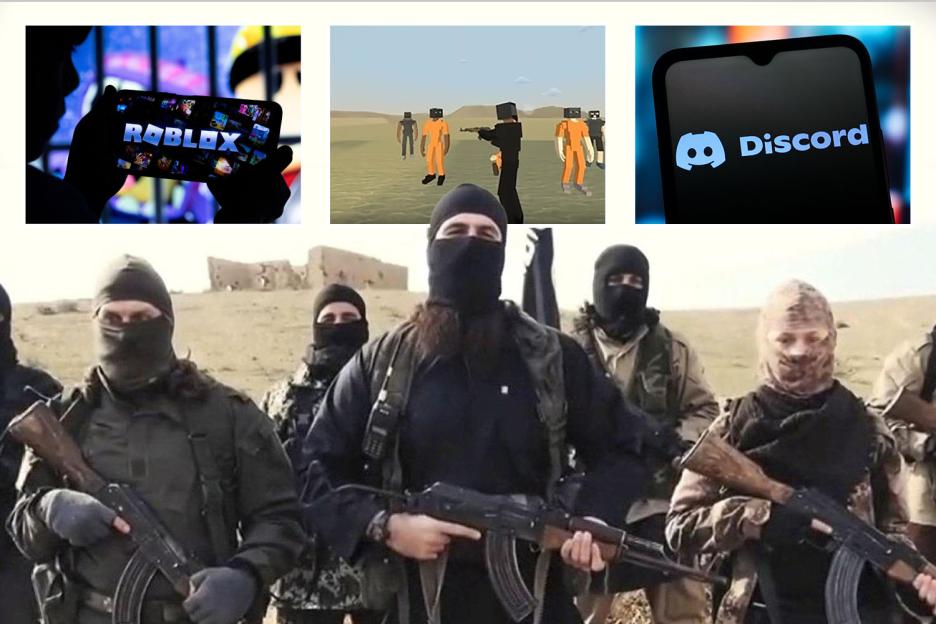
AN 11-YEAR-OLD boy sits down at the computer to log on to Roblox and play with his pals. But he’s not talking to friends from school.
In fact, behind the colourful avatars hanging around in the digital playground is a group of sick ISIS thugs who are attempting to recruit a chilling new wave of “caliphate cubs” and Jihadi brides.
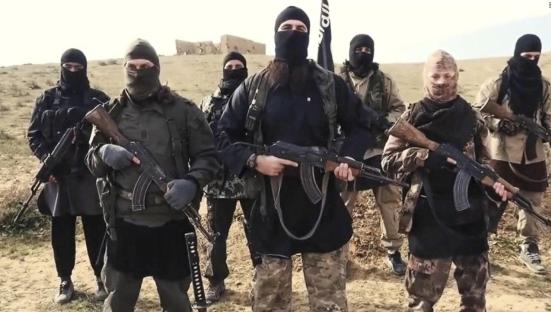 Masked ISIS militants in SyriaCredit: Alamy
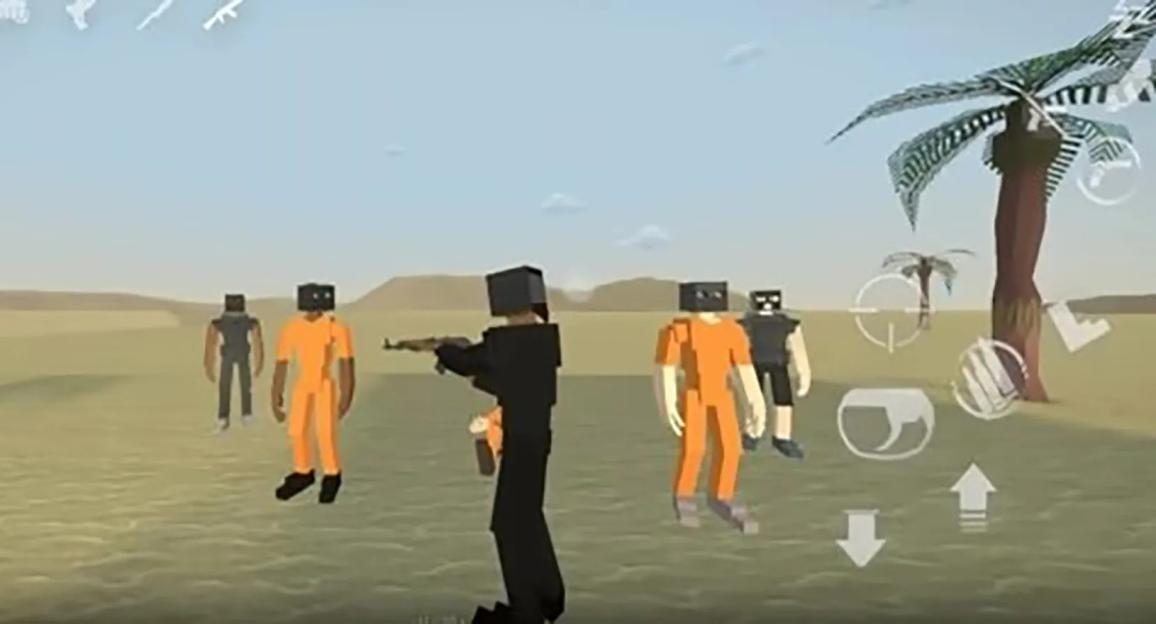 A teenager was recently caught recreating sickening ISIS execution videos on Roblox as he aspired to ‘die as a martyr’ fighting alongside terroristsCredit: Newsflash
 Terrorist groomers are infiltrating the hugely popular game, say expertsCredit: Reuters
Ten years ago, coerced and indoctrinated children were herded into camps in Syria and Iraq, moulded to join the ranks of the world’s most brutal terrorist groups.
Sometimes they were snatched directly from school, sometimes they were recruited on social media.
The imagery was deliberately shocking – boys grappling with Kalashnikovs and parading the black-and-white flag of jihadists. They were signalling that the next generation was already prepared to kill.
In 2019, the final remnants of ISIS’ so-called caliphate were destroyed by the Syrian Democratic Forces, a Kurdish militia, in what is now referred to as the Battle of Baghuz Fawqani.
This was its last territorial stand – but the deadly attack at the Hanukkah celebration at Sydney’s Bondi Beach in December 2025, and the suicide bombing at the gates of a Shi’ite mosque in Islamabad, Pakistan, earlier this month show that the threat is still very much alive.
In fact, the terrorist group is increasingly targeting children to advance its violent and extremist agendas.
Today, the ISIS propaganda machine has evolved and intensified, amplified by churning social media algorithms and gaming .
Terrorists use anything – from cartoons to computer games – to groom their victims across the world.
Last year, teenage boys between the ages of 13 and 17 were detained for planning several terrorist attacks in Indonesia, Malaysia and Singapore, after being radicalised on gaming platforms.
Indonesia reported that 110 minors – aged 10 to 18 – had been recruited in this manner in 2025 alone.
Meanwhile, Dr Peter Neumann, a Professor of Security Studies at King’s College London, warned that girls are also being recruited.
In his book, “The Return of Terror,” Dr Neumann said that girls may be groomed to ‘fall in love’ with a member of a group through social media.
“Or they may seek an escape from structural violence or family pressure at home by getting married to a terrorist fighter,” he added.
Professor Alexander Evans, from the London School of Economics, warned that for ISIS, there was “always an appetite to reach for the young”.
He told The Sun: “The big transformation [of recruitment] came with ISIS.
“They changed the nature of communication propaganda for the terrorist groups. Gaming became a big vehicle for that because of the ubiquity of gaming culture.
“It was often used as a way to build friendships, networks, relationships… And at times, it was used as a vector to recruit people as well.
“What we have today is that – but on steroids.”
How to keep your kids safe on Roblox and Discord?
For Evans, the biggest threat to children is when they are left unsupervised by adults online - and this is not "unique" to to terrorism.
He told The Sun: “We should be worried about the cumulative impact of exposure to this kind of material for younger people.
“This is also true for child sexual abuse material, for extreme violence and pornographic material.
“Any child with a smartphone who is accessing it unsupervised by an adult can potentially be exposed to all kinds of malign content online including terrorist content.”
Evans explained that chats in video games are often unsupervised – without a moderator to keep a watchful eye on what is shared by the players.
“A child may be playing an online shooter game and in a chat with five or six people,” he said.
“The chat is not being supervised or seen by a wider group of people. So again, it is a space which actually allows people to get alongside other people and seek to radicalize them.”
Separately, advice from the NSPCC, the UK’s children charity, lists six tips to help keep your child safe on Roblox.
- Sign up with the correct age
Make sure your child creates an account using the correct age. On Roblox, certain safety settings and parental controls are enabled by default for children under 13. However, you should still review the settings to ensure they’ve been set up correctly. - Build a list of age-appropriate games
Not all games on Roblox will be appropriate for your child. The platform has a setting that lets parents and carers limit what their child can play by allowing them to build lists of age-appropriate games. You can also switch off in-app spending or set them monthly limits. - Explore communication settings
You can manage who your child can speak to by disabling chat completely or limiting it to friends only. You can also switch off their inbox to stop them receiving direct messages. - Explore the platform together
Ask your child to give you a demonstration of the platform to help you understand how they use it and explore some of the parental controls together. You could even consider setting up your own account and playing the games yourself. - Have regular conversations about gaming
Continue to have regular conversations with them about what they are doing online. Ask your child open questions like ‘What games have you been playing on Roblox recently?’ or ‘What platforms have you been using to play games?’. - Check out our Online Safety Hub
Visit our Online Safety Hub for more advice and tips on gaming, talking to your child and much more. If you need more information on setting up parental controls on Roblox, visit their Parent Guide .
Evans’ warning comes as the United Nations Security Council published its annual report on the global terrorist threat, highlighting the ambitions of ISIS and Al-Qaeda to carry out “spectacular” attacks aimed at attracting notoriety.
Youngsters continue being targeted – particularly by ISIS – to be played as their pawns in the spread of terror globally.
In France, two minors, aged 15 and 17, were arrested last July for planning attacks on synagogues and the Eiffel Tower, after connecting through a group on an encrypted messaging app.
Both shared a fascination with ISIS and wanted to travel abroad to “wage jihad.”
In Austria, an 18-year-old was arrested after researching how to construct a bomb and plot an attack, reportedly inspired by Al-Qaeda.
Meanwhile, this week chilling details of a made by Canada school killer Jesse Van Rootselaar emerged.
The 18-year-old, who allegedly fatally shot eight people, created a video game that let players simulate a mass shooting on a level designed to look like a shopping centre on Roblox.
Plots for ‘spectacular’ attacks
What makes the recruitment drive especially alarming is its reach. It is not confined to older teenagers already flirting with rebellion or radical ideas.
Colin Smith, coordinator of the monitoring team behind the report, pointed to a growing trend of minors being recruited – some as young as 11.
He told a briefing at the Royal United Services Institute (RUSI): “This is a big concern in many European countries.
“We have seen an uptick in radicalisation of minors.
Cartoons and computer games designed to appeal to children… are often integrated within material that glorifies terrorist acts
Dr Peter Neumann, Author of The Return of Terror
“We have seen cases in which children as young as 11 years old are being radicalised as part of terrorist groups.”
Their propaganda is carefully calibrated to appeal to the emotions, identity and desire of children.
Joining a group is framed as offering status and prestige, smart uniforms and weapons.
For children growing up amid war, poverty or lack of education, this can be intoxicating.
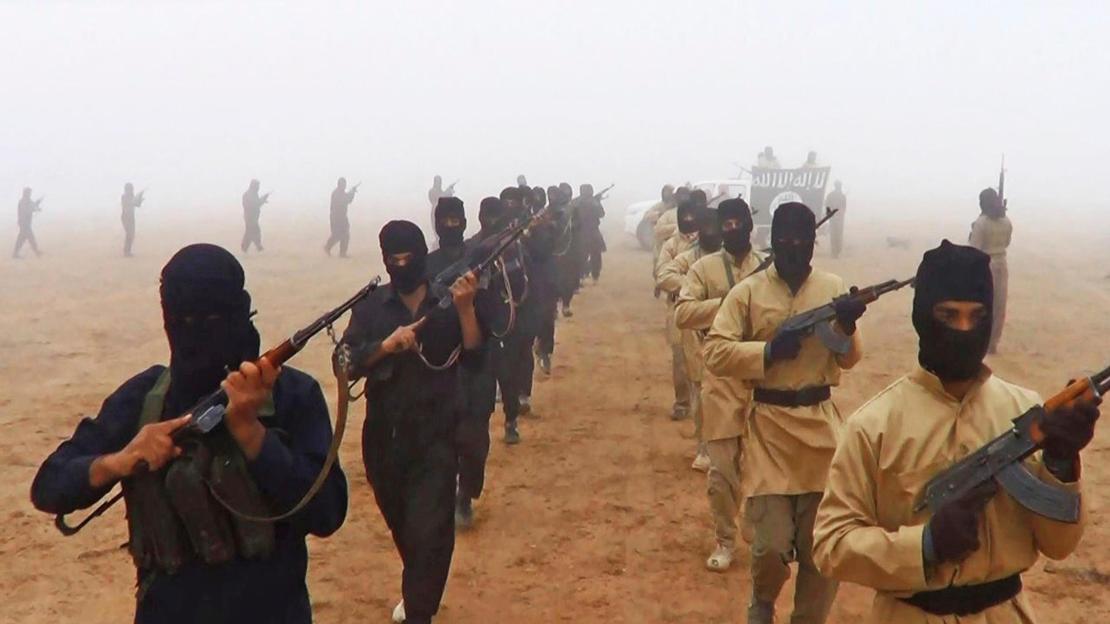 Propaganda photos released by ISIS fightersCredit: Alamy
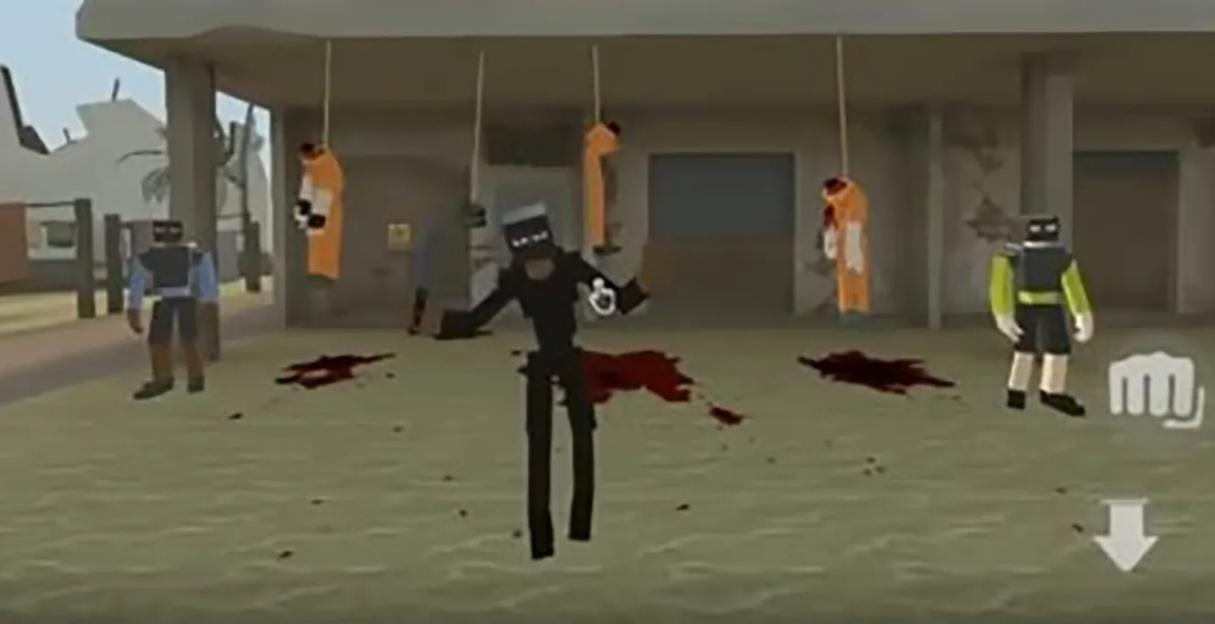 One clip from the teenager caught recreating execution videos shows ISIS ghouls hanging their foesCredit: Newsflash
Dr Neumann explained: “Groups also use communication material to spread their message.
“Cartoons and computer games and other interactive media appearing on the Internet have been designed to appeal to children in particular.
“Often colourful content is integrated within material that glorifies terrorist acts, including suicide attacks.
“Social media platforms, including email, chat rooms, e-groups, message boards, video recordings and applications are especially popular tools that can also facilitate tailored approaches.
“One of the methods, which can be defined as ‘grooming’, is based on the perpetrator learning about the individual’s interests in order to tailor the approach and build up a relationship of trust.
“A second technique replicates ‘targeted advertising’: by tracking the online behaviour of Internet users, a group can identify those vulnerable to its propaganda and tailor the narrative to suit its target audience.”
Pointing to findings included in the United Nations report, Smith warned that youth recruitment is not just a European phenomenon.
Girls may be induced to ‘fall in love’ with a member of a group through social media
Dr Peter Neumann, Author of The Return of Terror
He said: “We are seeing recruitment in South-East Asia and North Africa.”
One of the countries where at least 30 youngsters have been recruited by ISIS in the last six months of 2025 is Tunisia, according to the report.
And in Morocco, recent arrests showed the threat was mainly driven by exposure to terrorist content online and aspirations to travel to conflict zones, particularly in the Sahel-Saharan region.
Four plots – including the arrest of a 21-year-old female student linked to ISIS who had got hold of bomb-making materials and toxic substances – were foiled in 2025.
She is believed to have been plotting an attack on a religious site in Rabat, the capital of Morocco.
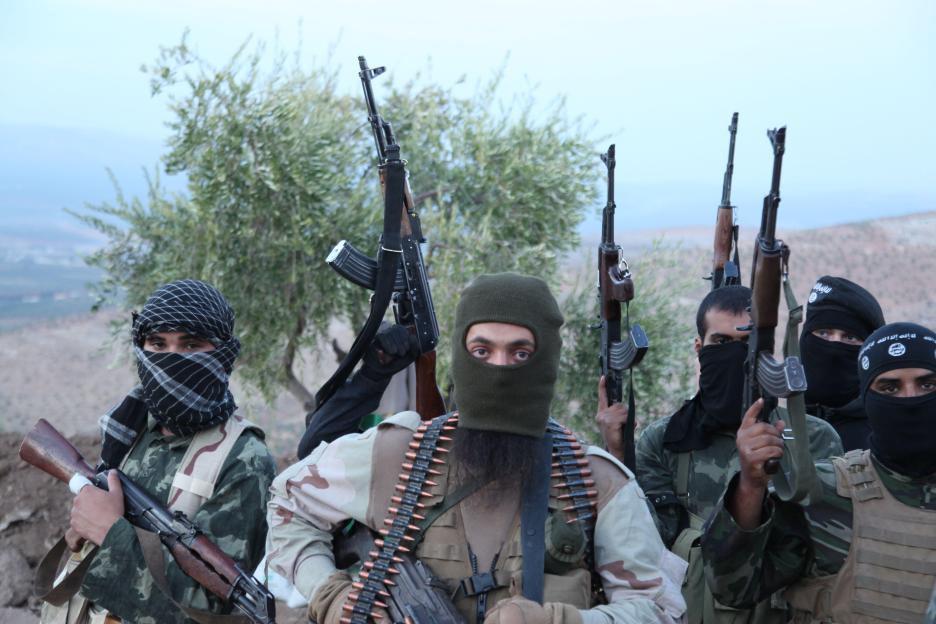 ISIS rebel militant soldiers on the frontlineCredit: Alamy
 ISIS recruiters are using apps such as Discord to target kidsCredit: Getty
Number of Al-Qaeda fighters growing
Data compiled by the monitoring group revealed that Al-Qaeda boasts 50 times more recruits currently than it had at the time of 9/11.
The figures, drawn from intelligence gathered by international agencies such as MI6, show that there are now 25,000 potential fighters – without an epicentre in a single country or region.
Similarly to the recruitment process, the overall situation from Al-Qaeda and ISIS remains “multipolar and increasingly complex,” according to the report.
The Sun has contacted Discord and Roblox for a comment.