

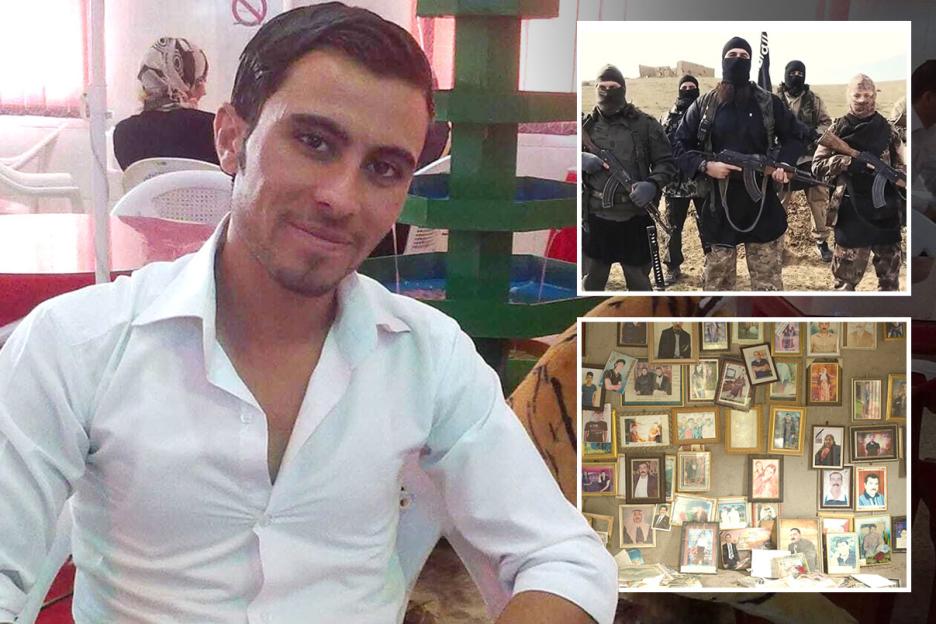
A SURVIVOR of an ISIS massacre that left thousands dead said the horror he witnessed left “something broken” inside him that will “never fully heal”.
On August 3, 2014, ISIS invaded the Sinjar region in northern Iraq, killing an estimated 5,000 and .
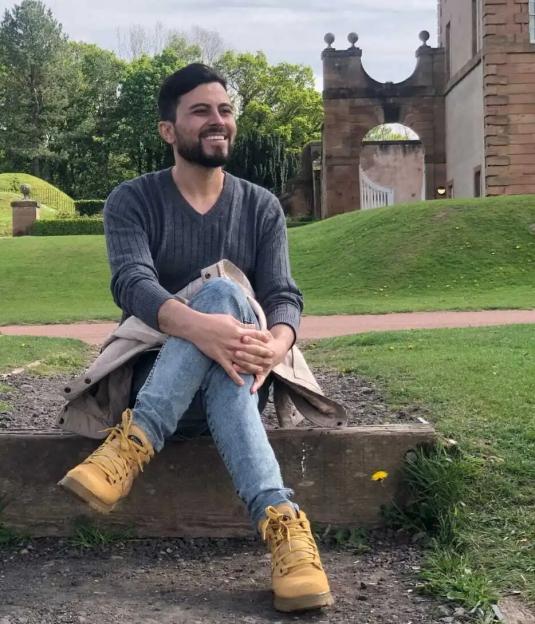 Today Sovan Mato Hamad Mato lives in the UK, but is still scarred by the horrors he witnessed in 2014 Credit: Supplied
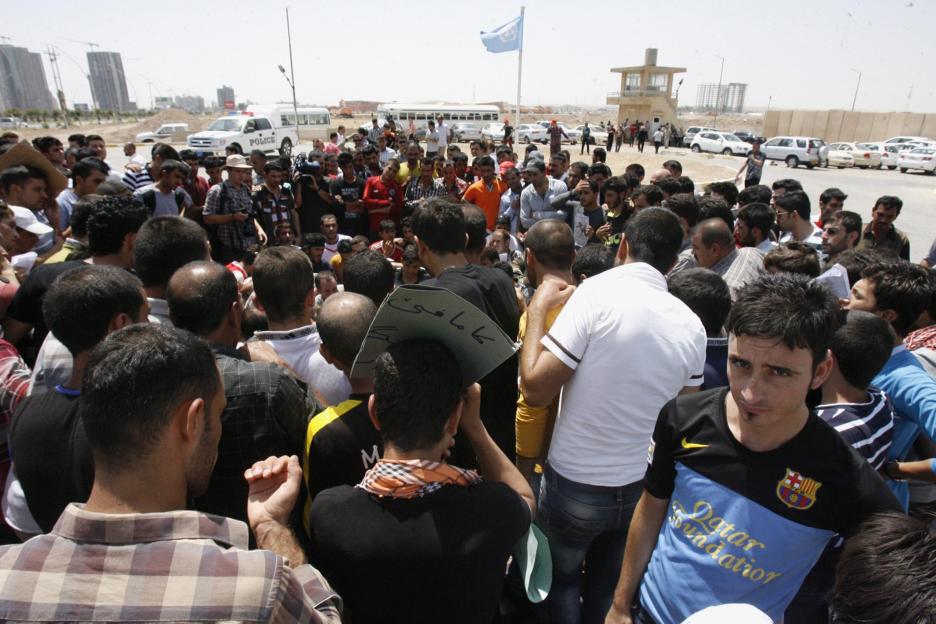 Yazidis protest in front of the gates of the UN office in Erbil, northern Iraq Credit: EPA
Those who refused to convert to Islam were executed and their bodies dumped in mass graves.
Others were forcibly converted, while women and girls were turned into sex slaves and sold between ISIS fighters.
The murderous rampage forced 400,000 Yazidis to flee their homes.
Survivor Sovan Saad Hamad Mato, 37, told The Sun: “I witnessed events so barbaric they defy human imagination and belief.”
That hellish day, Sovan watched helplessly as women died from their wounds in front of him while children threw themselves from the mountain side to avoid capture.
“The horrific scenes I saw on the mountain left something broken inside me that can never fully heal,” he said.
ISIS fighters stormed Sovan’s village of Tal Banat, south of Sinjar Mountain, at exactly 1am.
A battle erupted as the brave Yazidi men took up arms to protect their families.
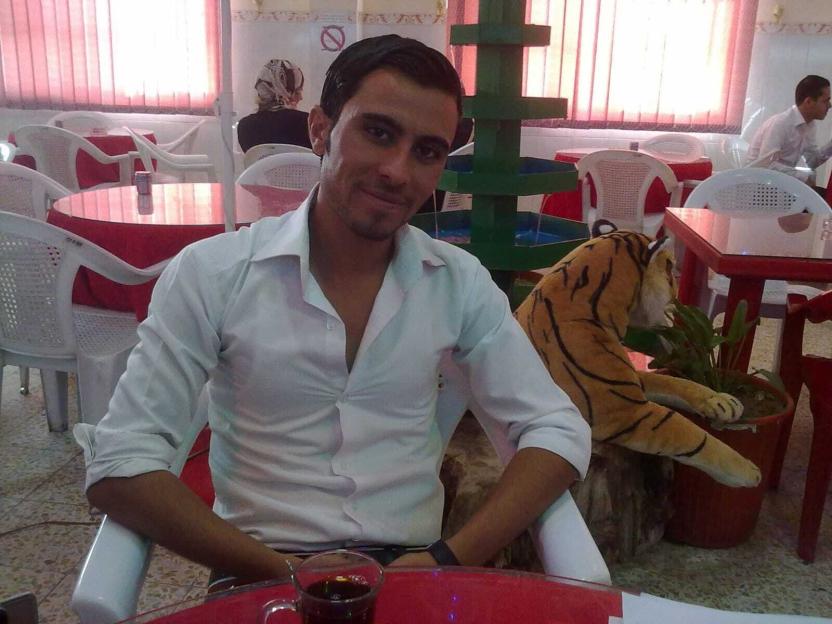 Sovan Mato, a survivor of the Yazidi genocide in 2014 Credit: Supplied
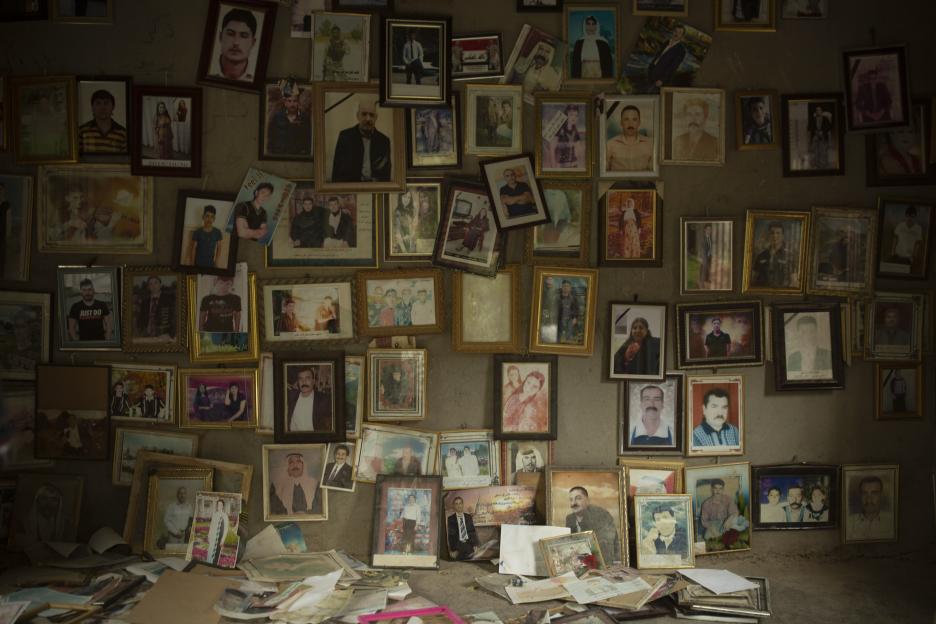 Pictures of Yazidis slain in 2014 by IS militants in a room at the Lalish shrine in northern Iraq Credit: AP
But Sovan said: “When we ran out of bullets and realised no back-up was coming from either the Kurdish or Iraqi forces, we were forced to flee our village to save our families.
“I will never forget the image of my father shouting, ‘Sovan, hurry up, we don’t have time, we need to leave the village now’.”
Trapped in the mountains with no food or water under the scorching sun, thousands of terrified families sought shade for the children, sick, and elderly.
But as sunrise broke, five ISIS hummers surrounded the group.
Sovan said: “They pointed their weapons at us and demanded surrender.”
Their leader, a man from Yemen, was accompanied by two other fighters — one from Tal Afar in Nineveh, Iraq, and one from Saudi Arabia.
Sovan said: “The leader said we had become slaves for refusing to convert to Islam.”
But when one of the militants accidentally shot himself, he was rushed off to hospital.
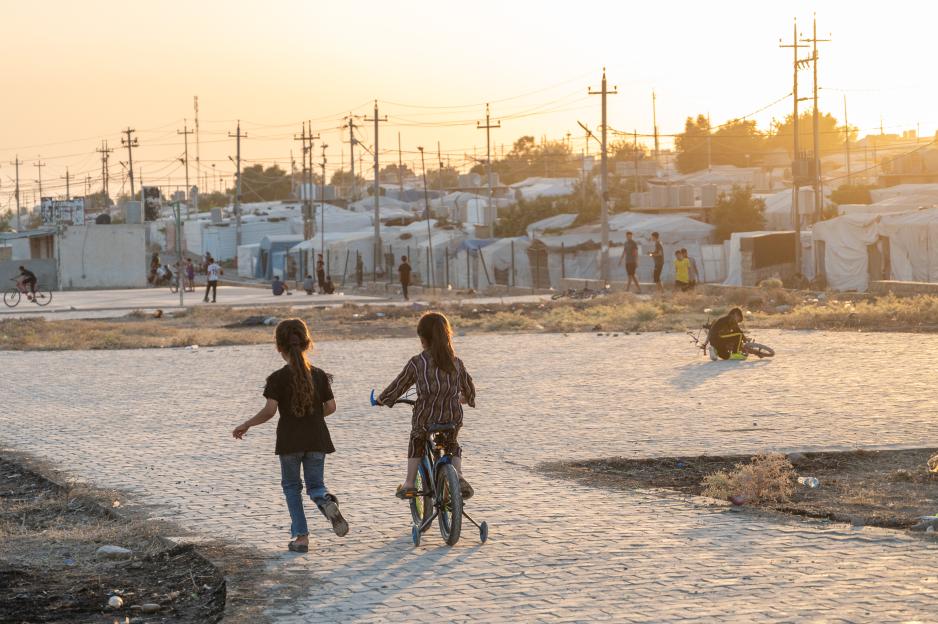 Children gather inside the Khanke camp in the Kurdistan region of Iraq Credit: Times Media Ltd
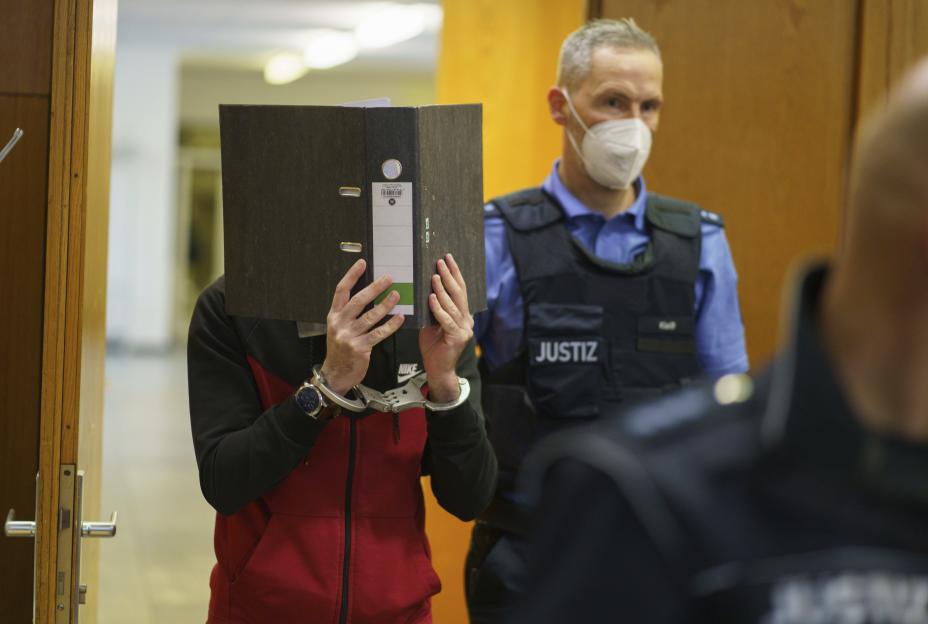 The Iraqi Taha Al-J led into the courtroom in Frankfurt, Germany, accused of genocide, crimes against humanity, war crimes, human trafficking and murder Credit: AP
In what Sovan described as a “miracle”, he was able to flee with his family and together sought refuge in Peeri Awra temple.
Those who stayed behind, including Sovan’s aunts, were all slaughtered later that day.
Sovan said: “We spent nine days in the temple. I saw people suffocating from dehydration and children dying of starvation.
“I tried to nurse a man and a woman who had been shot by ISIS, but could not save the man due to heavy bleeding.”
On the ninth day, Sovan moved from Peeri Awra to Sharfadin temple – an 5-mile journey.
“On the way, I saw a girl kill herself by throwing herself from a mountain,” Sovan said.
From Sharfadin temple, Sovan moved through Syria to the Kurdistan region.
He joined hundreds of thousands of other Yazidis in official camps across Kurdistan.
Today, Sovan lives in Derby, after moving to the UK in 2025 to study at university.
He qualified the One Health Master’s programme in May this year.
But more than 2,700 Yazidis are still missing.
This includes dozens of Sovan’s relatives and friends who were snatched 12 years ago.
Anaunt who recently escaped captivity told Sovan she was beaten “every single night” by militants who demanded she convert.
Two of his cousins were also recently released – but had been brainwashed and “acted like ISIS fighters, using dolls to practice beheading”.
Around 150,000 Yazidis remain in camps – living in decaying tents with no money or education.
And the in the region remains a significant danger to anyone hoping to return home.
Sovan said: “The Yazidi people are still in danger. Atrocities can happen again at any time if there are no serious prevention and protection measures put in place.”
The attack has been officially recognised as a genocide against a religious minority by British, French, German and American governments.
But many survivors like Sovan feel abandoned by the international community.
The UN investigative team set up to bring accountability for war crimes committed by Isis was disbanded two years ago because of pressure from Iraq, having achieved little.
Sovan said: “The genocide taught me a harsh lesson, in Arab countries, life is neither valuable nor safe for those who do not follow Islam and Sharia.”
Now, victims are taking matters into their own hands.
For three days, more than 30 survivors will give testimony at a new truth commission in the German Bundestag.
This will then be evaluated by experts, including judge Navi Pillay.
Pillay oversaw the world’s first conviction of rape as a war crime, for offences committed during the genocide in Rwanda.
A report with policy recommendations will be presented in the Houses of Parliament in 2027.
Sovan said: “My home country feels like a black page in my life. Living in the UK I have experienced for the first time what it feels like to be treated as a human being and respected.
“I struggle to process everything I lost in Iraq and cannot accept the idea that my children might endure the same life.
“The thought of my family still living amid mass destruction and danger in Iraq torments me every day.”
Almost no ISIS fighters have been brought to justice for their crimes against the Yazidis.
According to monitoring groups, there have been nine cases in Germany, including three convictions for genocide and one ongoing case in Munich.
There has been one case in the Netherlands, as well as proceedings in Sweden, Belgium, and Kosovo.
In total, this amounts to 14 cases over nearly twelve years, across five countries.
Aldo Zammit-Borda, Professor of Law at City St George’s, University of London, said: “Many ISIS members have been prosecuted for terrorism, but the lack of convictions for genocide has left the Yazidi community in a state of recognition without redress.
“This Truth Commission will aim to right that wrong, confronting governments with an unavoidable responsibility to deliver justice for victims of genocide.”
![2027: INEC publishes final names of governorship candidates across states [FULL LIST]](https://www.flyingeze.com/storage/posts/0943c1/inec-1.jpg)