
"Insecurity: IHRC Urges NASS to Reflect on How History Will Judge Their Actions"
The International Human Rights Commission – Relief Fund Trust (IHRC-RFT), Nigeria Chapter, has warned that history will judge Nigeria’s democratic institutions...
 Written byEze Chidiebere Paul

The International Human Rights Commission – Relief Fund Trust (IHRC-RFT), Nigeria Chapter, has warned that history will judge Nigeria’s democratic institutions by how they respond to the country’s worsening security crisis.
In a statement signed by its Country Director, Amb. Abdullahi Bakoji Adamu on Saturday, the Commission commended Hon. Alhassan Ado Doguwa for what it described as a courageous intervention on the floor of the House of Representatives in November 2025.
Doguwa had declared that Nigeria was running in blood and tears, a statement the IHRC said reflected the painful reality facing millions of citizens across the country.
According to the Commission, farmers have abandoned their lands, communities have been displaced, worship centres attacked, and innocent citizens killed in different parts of the country.
The group praised Doguwa’s call for urgent and decisive legislative action, noting that his intervention showed leadership rooted in responsibility rather than partisanship.
However, the IHRC expressed concern that nearly four months after that appeal, Nigerians are yet to see substantial or measurable improvement in the security situation.
“The frequency of violent incidents across multiple regions continues to raise grave concern,” the statement said.
The Commission respectfully directed questions to the leadership of the National Assembly.
“Mr. Rt. Hon. Speaker of the House of Representatives, Distinguished President of the Senate; where does this matter currently stand?” the statement asked.
“Why has decisive and visible legislative action not followed the passionate appeal made on the floor by Hon. Ado Doguwa?”
The IHRC argued that when a member of the House raises such a fundamental issue, one that touches on the constitutional responsibility of protecting life and property, it should trigger immediate institutional response, strategic oversight, and measurable accountability.
The Commission warned that prolonged inaction in the face of widespread violence could normalize criminality, weaken public trust in democratic institutions, encourage impunity, expand the operational space of armed and organized criminal networks, and undermine national cohesion.
“Security challenges of this magnitude require more than debate; they require coordinated legislative oversight, emergency frameworks, intelligence reform, and strict accountability mechanisms,” the group stated.
It stressed that the crisis is not sectional, not partisan, and not religious, but national.
The IHRC clarified that it is not a political organization and does not align with any political party.
“We align with principles, the protection of human life, dignity, and fundamental rights,” the statement said.
“Whoever speaks courageously in defense of citizens must be commended. That is why we commend Hon. Alhassan Ado Doguwa. But commendation alone is not enough.”
The Commission called on all members of the National Assembly, both in the House of Representatives and the Senate, to rise collectively and convert words into enforceable action.
“Nigerians deserve to see outcomes, not only expressions of concern,” it added.
Concluding, the IHRC said the security crisis has gone beyond commentary and now demands urgency, courage, and measurable intervention.
“History will judge institutions not by the intensity of their debates, but by the effectiveness of their response. The time to act is now.”
Continue reading

Rayner warns Farage that Reform could be forced to hand back £72m crypto cash under new law crackdown
NIGEL Farage has been put on notice that he may have to hand back some of the £72 million in new donations as they could be deemed unlawful, Angela Rayner has s...

Gov Nwifuru warns kinsmen against selling ancestral lands, graves
Governor Francis Nwifuru of Ebonyi State has warned the people of Izhi Nnodo clan against the indiscriminate sale of ancestral lands, family compounds and buria...
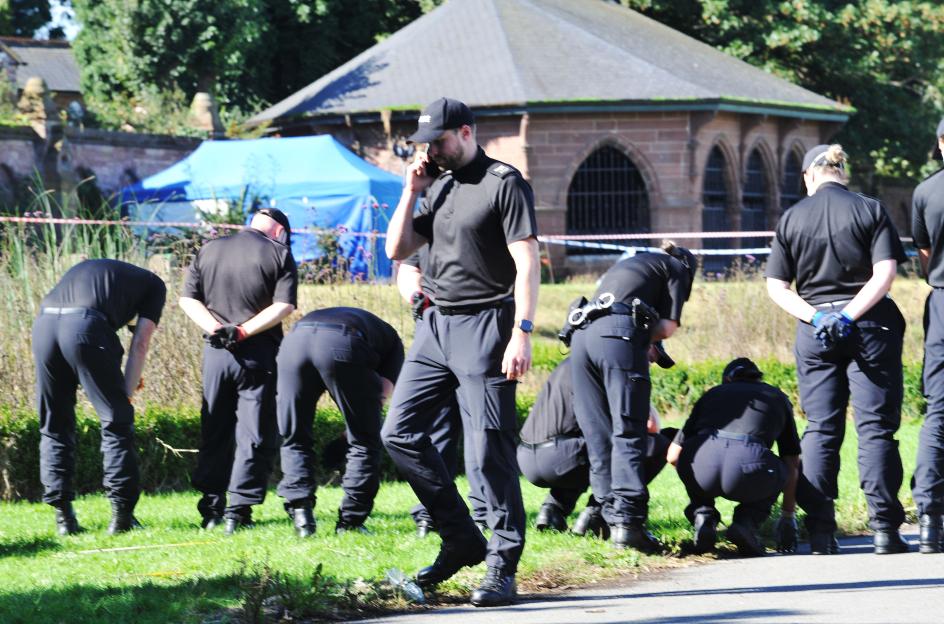
Mystery surrounds unidentified woman found dead in bin bag near Premier League ground as cops rule out 73 names
MYSTERY continues to surround the body of an elderly woman found stuffed inside a bin bag in a park near two Premier League stadiums. Cops have ruled out more t...

Woman ‘sexually assaulted’ on busy train by man who tried to hide in crowd – as cops release CCTV
A WOMAN was allegedly sexually assaulted on a busy city-centre train by a man who tried to disappear into the crowd. Cops have released CCTV in the hunt for the...