 Credit: Getty
A MAN thought to be infertile has been given fresh hope of having a family after undergoing a world-first “frozen testicular implant”.
The now 27-year-old had tissue from his testicles frozen before undergoing chemotherapy as a child to treat .
Sixteen years later, he’s been able to produce sperm after having the tissue re-transplanted in his sex organs.
It’s the first time a transplant of “cryopreserved prepubertal testicular tissue” has been shown to restore sperm production in an adult patient.
The study was led by a team led by Vrije University Brussel in , which hasn’t yet been peer-reviewed – meaning it hasn’t been checked for accuracy and quality by experts in the field before being published.
The team announced in March that they had successfully implanted testicular tissue in the 27-year-old man and recently told The Guardian that the patient was able to produce sperm.
It’s not yet clear if the sperm is healthy enough to fertilise an egg and produce children, but scientists hailed the breakthrough as “a huge finding”.
“This is a huge finding,” Prof Ellen Goossens, of the Vrije Universiteit Brussel, who led the trial, said.
“Many more people will have hope that they can have biological children.
“It’s great to see for the patients for whom we already have tissue banked.”
The breakthrough could offer hope to boys who’ve had to undergo lifesaving cancer treatment – such as chemotherapy or radiotherapy -that’s left them infertile.
Unlike adults, children don’t have the option to store sperm and eggs ahead of treatment. This is only possible after puberty.
Clinics have been freezing reproductive tissue in the hope it might be used to restore later down the line.
The Belgian clinic became the first to start banking testicular tissue from prepubescent patients in 2002.
To date, more than 1,600 children in the UK have stored tissue, and there have been around 200 live births globally using frozen ovarian tissue, The Telegraph reported.
But the technique hasn’t been tested in men until now.
The 27-year-old patient received high-dose chemotherapy in 2008 to destroy his own blood cells before undergoing a bone marrow transplant.
Before the treatment, the clinic surgically removed one testicle, cut it into small pieces and froze the tissue.
After going through puberty, the man was unable to produce sperm.
In 2022, he contacted a clinic asking whether he could have the tissue implanted, as he and his partner wanted to start a family and were considering .
Last year, the man had four tissue fragments grafted back into his remaining testicle and four under the skin of his scrotum.
Researchers removed and analysed the grafts after they’d been in his body a year.
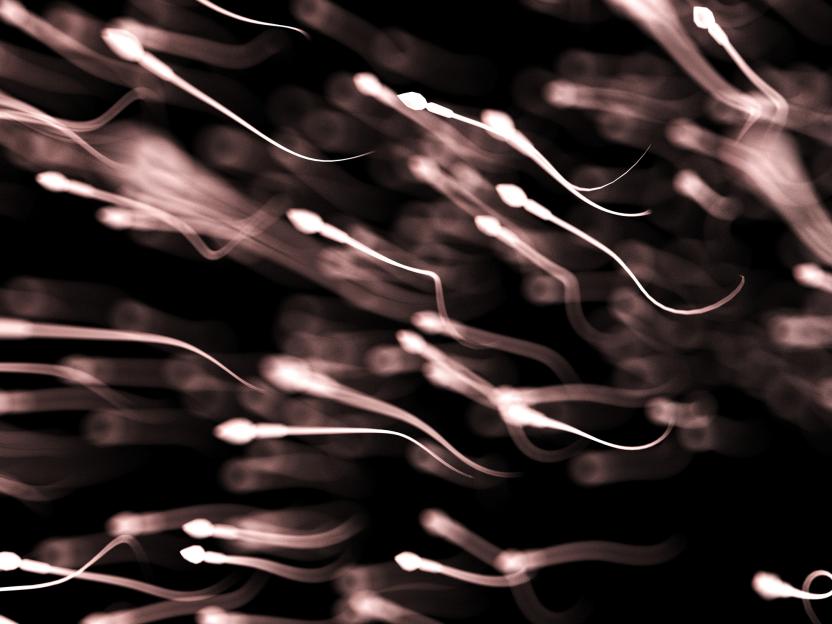
They were found to be producing mature sperm, which has been collected and frozen.
Unlike real testicular tissue, the implants are not connected to the sperm duct, so they cannot enter the semen, making IVF the only option.
The experts said the study proved that testicular tissue could survive being frozen long term before being put back into the body to make sperm.
But they warned that while the sperm looked normal, they don’t yet know if it can fertilise an egg.
And if the man’s partner did become pregnant, she would need to be carefully monitored.
He’s now considering whether to undergo a second round of grafts to collect more sperm, or whether to proceed with IVF in the near future.