QUESTIONS are mounting over the Bedford train crash that killed one of the drivers and left 100 people injured in one of the UK’s worst rail disasters in the past two decades.
The took place just outside the town on Friday at around 5.15pm, when a Luton Airport Express service rammed into the back of a stationary East Midlands Railways train.
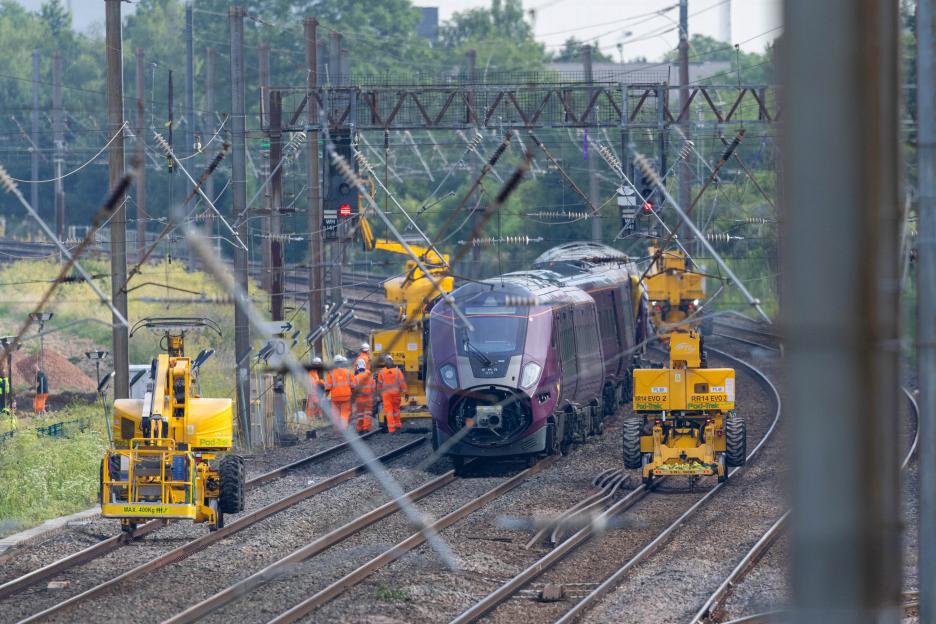 Crews working on the scene of the train crash outside Bedford Credit: Bav Media
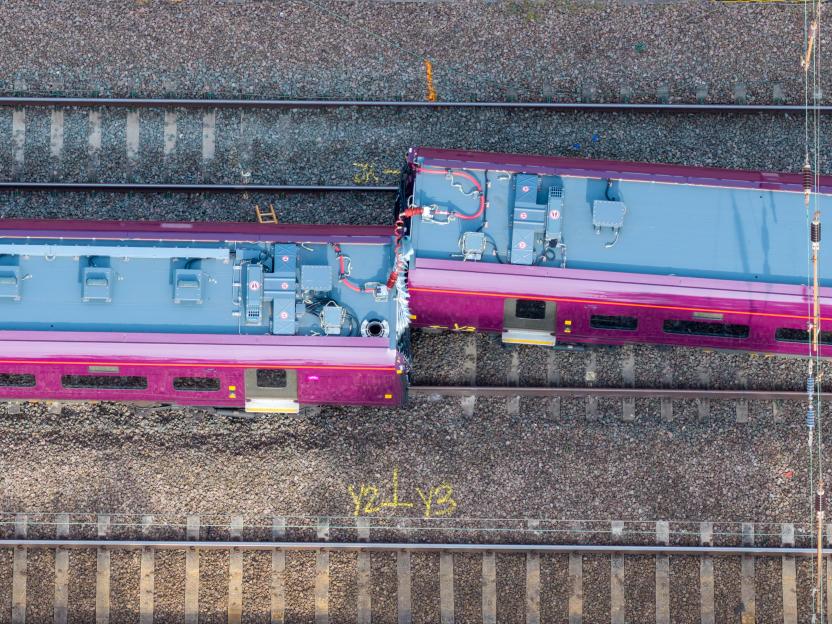 One of the carriages derailed as the trains were crushed together in the shunt Credit: Bav Media
The the train from Nottingham just minutes after they both passed through Bedford on the way to London St Pancras.
The Rail Accident Branch launched a full-scale probe shortly after the collision – but many questions remain unanswered, .
Why did the first train stop?
Passengers reported the first train- the 3.50pm from Nottingham stopped on the tracks near Elstow minutes after passing through Bedford.
It did not stop in the town – but then the outskirts the train is reported to have braked “really hard”.
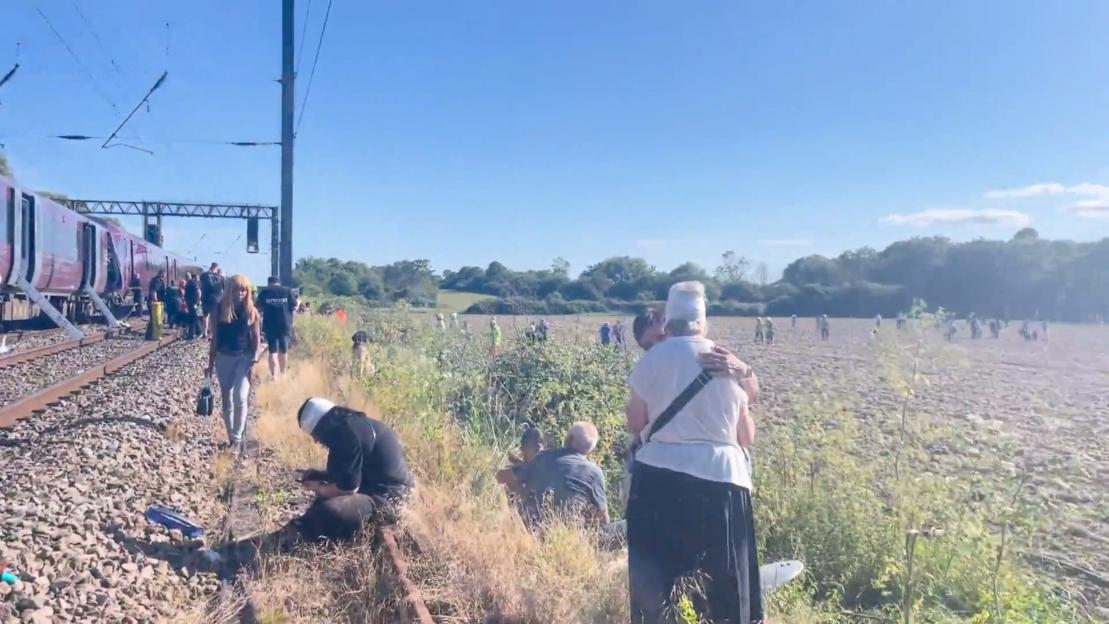 One of the drivers was killed and nine passengers are in a critical condition Credit: Reuters
 Officials continue to gather evidence at the site of the crash Credit: Getty
 Engineers remove what is believed to be the train’s ‘black box’ Credit: Bav Media
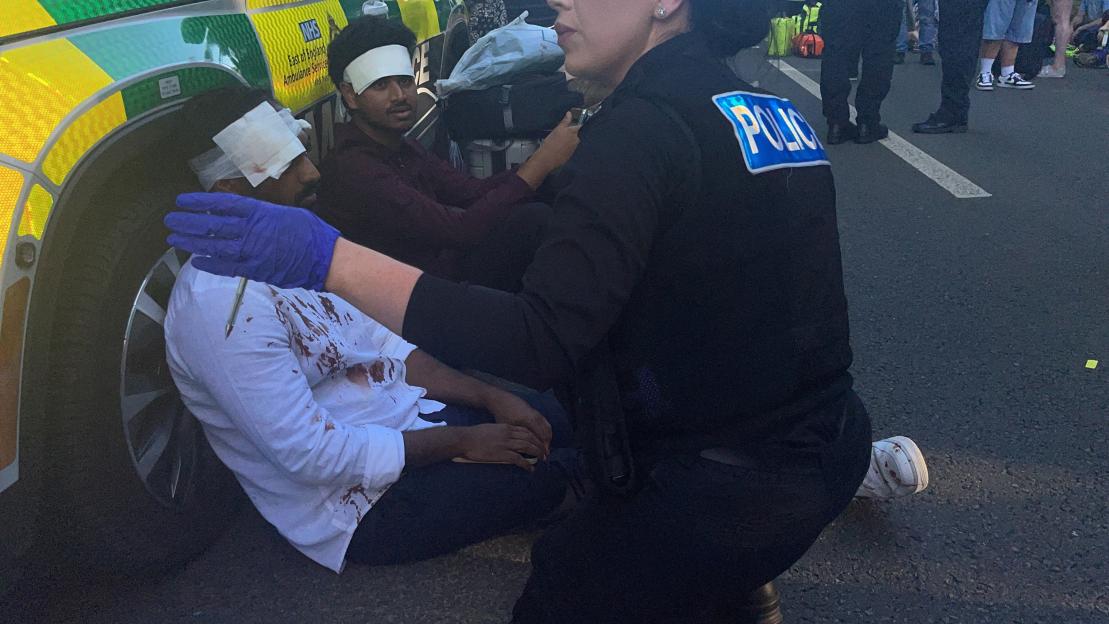 Passengers were reportedly seen ‘spitting blood’ in the wake of the crash Credit: Reuters
It is understood that the driver of the train was reporting the stoppage and a fault to maintenance staff by phone at the time on the impact.
Regular passengers have said the stop was “unusual”.
So why did the first of the train stop on the fast line – placing it in the path of the oncoming Luton Airport Express?
But why didn’t the second train also stop?
The next question is to why didn’t the following train stop when the line was blocked.
The Luton Airport Express had stopped at Bedford, and then moved onto the fast line – coming up behind the stopped service – around a minute before the crash.
British rail operators have numerous protection measures in place to prevent crashes between two trains that end up on the same line.
Investigators will be probing if the driver received the correct signal information, whether they had sufficient warning, the state of the train’s brakes, and the effectiveness of the safety mechanisms.
Was there a signal failure?
The possibility of a signal failure will also be probed – which could explain why the train didn’t stop.
Experts are questioning why the driver of the Corby service was not alerted to the stationary train ahead.
Drivers should be alerted in the cab with the sound of a bell if a train passes a red or yellow signal without stopping – known as the Automatic Warning System.
So was there the correct signal showing on the line?
Tony Miles, a rail jounalist, said on Sky News: “Were the signals showing red and the train went past them?
“Or were the signals showing that the line was clear, and if so, how were they able to know when the train in front was stopped?”
Did the safety systems fail?
Another question that will need to be answers is if there was a faulty safety mechanism.
RAIL editor Phil Haigh said that train protection systems in the UK are typically very robust and alert drivers if they pass signals or fail to press a pedal.
The protection system – dubbed the “dead man’s pedal” – will automatically stop the train if it suspects the driver is either not conscious or has made an error.
The retrieval of the airline-style “black box” will confirm whether either or both of these two systems were functioning properly.
Could human error have played a part?
Human error will also be probed as a possiblity – but right no there is no public evidence suggesting this.
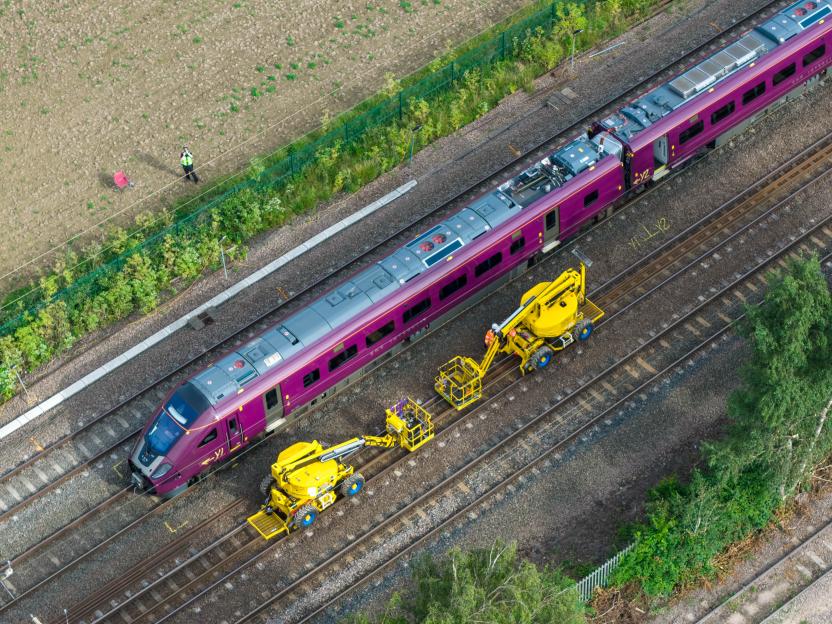 Pictures show the wreckage of the trains near Elstow Credit: Bav Media
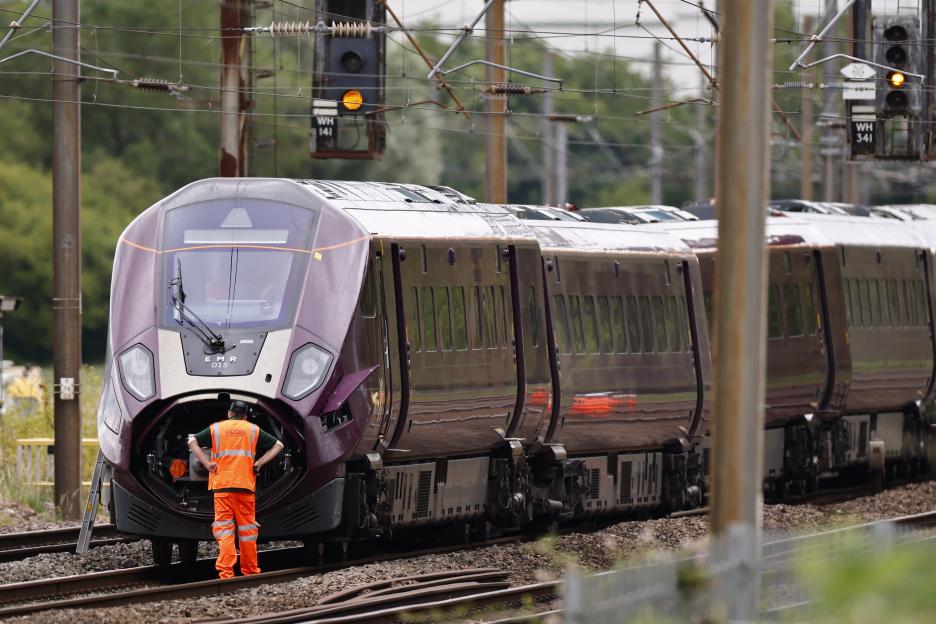 Investigators will be studying the ‘black box’ recorders on both trains Credit: EPA
Investigators will study communication between the driver and the signaller.
The team will also likely examine the role employee fatigue played in the crash, workload concerns, and insufficient training.
Miles said: “The question has to be how has that train that’s in the rear got into contact with the train that it was following, and obviously it’s either gone past the signal that was telling it it should stop, or the signal was faulty, or the driver’s made a mistake in some way, or didn’t read the signal, or something.”
Simon Calder also said the train in front could have stopped “because of a problem with the automatic warning system which warns train drivers if there is a red signal ahead.”
He added that: “The pictures we are seeing are just shocking for the train to have struck with such force that we had a derailment is really worrying.”
Expert Phil Haigh said he has been left “mystified” by the crash.
He told The Telegraph that train safety systems are “usually really, really, really reliable”.
Trains will automatically brake if a driver goes past a red signal or doesn’t press a pedal which checks they are still awake – dubbed the “dead man’s pedal.”
 Rail experts have been left ‘mystified’ after two trains collided on Friday afternoon Credit: X
 The tragedy unfolded nea the Elstow interchange between the A421 and the A6 in Bedford Credit: PA
Haigh, the former RAIL magazine editor, said: “I am mystified, really, as to how the [train] at the back got to where it got.
“Unless there was a fault with the signalling system, or unless the driver passed a red signal.”
Shocking footage of the aftermath shows shell-shocked passengers covered in blood and screaming for help.
Witnesses reported seeing people with broken limbs and “spitting blood” as they staggered out of the carriages.
It is the worst such disaster to hit the UK since the Grayrigg derailment in February 2007, which killed the driver and left 30 passengers with severe injuries.
said it would provide updates when it had a clearer understanding of the recovery work required and when services can safely reopen.
It added that passengers should check with their train operator for the latest .