

A BBC star has revealed he’s in a hospice bed just weeks after revealing he is battling terminal cancer and “entering the last stages”.
The actor, who stars on crime drama Hope Street, made his heartbreaking reveal in a message to fans and supporters on Instagram.
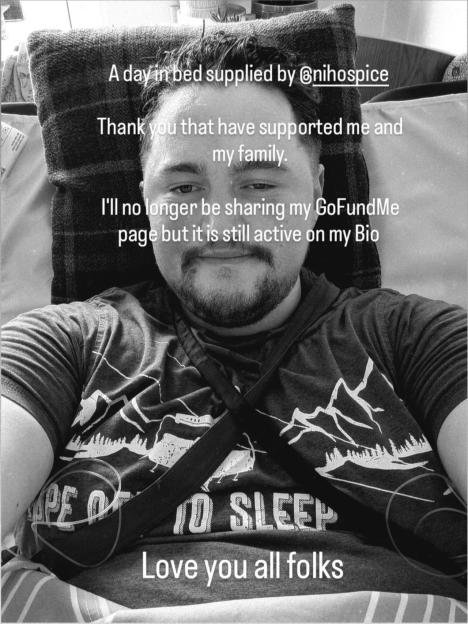 Finnian has told how he is now in a hospice bed after being told his cancer is terminalCredit: Instagram
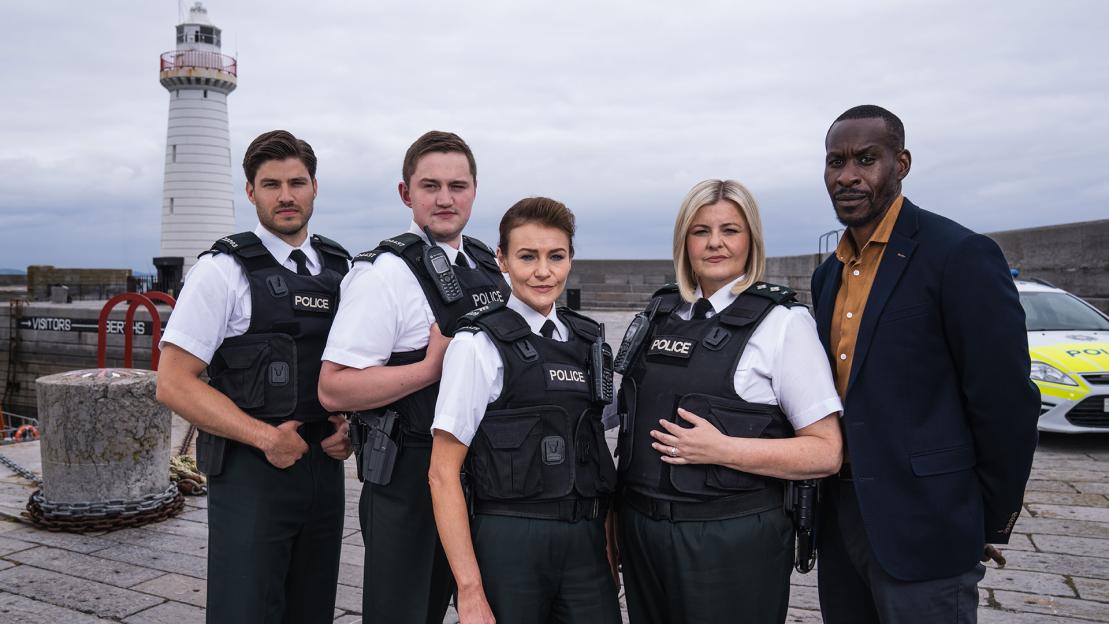 A BBC star has tragically revealed he’s in the ‘last stages’ of his cancer battle
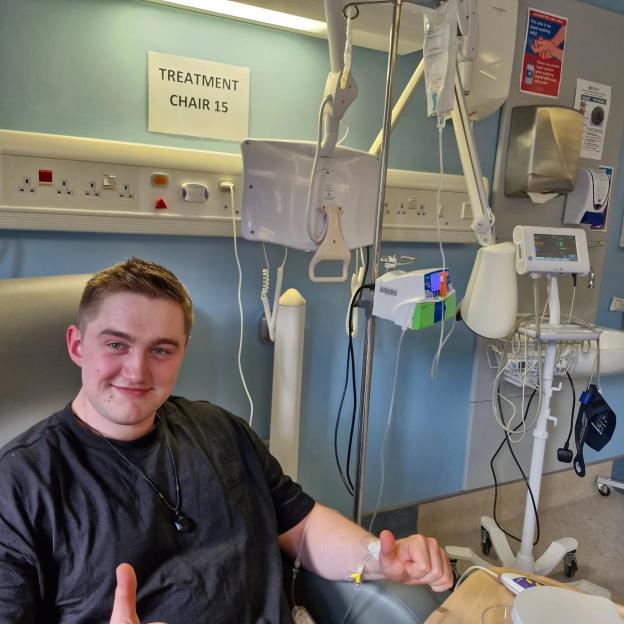 Hope Street star Finnian Garbutt, 28, has told how his cancer has ‘progressed rapidly’
Finnian Garbutt, who plays Ryan Power in the Northern Irish based show, revealed the sad update today.
Posting a picture of himself in a hospice bed, he wrote: “A day in bed supplied by @nihospice.
“Thank you that have supported me and my family. (sic) I will no longer be sharing my GoFundMe page, but it is still active in bio.
“Love you all folks.”
Earlier this month he shared with fans how his cancer had “progressed rapidly”.
He was diagnosed at the age of 25 after finding a lump behind his ear, which he initially assumed was an ingrown hair.
After his barber told him it had grown “quite substantially”, he received the devastating health verdict and in 2022, learned the skin cancer was Stage 3 and had spread into his neck.
He then had 75 lymph nodes removed from his face and neck in a gruelling 12-hour surgery.
The star has told how he has made his health update public so he can enjoy special moments with his “amazing” loved ones.
In a text post written on a blue background earlier this month, he wrote: “Hey all.
“Over the last month or so I’ve been having quite a bit of pain in my back and hip.
“My cancer team admitted me the other day for observations and to do a few scans.
“Unfortunately the scans have shown that the cancer has progressed rapidly in my body and I am now entering the last stages of life”.
Finnian continued: “I’m putting this out there as it is really difficult to tell people individually and I hope now that it’s in the open I can enjoy the time with my amazing family and friends.
“Since being diagnosed four years ago I have achieved so many of my life goals – 30 episodes on a TV show, being the lead in a movie that should be out soon, buying my own house marrying my best friend and becoming a father to the most incredible baby girl who never fails to make me smile”.
He concluded with the words: “Thank you to all that have reached out over the years and supported me and my family.
“If anyone wants to meet up for a pint, coffee or general bit of craic please reach out and we can try to make it work.
“Love as always Finnian”.
What is melanoma, what are the symptoms and how can you prevent it?
Melanoma is the most serious type of skin cancer that has a tendency to spread around the body.
It is diagnosed 16,000 times per year, and tragically takes the lives of 2,340 people per year.
The number of people being diagnosed with melanoma is increasing, and it is the 5th most common cancer in the UK.
But it is also one of the most preventable cancers, with 86 per cent of cases in the UK avoidable.
The best way to protect yourself from melanoma is to be sun safe – wear SPF every day, wear a hat and sunglasses and keep out of the sun in the hottest hours. It is also advised to avoid sunbeds.
People who are fair-skinned, have blue or green eyes, blonde or red hair and a large number of freckles or moles are more likely to get skin cancer.
Surgery is the main treatment for melanoma, particularly if it is found early. This will involve removing the affected tissue in the skin.
Radiotherapy, medicines and chemotherapy are also sometimes used to try and stop the cancer from growing. Treatment depends on the severity of the disease.
What are the symptoms?
The key thing to look out for are changes to an existing mole, or a new mole on your skin.
Most experts recommend using the simple to look for symptoms of melanoma skin cancer, which can appear anywhere on the body.
There are five letters/words to remember:
- Asymmetrical – melanomas usually have two very different halves and are an irregular shape
- Border – melanomas usually have a notched or ragged border
- Colours – melanomas will usually be a mix of two or more colours
- Diameter – most melanomas are usually larger than 6mm in diameter
- Enlargement or elevation – a mole that changes size over time is more likely to be a melanoma
A mole that changes size, shape or colour may be a melanoma.
But other signs to look out for include moles that are:
- Swollen and sore
- Bleeding
- Itchy
- Crusty
How deadly is it?
Melanoma is a deadly form of skin cancer.
The outlook of a person’s disease depends on the stage of the cancer when it was diagnosed.
Survival is better for women than it is for men.
“We don’t know exactly why this is. It may be because women are more likely to see a doctor about their melanoma at an earlier stage,” says Cancer Research UK.
The charity says that generally, statistics show that in England, more than 85 out of every 100 people (more than 85 per cent) will survive their melanoma for 10 years or more after they are diagnosed.
- Around 100 per cent in England diagnosed with melanoma at stage 1 – when the cancer cells are only in the top layer of skin – will survive for five years or more after diagnosis.This drops to 80 per cent for stage 2.
- Some 70 per cent live for a further five years when they are diagnosed in stage 3, which is when the cancer has started to spread to nearby lymph nodes.
- At stage 4, when the melanoma has spread elsewhere in the body, almost 30 per cent survive their cancer for 5 years or more.
Cancer Research says the stage 4 data does not account for age differences. Age can affect outlook and younger people have a better prognosis than older people.
Age can affect outlook and younger people have a better prognosis than older people.
What is melanoma?
Melanocytes are cells in the skin that give us the colour of our skin because they produce a pigment, known as melanin.
When you sit in the sun, melanocytes produce more pigment (a sun tan), which spreads to other skin cells to protect them from the sun’s rays.
But melanocytes are also where cancer starts.
Too much UV causes sunburn, and this is a sign of damage to the skin’s DNA.
The UV triggers changes in the melanocytes, which makes the genetic material become faulty and cause abnormal cell growth.
People who burn easily are more at risk of skin cancer because their cells do not produce as much pigment to protect their skin.
Those with albinism are at the most risk because their skin produces no pigment at all.
Finnian plays a constable in the hit BBC series, which has spanned five seasons.
He previously opened up to Belfast Live about how his world had come “crashing down” after the diagnosis.
He said: “It was almost as if they accidentally had diagnosed me with cancer and were treating me by mistake.
“I was told I could die; my plastic surgeons had warned me about how ill I could be following surgery.
“It kept being communicated to me that I was really sick, that I was one step away from being a terminal patient.
“I was just waiting to hear that I had tumours elsewhere throughout my body.
“I had already come to terms with the fact that I was going to die young.
“My defence mechanism was to expect the worst. I thought it was only going to be a matter of time.”
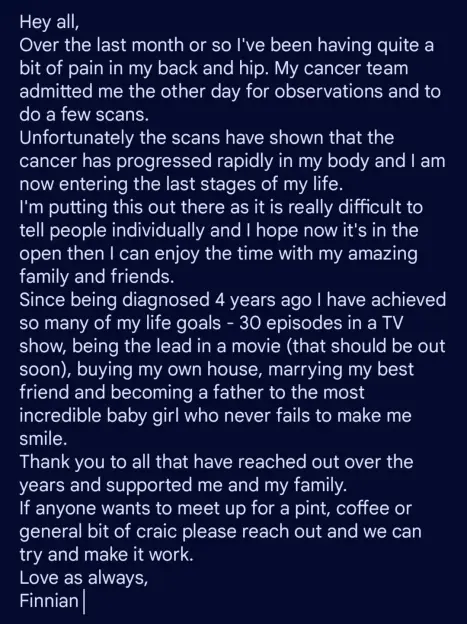 He posted a lengthy statement to Instagram
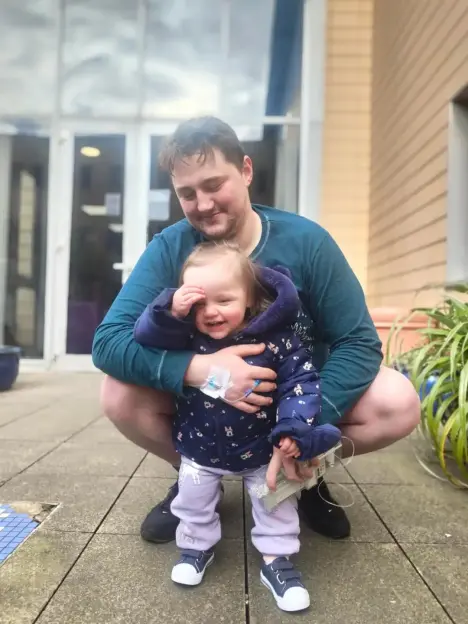 He is dad to an adorable little girl
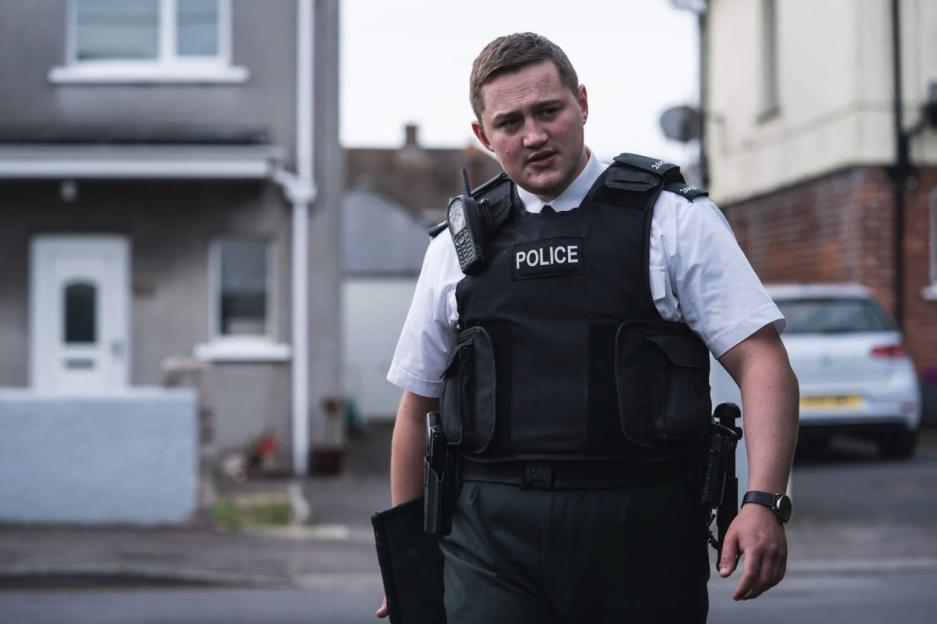 He said bagging the role on the BBC crime drama was on his bucket listCredit: BBC

![Legendary Nigerian actor, Olu Jacobs buried in Lagos [VIDEO]](https://image.flyingeze.com/posts/file/efbb5a/legendary-nigerian-actor-olu-jacobs-buried-in-lagos.webp)