Artisans in Ebonyi State have raised alarm over alleged escalating cases of double taxation, excessive levies, and harassment by revenue contractors.
They have called on the state government to urgently scrap the involvement of third parties in the collection of internally generated revenue (IGR).
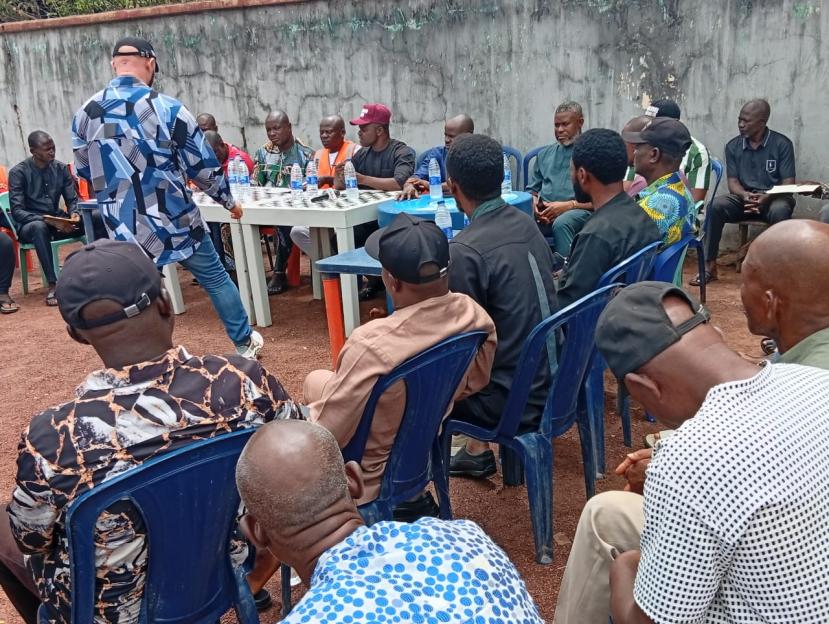
The concerns were made known on Monday in Abakaliki during the artisans’ stakeholders’ meeting convened by the Artisans Association of Nigeria, Ebonyi State chapter. Leaders across various trade groups decried what they termed an “unsustainable and exploitative” tax regime.
The state President of the association, Engr. Francis John Nwebonyi, who addressed journalists after the meeting, said the grievances were widespread and affected all artisan groups.
“The objective of this engagement is to address the growing discontent among our members over the manner in which IGR is being administered. Artisans are not opposed to paying taxes.
“However, the introduction of third-party contractors has led to systemic abuses, including intimidation, over-taxation, and, in some instances, the confiscation of tools and equipment,” he said.
Nwebonyi warned that the current system is eroding the gains of government skills development initiatives.
“Many of our members, who acquired their tools through loans and government-supported programmes, are being driven out of business. This trend is counterproductive and undermines the economic objectives of the state,” he added.
He called for a policy shift that would allow registered trade associations to handle revenue collection within their sectors.
“We are proposing a transparent framework where associations take responsibility for collecting and remitting taxes directly to the government. This will enhance accountability, ensure compliance, and eliminate the excesses associated with external contractors,” he said.
Also speaking, Chairman of the Ebonyi State Tailors Association, Mr. Chinedu Agbe, described the current levy structure as arbitrary and burdensome. “Our members are deeply frustrated. The charges imposed on artisans have increased significantly without any clear justification or consultation.
“In previous years, we paid about ₦14,000. Today, some of our members are being asked to pay as much as ₦59,000. This is simply not sustainable,” he said.
He criticised the lack of transparency in the assessment process, noting that contractors rely on undisclosed criteria.
“We are told that payments are determined by a chart, yet that chart is not made available to us. There is no clarity on how these figures are arrived at, which raises serious concerns about fairness and accountability,” he stated.
Chairman of the Welders and General Fitters Association, Mr. Soludo Ogodo, attributed the crisis to the outsourcing of revenue collection to individuals unfamiliar with the operational realities of artisan trades.
“The involvement of third parties has distorted the system. These contractors impose arbitrary charges and, in some cases, demand multiple payments within a single year. Such practices are not only unjust but also disruptive to our businesses,” Ogodo said.
He recounted a personal experience to underscore the severity of the situation.
“I was arrested last year over alleged non-compliance despite having fulfilled my tax obligations. Experiences like this diminish trust in the system and discourage voluntary compliance,” he said.
Similarly, the State Chairman of the Nigerian Automobile Technicians Association (NATA), Mr. Johnson Azi, expressed concern over what he described as “gross discrepancies” between official tax rates and actual demands by contractors.
“The officially recognised IGR for artisans is about ₦14,000 annually. However, our members are being issued demand notices ranging from ₦50,000 to ₦59,000. This level of inconsistency raises critical questions about the integrity of the collection process,” he said.
He maintained that artisans are willing to meet their tax obligations under a more structured system. “We are not resisting taxation. What we reject is the involvement of intermediaries who exploit the process. The associations have the capacity to manage collections efficiently and remit directly to government without conflict,” he added.
On his part, Chairman of the Furniture Makers Association, Mr. Chukwu Michael, described the development as a major setback to the growth of small-scale enterprises in the state.
“For the past few years, the system was manageable and predictable. What we are witnessing now is a sharp deviation, characterised by excessive and unregulated charges. Many of our members are finding it increasingly difficult to remain in business,” he said.
He warned that the situation could lead to wider economic consequences if left unaddressed. “When artisans are forced out of their trades, it not only affects livelihoods but also reduces the state’s revenue base in the long run,” he noted.
Corroborating this position, a vulcaniser association leader in the state, Mr. Simon Elom, said the pressure from rising levies was already triggering business closures and migration.
“A significant number of our members are relocating to rural areas or abandoning their trades entirely due to the financial strain. This trend is unhealthy for both the artisans and the state economy,” Elom said.
The artisans, in a formal communication addressed to the Ebonyi State Internal Revenue Service, requested that all revenue collection contracts relating to their trades be reassigned to their respective associations.
They argued that such a move would promote transparency, reduce conflict, and improve compliance while ensuring a more stable and productive business environment.
When contacted, the Secretary of the Ebonyi State IGR Board, Barrister Emmanuel Egba, said he would respond to the allegations the following day. Efforts to reach the Chairman, Mr. Christopher Omo Isu, were unsuccessful as of press time.