Table of Contents
- Sultan's Statement on Sharia Law
- NIREC Meeting Overview
- Address by the Speaker of the House
- Government's Commitment to Security
- Role of Religious Institutions
- Call for Cooperation
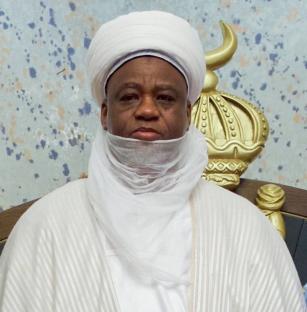
The Sultan of Sokoto, Alhaji Muhammadu Sa’ad Abubakar III, stated that it is entirely inappropriate for Christians to be subjected to Sharia courts or compelled to adhere to Sharia regulations.
He made this remark on Wednesday during the commencement of the 2025 meeting of the Nigeria Inter-Religious Council (NIREC) in Abuja.
The theme of the meeting was “Collaboration of the Inter-Religious Council with Government to Promote Peace in Nigeria.”
The Sultan clarified that Sharia is exclusively for Muslims, and no Christian should be obligated to dress, behave, or pray in a manner akin to Muslims.
He emphasized that Nigeria is a multi-religious nation, not a secular one, and that the government supports both Islam and Christianity without endorsing either as a state religion.
He also dismissed recent proposals to abolish Sharia law, affirming that Nigeria allows all religions to practice freely without interference.
The Speaker of the House of Representatives, Abbas Tajudeen, also addressed the gathering. He advocated for enhanced collaboration between NIREC and the Federal Government to foster peace and combat insecurity.
Tajudeen cautioned that extremist groups are attempting to exploit religion to create divisions within the country and commended NIREC for its longstanding commitment to promoting unity.
The Secretary to the Government of the Federation, Senator George Akume, remarked that Nigeria is confronting significant challenges, including insecurity, political strife, and diminishing trust among its citizens. He added that the nation is also being misrepresented on the global stage due to misinformation regarding its security concerns.
Akume assured Nigerians that the Federal Government will persist in safeguarding lives and property.
He encouraged religious and traditional leaders to collaborate in fostering peace.
The President of the Christian Association of Nigeria (CAN), Archbishop Daniel Okoh, stated that Nigeria is at a critical juncture in its history, as insecurity poses a threat to national unity.
He pointed out that religious institutions are highly regarded and can significantly contribute to peacebuilding.
He called for a closer partnership between the government and religious organizations to facilitate dialogue, unify communities, and promote tolerance.
The Executive Secretary of NIREC, Rev. Fr. Cornelius Omonokhua, also delivered remarks.
He asserted that religious leaders must collaborate more closely with the government to eradicate terrorism and banditry.
According to him, every human life is valuable, and all leaders must unite to protect the populace.
He prayed for wisdom for Nigerian leaders and sought a transformation of heart for criminals, hoping they will become law-abiding citizens.
He also prayed for Nigerians to embrace positive values.
Frequently Asked Questions
What did the Sultan of Sokoto say about Sharia law?
The Sultan stated that it is inappropriate for Christians to be subjected to Sharia courts or compelled to follow Sharia regulations, emphasizing that Sharia is strictly for Muslims.
What was the theme of the NIREC meeting?
The theme of the meeting was “Collaboration of the Inter-Religious Council with Government to Promote Peace in Nigeria.”
What did the Speaker of the House of Representatives emphasize?
The Speaker called for stronger cooperation between NIREC and the Federal Government to help build peace and combat insecurity in the country.