A WOMAN has revealed her results after checking into a Chinese ‘weight loss prison’ to shed some pounds.
The 28-year-old Australian who goes by @eggeats on Instagram documented her four-week stay which cost $1000 (£742).
 A 28-year-old Australian shared how she checked into a 28-day weight loss ‘prison’ in ChinaCredit: instagram
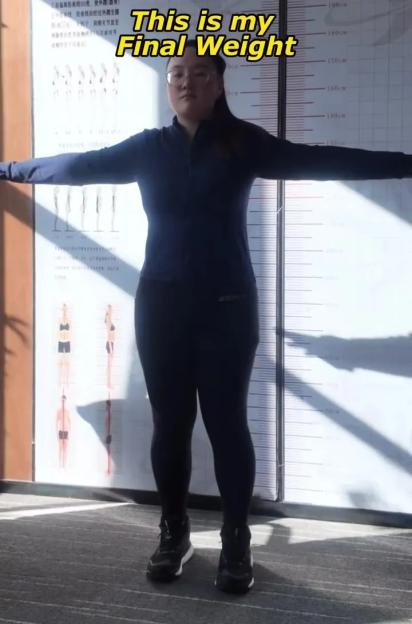 She lost 6kg by the end of her stay – and gained a legion of followers who watched her daily videosCredit: instagram
The closed promise rapid with a strict routine of exercise and mandatory weigh-ins.
The user uploaded a video at the end of her stay, saying: “Before and after 28 days in Chinese fat for weight loss after exercising for four hours everyday.”
The woman explained how she did cardio, endless spin classes, and had persevered despite getting sick and having low moods – with some days leaving her in tears.
However, she shared her during her stay, with her starting weight being 188.7lbs (85.6kg) with a BMI of 32.2.
By the end of her 28-day stay, she was 175.4 lbs (79.6kg) and had a BMI of 30 – which marked a 13.3 lbs (6kg) weight loss.
At the camp, obese individuals enrol for their stay, but the rules make it hard to leave, as participants cannot leave the premises without a “valid reason”.
Three carefully portioned meals are served on trays throughout the day.
Breakfast is light, with larger portions for lunch including braised duck, stir fried vegetables and raw carrots.
Upon entrance, everyone is expected to forfeit ‘banned’ food items, like instant ramen noodles as well as dried and fried snacks.
Whilst participants bunk up together with five people per room, each person is allocated their own space with a personal desk and wardrobe.
Accommodation also includes an outdoor washroom, high-pressure shower and squat-toilet.
Lighter elements to the ‘fat prison’ were also revealed, including downtime each day and rest on Sundays – until an evening exercise class.
In another clip, the content creator explained the programme accepts anyone from across the world.
Participants do not necessarily need to speak Mandarin or Cantonese.
Recommending the plan, she said: “I made heaps of friends, everyone is nice and non–judgemental because we all have the same goal: TO LOSE FAT!”
Two week options of the camp are available but the team encourages a 28-day plan for the best results.
The camps have emerged as part of a network of commercial or government run weight-loss ‘prisons’ as seeks to address its growing problem.
Many people were quick to comment on her experience, with one saying: “It’s tough and hard, but you are an inspiration and you look great.”
Another said: “You did such a great job!”
However, one said: “Looks so stressful and harming for mental .”
How do you work out your BMI, and what do the results mean?
THE BMI (Body Mass Index) is a calculation that's made using someone's height and weight.
To work out your BMI, you first need to note your weight in pounds (there are 14 pounds in a stone).
Once you have that, divide the answer by your height in inches (there are 12 inches in a foot).
Then, divide that answer by your height in inches again.
That will give you your BMI.
If you have a BMI of under 18.5, you are “underweight and possibly malnourished”.
If it’s between 18.5 to 24.9 , you “have a healthy weight range for young and middle-aged adults”.
If it’s between 25.0 and 29.9, you’re overweight.
And a BMI of over 30 means “you are obese”.
While BMI has long been used as a measurement within the NHS, there have been calls to abolish it for some time now, as it doesn’t “take into account muscle mass, bone density, overall body composition, and racial and sex differences,” researchers at the Perelman School of Medicine in the University of Pennsylvania.