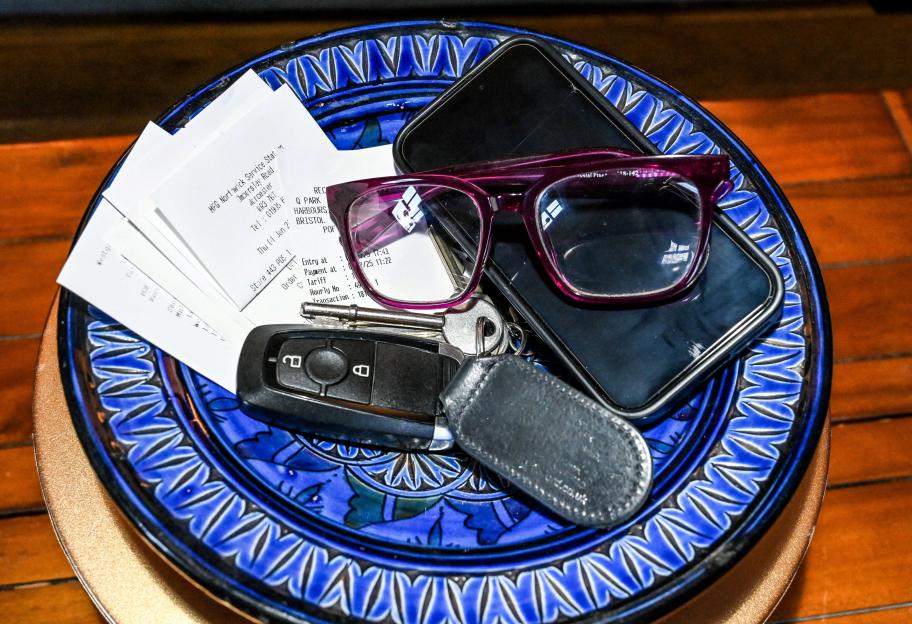
 The items that Brits misplace most frequently aren’t just their keys, glasses, or phones – they also often lose receipts and vouchers. A survey of 2,000 adults revealed that 52 percent admitted to arriving at a checkout or returns desk without the necessary receipt. On average, individuals misplace at least three physical items each month, and 27 percent spend between 20 minutes to an hour searching for them. Other commonly misplaced items include the TV remote (24 percent), house keys (19 percent), and earbuds or headphones (15 percent). Photo released 07/01/2026 Credit: SWNS
The items that Brits misplace most frequently aren’t just their keys, glasses, or phones – they also often lose receipts and vouchers.
A survey of 2,000 adults revealed that 52 percent admitted to arriving at a checkout or returns desk without the necessary receipt.
 The average person misplaces at least three physical items each month
Credit: SWNS
The average person misplaces at least three physical items each month
Credit: SWNS
The average person misplaces at least three items each month, and 27 percent spend between 20 minutes to an hour searching for them.
Other frequently misplaced items include the TV remote (24 percent), house keys (19 percent), and earbuds or headphones (15 percent).
Additionally, 83 percent of people now struggle to locate documents or files they need on their electronic devices.
A third of respondents spend between one and six hours a month searching for documents.
This research was commissioned by Samsung, which is launching its new Galaxy Book6 series at CES 2026, designed to assist users in rediscovering documents, photos, and contacts, even when they can’t recall specific details.
Annika Bizon, spokesperson for Samsung UK & Ireland, stated: “Searching for something you can’t find on a device can be even more frustrating than losing your house keys; you know it’s there, but you just can’t find it.”
“Now you can ask for what you’re looking for in a natural, human way, just as you would ask a friend.
“You don’t need to remember file names or folders because it’s designed around how people remember, not how computers store information, which helps save valuable time.”
The study also found that 30 percent have lost track of emails (24 percent) or photos (18 percent) and struggled to locate them.
Moreover, 32 percent reported that they find it more challenging to organize items on their phone, tablet, or laptop compared to in real life.
Additionally, 52 percent indicated that changes in their routine make them more forgetful, while 34 percent admitted they have lost more items as they have aged.
Almost a fifth (19 percent) can ‘never’ find the document they need to send to friends or family.
Furthermore, 34 percent spend time scrolling through their camera roll trying to locate something on their devices.
Meanwhile, 31 percent struggle to remember the folder or chat where the item they are searching for is stored on their devices.
On average, individuals have over 3,000 documents, photos, or videos saved on their devices.
Moreover, 28 percent confessed they wouldn’t feel confident finding a specific item within 30 seconds.
Among those who participated in the study by OnePoll.com, 35 percent reported that the item they are looking for is often saved in the wrong place by mistake.
Additionally, 29 percent claimed that the search function does not yield the correct files.
Annika Bizon for Samsung Galaxy Book6 added: “Losing things isn’t just inconvenient; it can really disrupt your day.
“Whether it’s a receipt or a file, those small moments of frustration accumulate.
“Managing both physical and digital clutter is becoming an essential skill in modern life.”
Top items commonly misplaced by Brits
1. TV remote
2. Glasses/sunglasses
3. Receipts/vouchers
4. House keys
5. Mobile phone
6. Earbuds/headphones
7. Paperwork
8. Car keys
9. Chargers
10. Bank cards
 On average, individuals have over 3,000 documents, photos, or videos saved on their devices
Credit: SWNS
On average, individuals have over 3,000 documents, photos, or videos saved on their devices
Credit: SWNS
What are the most commonly misplaced items by Brits?
The most commonly misplaced items by Brits include the TV remote, glasses/sunglasses, receipts/vouchers, house keys, mobile phones, earbuds/headphones, paperwork, car keys, chargers, and bank cards.