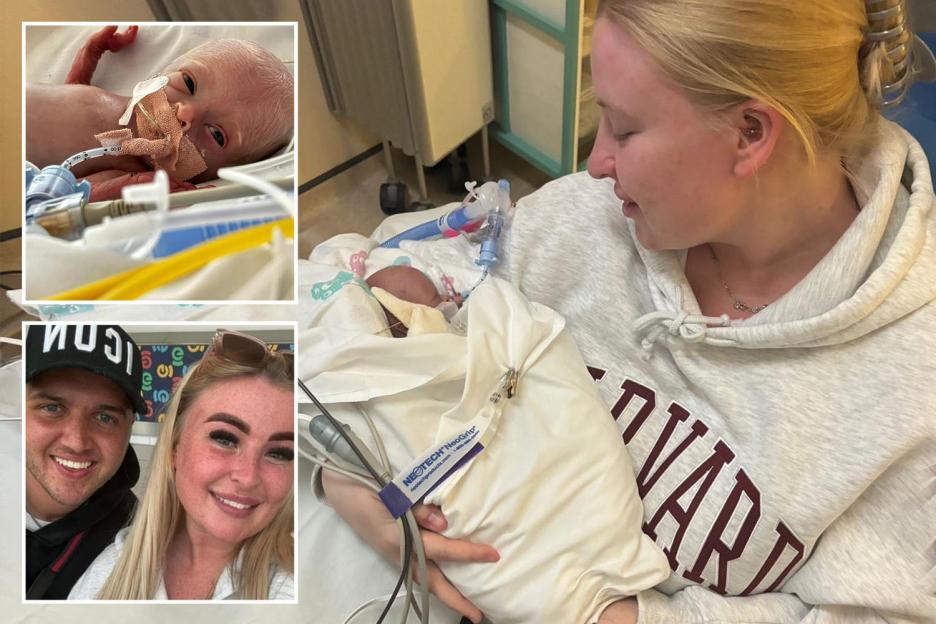
NEW mum Lucy Regan gave her tiny baby daughter Nelly her first cuddle – but tragically hours later the tot had died and a simple test would’ve saved her.
A routine scan at just 28 weeks had flagged up complications and the same evening Lucy, 25, was undergoing an emergency C-section.
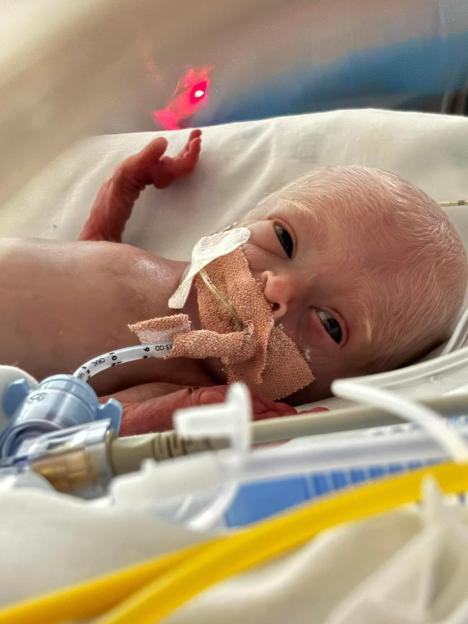 Baby Nelly Malone died after only nine daysCredit: Lucy Regan
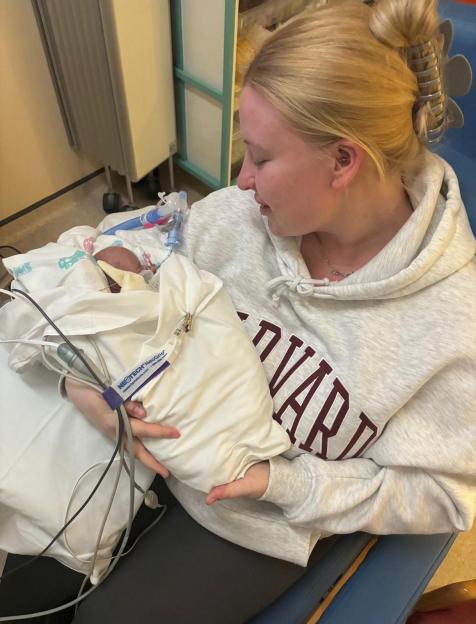 Mum Lucy Regan only got to have one cuddle with her little daughter before she passed awayCredit: Lucy Regan
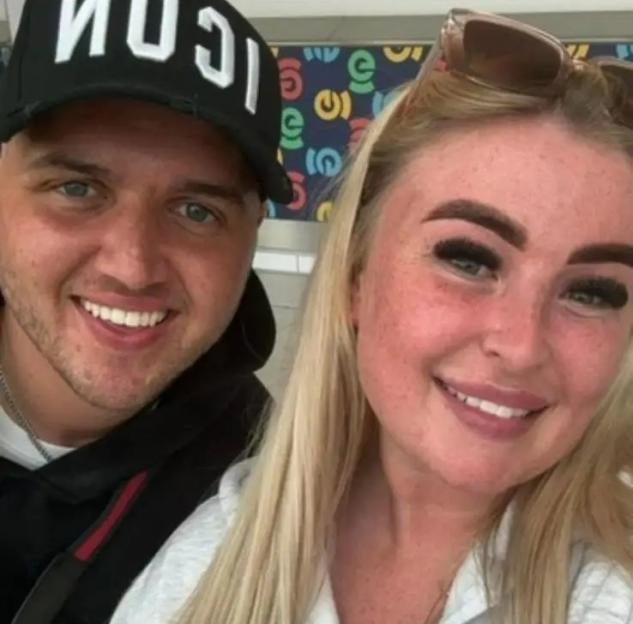 Lucy and partner Kyle Malone spent almost every hour at Nelly’s side during her short lifeCredit: Lucy Regan
The last thing she remembers on being put to was being told by doctors it was unlikely her child would survive.
On waking up, Lucy looked around, and seeing no baby she feared the worst.
Partner Kyle Malone, 23, told her it was fine – little Nelly was alive and had been taken upstairs.
The couple were filled with hope, and for the next nine days they stayed at their daughter’s bedside until she finally passed away.
For months, Lucy struggled to understand what had happened – until tests undertaken by chance showed she had a rare autoimmune syndrome, not routinely screened for by the during pregnancy: Antiphospholipid syndrome or sticky blood.
It causes blood to clot too easily and can restrict blood flow to an infant in the womb.
She is now petitioning for the for all pregnancies in the UK.
Nursing assistant Lucy, from Irvine, North Ayrshire in , left work early and met up with Kyle to go for a routine scan on November 19 2024.
But they had no idea what was in store.
Lucy told The Sun: “The minute they scanned me they knew she was pretty unwell.
“She had a heartbeat but because she was so small they were struggling to find it.”
Nelly’s deteriorating condition also meant Lucy’s blood pressure was spiking too.
Initially, doctors told her they’d need to deliver the baby within five days.
“But because things took a turn she was born that night,” said Lucy.
She was blue-lighted from University Hospital Crosshouse in Irvine to Glasgow’s Queen Elizabeth University Hospital.
“I wasn’t unwell during my pregnancy,” explained Lucy. “I was at work that day, and didn’t think anything of the scan beforehand.
“I kind of felt like I had a cold but they say that was maybe the start of my blood pressure starting to come up – but I wasn’t unwell until that night.”
She added: “I was confused – how can I have gone from having a scan a matter of weeks ago and everything was fine to now my baby’s coming in a matter of hours?”
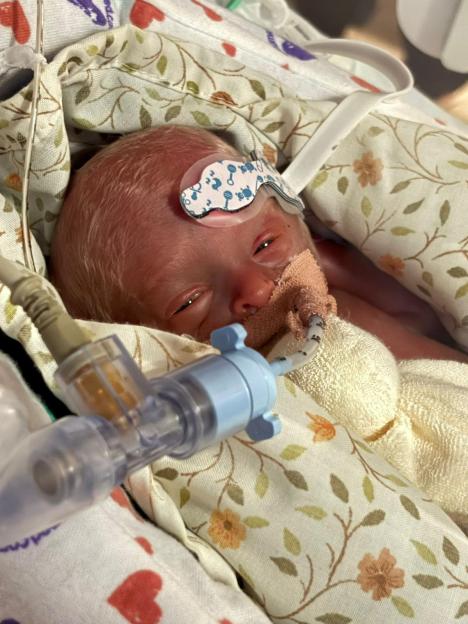 Lucy Regan and Kyle Malone’s baby Nelly died after nine days due to rare APS blood disorderCredit: Lucy Regan
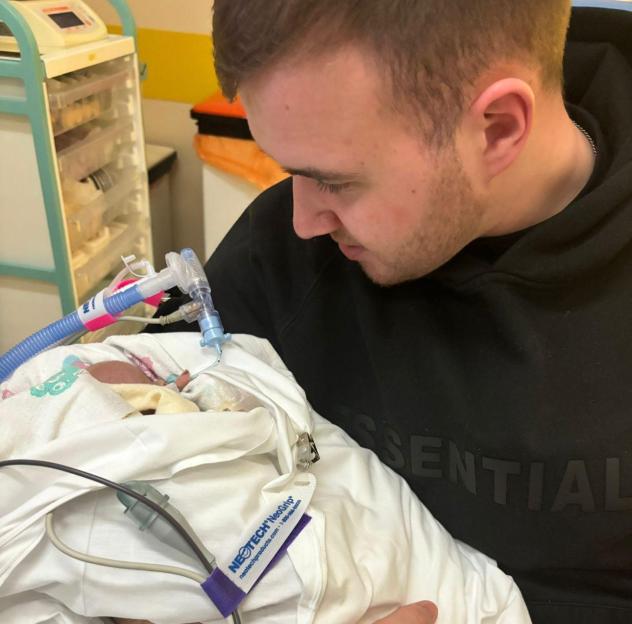 Dad Kyle holds baby daughter Nelly on the neonatal wardCredit: Lucy Regan
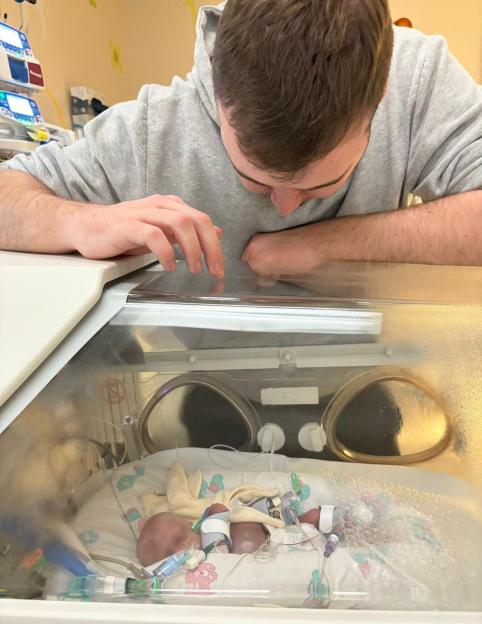 Nelly was kept in an incubator after she was bornCredit: Lucy Regan
Before she could be taken to the second hospital – where there was a bed in a neonatal ward, doctors worked to stabilise Lucy’s blood pressure, otherwise she could’ve been at risk herself during birth.
As she was rushed to Queen Elizabeth she recalled: “I don’t think in the moment I really understood what was happening.
“It was like 0-100. I took in a lot of information.
“I kept saying to my mum ‘but you’ve just bought her pram’, and stuff that really didn’t matter because I was in so much shock.
“I don’t think it really hit me until a couple of days after she was born.”
As Lucy was put under general anaesthetic, she said one of the last conversations she had with the doctor was worrying.
“They said ‘you need to prepare yourself because we don’t think she’s going to survive,’” Lucy explained.
“That was one of the last things that we were told… they said her heart rate had rapidly come down, so it had really decreased in seconds – so they put me out.”
When she woke up, Lucy recalled “I thought the worst”.
She said: “In my head, I thought she’d passed away. Kyle was with me, and I just asked him ‘did you get to hold her? Did you at least get to meet her?’
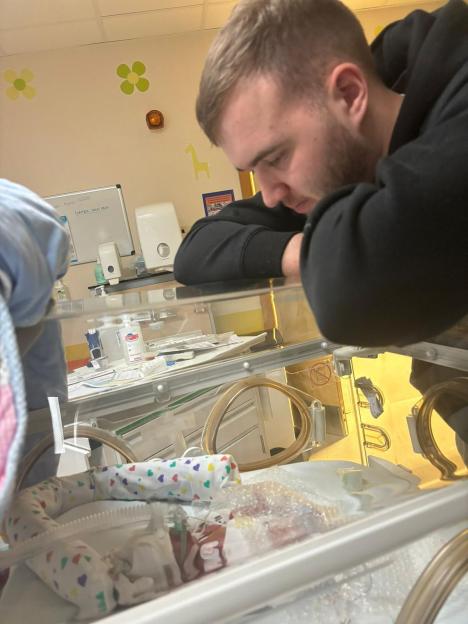 Nelly died due to complications as a result of undiagnosed APSCredit: Lucy Regan
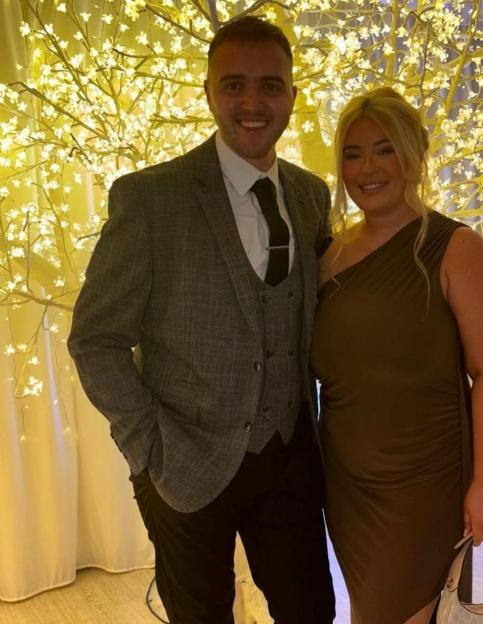 Lucy and Kyle are now engaged and have welcomed second child TeddyCredit: Lucy Regan
“He said ‘she’s upstairs, she’s doing fine’. I was thinking I’d never get to see her.”
Lucy said what followed were “a lot of difficult conversations” and the young couple “prepared for the worst”.
She added: “I don’t think anything can fully prepare you – but the doctors were very honest about the outcome.”
Lucy was kept in at QE for three days as a patient and was able to stay with Kyle at a family member’s home nearby the hospital on being discharged, with staff allowing them to visit Nelly all day.
“We went in as much as we wanted,” she explained. “We could have sat with her 24/7.”
Their families were also allowed to meet Nelly, but only one by one to avoid risking infection, with the infant remaining in an incubator.
Lucy said: “We were able to do stuff like changing her nappy and putting our hands in the incubator.
“But we didn’t get to hold her and have a proper cuddle with her until the night she passed away.”
And that was only by chance, with doctors talking about operating on Nelly due to problems with her bowels.
What is Antiphospholipid syndrome?
Antiphospholipid syndrome (APS) is an autoimmune disorder where the immune system produces abnormal antibodies (antiphospholipid antibodies).
These increase the risk of developing blood clots in arteries and veins, potentially leading to deep vein thrombosis (DVT), stroke, or pulmonary embolism.
It is a major cause of recurrent miscarriages and pregnancy complications.
While there is no cure, it is managed with blood-thinning medications (anticoagulants) to prevent clots.
“One of the midwives, feeling really bad because we hadn’t had a hold yet, said ‘why don’t you give her a cuddle now because she’ll be too fragile for a few days after surgery’,” Lucy explained.
“They didn’t think she was going to pass away the next day.”
Before arriving at the hospital each morning, Kyle would ring up and ask how Nelly was. But on the day she died, he was told the tot had “taken a dip” overnight.
The couple rushed to her bedside and stayed there until the evening when she died.
They’d begun to half-believe she might survive long-term, and she’d in fact been doing well the previous eight days, remaining fairly stable.
“We always did think she’d defy the odds,” said Lucy.
“We’d got over the part where she survived her birth, and were thinking she can do anything.
“All the doctors and nurses were saying after she died they never thought they would come in the next shift and she wouldn’t be there.”
Holding back tears, Lucy said: “It was horrendous, you feel like, it’s all been taken away from you.”
She said friends and family tried to comfort her by saying “it happened for a reason” but the young mum said: “With babies and children I don’t think there’s any reason for them to be at that point, I don’t agree.”
After Nelly’s death, Lucy and Kyle were able to stay with her body for a couple of days before she left the hospital.
And then suddenly, after getting excited to welcome their baby girl into the world, they were planning her , having barely met her at all.
“You’re just in limbo for a while,” Lucy said. “It was all a blur, you’re still trying to grieve and deal with all of this.
“I just feel like a child’s funeral is not something anyone should have to witness let alone attend.”
Lucy now has only snatches of memories. During the hours at her bedside, she recalled: “You just want her to know your voice. The day after she was born, Kyle was talking to her and she was trying to turn her head.
“It’s because she obviously recognised his voice. It’s as if she knew who he was.”
She added: “Nothing was normal but we tried to keep it normal for our own sake and her.”
Lucy was offered a debrief with a doctor who had made much of the decisions the night Nelly was born.
But before that appointment in February last year she found she’d fallen pregnant again.
At that point, they did tests which would confirm she had APS after analysis of the placenta from the first birth flagged up clotting and other telltale signs.
Lucy said: “Nothing ever makes the situation better.
“It was a relief because it was like they’ve got a plan here.
“They’re going to give me treatment from the start – obviously I don’t have a crystal ball, they can’t tell if nothing’s going to go wrong.
“When something like that happens you always blame yourself. Even though you’ve done nothing wrong, but getting that diagnosis made me think it’s not anything I’ve done, but you get that answer as to why it’s happened.
“You can move on from it.”
Fortunately, baby boy Teddy was born at 39 weeks by C-section and Lucy said despite some nerves “everything was great”.
Referring to her campaign, she said: “I just feel it’s a shame we had to learn it the hard way, it’s not a routine part of their testing, they had no reason to test me, but having no reason to do it, clearly it still happens.
“I think it should just be a routine test for everyone so there’s no risk factor.
“I know these tests cost a lot of but I think a healthy baby is worth more than any blood test can cost the NHS.”
A Scottish Government spokesperson said: “We are very sorry to hear of the passing of Lucy Regan and Kyle Malone’s daughter, Nelly.
“We fully understand their desire for screening during pregnancy for antiphospholipid syndrome (APS).
“However, the Scottish Government, along with the other UK nations, relies on advice about screening programmes from the independent UK National Screening Committee (UK NSC).
“We will continue to closely monitor the situation, should the UK NSC make a positive recommendation for APS screening, we would then work with the NHS to take that recommendation forward.”
The Sun has also approached NHS Scotland and NHS England for comment.