THE Artemis II space crew have revealed the “tense” moment they were blasted into space for their daunting three-day journey to the Moon.
Four astronauts thundered into space aboard the 32-story rocket – the biggest ever built – beginning the first manned Moon trip in over half a century.
 Commander Reid Wiseman shared the tense moment the crew lifted offCredit: AP
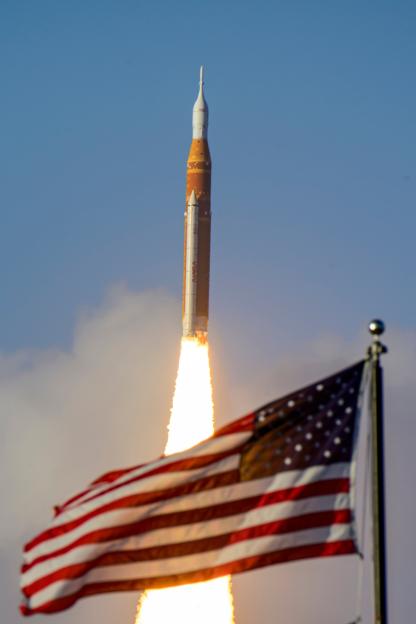 Nasa’s Orion spacecraft blasts off from Kennedy Space Center in FloridaCredit: Shutterstock Editorial
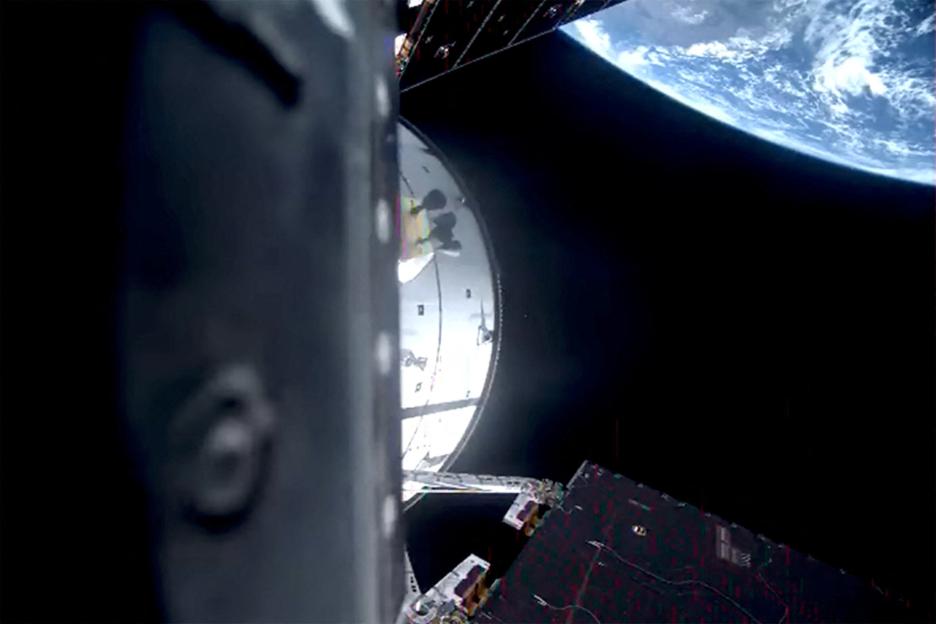 The view of Earth from spaceCredit: Reuters

Speaking for the first time since the launch, Commander Reid Wiseman, 50, shared the nail-biting moment the spacecraft boosted to 24,500 miles per hour.
“It was pretty tense moments there for a second,” he said.
“And when we got done with that burn, we just kind of looked at each other as a crew.
“We have been to the moon before. It’s been a long time since we’ve been back, and I got to tell you, there is nothing normal about this.
“Sending four humans 250,000 miles away is a Herculean effort, and we are now just realising the gravity of that.”
“And Houston, (this is) Integrity,” Hansen radioed when the burn was complete.
“Just wanted to share a little bit of the sentiment up here as we came around the planet and were zooming over just a hundred nautical miles above it, if you’ve got a moment.”
But one tense moment quickly shifted to another when , forcing the quartet to hold their bladders for six hours.
But the ten-day mission’s only woman, Christina Koch, fixed the fault after speaking to controllers in Houston.
Koch radioed controllers in Houston who told her to remove toilet parts and try the time-honoured switching on and off.
After her DIY heroics, were told to let the system warm up.
They were then given the green light to use the toilet — and take one giant leak for mankind.
When asked whether the weight of what they are achieving in human history has dawned on them, 50-year-old Jeremy Hansen – the first Canadian to go to space – said: “It’s a remarkable thing.
“You would think it would be weighty, but we just feel lifted up by the team that supports us and you just sort of execute the plan.
“We have a lot of people telling us how to work and manage this vehicle and a lot of great training.”
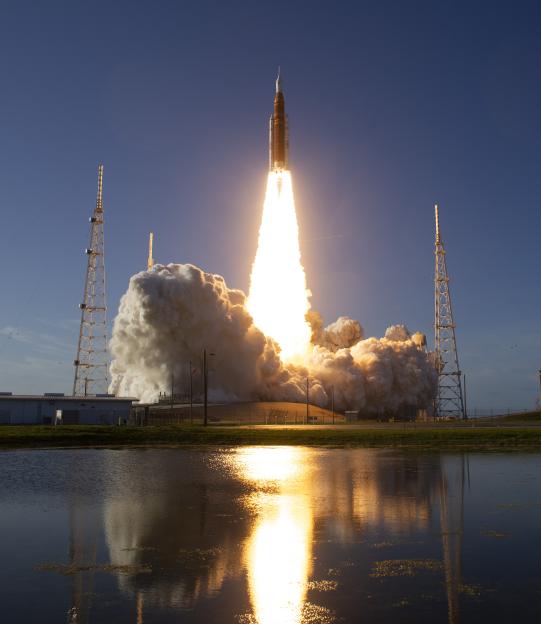 The breathtaking launch from Cape Canaveral, FloridaCredit: Splash
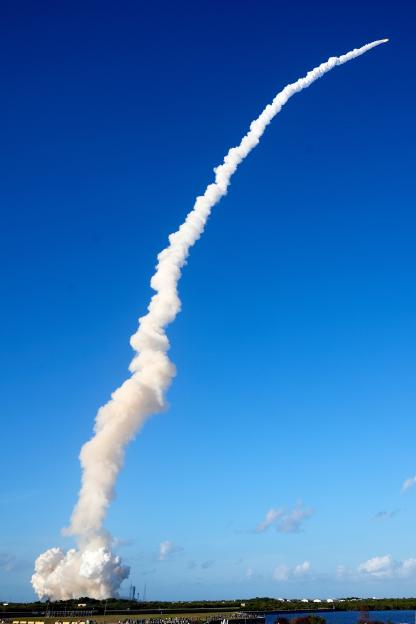 A trail of smoke is left in the wake of Nasa’s moon rocketCredit: AP
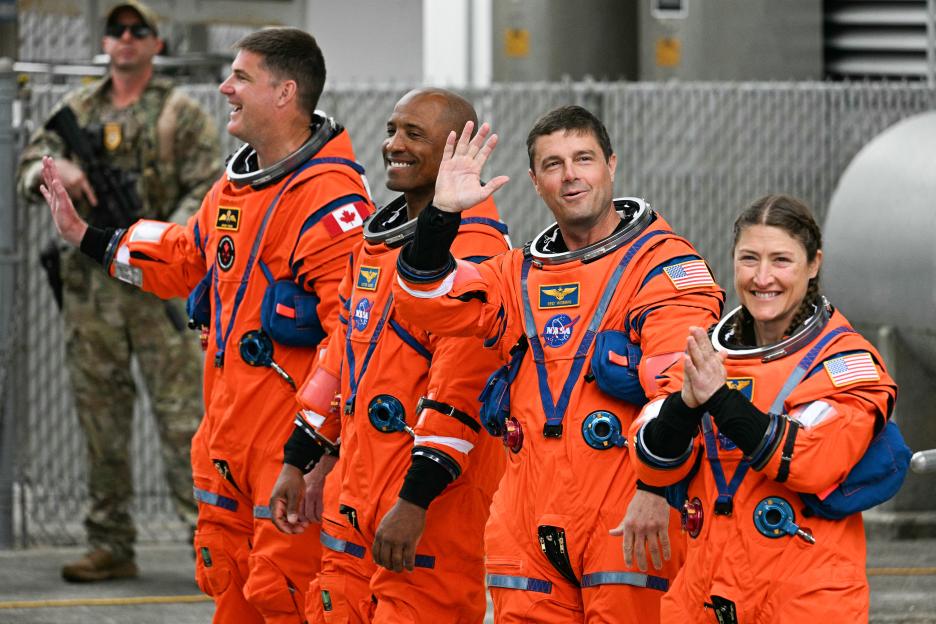 Artemis II astronauts Jeremy Hansen, Victor Glover, Reid Wiseman and Christina KochCredit: AFP
Last night the Orion craft was safely orbiting , 42,500 miles away, with the crew — including pilot Victor Glover, 49 — conducting tests.
Koch, also American, said: “I just wanted to describe for you guys the beauty that we’re seeing.
“You can actually make out the coastline of the continent, rivers, you can see the South Pole lit up. It is just phenomenal. You guys look great.”
Earlier, she asked ground control to turn up the temperature as the crew were chilly. Wiseman said they would fetch their long-sleeved tops from cases.
As tests of the emergency communications systems ended – Wiseman said: “We didn’t want to let you go without saying the view from window three, from about 38,000 nautical miles – the entire half of the is spectacular.”
Mission Control replied: “I love to hear that so much Reid, so glad you guys are getting to experience it.”
Roughly eight hours after launch, crew were heard asking where their pyjamas were.
A valve connecting water tanks had to be reset after it was found closed not open.
That fault was likely to have been caused by the force of the launch, which saw the rocket reach orbit at 17,000mph, or 22 times the speed of sound.
There were also issues with the flight termination system which would have destroyed the rocket if it veered off course. But
After a day in Earth orbit, the Orion will fire its main engine and head to the Moon, 244,000 miles away.
On day six — April 6 — Orion is due to reach the dark side of the Moon.
The mission is due to take them 5,000 miles beyond the Moon and further from Earth than a human has ever travelled.
The crew will slingshot back to Earth with splash-down in the Pacific expected on April 10.
hopes the mission paves the way for a 2028
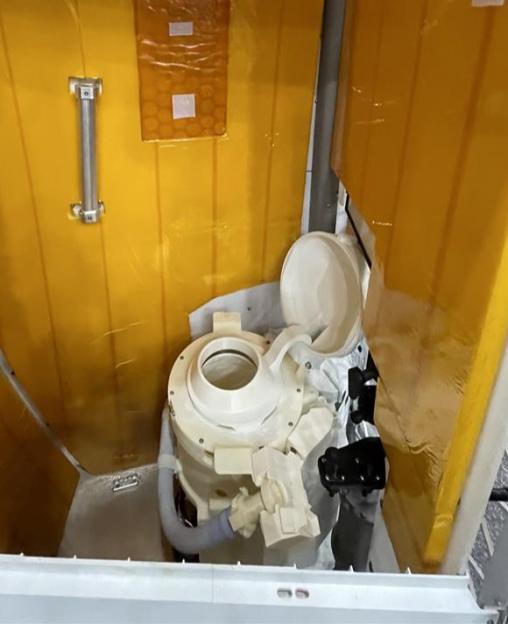 The £17.4m loo packed up on Artemis IICredit: Canadian Space Agency
 HOW THEY’LL SPEND 10 DAYS
APRIL 1: Space Launch System, Nasa’s most powerful rocket and carrying the Orion, launches at 11.35pm GMT. Crew check systems over 23 hours before they shed spacesuits and gauge life support system.
APRIL 2: Crew get physical exercise, then carry out the translunar injection burn to set Orion on its path to the Moon.
APRIL 3: A minor engine firing is scheduled to make sure the spacecraft is on the right trajectory.
APRIL 4: A second outbound trajectory burn to keep Orion on course. Crew to revise the Moon’s geography.
APRIL 5: Orion will enter the lunar sphere of influence — the point at which the pull of the Moon’s gravity will become stronger than that of the Earth’s.
APRIL 6: Spacecraft will pass the far side of the Moon, the closest it will get to the surface. Crew will be further from the Earth than any astronaut has previously travelled.
APRIL 7: Orion will leave the lunar sphere of influence and attempt a slingshot back to Earth. The riskiest phase of the mission.
APRIL 8: The astronauts will conduct a test for how they could protect from solar radiation events. They will also do some manual steering of the spacecraft.
APRIL 9: Their last full day in space will be spent studying re-entry procedures.
APRIL 10: Return to Earth. Re-entry will expose the heat shield to 1,650C/3,000F. Parachutes will deploy for splashdown in the Pacific.
Sign up for The Sun Tech newsletter for gadgets, games & more
Hello! I'm Sean Keach, The Sun's Head of Technology and Science
I’ve been writing about gadgets, games and the future of technology for more than a decade.
During that time I’ve penned thousands of articles, filmed hundreds of videos, talked tech on TV and radio, and travelled around the world to bring you the latest on Apple, Meta, Google, Amazon, Netflix and more.
And I’ve got a weekly newsletter called The Sun Tech that you can read for free every Thursday.
I bring you the latest from the world of tech, including behind-the-scenes action, exclusive content, expert analysis, and plenty of help advice – so please follow along!